
Executive Overview
For decades, the narrative dynamic of the female ensemble has served as one of western media’s most compelling storytelling engines. From the classic literary camaraderie of Louisa May Alcott’s Little Women and Mary McCarthy’s The Group to the cultural touchstones of Valley of the Dolls, The Golden Girls, Sex and the City, and Girls, multi-female dynamics naturally generate built-in dramatic stakes. These narratives explore the complex synthesis of unconditional support and fierce rivalry, emotional intimacy and systemic competition—offering viewers a mirror through which to examine the evolving sociological question of contemporary womanhood.
In modern television, reality broadcast and streaming networks have monetized this dynamic with extraordinary efficiency. Franchises like Bravo’s The Real Housewives, Netflix’s Selling Sunset, and Hulu’s The Secret Lives of Mormon Wives have demonstrated that curated groups of women can yield virtually endless serialized drama. At the apex of this commercial blueprint stands the Kardashian-Jenner family. Managed by matriarch Kris Jenner, the family transformed an E! network reality show into a multi-billion-dollar corporate empire spanning shapewear, cosmetics, spirits, and wellness.
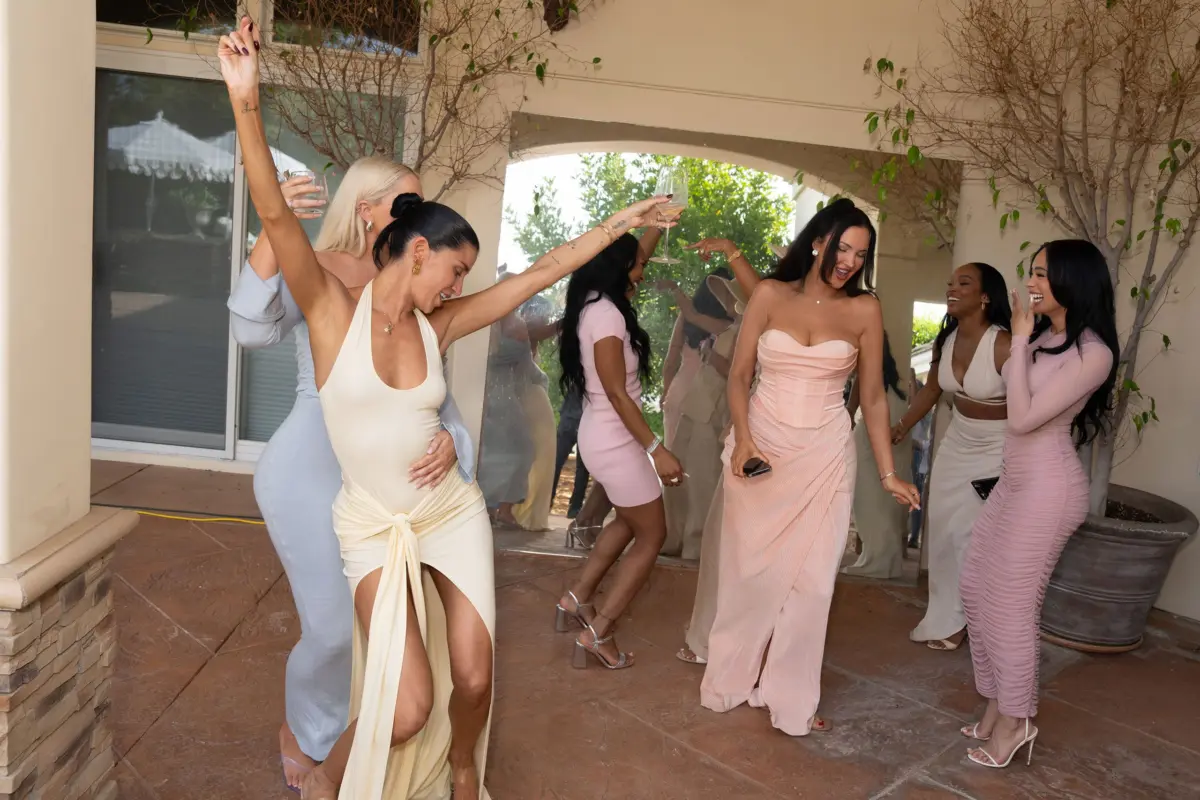
However, the release of Hulu’s six-part series, The Girls: a Khloé Kardashian Project, marks a crucial case study in content saturation and formulaic decay. Spearheaded by Khloé Kardashian, the series attempts to replicate the family’s iconic ensemble formula by assembling a circle of Los Angeles-based influencers and former reality personalities. Rather than reigniting the spontaneous intrigue of early-2000s reality television, The Girls exposes the structural limits of hyper-curated, transactional streaming content. This analysis examines the mechanics of the Kardashian production model, the socio-economic ideology driving these spin-offs, and what the series signals for the future of unscripted entertainment.
Read Also
Detailed Chronology
[2007] "Keeping Up With the Kardashians" debuts on E!, establishing the family's media model.
   │
[2009-2017] Rapid spin-off expansion begins: "Kourtney & Kim Take Miami", "Khloé & Lamar",
   │        "Kourtney & Khloé Take the Hamptons", "Kocktails with Khloé", "Revenge Body".
   │
[2021] E! series concludes; family signs lucrative multi-year global content deal with Hulu/Disney.
   │
[2022] "The Kardashians" premieres on Hulu with elevated production values and fourth-wall breaks.
   │
[Present] Premiere of "The Girls: a Khloé Kardashian Project", highlighting shifting dynamics
          in the influencer-driven spin-off ecosystem.
The Origins of the Kardashian Media Ecosystem (2007–2021)
The trajectory of the Kardashian content machine began nearly two decades ago with the 2007 debut of Keeping Up with the Kardashians on the E! network. The original series gained traction by offering an unvarnished, high-energy look at a blended Southern California family navigating sudden fame. At the core of the show’s appeal were the three eldest sisters—Kourtney, Kim, and Khloé—alongside their younger half-sisters, Kendall and Kylie Jenner.
Over twenty seasons, the sisters’ daily interactions—frequently taking place over Health Nut salads in their Hidden Hills kitchens—became the launchpad for individual consumer brands. As their personal lives made global headlines through high-profile relationships with figures such as Kanye West, Travis Barker, Travis Scott, Pete Davidson, and Timothée Chalamet, the show functioned as both a chronicle of their lives and a zero-cost marketing channel for their commercial ventures.
The Era of Expansion and Spin-offs
Recognizing the commercial value of individual cast members, E! and Ryan Seacrest Productions pioneered a series of targeted spin-offs designed to expand the franchise’s footprint:
- Regional Iterations: Kourtney & Kim Take Miami, Kourtney & Kim Take New York, and Kourtney & Khloé Take the Hamptons.
- Personality-Driven Concepts: Life of Kylie, focusing on Kylie Jenner’s cosmetic empire and personal life.
- Khloé Kardashian Protracted Vehicles: Khloé & Lamar (documenting her marriage to former NBA player Lamar Odom), the talk show Kocktails with Khloé, and the fitness transformation series Revenge Body with Khloé Kardashian.
While these early iterations maintained audience engagement through genuine personal stakes, later projects increasingly relied on familiar reality tropes, setting the stage for the family’s streaming pivot.
The Hulu Transition and the Conception of The Girls
In 2021, the family concluded their two-decade run on linear cable television, signing a multimillion-dollar global content deal with Disney-owned Hulu. The flagship series The Kardashians launched with cinematic visuals, aerial drone footage, and a polished aesthetic designed to reflect their status as global corporate moguls.
Despite higher production values, the streaming format required a constant stream of secondary content. This led to The Girls: a Khloé Kardashian Project. Now 42 and a mother of two, Khloé Kardashian stepped into the role of executive producer and off-camera host, gathering a group of longtime acquaintances to create a spin-off intended to capture the energy of modern female entrepreneurship.
Supporting Context & Metrics
Cast Profile and Structural Breakdown of The Girls
The cast of The Girls consists of six Los Angeles-area influencers, media personalities, and entrepreneurs who have operated on the periphery of the Kardashian ecosystem for years:
| Cast Member | Professional Background | Public/Media Anchor | On-Screen Narrative Arc |
|---|---|---|---|
| Natalie Halcro | Influencer, Co-founder of hair extension brand | Former star of WAGS LA | Navigating interpersonal boundaries within the group |
| Olivia Pierson | Influencer, Beauty Entrepreneur | Cousin to Natalie; WAGS LA alumna | Set up on blind dates; navigating single life in LA |
| Nicole Williams English | Model (Sports Illustrated), Business Owner | Married to former NFL player Larry English | Addressing marital dynamics and post-baby life |
| Yris Palmer | Founder of lash extension & children’s care lines | Engaged to former NBA player | Balancing multi-brand entrepreneurship & motherhood |
| Malika Haqq | Actress, Reality Personality | Longtime best friend to Khloé Kardashian | Dating TikTok personalities; exploring cosmetic procedures |
| Khadijah Haqq McCray | Actress, Media Personality | Identical twin to Malika; Kardashian friend | Acting as group confidante alongside her sister |
                    ┌─────────────────────────────┐
                    │  Khloé Kardashian           │
                    │  (Executive Producer/Host)  │
                    └──────────────┬──────────────┘
                                   │ (Via FaceTime / Narration)
      ┌────────────────────────────┼────────────────────────────┐
      ▼                            ▼                            ▼
┌───────────┐                ┌───────────┐                ┌───────────┐
│ Natalie & │                │ Nicole &  │                │  Malika & │
│ Olivia    │                │ Yris      │                │  Khadijah │
│ (WAGS LA) │                │ (Models/  │                │  (KUWTK   │
└───────────┘                │ Founders) │                │  Veterans)│
                             └───────────┘                └───────────┘
Narrative Mechanics: The Fourth-Wall Dilemma
Unlike early reality television, which relied on the illusion of unscripted interactions, modern unscripted streaming content frequently breaks the fourth wall. In The Girls, cast members explicitly reference filming schedules, publicity commitments, and network showcase events. Major plot points across the six episodes revolve around corporate commitments, including:
- Network Press Obligations: Scenes structured around promotional shoots for Hulu advertisers.
- Product Integration Events: "Botox parties," promotional brand launches, and staged group outings.
- Facetime Check-Ins: Khloé Kardashian appearing remotely to request updates on group dynamics and provide voiceover commentary modeled after classic television narrators.
This structural approach relies heavily on self-referential production moments, prioritizing corporate milestones over organic interpersonal drama.
Traditional Reality TV Arc:
Organic Conflict ──> Heightened Tension ──> Emotional Resolution

Modern Streamlined Influencer Arc:
Corporate Event/Shoot ──> Staged Disagreement ──> Brand/Product Integration
Official Statements and Industry Perspectives
On-Screen Statements and Narrative Commentary
Throughout the series, the narrative framing relies on a mix of motivational platitudes and transactional commentary on romance, finance, and body image:
"I’ll Carrie Bradshaw this thing and break all this drama down for you… The thing about expectations is that they’re basically just pre-planned disappointments."
— Khloé Kardashian, serving as narrator during Episode 2."Want my undies to be wet? ‘Cause that’s not moisturizing… [The bouquet] didn’t turn on the faucet at all."
— Khloé Kardashian and Malika Haqq, evaluating a floral gift based on its perceived expense.
The financial trade-offs of modern motherhood and cosmetic enhancements are similarly discussed in purely transactional terms. In one scene, cast member Yris Palmer evaluates the costs of expanding her family:
"Fifty K for my titties [versus two hundred and fifty thousand for a surrogate]… I’d rather carry the baby myself and end up ahead."
— Yris Palmer, calculating the cost-benefit ratio of surrogacy versus post-pregnancy plastic surgery.
During the final episode, set at a corporate Hulu promotional event, cast member Nicole Williams English offered a candid summary of the filming experience:
"I’m trying to figure out, do I feel dead inside?"
— Nicole Williams English, during the series finale.
Industry Commentary on the Kardashian Formula
Media analysts and industry insiders have long debated the durability of the Kardashian-Jenner production model. Reality television producer and media personality Spencer Pratt previously analyzed the family’s structural advantages in content generation:
"There’s, like, twenty of these people. They are legitimately like a Viking clan… They have mastered the ability to turn every micro-event of their existence into a multi-platform revenue stream."
— Spencer Pratt, Media Personality and Reality Television Executive.
This systematic approach to content creation was famously foreshadowed during a moment captured in Madonna’s 1991 documentary Truth or Dare, when actor Warren Beatty commented on the compulsion to live life publicly:
"Why would you say something if it’s off camera? What point is there in existing?"
— Warren Beatty, Truth or Dare (1991).
Future Outlook
The Limits of the Hyper-Curated Reality Model
The reception of The Girls: a Khloé Kardashian Project points to a growing challenge for streaming platforms reliant on influencer-led unscripted content. While early reality TV derived its appeal from unpredictable human behavior, modern influencer-driven spin-offs operate under strict brand management protocols. When cast members prioritize maintaining their personal brands, genuine emotional vulnerability is often replaced by manufactured conflict.
       [Authenticity Curve in Unscripted Television]

High │  Early KUWTK / Real Housewives (Raw, Unfiltered)
     │  ╲
     │   ╲
     │    ╲
     │     ╲
     │      ▶ The Kardashians (Polished, Controlled)
     │       ╲
Low  │        ╲───▶ "The Girls" (Hyper-Curated / Algorithmic)
     └─────────────────────────────────────────────────────
     Past                                            Future
Strategic Implications for Hulu and Disney
For Hulu and its parent company, Disney, streaming content requires high engagement and subscriber retention. The Girls illustrates the risks of relying on derivative spin-offs:
- Audience Fatigue: Audiences are increasingly sensitive to formulaic narrative structures and transactional brand integrations.
- Dilution of Brand Equity: Expanding a core reality franchise through peripheral cast members risks diluting the primary brand’s value.
- The Shift Toward Raw Content: The rising popularity of unscripted content on platforms like TikTok and YouTube suggests a growing preference for real-time, lower-production authenticity over hyper-edited ensemble TV.
Conclusion
The Girls: a Khloé Kardashian Project stands as a clear example of the challenges facing contemporary reality television. While the Kardashian-Jenner family built an unprecedented empire by converting personal lives into global media franchises, projects like The Girls demonstrate the boundaries of this formula. Without genuine stakes, authentic relationships, or meaningful narrative tension, even the most polished production engines risk producing content that feels less like compelling entertainment and more like an automated corporate exercise.



Comments
Facebook App ID not configured. Please add it in the Customizer.