
Executive Overview
For authors and screenwriters navigating the hyper-competitive landscape of traditional and independent publishing, the elevator pitch remains one of the most formidable trials of craft. Tasked with condensing a manuscript’s labyrinthine plot, complex thematic architecture, and precise tonal nuances into a sixty-second window, creators frequently stumble. The frustration is universal: how does one convey the technical mechanics of a sprawling plot while simultaneously igniting an agent or publisher’s curiosity?
The root of this creative dilemma lies in a fundamental misunderstanding of structural storytelling components: a story’s hook and a story’s heart are not the same thing.
A story’s hook is the high-concept mechanism designed to generate immediate curiosity, compelling an audience to pick up the book in the first place. Conversely, a story’s heart represents its deeper thematic core—the emotional resonance and philosophical inquiry that make the narrative matter long after the initial premise has faded.
Read Also
Recognizing the distinction between these two driving forces does more than simplify the composition of a back-cover summary or a literary agent query letter; it fundamentally transforms every page of the manuscript. By identifying and optimizing the hook and the heart early in the development phase, authors can construct robust, enduring narratives capable of surviving the scrutiny of acquisitions editors and readers alike.

Detailed Chronology of the Pitching Dilemma: From Concept to Query
The journey of a novel—from its embryonic inception in a writer’s mind to its eventual evaluation by industry gatekeepers—follows a distinct developmental trajectory. Understanding how the interplay between hook and heart evolves across this timeline is crucial for mastering the art of the pitch.
Phase 1: The Inciting Inspiration (The Genesis of the Heart)
Writers rarely begin their projects with a market-tested hook. More often, a novel is born from an internal impulse, a philosophical question, or a deep-seated passion for a particular genre or character dynamic. During this nascent phase, the author is consumed by the heart of the story. They know why they are writing, what emotional territory they wish to explore, and what moral arguments they hope to test.
Phase 2: The Structural Expansion (Drafting and Subplots)
As the writer moves into drafting, the narrative inevitably expands. Subplots proliferate, red herrings are introduced, and complex character arcs complicate the central premise. While vital for a 300-page manuscript, these secondary elements often muddy the waters when the author attempts to explain the project to a peer.
Phase 3: The Market Collision (The Search for the Hook)
Inevitably, the manuscript is completed, and the author faces the ultimate marketing crucible: the query letter or writers’ conference pitch. This is where the historical friction occurs. Creators often default to summarizing the mechanical plot or the emotional heart of the book without ever answering the critical agent’s question: "What makes this stand out from the thousands of other manuscripts currently sitting in my inbox?"

It is at this juncture that the deliberate extraction and refinement of the hook become non-negotiable.
Supporting Context & Metrics: Dissecting Heart vs. Hook
To successfully bridge the gap between creative writing and commercial pitching, authors must thoroughly understand the mechanics of both foundational elements.
What Is Your Story’s Heart?
The heart of your story is its emotional and thematic soul. It goes far beyond genre classifications like romance, thriller, or historical fiction. It is the core meaning that shines through the narrative technique—the reason the story matters to a reader on a human level.
To uncover your story’s heart, industry veterans advise interrogating the manuscript with two foundational questions:

- Why are you writing this story? (Moving beyond surface-level genre preferences to unearth personal or thematic motivations).
- What is the story really about at its deepest conceptual level?
Consider these streamlined examples of story hearts across various media:
- Rikers High by Paul Volponi: A kid ends up in a juvenile detention facility on Rikers Island, where the local school system inspires him to fundamentally turn his life around.
- Reflex by Steven Gould: A man with the innate ability to teleport is captured by bad actors attempting to weaponize his unique physiological gifts.
- Light of Eidon by Karen Hancock: A physically weak prince is sold into slavery, where he battles as a gladiator while quietly waging an internal war for personal faith and identity.
- Wide Sargasso Sea by Jean Rhys: Edward Rochester’s first wife fights desperately to preserve her psychological sanity against the backdrop of an abusive, loveless marriage.
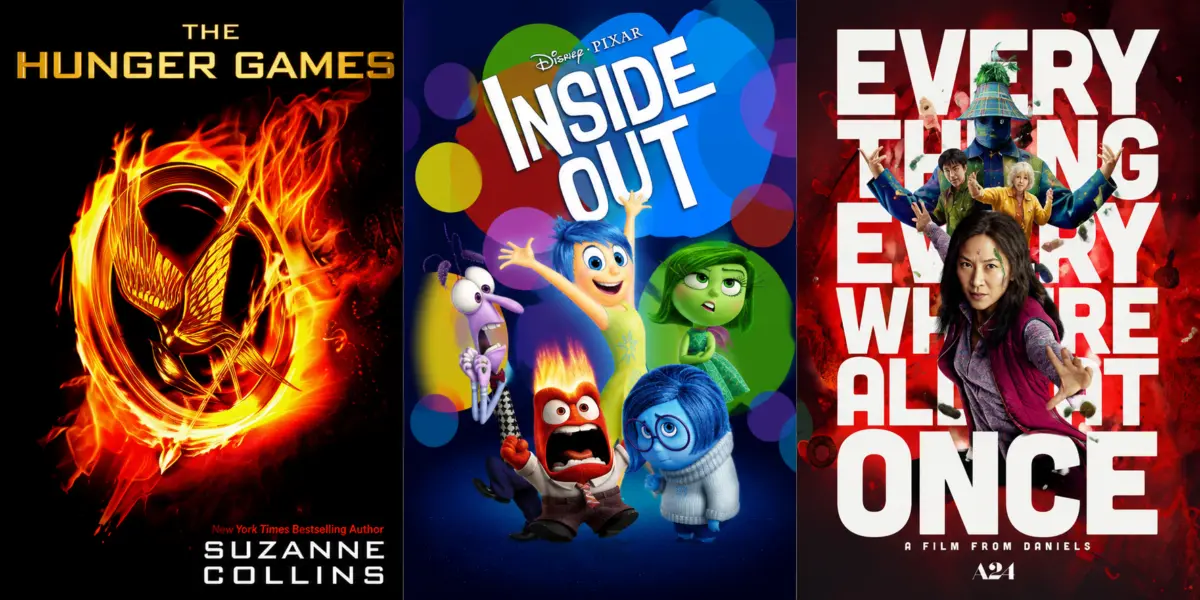
- The Hunger Games by Suzanne Collins: A teenage girl is forced into a televised gladiatorial bloodbath, where her quiet defiance threatens to destabilize an entire authoritarian regime.
- Inside Out (Pixar): A young girl’s anthropomorphized emotions must learn the value of cross-functional teamwork when a traumatic geographical relocation coincides with the onset of adolescence.
- Everything Everywhere All at Once: A stressed-out laundromat owner is abruptly plunged into a crumbling multiverse, forcing her to confront her fractured familial relationships.
None of these core summaries rely on intricate subplots or sudden plot twists. They represent the distilled essence of the narrative architecture.
What Is Your Story’s Hook?
If the heart is what makes the story matter after the book is opened, the hook is the sharp metal barb that ensures the book is opened in the first place.
As literary agent Elizabeth Winick Rubinstein noted in Writer’s Digest, authors must constantly evaluate their work against market saturation: "Really think about your novel’s hook. What makes it stand out? How is it different from all the other novels in my inbox?"

Identifying your hook requires isolating the single most unique, high-concept, or intellectually provocative element of your premise. It answers the reader’s unspoken question: "Why should I care about this specific variation of a classic theme?"
- Reflex Hook: While superpowers are common, this narrative subverts superhero tropes by stripping away the fantasy of saving the world; instead, it is a harrowing survival story of a terrified freak hunted by shadowy forces.
- The Hunger Games Hook: Dystopian regimes and gladiatorial combat are not new, but forcing children to slaughter one another on live television for political pacification creates an immediate, visceral jolt of originality.
- Wide Sargasso Sea Hook: The ultimate built-in high-concept hook—it operates as a canonical prequel to Jane Eyre, told entirely from the perspective of the "madwoman in the attic."
Official Industry Insights & Strategic Frameworks
When constructing a professional pitch—whether for a query letter, a synopsis, or back-cover ad copy—the sequencing of your structural elements dictates your success rate.
The Golden Rule of Pitching: The Hook Leads
The hook must always come first.
No matter how profound, emotionally devastating, or beautifully themed the heart of your manuscript may be, an agent or consumer will never invest the time to discover it unless their curiosity is pricked immediately. Bring out your most potent, unique elements right at the start of your pitch.

Once the hook has captured their attention, anchor the rest of the pitch with the heart of your story. If word-count constraints in a query letter or back-cover blurb limit your space, prioritize the hook above all else; readers will organically discover the heart as they turn the pages.
Integrating Hook and Heart Before Drafting
Waiting until a manuscript is completely finished to figure out its hook and heart is a recipe for revision hell. Industry experts increasingly advocate for defining these core components before sitting down to draft the first chapter.
By crystallizing your hook and heart in the early outlining stages, you ensure that every narrative choice—from character arcs to pacing beats—serves the ultimate thematic and commercial goals of the project.
Future Outlook: Navigating the Publishing Landscape
As the global literary market becomes increasingly saturated with content across traditional, indie, and digital-first publishing platforms, the margin for error in book marketing continues to shrink. Discoverability is the single greatest challenge facing modern authors.

Writers who master the art of delineating between the hook and the heart will hold a distinct competitive advantage. They will possess the diagnostic tools necessary to diagnose pacing sag, evaluate thematic drift during structural edits, and craft razor-sharp pitches that instantly convert casual browsers into dedicated readers.
For creators eager to hone these advanced craft skills, educational initiatives such as the upcoming WorldShift Summit for Speculative Fiction Writers offer invaluable industry access. Featuring dozens of bestselling authors, acquisitions editors, and masterclass instructors, events of this caliber provide deep dives into narrative architecture, world-building, and commercial positioning—ensuring that writers are fully equipped to bring stories of profound depth and undeniable market appeal to the global stage.




Comments
Facebook App ID not configured. Please add it in the Customizer.