
Executive Overview
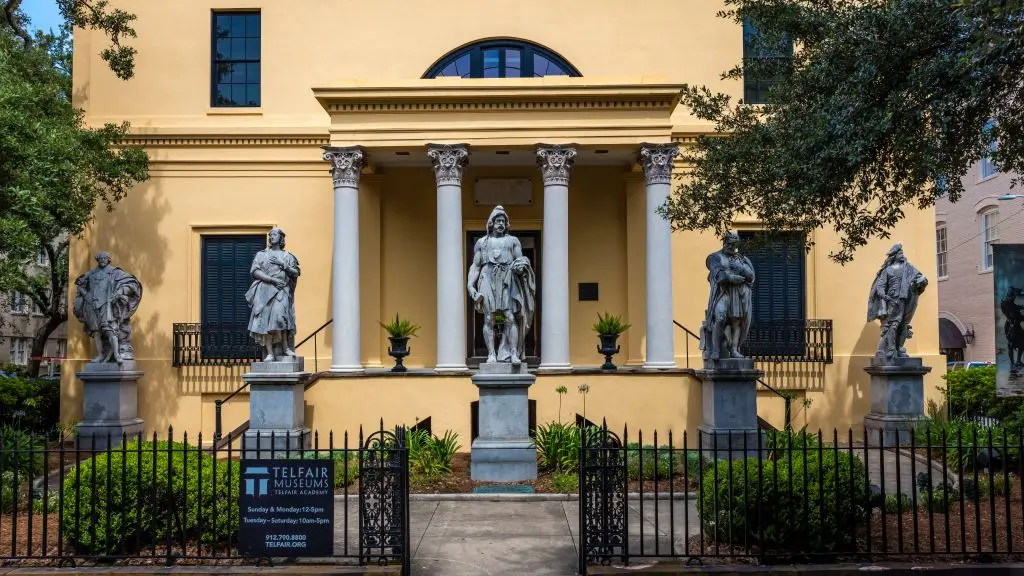
The Telfair Museums in Savannah, Georgia—hailed as the oldest public art museum in the American South—has officially named Caitlín Doherty as its new executive director. Set to assume the post in October, Doherty arrives from the Museum of Contemporary Art (MOCA) Jacksonville in Florida, where she has served as director since 2017. Her appointment marks a critical juncture for the historic institution, which oversees a multifaceted campus comprising the Telfair Academy, the Owens-Thomas House and Slave Quarters, the Jepson Center, and the Telfair Children’s Art Museum.
Doherty steps into the leadership role following a tumultuous period defined by sudden leadership changes and financial restructuring. Earlier this year, the museum made national art-world headlines when it abruptly laid off approximately 15 percent of its workforce via an internal Zoom call, citing persistent funding constraints. This reduction in force was shortly followed by the departure of former executive director David Brenneman, who stepped down in January due to a serious medical condition. Board Chair and Interim Executive Director Susan Willetts temporarily steered the institution while a nationwide search for permanent leadership was conducted.
With a proven track record of fiscal turnaround, endowment growth, and deep curatorial experience across international arts sectors, Doherty is tasked with stabilizing the historic institution. She assumes leadership during a landmark year for the Telfair, as the museum simultaneously celebrates the 140th anniversary of the Telfair Academy and the 20th anniversary of the Jepson Center. Her mandate involves not only restoring staff morale and community trust in the wake of recent layoffs but also securing the museum’s long-term financial health and expanding its cultural footprint in the Southeast.
Read Also
Detailed Chronology of Leadership and Institutional Turmoil
To fully understand the weight of Doherty’s new appointment, it is necessary to examine the turbulent chain of events that has shaken the Telfair Museums over the past two years. The institution, traditionally viewed as a bastion of Southern heritage and contemporary innovation, has experienced a series of abrupt departures and operational contractions that have tested its governance and community standing.
The Departure of Benjamin T. Simmons (March 2024)
The recent instability began in March 2024, when former executive director Benjamin T. Simmons abruptly resigned after serving a three-year tenure. Simmons’s departure caught the local arts community and the museum’s board by surprise, as no detailed reason was provided for his sudden exit. During his tenure, Simmons had helped navigate the museum through the tail end of the COVID-19 pandemic and oversaw various community outreach initiatives, but his departure left a leadership void that required immediate attention.
The Brief Tenure of David Brenneman (September 2024 – January 2025)
Following a nationwide search, the Telfair appointed David Brenneman as executive director in September 2024. Brenneman brought decades of museum administration experience to Savannah, raising hopes for a prolonged period of steady leadership. However, his tenure was cut tragically short.
The January 2025 Layoffs and Zoom Announcement
The situation at the Telfair escalated dramatically in early January 2025. In an unannounced move that sent shockwaves through Savannah’s cultural community, the museum abruptly laid off roughly 15 percent of its staff. According to local reporting by Savannah television station WJCL, employees were given no advance notice and were informed of their termination during a sudden internal Zoom call.
While museum representatives confirmed that severance packages were provided to affected workers, the manner of the layoffs drew sharp criticism from former employees, local advocates, and regional observers. Many expressed dismay over the lack of transparency, with headlines highlighting heartbreaking accounts of employees who did not even have the opportunity to say goodbye to their colleagues or collect their personal belongings in person.
Museum representatives defended the decision by pointing to severe decreases in funding and revenue. They noted that the workforce reduction had been thoroughly reviewed and approved by the board’s executive committee as a necessary measure to ensure the institution’s fiscal survival.
Brenneman’s Medical Departure and Interim Leadership
Just weeks after the layoffs, on January 20, 2025, David Brenneman stepped down from his role as executive director, citing a serious medical condition. The compounding crises—a sudden 15 percent reduction in staff, intense public scrutiny over the manner of those layoffs, and the sudden loss of a newly appointed director—left the institution in a precarious state.
Stepping into the breach, Telfair Board Chair Susan Willetts assumed the role of interim executive director. Willetts worked to steady the administrative ship, manage day-to-day operations, and initiate a rigorous search for a permanent leader capable of healing community relations, restoring internal confidence, and steering the museum toward long-term sustainability.
Supporting Context & Metrics: MOCA Jacksonville and Doherty’s Track Record
To appreciate why the Telfair Museums board selected Caitlín Doherty to navigate this complex chapter, one must examine her impressive institutional accomplishments at MOCA Jacksonville and her broader career trajectory.
Transforming MOCA Jacksonville
Doherty joined MOCA Jacksonville in 2017 after serving as chief curator at the Eli and Edythe Broad Art Museum in Michigan. At the time of her initial appointment in Florida, the MOCA Jacksonville board praised her for possessing an elusive "X factor"—a rare combination of vision, administrative grit, and relational intelligence that sets exceptional leaders apart.
Over her nine-year tenure, Doherty proved that praise well-founded. Under her leadership, MOCA Jacksonville achieved several monumental milestones:
- Endowment Doubling: Doherty successfully spearheaded fundraising and donor cultivation efforts that doubled the museum’s endowment, providing a crucial financial cushion and long-term stability.
- Attendance Growth: Through dynamic programming, targeted community engagement, and accessible exhibitions, she oversaw a steady, multi-year increase in public attendance.
- Collection Expansion: The museum’s permanent collection grew significantly in both scope and diversity during her tenure, reflecting contemporary conversations in the visual arts.
- Centenary and Accreditation: In 2024, MOCA Jacksonville celebrated its centenary year with a historic milestone: achieving formal accreditation from the American Alliance of Museums (AAM), a gold standard in the museum field that signifies operational excellence and adherence to professional standards.
International Curatorial and Academic Experience
Doherty’s curatorial prowess extends far beyond Florida. During her time at the Eli and Edythe Broad Art Museum (2014–2017), she curated a series of critically acclaimed, socially engaged exhibitions that tackled global issues. Notable projects included:
- The Artist as Activist: Mahbubur Rahman and Tayeba Begum Lipi (2016)
- 2116: Forecast of the Next Century (2016)
- Gideon Mendel: Drowning World (2016)
- Moving Time: Video Art at 50, 1965–2015, an ambitious exhibition that subsequently traveled internationally to China.
In addition to her museum administration work, Doherty has extensive academic and international credentials. She has taught art history, design history, and museum and gallery studies at Ireland’s Waterford Institute of Technology and has served as a frequent guest lecturer at high-profile institutions, including University College London. Earlier in her career in Ireland, she directed the interdisciplinary arts and cultural initiative Artswave and worked as the visual arts coordinator at the Garter Lane Arts Centre. This diverse background equips her with a holistic understanding of how art institutions interact with local communities, academic bodies, and global art markets.
Official Statements and Institutional Perspectives
The appointment of Caitlín Doherty has elicited enthusiastic responses from both the Telfair’s leadership and Doherty herself, signaling a shared commitment to transparency, community building, and institutional renewal.
The Board’s Perspective
Susan Willetts, Telfair Museums board chair and interim executive director, emphasized Doherty’s comprehensive understanding of museum operations balanced with a deep appreciation for human capital. In an official statement released by the museum, Willetts noted:
"Caitlín clearly knows what it takes to build and run a great art museum, whether it be exhibitions, collections, finance, or operations. Importantly, she recognizes that, at the end of the day, it all comes down to people. Caitlín is all about building relationships. We are very excited to welcome her to the community."
Willetts’s emphasis on relationship-building is telling. Following the administrative upheaval and staff layoffs of early 2025, the Telfair board clearly recognizes that restoring trust among local stakeholders, donors, artists, and surviving staff members is just as important as balancing the museum’s ledger.
Doherty’s Vision for Savannah
In her inaugural remarks regarding her appointment, Doherty acknowledged the historic weight and cultural significance of the Telfair Museums. She expressed eagerness to begin her tenure during a dual milestone anniversary year:
"It is exciting to be joining it at this important time in its history, as the Museum celebrates the 140th anniversary of the Telfair Academy and the 20th anniversary of the Jepson Center. I am looking forward to listening, learning, and working alongside the museum’s staff, board, supporters, artists, and community leaders as we collectively build on the Telfair’s remarkable history and together shape its equally remarkable future."
By emphasizing that she is looking forward to "listening" and "learning," Doherty signals a collaborative leadership style. For an institution that has recently experienced top-down shocks, an executive director who prioritizes dialogue and community consultation represents a welcome shift in tone.
Future Outlook: Challenges and Opportunities Ahead
As Caitlín Doherty prepares to step onto the Savannah campus this October, she faces a landscape defined by both formidable challenges and extraordinary opportunities.
1. Financial Stabilization and Revenue Diversification
The primary catalyst for the January 2025 layoffs was a tightening financial climate and decreased funding streams. Doherty’s proven track record of doubling MOCA Jacksonville’s endowment will serve her well in Savannah. However, she will need to quickly evaluate the Telfair’s current revenue models, donor pipelines, and operational expenditures to ensure the institution remains financially resilient against future economic shocks. Diversifying funding sources—through expanded membership drives, state and federal grants, private philanthropy, and corporate partnerships—will be paramount.
2. Healing Institutional Culture and Rebuilding Trust
Perhaps the most delicate task facing Doherty is the restoration of morale within the museum. The manner in which the 15 percent staff reduction was executed left lingering wounds among former employees and local cultural observers. To successfully lead the Telfair forward, Doherty must foster an internal culture of transparency, mutual respect, and open communication. Rebuilding trust with the remaining staff and demonstrating that their labor and well-being are valued will be crucial to executing the museum’s daily mission.
3. Celebrating Institutional Milestones
Doherty’s arrival coincides with a momentous period in the Telfair’s history. The Telfair Academy is celebrating its 140th anniversary as a cornerstone of Southern art and architecture, while the contemporary Jepson Center is marking its 20th anniversary. These milestones provide built-in opportunities for public engagement, high-profile exhibitions, and celebratory programming that can re-energize Savannah’s art patrons and draw tourists back through the museum’s doors.
4. Balancing Historic Preservation with Contemporary Relevance
The Telfair is uniquely positioned as a multi-site institution that spans the 19th-century elegance of the Telfair Academy and the Owens-Thomas House and Slave Quarters to the cutting-edge contemporary spaces of the Jepson Center. Managing this diverse portfolio requires a delicate balancing act: honoring the deep, complex history of Savannah—including the critical historical narratives addressed at the Owens-Thomas House and Slave Quarters—while continuing to champion progressive contemporary art through the Jepson Center.
Doherty’s extensive background in both historical curatorial practices and contemporary arts administration makes her uniquely qualified to bridge this divide. Her international experience ensures that the Telfair will maintain a global perspective, while her proven commitment to community engagement suggests she will keep local Savannah residents at the heart of the institution’s mission.
Conclusion
When Caitlín Doherty takes the helm at Telfair Museums this October, she will do so with the eyes of the regional and national art worlds fixed upon her. By drawing on the administrative acumen, fundraising prowess, and relational intelligence that defined her tenure at MOCA Jacksonville, Doherty has the opportunity to turn the page on a painful chapter in the Telfair’s history. Through careful fiscal management, transparent communication, and dynamic programming celebrating its rich dual heritage, the Telfair Museums under Doherty’s leadership is well-positioned to honor its historic 140-year legacy while forging a resilient, innovative path into the future.



Comments
Facebook App ID not configured. Please add it in the Customizer.