
Executive Overview
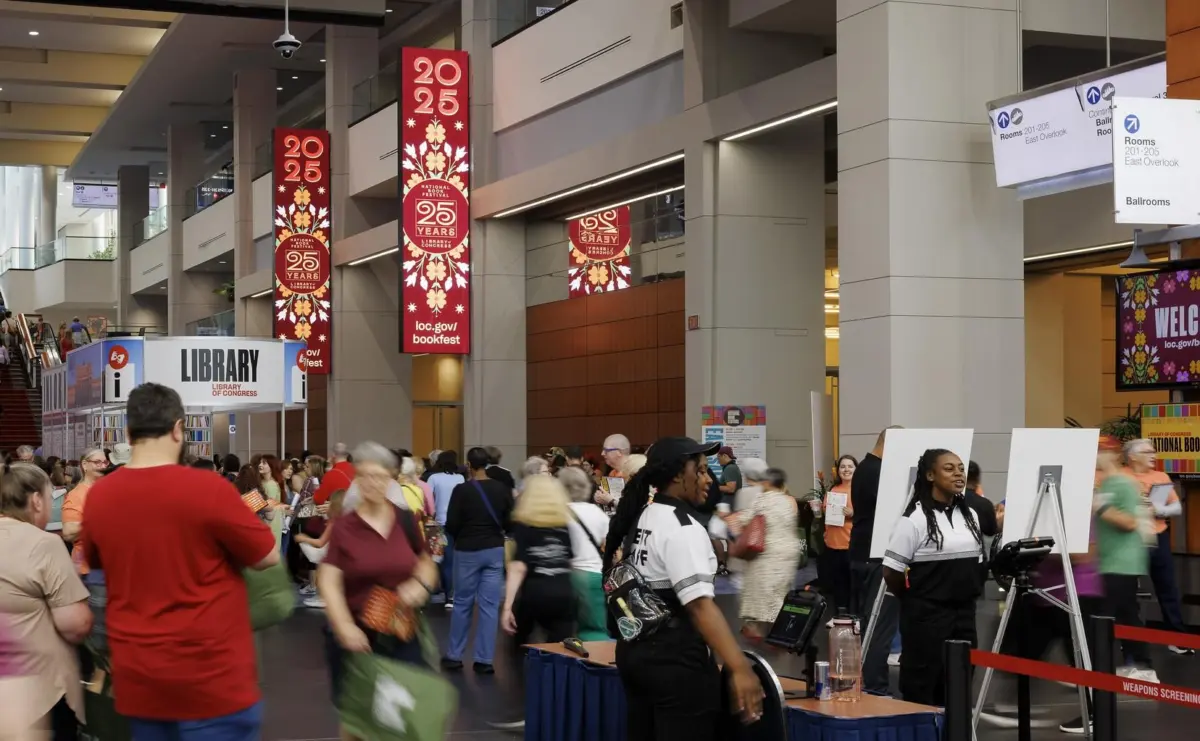
As the cultural landscape continues to navigate shifting digital paradigms and evolving reader engagement metrics, the Library of Congress (LOC) is doubling down on the enduring power of the written word. Organizers expect to meet or comfortably exceed last year’s robust attendance figure of 45,000 visitors as the 2026 National Book Festival prepares to open its doors on August 22 at the Walter E. Washington Convention Center in Washington, D.C.
Far from a traditional gathering of authors signing hardcovers behind folding tables, this year’s iteration represents a massive expansion in multidisciplinary cultural programming. More than 80 renowned authors, thinkers, filmmakers, and performers are slated to take the stage. Headliners range from cinematic auteur Martin Scorsese, who will champion the urgent necessity of film preservation, to multi-talented stage and screen star Cynthia Erivo, discussing her deeply personal memoir, Simply More.
Behind this year’s ambitious curation lies a deliberate effort to blend traditional literary discourse with the vast, multidisciplinary holdings of the Library of Congress. By weaving in divisions like the National Audio-Visual Conservation Center, the National Film Registry, the Music Division, and the American Folklife Center—which is proudly celebrating its golden jubilee (50th anniversary)—the 2026 festival transcends the boundaries of traditional publishing events.
Read Also
Furthermore, the programming has been intentionally aligned with America’s upcoming semiquincentennial (250th anniversary). Festival organizers have curated a slate of panels designed to prompt fresh, contemporary conversations about pivotal moments in United States history. For bibliophiles unable to make the trip to the nation’s capital, an unprecedented broadcast and streaming partnership with C-SPAN Book TV and local public broadcasting station WETA ensures that the intellectual wealth of the festival will reach millions nationwide.
Detailed Chronology and Event Highlights
The one-day festival on August 22, 2026, promises a dense, dynamic schedule packed with cross-disciplinary conversations, live performances, and historical retrospectives. The morning will kick off with keynote panels bridging the gap between literature, music, and the cinematic arts.
Morning Sessions: Cinema, Audio Drama, and the Art of Listening
The integration of the LOC’s non-literary divisions begins early. Filmmaker Martin Scorsese’s morning address is expected to draw cinephiles and historians alike, anchoring the festival’s commitment to archiving and protecting cultural artifacts. Scorsese’s session will flow naturally into discussions regarding the National Film Registry and the National Audio-Visual Conservation Center.
Simultaneously, graphic novelist Max Brooks will take the stage to discuss his collaborative project turning The Harlem Hellfighters—brilliantly illustrated by Caanan White—into a fully realized audio play. This session highlights the festival’s embrace of alternative narrative mediums, demonstrating how print stories evolve into immersive audio experiences.
Another morning highlight pairs NPR’s legendary Kitchen Sisters, Davia Nelson and Nikki Silva, with acclaimed author Andrew Sean Greer (Villa Coco). Titled around the art of listening and asking profound questions, this panel will explore the methodology of oral history and narrative gathering, tying directly into the mission of the American Folklife Center as it marks 50 years of preserving the diverse voices of the American experience.
Afternoon Panels: Walking Through History and Semiquincentennial Reflections
As the afternoon unfolds, the festival pivots heavily toward America’s semiquincentennial. LOC leadership challenged its programming teams to seek out authors who are actively reexamining the foundational narratives taught in American classrooms.
Among the standout afternoon discussions is a joint session featuring Isaac Fitzgerald (American Rambler) and Beverly Gage (This Land Is Your Land). As LOC literary director Clay Smith noted, both authors are literal practitioners of historical research, having walked the actual historical sites across America that they write about. Their dialogue will bridge the gap between archival research and physical exploration.
Immediately following, researchers Elizabeth Adelman (Chasing Lewis’s Monkeyflower) and Craig Fehrman (This Vast Enterprise) will unpack their exhaustive archival work surrounding the Lewis and Clark expedition. Rather than repeating standard historical beats, these panels aim to challenge audiences to view America’s genesis through contemporary, critical, and nuanced lenses.
Evening Headliners and Special Broadcast Events
The festival culminates in high-profile evening conversations that bridge literature, pop culture, and the performing arts. Cynthia Erivo will draw massive crowds as she opens up about the creative processes and personal vulnerabilities behind Simply More.
Concurrently, C-SPAN Book TV will anchor its live coverage with specialized interviews featuring figures such as Michael Feinstein, celebrated as the "ambassador of the great American songbook." Feinstein, coauthor of Liza Minnelli’s memoir Kids, Wait Till You Hear This!, will discuss the preservation of American musical heritage, blending performance anecdotes with historical context.
Supporting Context & Metrics: A Collaborative Broadcast Ecosystem
The reach of the 2026 National Book Festival extends far beyond the physical footprint of the Walter E. Washington Convention Center. Thanks to an enduring partnership with C-SPAN Book TV—which has covered every single season of the festival since its inception in 2001—millions of viewers worldwide will have unfettered access to the day’s intellectual offerings.
The C-SPAN Partnership: 26 Years of Dedicated Nonfiction Coverage
Peter Slen, a longtime C-SPAN host and executive producer of Book TV, reflects proudly on the quarter-century relationship between the network and the Library of Congress.
"We love partnering with them on this project," Slen shares. "We’re very fortunate at C-SPAN to have a dedicated space for nonfiction books, and we will be live all day."
C-SPAN’s commitment to the 2026 festival includes a robust nine-hour live broadcast from East Salon ABC. Beyond the live stream, the network is recording a slate of exclusive, long-form interviews with prominent figures in literature, journalism, and public service. These include:
- Robert R. Newlen, acting Librarian of Congress, discussing the evolving mandate of the nation’s library.
- Geoff Bennett, PBS NewsHour coanchor and author of The Revolutionary History of Black Comedy.
- Mariann Edgar Budde, Episcopal Bishop and author of I Can Learn to Be Brave (illustrated by Holly Hatam).
- Lindsay Chervinsky, noted historian and contributor to The American Revolution and America’s Role in the World.
In a notable departure from their strictly nonfiction format, Slen and the C-SPAN team will also sit down with acclaimed fiction author Ann Patchett to discuss her latest work, Whistler. This conversation will explore not only the craftsmanship of her fiction but also the day-to-day realities of owning an independent bookstore.
Expanding Digital Access via WETA and PBS
For audiences unable to catch the live broadcasts, public broadcasting station WETA is stepping in to bridge the gap. WETA will curate and distribute festival video content in the weeks following the live event, making sessions available on-demand via the WETA+ and PBS streaming apps. This multi-tiered digital strategy ensures that the festival’s cultural programming remains accessible to educators, students, and casual readers long after the convention center doors close.
Official Statements and Industry Insights
Despite persistent cultural hand-wringing regarding declining literacy rates and the dominance of short-form digital media, the leaders driving the 2026 National Book Festival project an atmosphere of robust optimism.
Clay Smith on the Hunger for Real Culture
Clay Smith, the literary director of the Library of Congress, views the festival not merely as a book fair, but as an antidote to modern superficiality.
"Although we do the acquisition, collection, and preservation of books at the Library of Congress, we do a lot of other things too," Smith explains.
By opening up the programming schedule, Smith and his team gave every division of the library a platform to demonstrate its unique cultural value. When asked about contemporary anxieties surrounding the health of the reading public, Smith remains unbowed:
"Although we see statistics about falling readership, from my perspective people are hungry for real culture, and writers embody that. I understand the hand-wringing articles, I get that there is a problem, but things look pretty exciting from where I sit. People are going to go to this festival seeking out real conversations, and that’s what we’re giving them."
Peter Slen on Books as an Intellectual Investment
Echoing Smith’s sentiment, C-SPAN veteran Peter Slen expresses deep confidence in the publishing industry, anchored by his weekly series America’s Book Club and countless long-form author interactions. Slen argues that books occupy a unique, irreplaceable tier in human media consumption.
"I remain bullish on the publishing industry," Slen states. "Books still matter. They are an investment for readers. When you sit down with a book, you’re investing your time, your intellect, your ability to think."
Future Outlook
As the Library of Congress National Book Festival approaches its mid-2026 apex, it serves as a bellwether for the future of public cultural programming. By successfully dismantling the artificial silos separating literature from film, music, audio art, and historical preservation, the LOC has established a new blueprint for literary festivals nationwide.
Looking ahead, the integration of semiquincentennial themes signals a growing appetite for historical literacy that engages citizens on a deeper, more critical level. The willingness of federal institutions to partner with independent broadcasters, streaming services, and multi-platform creators guarantees that the dialogue sparked in Washington, D.C., will ripple across classrooms, libraries, and living rooms for months to come.
Ultimately, the 2026 festival proves that when high-caliber intellectual inquiry meets accessible, multidisciplinary public programming, audiences do not just show up—they engage profoundly, affirming that the written and spoken word remains as vital to the American experiment today as it was 250 years ago.

Comments
Facebook App ID not configured. Please add it in the Customizer.