
Executive Overview
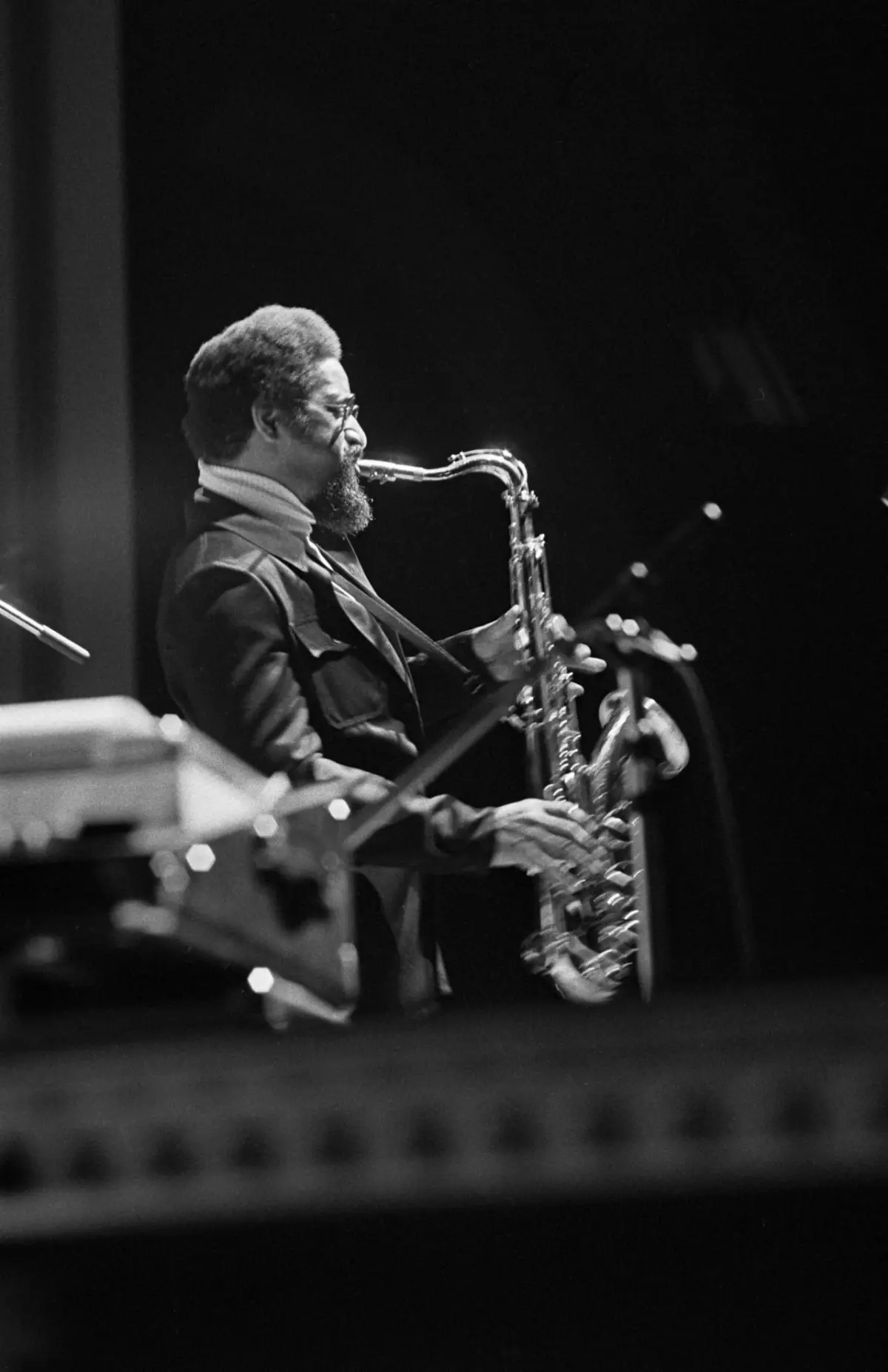
The passing of Walter “Sonny” Rollins at the age of 95 on May 25 marks the final closure of a monumental chapter in American cultural history. Rollins was not merely a premier jazz saxophonist; he was the last surviving link to the foundational eras of an indigenous American art form that spanned from the golden age of swing and the birth of bebop to the frontiers of hard bop, free jazz, and fusion.
To generations of musicians, critics, and aficionados, Rollins represented the uncompromising ethos of jazz improvisation: a relentless seeker who abandoned commercial peaks to practice on the Williamsburg Bridge, explored the intersections of calypso and avant-garde noise, and wielded an iconic tenor saxophone tone that music critics likened to a solid brick of sound. His death, learned by contemporaries in quiet moments across international stages, signals more than the loss of a virtuoso. It underscores the twilight of an era when jazz operated as an unpredictable, dangerous, and wildly inventive vehicle for cultural disruption. As the cultural landscape shifts toward institutional preservation, Rollins remains the ultimate archetype of artistic iconoclasm—a peer not just to Miles Davis and John Coltrane, but to literary and visual giants like James Baldwin and Jackson Pollock.
Detailed Chronology: The Evolution of a Giant
Formative Years and the Crucible of Harlem (1930–1955)
Born in Harlem on September 7, 1930, to parents who immigrated from Saint Croix and Saint Thomas, Walter Rollins was a largely self-taught prodigy whose deep dedication to the tenor saxophone manifested early. By his teens, he was already cutting records alongside bebop pioneers such as Babs Gonzales and J. J. Johnson.
Read Also
However, the vibrant post-war jazz scene exacted a heavy toll. Paralleling the trajectories of peers like Charlie Parker and Miles Davis, Rollins fell into the grip of heroin addiction. The cycle of substance abuse culminated in a nine-month incarceration at Rikers Island for theft at age twenty. Though briefly achieving sobriety, a subsequent relapse and parole violation led to further imprisonment. Where many of his contemporaries succumbed to the ravages of addiction, Rollins achieved permanent sobriety in the mid-1950s—a pivotal turning point that cleared the path for his ascent to the apex of jazz.
The Peak Years and the Williamsburg Bridge (1955–1961)
Cleansed and refocused, Rollins entered a historic creative streak in 1955. Initially joining a legendary quintet with drummer Max Roach and trumpeter Clifford Brown, Rollins experienced profound grief when Brown and pianist Richie Powell died in a tragic 1956 auto accident. Channeling this devastation into a monastic, relentless work ethic, Rollins emerged as the undisputed titan of the tenor saxophone.
In 1956 alone, he dropped two definitive masterpieces of the American canon: Saxophone Colossus and Tenor Madness (featuring John Coltrane). Yet, at the height of his commercial and creative momentum in 1959, Rollins stepped away from the spotlight. Uninterested in resting on his laurels, he spent nearly two years—from the fall of 1959 to the summer of 1961—performing no gigs and recording no albums. Instead, he retreated to the pedestrian walkway of the Williamsburg Bridge, playing hours on end over the East River.
This unusual residency produced a dramatic sonic transformation. When he returned to the studio for 1961’s The Bridge, his tone had expanded exponentially—richer, heavier, and entirely unmoored from the prevailing stylistic conventions of bebop.
Avant-Garde Exploration and Global Roots (1960s–1970s)
Throughout the turbulent 1960s, Rollins charted an idiosyncratic course through the jazz revolution. While contemporaries like Ornette Coleman and Cecil Taylor constructed entirely new harmonic languages detached from traditional chord progressions, Rollins viewed "freedom" through a historical lens. He freely juxtaposed avant-garde shrieks with traditional show tunes like "Alexander’s Ragtime Band" or channeled raw swing-era grit on sessions like 1967’s East Broadway Run Down.
At the dawn of the 1970s, Rollins initiated another dramatic hiatus, seeking spiritual and artistic renewal. He immersed himself in yoga and meditation at an ashram near Mumbai and journeyed to the Caribbean for the first time, reconnecting with his ancestral roots. There, he discovered calypso—the infectious, bouncing rhythmic music born among 19th-century enslaved populations in Trinidad and Tobago. Integrating calypso, soul, and funk into his angular phrasing, Rollins redefined his aesthetic on landmark recordings such as 1978’s Don’t Stop the Carnival. He later expanded his scope to include solo saxophone performances and ambitious orchestral compositions, such as a concerto written for the Yomiuri Nippon Symphony Orchestra.
The Hermit Magus and Final Years (2014–2025)
Health concerns prompted Rollins to officially retire from live performance in 2014. Rather than fading into obscurity, he transitioned into a revered elder statesman of American music—a "hermit magus" whose shock of wild white hair and sharp intellect defined his later years. Through occasional interviews, publication of his personal notebooks in 2024, and comprehensive biographies by writers like Aidan Levy, Rollins remained the moral and artistic compass of the jazz world until his passing on May 25, 2025, at the age of 95.
Supporting Context & Metrics
Architectural Anatomy of a Sound
To understand Rollins’s singular legacy, one must examine the physical properties of his tone. Unlike the emotional, weeping intensity of John Coltrane or the fluttering, avian brightness of Eric Dolphy, Rollins’s sound was structural. Critics have long described his tone as a "brick"—compact, dense, and unyielding regardless of tempo.
This acoustic architecture was forged through physical endurance:
- The East River Projection: Hours of projecting sound against the steel and concrete of the Williamsburg Bridge conditioned his lungs and embouchure to produce massive overtones.
- Harmonic Density: As documented on landmark trio dates like 1958’s Freedom Suite, Rollins’s notes were fully saturated, carrying a weight that defied the blistering speeds at which he frequently improvised.
Rhythmic Elasticity and the Art of Tension
Rollins’s rhythmic sense pushed the boundaries of traditional swing into radical territory.
- The Coltrane Contrast: On the title track of Tenor Madness, John Coltrane unfurls his legendary "sheets of sound," consistently playing on the front edge of the beat to create forward momentum. Rollins responds by shifting his notes early, late, or dead-center within the quarter note, creating an electrifying friction that keeps listeners perpetually off-balance.
- Fractured Time: By the mid-1960s—exemplified on his rendition of "On Green Dolphin Street" from Sonny Rollins on Impulse! (1965)—Rollins stretched melodies across bar lines, effectively fracturing time itself and detaching his improvisations from the steady pulse of the rhythm section.
Discographic Milestones
Rollins’s catalog is defined by risk-taking and unrepeatable live energy:
- Saxophone Colossus (1956): A definitive hard-bop statement showcasing structural brilliance and melodic invention.
- A Night at the Village Vanguard (1957): Recorded live, this masterclass features multiple extended solos on complex standards like Dizzy Gillespie’s "A Night in Tunisia" without a single repeated idea.
- Way Out West (1957): A playful subversion of cowboy tunes, transforming novelty tracks like "I’m an Old Cowhand" into heavy tenor-sax vehicles.
- The Bridge (1961): The triumphant return from his hiatus, capturing his expanded, open-air tone.
- Sonny Meets Hawk (1963): Notable for a historic pairing with Coleman Hawkins, highlighted by a harrowing, 45-second ascent into the altissimo register on "Lover Man" that left Hawkins to anchor the foundational harmony underneath Rollins’s flight.
Official Statements and Cultural Tributes
The global cultural community responded to Rollins’s passing with an outpouring of grief and reverence, recognizing the end of an irreplaceable era in American arts.
"Sonny Rollins was the last titan who could speak the entire language of jazz from its inception to its outer limits. He didn’t just play the saxophone; he interrogated time, space, and melody with a fearless authenticity that may never be witnessed again."
— Leading Jazz Historian & Archivist
Musicians across genres noted his profound influence on the psychological approach to art-making. Tributes highlighted his absolute refusal to pander to commercial expectations—whether walking away from sold-out tours to practice on a bridge, showing up to high-profile gigs in custom suits and mohawks, or abandoning expected harmonic resolutions mid-solo.
Cultural institutions emphasized that Rollins’s impact transcended music theory, placing him firmly in the pantheon of mid-century American iconoclasts who redefined modern expression through pure individual willpower.
Future Outlook: The Domestication of an Untamed Art
Rollins’s death forces a sobering question upon the contemporary cultural landscape: Can jazz survive the loss of its final feral master?
In its current state, jazz has largely transitioned from a disruptive, living underground movement into an institutionalized discipline. Conservatories, university jazz programs, and repertory orchestras now preserve the music, rewarding young practitioners for technical precision, historical reverence, and faithful reproduction of past achievements. The risk-taking, the embrace of possible catastrophic failure, and the radical independence that characterized Rollins’s career have grown increasingly rare.
Yet, the blueprint left by Rollins remains vital. His legacy is not merely a collection of transcriptions, saxophone techniques, or stylistic blueprints for aspiring students. It is an ethical challenge to artists across all disciplines: the demand to follow one’s internal voice to its absolute limit, regardless of convention, comfort, or commercial safety.
As contemporary listeners return to his recorded output—sitting between speakers to experience the explosive opening of The Bridge or the dizzying high-altitude acrobatics of "Lover Man"—Rollins issues a final, enduring invitation. His work challenges a domesticated culture to remember what raw spontaneity sounds like, and in doing so, to let everything change.



Comments
Facebook App ID not configured. Please add it in the Customizer.