
Executive Overview
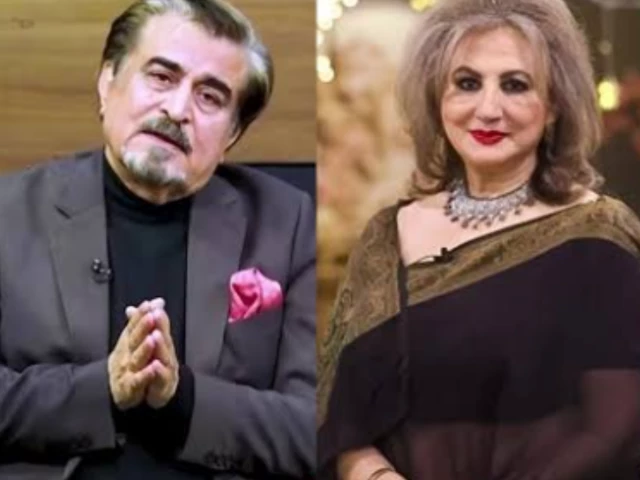
The intersection of public celebrity and private trauma has once again captured the public imagination in Pakistan, ignited by a high-profile media appearance that quickly cascaded into a digital public dispute. Veteran actor and television personality Faryal Gohar recently appeared on a prominent morning show—hosted alongside media figure Savera Nadeem—where she broke her silence regarding what she characterized as a deeply traumatic, nine-year marriage to fellow actor and artist Jamal Shah. Gohar’s public disclosures detailed allegations of systemic domestic abuse, psychological confinement, and a deeply painful pregnancy loss that she framed as a defining and devastating turning point in her life.
The televised statements immediately reverberated across traditional television networks and social media platforms, drawing intense scrutiny from fans, cultural commentators, and advocacy groups. However, the narrative did not remain unilateral for long. Jamal Shah, responding swiftly via the social media platform X (formerly Twitter), forcefully rejected the allegations. In a series of detailed posts, Shah claimed that his former wife’s accounts were heavily misrepresented, distorted by television producers chasing ratings, and factually incorrect. Offering his own meticulously structured timeline of their relationship, Shah contested the nature of the marriage, the circumstances surrounding the pregnancy loss, and the very existence of domestic abuse, asserting instead that he initiated their eventual divorce in 1989.
This public clash has reignited critical conversations regarding accountability, the ethics of morning-show media sensationalism, and the complexities of recounting historical domestic disputes decades after their occurrence. As both public figures stand by their sharply divergent realities, the episode highlights the profound challenges of navigating private trauma in an era of rapid, unmediated digital communication.
Read Also
Detailed Chronology of the Relationship
To understand the current public disagreement, observers must examine the timeline provided by both parties, anchored by Jamal Shah’s recent historical clarifications and Faryal Gohar’s retrospective disclosures. The relationship, which unfolded largely away from the hyper-connected digital landscape of the modern era, spans a turbulent period in Pakistan’s cultural and artistic history during the 1980s.
1984: The Marriage
The union between Jamal Shah and Faryal Gohar commenced in 1984, during a vibrant yet socially complex era for Pakistani artists and intellectuals. Both individuals were emerging figures in the country’s cultural sphere, known for their work in theater, television, and the arts. At the time of their wedding, the marriage brought together two prominent names in Pakistani creative circles. However, according to Gohar’s recent morning show disclosures, the harmonious public image masked an oppressive domestic environment characterized by restrictions on her personal freedom and escalating emotional coercion.
1985: The Tragic Turning Point and Pregnancy Loss
A central point of contention between the former spouses involves a pregnancy loss that occurred in 1985. In her televised interview, Gohar described the loss of her unborn child as a catastrophic emotional turning point that deeply altered the trajectory of her life and compounded the trauma of her marriage.
Jamal Shah has offered a radically different context for this tragedy. According to Shah’s statements on X, the couple experienced only one pregnancy during their marriage, which ended in a tragic miscarriage in 1985. However, Shah explicitly disputes any connection between the miscarriage and domestic violence or stress induced by him. Instead, Shah attributed the pregnancy loss to a physical accident: Faryal Gohar was reportedly bitten by a dog belonging to Muniza Hashmi at a residence in Lahore, an unforeseen event that Shah asserts directly triggered the medical complication and subsequent miscarriage.
1986–1988: Academic Pursuits in London
Following the events of 1985, the couple’s life transitioned internationally. From 1986 to 1988, Jamal Shah relocated to the United Kingdom to pursue advanced academic and artistic studies on a scholarship at the prestigious Slade College of Art in London.
Shah has invoked this specific geographical and chronological marker to counter allegations of ongoing reproductive pressure or domestic volatility during these years. According to Shah, because he was fully immersed in rigorous academic pursuits abroad, children were not planned during this timeframe, which explains the absence of any further pregnancies. While Shah maintains that this period was focused on education and artistic development, the retrospective accounts provided by Gohar suggest a period of continued emotional strain and a restrictive environment that amplified her feelings of isolation.
1989: The Dissolution of the Marriage
The marriage officially concluded in 1989 with a divorce. While Gohar’s narrative frames the separation as an eventual escape from a prolonged, nine-year abusive environment—a timeline that slightly compresses or extends the precise calendar years depending on the retrospective accounting—Shah has strongly contested the mechanics of the separation. Shah explicitly asserted in his public statements that the legal and personal decision to terminate the marriage was his own, challenging any insinuation that he was forced out or that the separation occurred under terms dictated solely by the narrative of abuse.
Post-1989 to Present: Divergent Paths
Following their divorce, both individuals carved out substantial careers in the arts. Jamal Shah went on to become a leading figure in Pakistani cinema, theater, and fine arts, serving in prominent cultural administration roles, including heading the Pakistan National Council of the Arts (PNCA). In his recent social media disclosures, Shah noted that he remarried in 2005, sharing that he has three children and lives a modest, peaceful, and content family life with a partner whom he described as capable, mature, and deeply caring. Faryal Gohar similarly maintained a distinguished career as an actress, writer, and documentarian, occasionally speaking out on social issues before her recent, highly publicized return to the topic of her early marriage.
Supporting Context & Cultural Metrics
The public confrontation between Gohar and Shah occurs within a broader, rapidly evolving cultural landscape in Pakistan regarding media ethics, gender dynamics, and the discussion of domestic abuse.
The Evolution of Morning Show Culture in Pakistan
Pakistani morning television has long walked a precarious tightrope between entertainment and sensationalism. Historically designed to engage homemakers with lifestyle tips, cooking segments, and celebrity interviews, the format has increasingly gravitated toward deeply personal, confessional storytelling. High-profile figures frequently use these platforms to share intimate details of their personal lives, breakups, and historical grievances.
However, media critics have repeatedly raised ethical concerns regarding how these shows handle sensitive topics such as domestic violence and marital breakdown. Programs are often structured to maximize emotional resonance, occasionally prioritizing ratings, viewer engagement, and digital virality over journalistic rigor, balanced perspectives, or psychological safety. Jamal Shah’s pointed critique of the morning show that hosted Gohar—condemning what he termed "mud-slinging programmes on ordinary people like me"—speaks to a growing discomfort among public figures regarding how television networks monetize personal history without offering immediate, verified right-of-reply mechanisms to all parties involved.
The Mechanics of Digital Retraction and Public Defense
The reliance on platforms like X (formerly Twitter) for rapid-fire public defense highlights a modern communication shift. When historical figures from the pre-digital era of Pakistani television find their decades-old marriages scrutinized on digital-first morning shows, traditional press releases are often deemed too slow. Shah’s decision to issue threaded, point-by-point Urdu and English rebuttals reflects an urgent need to reclaim narrative control in real-time.
However, digital refutations of this nature present inherent journalistic complexities. Unverified claims and counter-claims collide in public comment sections, where nuance is frequently lost. The debate surrounding Gohar and Shah underscores the difficulty of adjudicating historical interpersonal disputes in the digital public square, where emotional resonance often overshadows verifiable documentation.
Official Statements & Direct Quotations
To fully comprehend the depth of the divide between the two actors, it is essential to examine their respective public statements in detail.
Faryal Gohar’s Account
During her appearance on the morning show alongside host Savera Nadeem, Gohar laid bare her historical experiences, framing her early adulthood through the lens of survival and endurance:
"I endured 9 years of an abusive marriage. I was subjected to physical violence and a restrictive environment."
Describing the profound emotional impact of losing her unborn child, Gohar pointed to the event as a pivotal moment of psychological rupture that permanently altered her life’s trajectory, emphasizing the isolation she felt during a formative period of her youth.
Jamal Shah’s Counter-Response
Utilizing social media to systematically dismantle and reframe the allegations, Jamal Shah released a series of direct statements:
Regarding the timeline of the marriage, the tragic loss of the pregnancy, and his academic commitments abroad, Shah stated:
"We got married in 1984, she lost her pregnancy in 1985 due to dog bite, we were in London for my studies at the Slade College of Arts from 1986-1988 and we divorced each other in 1989. No domestic violence, no more pregnancy as we had not planned children during my stint in London."
Addressing the core allegations of physical abuse and the initiation of the divorce, Shah added:
"I never committed violence and nor did I ever say anything wrong about Faryal. The decision for divorce was also mine!"
Expressing deep frustration with the media apparatus that facilitated the broadcast, Shah criticized the sensationalization of private histories:
"ARY or any other channel should verify facts before airing such content for ratings. What a pity to air mud-slinging programmes on ordinary people like me! What a pity!!!!"
Shah further contextualized his current standing to emphasize the stability and peace of his life following the dissolution of the marriage decades ago:
"I remarried in 2005 and have three children. My current wife is very caring, capable, and mature. We live modestly, but in a peaceful and happy relationship."
Future Outlook & Industry Implications
The public disagreement between Faryal Gohar and Jamal Shah extends far beyond a mere celebrity spat; it touches upon vital structural and cultural questions facing the Pakistani entertainment industry and media ecosystem.
Reassessing Media Ethics and Broadcaster Accountability
As regulatory bodies and media watchdogs in Pakistan continue to monitor content standards, the fallout from this interview will likely prompt renewed discussions regarding the ethical responsibilities of morning show producers. Broadcasters may face mounting pressure to establish stricter protocols when handling sensitive allegations of domestic abuse, ensuring that historical grievances are handled with journalistic balance, due diligence, and respect for the complexities of private lives—particularly when events occurred decades prior and cannot be easily corroborated by contemporary physical evidence.
The Legacy of 1980s Artistic Icons
Both Gohar and Shah hold esteemed places in the history of Pakistan’s cultural renaissance. Their contributions to independent theater, television dramas, and fine arts during politically restrictive decades earned them the respect of peers and audiences alike. The emergence of this public dispute threatens to cast a shadow over their respective artistic legacies, reminding cultural observers of the deep personal tolls often exacted behind the scenes of creative brilliance.
Navigating Historical Trauma in the Public Eye
Ultimately, the Gohar-Shah controversy serves as a stark case study in the difficulties of reckoning with historical trauma in an era of hyper-accelerated media consumption. Whether through the lens of survival and systemic endurance articulated by Gohar, or the narrative of factual misrepresentation and personal vindication presented by Shah, the episode underscores a sobering reality: when private grief enters the public sphere, resolution is rarely simple, and the truth often remains contested between the sharply differing memories of those who lived it.





Comments
Facebook App ID not configured. Please add it in the Customizer.