
Executive Overview
New York City is experiencing an unprecedented surge in seafood-centric establishments, marked by a wave of raw bars, coastal taverns, and specialized fish shops transforming the culinary landscape across Manhattan and Brooklyn. At the center of this movement is Zig Zag Oyster Bar, a newly opened establishment located on the border of Crown Heights and Prospect Heights, Brooklyn. Developed by the acclaimed hospitality team behind Hart’s, Cervo’s, The Fly, and Eel Bar—Nialls Fallon, Nick Perkins, and Leah Campbell—Zig Zag represents a masterclass in low-overhead, high-craft bar dining.
Occupying the former footprint of Bar Meridian, Zig Zag delivers a precise, atmospheric homage to bivalve culture. Operating out of a compact, gasless basement kitchen, the venue relies entirely on electric heating elements, meticulous pickling, and raw bar cold-prep to deliver a high-impact menu. The establishment’s success reflects broader macroeconomic and culinary shifts: urban restaurateurs are increasingly adapting to complex municipal codes and rising real estate costs by leveraging ventless kitchen infrastructure, concise sourcing, and high-margin, beverage-adjacent seafood programs.
This report provides a comprehensive analysis of Zig Zag Oyster Bar’s market entry, operational blueprint, supply chain dynamics, and position within New York’s competitive seafood sector.
Read Also
Detailed Chronology
[2016–2023] Hospitality Foundation
  │  • Founders establish Hart's, Cervo's, The Fly, and Eel Bar.
  │  • Develop expertise in Iberian/coastal seafood and modern bar culture.
  ▼
[Early 2024] Site Acquisition
  │  • Secure former Bar Meridian space at Crown Heights/Prospect Heights border.
  │  • Preserve signature U-shaped bar and sliding floor-to-ceiling glass doors.
  ▼
[Mid-2024] Concept & Kitchen Engineering
  │  • Design ventless, electric-only basement kitchen.
  │  • Build direct supply lines for regional bivalve producers (PEI, Long Island).
  ▼
[Summer 2024] Official Launch of Zig Zag
  │  • Debut signature menu featuring double-decker seafood towers, chilled entrees, and crisp Martinis.
  ▼
[Late 2024 & Beyond] Market Integration
     • Solidify role in NYC raw bar surge alongside peers like Penny and Crevette.
Phase 1: The Predecessors & Hospitality Lineage (2016–2023)
The inception of Zig Zag is rooted in nearly a decade of culinary development by partners Nialls Fallon, Nick Perkins, and Leah Campbell. Beginning with Bed-Stuy’s critically praised Hart’s in 2016, the trio built a reputation for neighborhood-focused dining rooms defined by Mediterranean influences and uncompromising ingredient sourcing.
They subsequently expanded their portfolio:
- Cervo’s (Lower East Side): A seafood-forward venue highlighting Spanish and Portuguese coastal traditions.
- The Fly (Clinton Hill): A chicken rotisserie bar that retained the team’s signature seafood fluency through dishes like an anchovy-heavy Caesar salad.
- Eel Bar (Lower East Side): A Basque-inspired cocktail and tapas lounge.
By early 2024, the team sought to translate their seafood expertise into a specialized raw bar concept.
Phase 2: Site Acquisition & Spatial Adaptation (Early 2024)
The team secured the lease for 1563 Bedford Avenue, the former home of Bar Meridian. Situated on a prominent corner where Crown Heights meets Prospect Heights, the venue possessed key structural attributes ideal for an intimate raw bar:
+-------------------------------------------------------------------+
|                    ZIG ZAG PHYSICAL LAYOUT                        |
+-------------------------------------------------------------------+
|  [Sidewalk Cafe Seating]  <-- Wall-Sized Sliding Glass Doors -->  |
|                                                                   |
|   +-----------------------------------------------------------+   |
|   |                      U-SHAPED BAR                         |   |
|   |   (Central service hub; raw bar prep & beverage display)  |   |
|   +-----------------------------------------------------------+   |
|                                                                   |
|   [High Ceilings & Large Windows]  -->  Maximizes ambient light  |
+-------------------------------------------------------------------+
|  BASEMENT KITCHEN: Ventless / Gasless / 100% Electric Setup        |
+-------------------------------------------------------------------+
Preserving the central U-shaped counter allowed the operators to maintain an open, conversational room dynamics, turning bivalve shucking and beverage crafting into a central focal point.
Phase 3: Kitchen Infrastructure & Menu Engineering (Mid-2024)
The physical building presented a unique structural challenge: the micro-sized basement kitchen lacked a municipal gas line and commercial exhaust hood. Installing code-compliant ventilation in the multi-story residential building would have required immense capital expenditure and months of municipal permitting delays.
Rather than altering the building’s infrastructure, the team designed a fully electric culinary program. Utilizing high-efficiency countertop broilers, induction surfaces, and precision refrigeration, chef-partner Nick Perkins constructed a menu centered around:
- Raw, freshly shucked bivalves.
- Chilled, marinated, or preserved shellfish (escabeches, salsas verdes).
- Cold-served roasted proteins and electric-broiled dips.
Phase 4: Summer Debut & Operational Rollout (Summer 2024)
Zig Zag opened its doors in mid-summer 2024, joining a wave of high-profile seafood openings across New York City—including Penny, Crevette, Strange Delight, Capitaine, and the return of Mary’s Fish Camp. The establishment immediately drew local and regional acclaim for its focused beverage program and elevated raw bar offerings.
Supporting Context & Metrics
The Raw Bar Renaissance: Comparative NYC Openings
The opening of Zig Zag comes during a broader surge in raw bar openings across New York City. Driven by shifts in consumer preferences toward lighter dining, high-protein options, and social, bar-centric experiences, new operators are expanding across diverse neighborhoods.
| Venue | Neighborhood | Primary Culinary Focus | Key Infrastructure/Style |
|---|---|---|---|
| Zig Zag Oyster Bar | Crown Heights, Brooklyn | Regional Bivalves, Chilled Shellfish, Preserved Fish | Ventless/Electric, U-Shaped Bar |
| Penny | East Village, Manhattan | High-End Raw Bar, Counter Dining | Marble Counter, Fine-Dining Polish |
| Crevette | Fort Greene, Brooklyn | French-Coastal Shellfish, Wine Bar | Bistro Aesthetic, Natural Wines |
| Strange Delight | Fort Greene, Brooklyn | New Orleans-Style Seafood, Cooked & Raw Oysters | Southern Coastal, Fryers/Grills |
| Capitaine | TriBeCa, Manhattan | Classic Seafood Tower, European Raw Bar | Formal Dining Room & Bar |
Menu Breakdown & Infrastructure Adaptation
Zig Zag’s operational success lies in its balance between raw assembly and electric heat applications. Below is an overview of the menu structure and processing methods:
                                  ZIG ZAG MENU ARCHITECTURE
                                              │
         ┌────────────────────────────────────┼────────────────────────────────────┐
         ▼                                    ▼                                    ▼
   RAW & UNCOOKED                      CHILLED / PRESERVED                      ELECTRIC HEAT
 ──────────────────────               ──────────────────────               ──────────────────────
 • PEI Sweets (Oysters)               • Clams in Escabeche                 • Broiled Crab Dip
 • Long Island Xanadus                • Mussels in Salsa Verde             • Pre-Roasted Half Chicken
 • Rotating Daily Bivalves            • Anchodinhas on Buttered Toast        • Boiled Potatoes w/
 • Whitefish & Tomato Salad           • Cocktail Shrimp w/ Horseradish       Horseradish Vinaigrette
Culinary Highlights & Operational Execution:
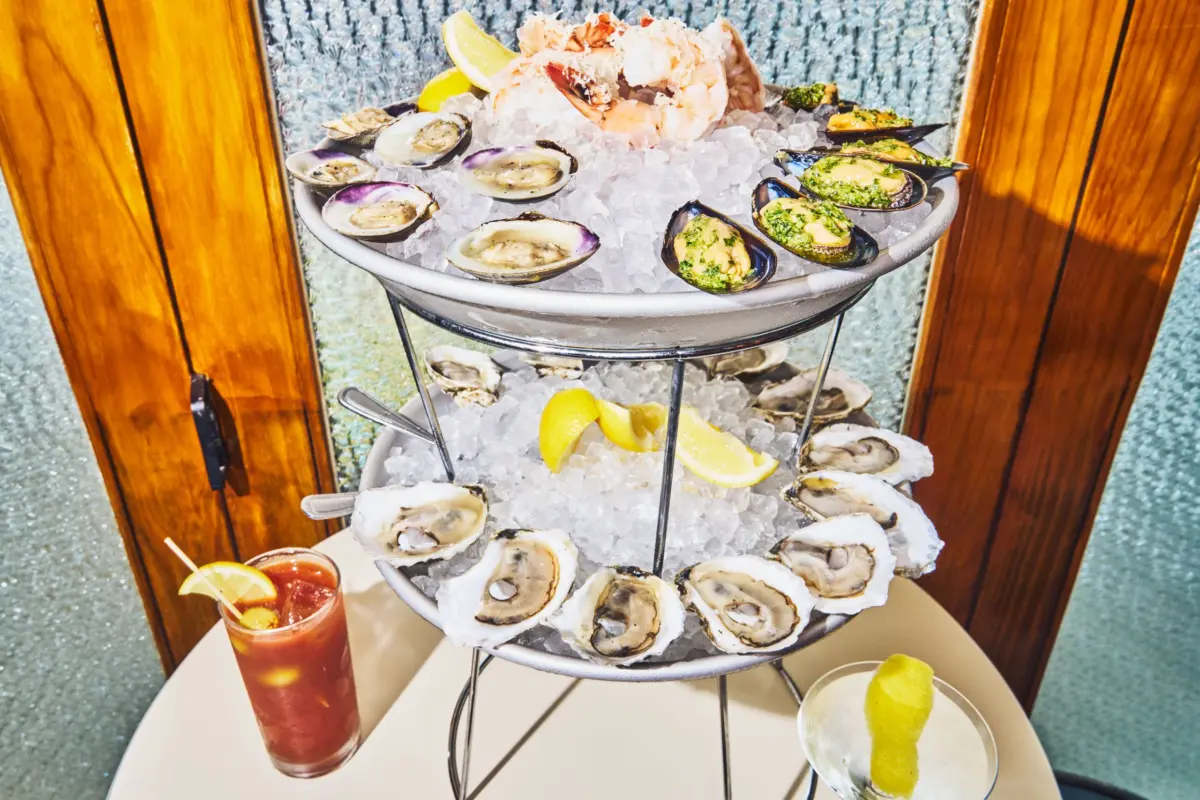
- The Seafood Tower: A two-tiered presentation separating raw and chilled-cooked elements:
- Lower Level: Raw oysters served on crushed ice with lemon and house-made mignonette.
- Upper Level: Mussels tossed in salsa verde; steamed clams in a pepper-forward escabeche marinade; cocktail shrimp topped with freshly grated horseradish.
- Accompaniments: Thinly sliced house-made potato chips and a proprietary tart hot sauce.
- The Broiled Crab Dip: Cooked exclusively in an electric countertop broiler, this dish relies almost entirely on lump crab meat seasoned with salt and spices, proving that complex ventilation is unnecessary for rich, hot appetizers.
- The Cold-Served Half Chicken: Daytime electric roasting followed by rapid chilling allows the kitchen to serve cold roasted chicken paired with mayo, hot sauce, and pickles—eliminating the need for active gas line cooking during service hours.
Nutritional & Economic Profile of the Bivalve Program
From an economic perspective, bivalves offer an exceptionally efficient product model for modern beverage-driven establishments:
- Nutritional Density: A single serving of raw oysters provides dense concentrations of Zinc (over 300% of daily recommended intake per 100g) and Vitamin B₁₂, catering to modern diner demands for nutrient-rich foods.
- Margin & Logistics: While oyster prices fluctuate based on harbor freight, freight traffic, and seasonal tides, raw bivalves require no line-cook labor to prepare beyond precise shucking. This reduces kitchen labor costs compared to traditional hot line operations.
OPERATIONAL MARGIN PROFILE (ESTIMATED)
-----------------------------------------------------------------
Traditional Hot Kitchen:    High Labor Cost  | High Utility Overhead (Gas/Exhaust)
Zig Zag Electric/Raw Bar:   Low Labor Cost   | Low Utility Overhead (Ventless)
-----------------------------------------------------------------
Official Statements
Executive Leadership & Operator Perspectives
Speaking on the operational layout and kitchen limitations, chef-partner Nick Perkins underscored the strategic value of design constraints:
"Operating without a gas line or exhaust hood isn’t a limitation; it’s a design framework. By leaning heavily into cold preparations, precise pickling, high-quality canned and preserved fish, and utilizing smart electric equipment, we can deliver a menu that feels complete, fresh, and deeply connected to classic coastal dining without the traditional kitchen footprint."
Partner Nialls Fallon commented on the choice of neighborhood and room layout:
"We were drawn to the physical architecture of the former Bar Meridian space—the natural light from the sliding glass doors and the U-shaped bar that anchors the room. Bivalve dining is inherently social and physical. It demands focus, whether you’re watching the shucker work or lifting the shell to your lips. We wanted the space to reflect that clean, tactile connection."
Partner Leah Campbell addressed the beverage integration strategy, noting the intentional pairing philosophy:
"There’s a reason the Martini and the oyster are inseparable in cocktail history—the cold dryness cuts right through ocean salinity. But at Zig Zag, we also wanted to expand that conversation. Pairing raw seafood with a spicy Bloody Mary or a bright, non-alcoholic citrus build creates new access points for how people experience a raw bar."
Industry & Economic Commentary
Commenting on the rise of ventless seafood concepts in New York City, commercial real estate analyst and hospitality consultant Elena Rostova noted:
"Installing commercial gas and hood lines in older Brooklyn real estate can easily add $150,000 to $300,000 to capital expenditure budgets before a restaurant even opens its doors. Concept design teams like Fallon, Perkins, and Campbell are pioneering an economically sustainable model. By focusing on raw bars, electric heating, and cold prep, they cut upfront buildout costs, bypass long municipal review cycles, and maximize front-of-house revenue per square foot."
Future Outlook
Short-to-Medium Term Industry Trends
As New York City real estate costs remain elevated, the success of Zig Zag Oyster Bar provides a scalable blueprint for urban operators. The combination of ventless infrastructure, high-margin raw items, and tight beverage pairings is expected to proliferate across mid-sized metropolitan markets.
+-------------------------------------------------------------------+
|                     FUTURE SEAFOOD BAR TRAJECTORY                 |
+-------------------------------------------------------------------+
|  1. KITCHEN EVOLUTION   --> Broader shift to 100% electric/induction |
|  2. CLIMATE ADAPTATION  --> Diversification of oyster farm sourcing |
|  3. BEVERAGE PARITY     --> Expansion of low/no-ABV coastal pairings |
+-------------------------------------------------------------------+
Supply Chain Resilience & Marine Climate Adaptation
The long-term outlook for establishments like Zig Zag remains closely tied to coastal aquaculture dynamics:
- Water Temperatures & Tides: Rising ocean temperatures impact wild and farmed bivalve supplies, forcing shuckers to continuously rotate inventory across regions—ranging from Prince Edward Island down to Long Island and North Carolina.
- Agile Sourcing: Zig Zag’s strategy of maintaining a fluid, daily-changing oyster menu (offering two or three exceptional varieties at a time rather than a fixed laundry list) insulates the business against localized supply chain disruptions.
Concluding Assessment
Zig Zag Oyster Bar illustrates how thoughtful hospitality, minimalist kitchen design, and precise culinary vision can turn spatial constraints into a distinct operational advantage. As New York’s raw bar renaissance continues to mature, Zig Zag stands as an exemplary model of contemporary neighborhood dining—chic, adaptable, and deeply anchored in the timeless appeal of the bivalve.





Comments
Facebook App ID not configured. Please add it in the Customizer.