
Executive Overview
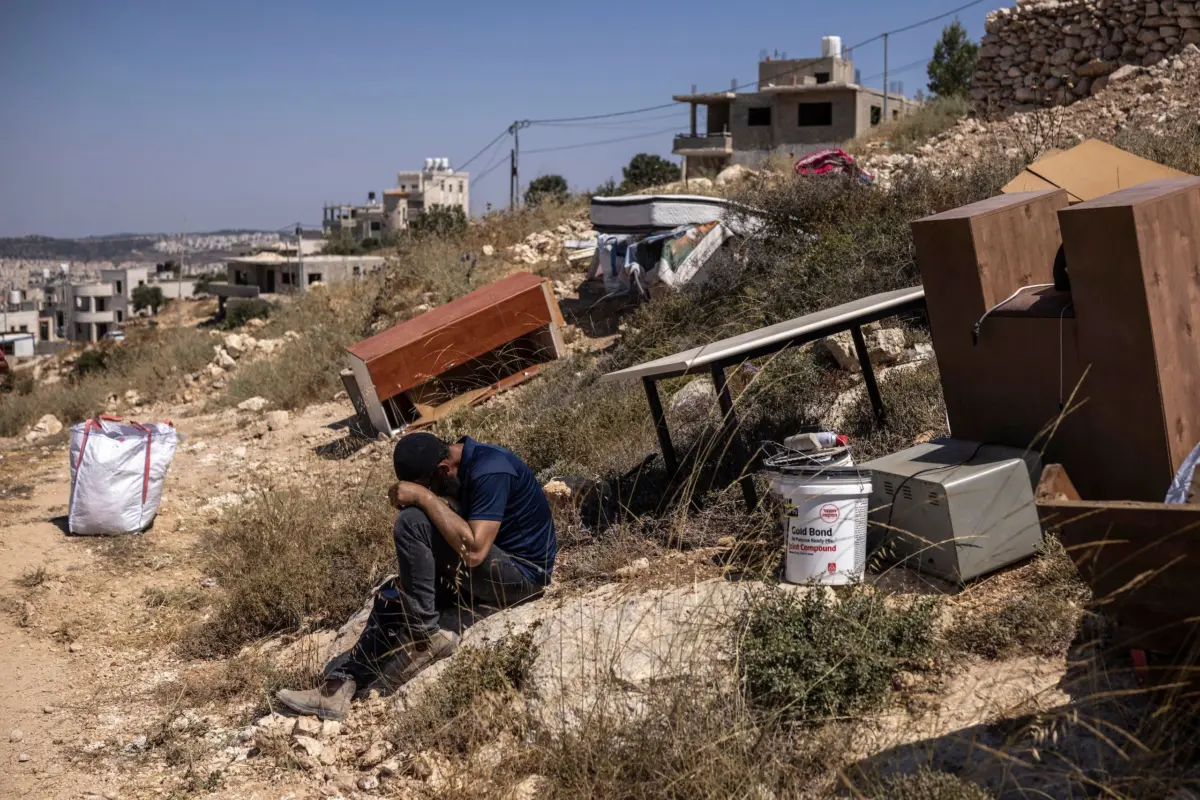
Violent attacks by Israeli settlers against Palestinian communities across the occupied West Bank have reached unprecedented levels, marking a dramatic escalation in what international observers describe as a systematic campaign of displacement. According to data published by the United Nations, Palestinian communities suffered more than 1,400 documented settler attacks resulting in casualties or severe property damage over recent monitoring periods. This escalation is not occurring in a vacuum; it coincides with profound political maneuvering within the Israeli political landscape ahead of upcoming national elections in October.
In recent weeks, Israeli Defense Minister Israel Katz generated significant institutional debate by proposing that domestic police forces assume broader civil law enforcement duties across parts of the West Bank. This proposed administrative shift would place key operational authority under the purview of National Security Minister Itamar Ben-Gvir—a far-right political figure, himself a prominent West Bank settler, with a long history of endorsing extremist actions against Palestinian populations.
Against this backdrop of systemic pressure and political restructuring, a small movement of Israeli peace activists and military veterans has stepped into the breach. Operating under grassroots initiatives such as Looking the Occupation in the Eye, these activists attempt to provide round-the-clock protective presence in vulnerable Palestinian villages. Among them is Doron Meinert, a 66-year-old retired Colonel in the Israel Defense Forces (IDF) and former brigade commander. Meinert’s recent arrest while attempting to protect a Palestinian community highlights the growing friction between grassroots civil resistance, militarized settler movements, and the state security apparatus.
Read Also
========================================================================================
                      WEST BANK ADMINISTRATIVE & SECURITY SPLIT
========================================================================================
  ZONE     CIVIL CONTROL           SECURITY CONTROL        PRIMARY POPULATION / STATUS
----------------------------------------------------------------------------------------
 Area A   Palestinian Authority   Palestinian Authority   Major Palestinian Urban Centers
 Area B   Palestinian Authority   Israeli Military (IDF)  Rural Palestinian Villages
 Area C   Israeli Military (COGAT) Israeli Military (IDF)  Settlements, Open Area, Bedouins
========================================================================================
Detailed Chronology of Escalation: From Outposts to Townships
The operational tactics of West Bank settler movements have undergone a structural transformation over the past three decades. Historically concentrated on establishing un-authorized outposts and harassing isolated pastoral communities, aggressive actions have increasingly targeted heavily populated centers.
CHRONOLOGY OF ESCALATION & TACTICAL SHIFTS

[ early 1990s ] ------------------------------------------------------------------------
IDF mandate emphasizes maintaining order; military command maintains distinct boundary
between state security enforcement and civilian settler oversight.

[ Nov 2022 ] ---------------------------------------------------------------------------
Formation of Israel's most right-wing coalition government; systemic expansion of
settlement infrastructure and political backing for outpost legalizations.

[ Oct 2023 ] ---------------------------------------------------------------------------
Outbreak of Gaza War. Rapid acceleration of land seizures, rural forced evictions,
and militarization of settler security teams across Area C.

[ Mid-2026 ] ---------------------------------------------------------------------------
Settler operations shift systematically from Area C outposts into Area B villages
(pop. up to 5,000), aiming to provoke escalation ahead of October elections.
The Post-2022 Catalyst and the Gaza War Impact
Activists and military analysts identify two critical inflection points behind the recent surge in violence:
- The November 2022 Elections: The ascension of an ultra-nationalist coalition government fundamentally altered the state’s approach toward West Bank expansion. The cabinet granted unprecedented administrative authority over civilian matters in the West Bank to far-right ministers.
- The Post-October 7, 2023 Operations: Following the onset of the war in Gaza, settler groups capitalized on the diversion of national and international attention to accelerate land seizures. The period following October 7 saw the highest rate of forced displacement of rural Palestinian communities in decades, primarily impacting Bedouin and herding encampments in Area C.
The Strategic Shift from Area C to Area B
Under the 1995 Oslo II Accord, the West Bank was partitioned into three distinct administrative divisions:
- Area A: Comprising major Palestinian cities, under full civil and security control of the Palestinian Authority (PA).
- Area B: Encompassing rural villages, where civil administration is managed by the PA while security remains under exclusive Israeli control.
- Area C: Covering approximately 60 percent of the territory, including Israeli settlements and open land, under total Israeli civilian and military administration.
Historically, the vast majority of land confiscations and physical skirmishes occurred within Area C. However, field reports from mid-2026 document a deliberate expansion of settler activity directly into Area B. Activists report that armed groups are constructing illegal forward outposts within meters of established Area B villages, some housing up to 5,000 residents.
The strategic goal of this spatial encroachment is twofold: to systematically disrupt the agricultural livelihoods of rural Palestinians and to provoke localized confrontations. Activists note that settler strategists hope high-friction encounters will force military interventions, effectively replicating heavy enforcement regimes inside populated zones.
              TERRITORIAL ENCROACHMENT PATTERN

   [ Area C: Outposts ]  ======>  [ Area B: Villages ]
   (Pastoral/Bedouin lands)       (Populated centers, up to 5,000)
             |                                 |
             v                                 v
   Gradual displacement             Direct physical friction &
   of isolated herders              infrastructure disruption
Field Case Study: The Qusra Incident and Institutional Complicity
The operational reality on the ground is illustrated by an incident in the village of Qusra, near Nablus, involving retired IDF Colonel Doron Meinert. Meinert, who served 25 years in the military as a brigade commander and staff officer, joined Looking the Occupation in the Eye to document settler activities and shield local communities.
       INCIDENT COMMAND & JUDICIAL OVERVIEW: THE QUSRA CASE

 +-----------------------------------------------------------------+
 | 1. MILITARY DECLARATION                                         |
 |    IDF Commander declares Qusra a "Closed Military Zone."      |
 +-----------------------------------------------------------------+
                                  |
                                  v
 +-----------------------------------------------------------------+
 | 2. SELECTIVE ENFORCEMENT                                       |
 |    - Israeli Peace Activists: Arrested & Detained.              |
 |    - Armed Settlers: Allowed to remain & break water well.     |
 +-----------------------------------------------------------------+
                                  |
                                  v
 +-----------------------------------------------------------------+
 | 3. JUDICIAL REVIEW & APPEAL                                     |
 |    - District Court orders temporary activist exclusion.        |
 |    - High Court overturns order; rebukes military rationale.    |
 +-----------------------------------------------------------------+
Selective Enforcement in Closed Military Zones
Earlier this year, Israeli security forces declared an agricultural perimeter around Qusra a "Closed Military Zone"—an administrative measure theoretically intended to bar all non-resident civilians from entering a high-friction area.
When Meinert and fellow volunteers arrived to monitor a group of settlers attempting to dismantle a vital Palestinian communal water well, IDF forces selectively applied the closure order:
- Activists and Observers: Arrested, bound, and transported to police facilities for violating military orders.
- Settler Groups: Permitted to remain within the restricted zone unhindered, allowing them to breach the wellhead infrastructure and divert water resources for their own livestock.
Meinert spent the night in custody before being brought before an Israeli magistrate. While the initial court issued a two-week exclusion order against Meinert, a higher appellate court systematically overturned the decision. The appellate judge openly questioned military prosecutors regarding the asymmetric enforcement, demanding to know why peace activists were detained while armed individuals engaging in property destruction were left unmolested. Military representatives responded only that they would consider "further action at a later date"—a commitment activists note rarely results in prosecutions.
Supporting Context & Metrics: Escalation Indicators
Quantitative metrics compiled by international monitors, humanitarian NGOs, and legal observers reflect a broad institutional breakdown in law enforcement across the territory.
========================================================================================
                      WEST BANK INCIDENT METRICS & LAW ENFORCEMENT DATA
========================================================================================
  METRIC CATEGORY                               RECORDED QUANTITY / RATE
----------------------------------------------------------------------------------------
  Documented Settler Attacks (UN Monitoring)    1,400+ incidents (casualties/property)
  Targeted Geographic Zones                     Shift from Area C to Area B Townships
  Prosecution Rate of Settler Aggression        < 3% of reported incidents lead to charges
  Volunteer Activist Deployment                 24/7 rotational presence in high-risk zones
========================================================================================
Systemic Impunity and Judicial Limits
Human rights organizations operating in the region have long documented the disparity in legal frameworks applied in the West Bank:
- Palestinian Residents: Governed under military law, tried in military tribunals, and subject to administrative detention orders.
- Israeli Settlers: Subject to Israeli civilian law, benefiting from full legal representation and constitutional protections.
This dual legal reality creates systemic impunity. Data from Israeli legal monitoring organizations indicates that over 90 percent of police investigations into offenses committed by Israeli citizens against Palestinians in the West Bank are closed without an indictment. Activists point out that even when higher civilian courts rule against military overreach—as occurred in Meinert’s case—these judicial rebukes rarely alter day-to-day tactical execution by military personnel on the ground.
                     DUAL LEGAL SYSTEM IN THE WEST BANK

             +-----------------------------------------------+
             |         Occupied West Bank Territory          |
             +-----------------------------------------------+
                                     |
           +-------------------------+-------------------------+
           |                                                   |
           v                                                   v
  [ PALESTINIAN RESIDENTS ]                           [ ISRAELI SETTLERS ]
  - Military Law Jurisdiction                         - Israeli Civilian Law
  - Military Courts & Tribunals                       - Civilian District Courts
  - Strict Enforcement Regime                         - High Prosecution Immunity Rate
Comparative Perspectives: Military Ethos Then and Now
The testimony of former high-ranking military officers provides historical context regarding the structural shift inside Israel’s security establishment.
The Evolution of IDF Operational Directives
Reflecting on his active duty service during the early 1990s, Meinert highlights a stark contrast in how military commanders viewed their legal mandates under international law.
"Thirty years ago, when I served as a battalion commander in the Hebron sector, our explicit operational mandate included preventing settler violence and maintaining public order for all residents under military authority," Meinert notes. "While we were focused on combatting armed attacks against Israelis, we maintained a clear structural line: the army had a duty to uphold basic civil protections. Today, the military command structure actively facilitates settler projects, providing security cover, infrastructure support, and administrative immunity."
========================================================================================
                      EVOLUTION OF WEST BANK MILITARY DIRECTIVES
========================================================================================
  CHARACTERISTIC          EARLY 1990s MANDATE              CURRENT OPERATIONAL REGIME
----------------------------------------------------------------------------------------
  Public Order Mandate    IDF held explicit duty to        IDF regularly provides security
                          restrain settler aggression.      cover during settler entries.
  Institutional Stance    Distinction between state        Integration of settler security
                          forces and civilian activists.   teams with active duty units.
  Legal Standard          Adherence to international       Administrative delegation to
                          military law obligations.        politicized civil ministries.
========================================================================================
Under international humanitarian law—specifically the Fourth Geneva Convention and post-World War II legal precedents governing military occupation—an occupying power’s military command is legally obligated to safeguard the civilian population under its control. The proposed transfer of civil authority from the IDF’s Central Command to civilian police agencies overseen by politicized ministries represents, according to legal experts, a formal departure from these long-standing international norms.
Future Outlook: Strategic Implications for the Region
As Israel approaches its October elections, the operational dynamics in the West Bank are expected to intensify. Analysts view the current surge in territorial expansion not merely as spontaneous civil unrest, but as a coordinated political strategy designed to permanently alter the physical and political landscape.
                   ELECTORAL COUNTDOWN & STRATEGIC GOALS

 +-----------------------------------------------------------------+
 | OCTOBER ELECTIONS APPROACHING                                   |
 | Far-right factions seek irreversible structural gains.         |
 +-----------------------------------------------------------------+
                                  |
                                  v
 +-----------------------------------------------------------------+
 | TARGET: AREA B ENCROACHMENT                                     |
 | Establishing outposts near large villages to fracture unity.    |
 +-----------------------------------------------------------------+
                                  |
                                  v
 +-----------------------------------------------------------------+
 | STRATEGIC RESULT: PREEMPTION OF TWO-STATE SOLUTION              |
 | Dismantling territorial contiguity to block future statehood.   |
 +-----------------------------------------------------------------+
Strategic Objectives Ahead of the October Polls
- Creating Irreversible Facts on the Ground: Right-wing factions are incentivized to establish physical outposts, road networks, and security buffers that cannot be easily dismantled by subsequent governments, regardless of coalition configurations.
- Dismantling Area B Contiguity: By driving deeper into Area B, land acquisitions break up the territorial integrity of Palestinian village networks, effectively rendering any future contiguous Palestinian state physically impossible.
- Provoking Institutional Friction: Transferring police jurisdiction to the Ministry of National Security would embed far-right oversight into daily policing, further marginalizing the IDF Central Command’s traditional authority.
Despite the growing personal risks—ranging from physical assaults, tear-gas inhalation, and spit attacks to formal arrests—members of groups like Looking the Occupation in the Eye continue their daily deployments. Their strategy relies on using their status as Israeli citizens and military veterans to document abuses and act as physical shields.
Yet, as veterans like Doron Meinert observe, civil intervention alone cannot stem systemic institutional shifts. Without major international pressure or fundamental changes in domestic political incentives, the rapid erosion of legal protections in the West Bank continues to accelerate, dismantling the physical foundation of a potential two-state outcome and locking the region into an escalating cycle of displacement and conflict.




Comments
Facebook App ID not configured. Please add it in the Customizer.