
Executive Overview
For well over a decade, the landscape of Pakistani television was defined by a predictable sonic architecture. A small, elite circle of veteran vocalists and veteran composers held a virtual monopoly over the Original Soundtracks (OSTs) that heralded the start of every primetime drama. These tracks were crafted to be universally palatable—anchored by sweeping orchestral strings, towering choruses, and deeply traditional lyrical motifs designed to resonate across multi-generational households. They were the comforting, familiar aural wallpaper of the nation’s living rooms.
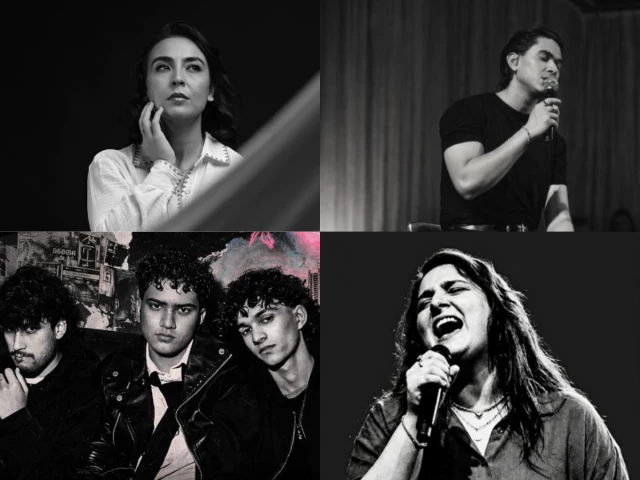
However, somewhere between 2019 and the present day, a quiet but profound cultural revolution has been unfolding across the airwaves. Pakistani television has effectively handed the aux cord to a fresh, eclectic cohort of artists, producers, and multi-hyphenate talents. This new wave is systematically dismantling the traditional OST playbook.
By injecting contemporary aesthetics—ranging from moody, lo-fi bedroom pop and atmospheric folk-rock to eerie, genre-bending experimentalism—these emerging voices are reshaping what a drama soundtrack can sound like. Far from alienating audiences, this departure from convention has birthed viral anthems that dominate streaming algorithms, social media reels, and digital playlists. This in-depth analysis explores the artists spearheading this shift, the mechanics of their disruptive sound, and the broader implications for the future of Pakistan’s media and music industries.
Read Also
Detailed Chronology: The Turning Points of Change
The transformation of the Pakistani television OST did not happen overnight. It was catalyzed by a series of deliberate departures from the industry standard, driven by digital consumption habits and a growing appetite for authentic, genre-agnostic storytelling.
The Inception of the Shift (2019–2021)
The cracks in the monolithic OST monopoly began to show around the turn of the decade. As streaming platforms and YouTube began to rival linear television for audience attention, producers and directors realized that younger audiences demanded a different emotional frequency.
Natasha Baig’s contribution to Khaas in 2019 (Woh Jo Tha Bahut Hi Khaas) hinted at the versatility required for modern dramas, but it was the digital explosion of independent artists bridging the gap between underground scenes and mainstream television that truly accelerated the timeline. Vocalists who had built organic followings independently were suddenly being courted by production houses looking to capture lightning in a bottle.
The Digital Acceleration (2022–2024)
During this period, the barrier between indie music and television soundtracks crumbled entirely. Artists like Yashal Shahid—whose haunting, melancholic delivery became synonymous with high-stakes emotional dramas such as Hum Kahan Kay Sachay Thay and Bharaas—proved that vulnerability and restraint could carry a show just as effectively as powerhouse vocal acrobatics.
Simultaneously, the rise of multi-talented phenoms like Samar Jafri broke traditional industry silos. Jafri, operating concurrently as an actor, singer, and composer, demonstrated that the modern OST creator could author every facet of a song’s identity. His viral track for Mayi Ri in 2023 set a new benchmark for how organically an artist could weave personal artistic vision into a narrative framework.
The Modern Zenith (2025–Present)
Today, the evolution has reached a fever pitch. The title track of Kabhi Main Kabhi Tum, Chal Diye Tum Kahan—composed and performed by the lo-fi pioneers AUR (Ahad Khan and Usama Ali) alongside producer Raffey Anwar—shattered every preconceived notion of what a primetime drama anthem should sound like.
By trading soaring string sections for understated, electronic-tinged bedroom pop beats, AUR captured the imaginations of a deeply online, Gen-Z demographic. Concurrently, seasoned composers like Saad Sultan stepped out from behind the mixing console to claim their place at the microphone, cementing an era defined by artistic authenticity, genre-fluidity, and a rejection of formulas.
Artist Profiles: The Vanguard of the New Wave
To understand the scope of this sonic revolution, one must examine the specific artists who are rewriting the rules of engagement with the Pakistani viewing public.
1. AUR: The Lo-Fi Revolutionaries
Most traditional OSTs are engineered to sound timeless, invoking nostalgic tropes that older generations can instantly hum along to. AUR did the exact opposite—and it paid off exponentially.
The title track of Kabhi Main Kabhi Tum, Chal Diye Tum Kahan, leaned heavily into a modern, minimalist, lo-fi soundscape that television executives would have dismissed as too unconventional a decade ago. Written and performed by Ahad Khan and Usama Ali, with production by Raffey Anwar, the track immediately resonated with a younger, digitally native audience.
While Chal Diye Tum Kahan remains their sole drama OST credit to date, AUR is far from a novelty act. Their broader catalogue—including the global viral phenomenon Tu Hai Kahan (featuring international superstar ZAYN), the moody atmosphere of Shikayat, and their subsequent 2025 EP Par Ab Jo Aayegi Tu—shares a unified aesthetic: slow-burning, emotionally unguarded, and unapologetically contemporary. Their success proves that audiences do not need to be coddled with traditional arrangements to feel deeply.
2. Yashal Shahid: The Voice of Restrained Heartbreak
Yashal Shahid’s entry into the industry reads like a modern fairy tale. Discovered after Ali Zafar stumbled upon a casual singing video she posted during her university days, Shahid quickly transitioned from internet cover artist to one of the most recognizable emotional fixtures on Pakistani television.
Shahid’s superpower lies in her vocal restraint. Her delivery often sounds as though she is holding something back—a stylistic choice that makes her voice devastatingly effective for narratives centered on heartbreak and longing. Throughout the 2025 run of Iqtidar, her vocals anchored the series, turning the soundtrack into a permanent fixture on social media reels and streaming playlists.
Around the same time, she lent her melancholic, haunting tones to Akhiyan for Main Manto Nahi Hoon, a critically polarized drama that nonetheless united listeners in praise of its music. Traced back to her work on Tere Bin (for Hum Kahan Kay Sachay Thay), Shahid’s career trajectory illustrates the power of a signature vocal texture that speaks directly to the modern listener’s capacity for introspection.
3. Samar Jafri: The Complete Authour
The Pakistani entertainment industry has historically maintained rigid barriers between acting, singing, and composing. Samar Jafri shatters this paradigm entirely. As a rare triple-threat capable of writing, composing, and performing his own material, Jafri infuses his OSTs with an undeniable sense of personal authorship.
His work on the 2023 breakout drama Mayi Ri produced one of the most heavily streamed tracks of that year, catapulting him into the public consciousness long before his breakout acting performances. He continued this momentum with Main Rahun for Parwarish, alongside its companion piece Guzaarishein (a compelling duet with Alistair Alvin).
Jafri’s vocal style—warm, slightly rough-edged, and remarkably conversational—creates a seamless bridge between his on-screen persona and his musical output. By collapsing the distance between the actor portraying a character and the artist voicing their internal monologue, Jafri provides a deeply immersive experience for the viewer.
4. Saad Sultan: From Behind the Boards to Center Stage
For years, Saad Sultan was the industry’s best-kept secret—a master craftsman pulling the strings from behind the mixing console, composing memorable OSTs for projects like Dhaani and Mera Naam Yousuf Hai. However, the past year marked a definitive evolution, with Sultan stepping decisively out of the studio shadows and in front of the microphone.
His collaboration with Aima Baig on Main Woh Toh Nahin—the OST for Main Manto Nahi Hoon—introduced a stripped-back, confessional sonic palette that quickly became one of the most discussed musical releases of the year. Sultan’s transition did not mean an abandonment of his production roots; he also co-composed Khaada Aye for the drama Sher (sung by Shahid Amin). Sultan’s journey serves as a powerful reminder that many of the "new voices" reshaping the OST landscape are industry veterans who simply waited for a cultural climate bold enough to embrace their true artistic range.
5. Natasha Baig: The Genre-Blurring Chameleon
With over a decade of experience navigating the complex intersections of Sufi rock, folk traditions, and playback singing, Natasha Baig brings a textural depth to television that few contemporaries can match. When tasked with performing Banjarapun—the OST for the horror-comedy Jinn Ki Shadi Unki Shadi—Baig was handed a formidable challenge: the track needed to evoke genuine eeriness without sliding into the realm of parody.
Drawing from her upbringing listening to legends like Abida Parveen and her career-long dedication to cross-genre experimentation, Baig struck the precise balance required. This versatility is a hallmark of her career. Her 2019 OST for Khaas, Woh Jo Tha Bahut Hi Khaas, was a tender, straightforward romantic ballad, while her work alongside Adnan Dhool on Adawat carved out a gritty, middle ground. Baig proves that the most exciting thing an artist can bring to the modern OST is a complete refusal to be pinned down to a single genre.
Supporting Context & Metrics: The Shift in Consumer Behavior
The proliferation of these diverse musical styles is not occurring in a vacuum; it is directly responding to profound shifts in how media is consumed across South Asia.
- The Streaming Economy: Unlike linear television, where viewers are a captive audience to whichever song plays over the opening titles, digital platforms empower active choice. Audiences routinely stream, loop, and curate drama OSTs on Spotify, Apple Music, and YouTube. Consequently, tracks that rely on repetitive, formulaic arrangements struggle to capture listener retention in a crowded digital marketplace.
- The TikTok & Reels Factor: Short-form video platforms have become primary discovery engines for music. Songs like Chal Diye Tum Kahan and Yashal Shahid’s melodic contributions thrive in this ecosystem because they feature distinct, hook-driven moments, atmospheric intros, and relatable lyrical themes tailor-made for user-generated video content.
- Demographic Realignment: The primary consumer base for Pakistani dramas has experienced a profound demographic shift. While older generations remain loyal television viewers, the secondary and tertiary digital engagement is overwhelmingly driven by Gen-Z and Millennial cohorts who consume global indie pop, lo-fi, R&B, and electronic music. These audiences expect their domestic media to reflect their globalized musical palates.
Official Industry Perspectives
While formal statements from production houses often emphasize ratings and commercial viability, industry insiders note a growing willingness to take creative risks.
Speaking anonymously on the evolution of drama scoring, a prominent Pakistani television director remarked:
"For a long time, the OST was treated as a contractual obligation—something loud and safe to quiet the viewers down before the episode started. Today, directors and producers realize that the soundtrack is the emotional Trojan horse of the drama. If the music doesn’t feel authentic to the contemporary youth experience, the show loses its cultural footprint before it even begins airing."
A leading music producer involved in recent primetime projects added:
"The boundary between the independent music scene and television has officially dissolved. Artists no longer feel they have to compromise their artistic integrity or water down their sound to fit into a television mold. In fact, networks are actively seeking out indie credibility because they know that’s where true emotional resonance lives right now."
Future Outlook: Where Do Pakistani OSTs Go From Here?
As the dust settles on this transitional era, the trajectory of the Pakistani drama OST points toward a future characterized by boundless experimentation and individualistic artistry.
The era of the one-size-fits-all, factory-produced soundtrack is rapidly drawing to a close. As multi-hyphenates like Samar Jafri continue to blur the lines between acting, writing, and composing, and as bedroom producers like AUR prove that lo-fi aesthetics can conquer primetime television, the definition of what constitutes a "mainstream" Pakistani sound is expanding.
Furthermore, the willingness of established composers like Saad Sultan and seasoned vocalists like Natasha Baig to reinvent their output suggests that adaptability is the ultimate currency of the modern creative economy.
Ultimately, what unites these disparate artists is not a shared sonic signature, but a shared rebellion against creative stagnation. By pushing the Pakistani OST into uncharted territories—whether through atmospheric minimalism, genre-blurring folk-rock, or deeply confessional lyricism—this new generation has ensured that the musical identity of Pakistani television will remain vibrant, unpredictable, and fiercely relevant for years to come.

Comments
Facebook App ID not configured. Please add it in the Customizer.