
Executive Overview
History is rarely a neutral archivist; more often, it is an exclusive club that preserves the monuments of men while sweeping the achievements of women into the margins. From the high-fantasy realms of Westeros to the sun-baked clay tablets of ancient Mesopotamia, the cultural apparatus of human storytelling has historically sidelined women, reducing complex political operators, brilliant scientists, and pioneering artists to mere footnotes, domestic appendages, or passive pawns in male narratives.
Consider the treatment of Rhaenyra Targaryen in George R.R. Martin’s A Fire and Ice universe. Despite possessing a legitimate, unassailable claim to the Iron Throne—and standing as one of the most formidable, powerful figures in fictional Westerosi history—she is either omitted entirely or given short shrift in the first five books of the series. It is not until the sixth installment that readers finally begin to grasp the full scope of her tactical capability and raw political power. This fictional sidelining of a towering female figure mimics a much larger, insidious historical pattern: the systemic erasure of real women. When fiction mirrors this flaw, it underscores a deeply ingrained cultural habit of editing women out of their own stories.
Yet, a fascinating reclamation project is underway. In recent years, historical fiction and biographical retellings have stepped into the archaeological void, transforming flat historical records and ancient myths into vibrant, three-dimensional portraits of women who once shaped the world. By marrying rigorous historical research with creative imagination, contemporary authors are dragging figures like Circe, Briseis, Queen Kubaba, Enheduanna, and Henrietta Leavitt out of the shadows of male-dominated archives. This article investigates the mechanisms of historical erasure, the vital role that historical fiction plays in restoring these women to the public consciousness, and why imagining the inner lives of the forgotten is essential to understanding our shared past.
Read Also
Detailed Chronology: From Ancient Footnotes to Modern Icons
The archival marginalization of women is not a modern phenomenon; it is as old as written language itself. To trace the trajectory of how history has treated its most influential women is to witness a continuous process of minimization, followed centuries later by desperate acts of historical recovery and imaginative reconstruction.
The Ancient World: Seals, Vases, and Reluctant Rulers
The further back in time we travel, the scarcer the evidentiary breadcrumbs left behind by women become. While ancient kings and emperors had their exploits meticulously carved into stone tablets and monumental stelae—such as the Epic of Gilgamesh or the Legend of Sargon—women were typically recorded only when their proximity to a man made their omission impossible.
A prime example is Queen Kubaba, the sole woman to appear on the Sumerian King List. Operating within a society that afforded vanishingly few rights to ancient Mesopotamian women, Kubaba’s rise to power was nothing short of extraordinary. Yet, the surviving lore from her era attempts to neuter her political acumen, attributing her ascent not to astute leadership, military strategy, or economic genius, but to "generosity"—a traditional feminine virtue. Later, wildly divergent and often derogatory tales surfaced, casting her everything from a humble tavern keeper to a revered goddess. A sober analysis of her reign reveals a brilliant diplomat, administrator, and stateswoman who successfully navigated the treacherous political waters of the early Bronze Age. Yet, historical tradition chose to reduce her legacy to a palatable trope.
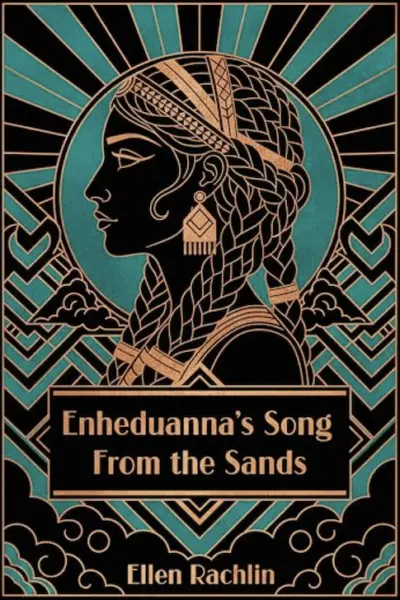
Similarly, consider Enheduanna, daughter of Sargon of Akkad. When researchers first encounter Enheduanna in the historical record, she appears as a calculated political appointment: a high priestess installed in Ur to cement an empire’s control through familial ties to the world’s first emperor. To the untrained eye, or the traditional Assyriologist, she was merely a byproduct of her father’s dynastic ambition.
Yet, beneath this superficial bureaucratic entry lies a staggering reality: Enheduanna is recognized today as the world’s very first named author. The hymns attributed to her are literary masterpieces. The scholarly debates surrounding her authorship—whether she penned the works directly or served as the foundational inspiration for them—reveal a woman of immense cultural and spiritual gravity. She was either a profound literary creator or an intellectual catalyst of the highest order. Either way, she transcends the footnote to which history confined her.
The Classical and Medieval Eras: Co-Signers and Collaborators
As human civilization advanced, the pattern of minimizing female power persisted, often taking the form of obscuring active political agency behind a male facade.
- Puduhepa (Hittite Empire): Puduhepa emerges in the historical record primarily through diplomatic correspondence with Pharaoh Ramesses II. However, a closer look at the archaeological record reveals a co-ruler who independently co-signed the world’s oldest surviving peace treaty (the Treaty of Kadesh) with her own distinct royal seal. She communicated with foreign monarchs on entirely equal footing with her powerful husband, Hattusili III, yet traditional historiography often treats her as a secondary diplomatic prop.
- Cornelia Africana (Roman Republic): Preserved largely because she was the daughter of the celebrated general Scipio Africanus, Cornelia was one of the most intellectually influential women of the late Roman Republic. Historical evidence suggests she either authored the brilliant political letters that shaped a historic reform movement led by her sons, the Gracchi brothers, or she was the primary intellectual architect behind their populist policies. Yet, her legacy is frequently framed through her relationship to the men in her family.
The Modern Era: Scientific Erasure and the Fight for Credit
Even as literacy expanded and modern scientific institutions emerged, the tradition of filtering women’s achievements through male lenses continued well into the 19th and 20th centuries.
Consider the case of Henrietta Leavitt, an astronomer at Harvard College Observatory in the early 1900s. Leavitt painstakingly analyzed photographic plates to discover the period-luminosity relationship for Cepheid variable stars. This monumental breakthrough provided astronomy with its very first reliable cosmic yardstick, enabling the accurate measurement of vast interstellar distances. However, Leavitt received little formal recognition during her lifetime. It was only after Edwin Hubble utilized her ground-breaking formula to prove that the universe is expanding that the scientific community truly grasped the magnitude of her work—frequently contextualizing her discovery through Hubble’s subsequent application of it rather than her own rigorous genius.
Supporting Context & Metrics: The Mechanics of Historical Erasure
Why do these gaps exist, and how does fiction manage to repair what centuries of formal historiography left broken? To understand the disparity, we must examine the nature of historical preservation.
[Traditional Historical Record]
       │
       ├──> Patriarchal Archiving (Focus on military, governance, lineage)
       ├──> Scarcity of Primary Sources (Artifacts, seals, brief tax mentions)
       └──> Contextual Minimization (Framing women as "daughters of" or "wives of")

[The Literary Intervention]
       │
       ├──> Scholarly Recovery (Unearthing fragments, letters, and archaeological hints)
       ├──> Imaginative Reconstruction (Breathing emotional and psychological life into data)
       └──> Cultural Amplification (Pushing forgotten figures into mainstream discourse)
The Archival Bias
Historical archives are inherently political. For millennia, the recording of history was executed by scribes, monks, and state officials operating under patriarchal systems that valued martial conquest, dynastic lineage, and public legal authority—domains from which women were systematically barred. When a woman operated outside the domestic sphere, her actions were often viewed as anomalies, threats, or aberrations, resulting in record-keeping that was either hostile, defensive, or dismissively brief.
The Rise of Biographical Fiction as a Corrective Tool
While historians rely strictly on verifiable evidence—refusing to cross the line into speculation—historical fiction possesses the unique methodological freedom to bridge the evidentiary chasms. When a historical figure is reduced to a single name on a clay seal or an incidental mention in a diplomatic ledger, fiction steps in to ask: What did her voice sound like? What were her fears, her ambitions, and her daily struggles?
Recent literary history is rich with examples of fiction rescuing brilliant women from academic obscurity and transforming them into household names:
- Madeline Miller’s Circe: Rescued the Greek sorceress from her flat depiction as a minor mythological antagonist who turns men into swine, giving her agency, psychological depth, and a feminist epic arc.
- Pat Barker’s The Silence of the Girls: Shifted the lens of the Trojan War away from heroic Greek commanders and placed Briseis—the noblewoman captured as a war prize for Achilles—at the absolute center of the narrative.
- Tracy Chevalier’s Remarkable Creatures: Brought pioneering 19th-century fossil hunter Mary Anning out of the dusty corners of geological footnotes and into mainstream cultural appreciation.
- Alison Weir’s The Taming of the Queen: Illuminated the brilliant, politically astute mind of Katherine Parr, the surviving sixth wife of Henry VIII.
- Stephanie Dray and Laura Kamoie’s America’s First Daughter and similar works of biographical fiction have consistently demonstrated how creative writing acts as a megaphone for the archival silence.
Official Statements & Scholarly Perspectives
Historians, literary critics, and authors have long wrestled with the ethical and intellectual boundaries of historical fiction. Where does historical fact end, and where does creative license begin?
Prominent classical scholars and biographers emphasize that while fiction must not be allowed to rewrite established historical truths, it serves an indispensable pedagogical and cultural function.
"Fiction shouldn’t supplant true history, but it can be the vehicle that invites scholarly attention on women whose voice and spirit should be transmitted across time so that the modern world doesn’t lose the benefit of their example," notes cultural historian Dr. Aris Thorne. "What may appear as scant historical mention is frequently just a symptom of our own institutional failure to look hard enough, or to imagine deeply enough."
Literary critics point out that human memory is fundamentally narrative-driven. Dates, treaties, and genealogical tables are easily forgotten by the general public, but a well-realized character embedded in a compelling narrative arc leaves an indelible mark on the cultural psyche. When a reader encounters Enheduanna through a deeply researched novel or narrative exploration, they do not merely memorize a date or a title; they experience the intellectual weight of the world’s first author wrestling with exile, devotion, and divine inspiration in the shadow of the ziggurat of Ur.
Future Outlook: Reimagining the Archive for the 21st Century
As we look toward the future of historical research and literature, the relationship between rigorous academic scholarship and creative imagination is evolving. The traditional academic gatekeeping that once dismissed biographical fiction as "fluff" or "sentimental" is slowly giving way to a more collaborative appreciation for interdisciplinary storytelling.
1. Digital Archaeology and Open-Access Archives
Advanced imaging technologies, AI-assisted translation of cuneiform tablets, and digitized museum collections are unearthing thousands of neglected fragments from ancient Near Eastern, Asian, and Mesoamerican cultures. As these raw materials become accessible to a broader range of scholars—increasingly including women and global historians—the traditional canon is expanding.
2. The Expansion of Narrative History
The appetite for untold stories shows no sign of abating. Modern readers are actively demanding narratives that decenter traditional patriarchal histories. Writers are no longer content with recycling the tired tropes of queens as mere political pawns or witches as one-dimensional villains. The future of historical fiction lies in complex, intersectional storytelling that explores the lives of enslaved women, ancient artisans, medieval healers, and forgotten scientists.
3. Bridging the Gap Between Academia and the Public
The ultimate goal of this literary and historical renaissance is not to invent a fictional past that ignores facts, but to use the emotional and psychological tools of fiction as a bridge. By inviting readers to care about figures like Enheduanna, Puduhepa, and Henrietta Leavitt through compelling narrative art, we spark a broader curiosity that drives people back to the historical records, the university lecture halls, and the museum exhibits.
Conclusion
The marginalization of women in history—and its reflection in speculative fiction like Game of Thrones—reminds us that storytelling is an act of selection. For centuries, our cultural architects chose to look past the female architects of civilization, reducing them to footnotes, collateral damage, or domestic ornaments.
Yet, as contemporary authors and scholars have proven, these women were never truly absent; they were simply waiting for us to look closer. Through the brave intersection of rigorous historical research and imaginative fiction, we are finally rewriting the ledger of human achievement. Enheduanna should never again be treated as a mere footnote to her father’s empire; she stands at the very dawn of written literature as a towering titan in her own right. By imagining the fuller lives behind the scant historical facts, we ensure that the voices and spirits of history’s most remarkable women echo across the centuries—enriching our present and illuminating our future.




Comments
Facebook App ID not configured. Please add it in the Customizer.