
In the linguistic landscape of Norway, to metaphorically backpedal does not involve bicycles; rather, it demands a vessel. The Norwegian idiom å ro translates to "to row," capturing a discursive retreat that evokes a frantic, desperate dash toward safety using oars and full physical force to escape the awkward territory of careless speech. Throughout the summer months, this concept of rowing transformed from a linguistic expression into a nationwide physical phenomenon, sweeping across Oslo and beyond during the Norwegian men’s national football team’s historic run at the World Cup.
What began as an impromptu post-game celebration—where players sit in a huddle on the pitch and mime the pulling of oars on a longship while supporters echo the rhythmic command “Ro!”—quickly transcended sports culture. It became the defining motif of a national folkefest, uniting citizens across generations, dominating public discourse, and briefly injecting a wave of nostalgic, defiant optimism into the global sporting consciousness.
This report provides an exhaustive, chronological examination of Norway’s remarkable World Cup campaign, tracing its cultural resonance, societal debates, and the lingering echoes of a nation that learned how to row together, win or lose.
Read Also
Detailed Chronology: From Midnight Kickoffs to the Quarterfinals
The Group Stage Awakening and the Birth of the "Viking Row"
Anticipation across Norway was unprecedented; the nation had not qualified for the World Cup in twenty-eight years. However, initial excitement was tested by grueling group stage time slots. Matches against Iraq and Senegal kicked off at midnight and 2:00 AM Oslo-time, respectively. While the government temporarily relaxed alcohol sales regulations—permitting bars to keep tapping half-liters all night long—many residents opted for rest over revelry. Yet, even those attempting to sleep found themselves enveloped by the nocturnal festivities, woken by singing, chanting passersby and the unmistakable sound of celebrations echoing through the streets.
By the second week of the tournament, the "Viking Row" had captured the public imagination. Conceived by a superfan following Norway’s qualification the previous autumn, the ritual was executed by players sitting on the edge of the field, facing the red sea of supporters, and moving in unison. The accompanying chant, an authoritative “Ro!”, filtered down from stadium bleachers to city sidewalks, where primary school children practiced the choreography outside public parks and commuters debated its merits on the tramways of downtown Oslo.
Conquering Côte d’Ivoire and Waking the King
As Norway advanced to the knockout stages, the national indifference of some citizens dissolved into fervent support. During the match against Côte d’Ivoire, goals by Antonio Nusa and star striker Erling Haaland secured a historic victory.
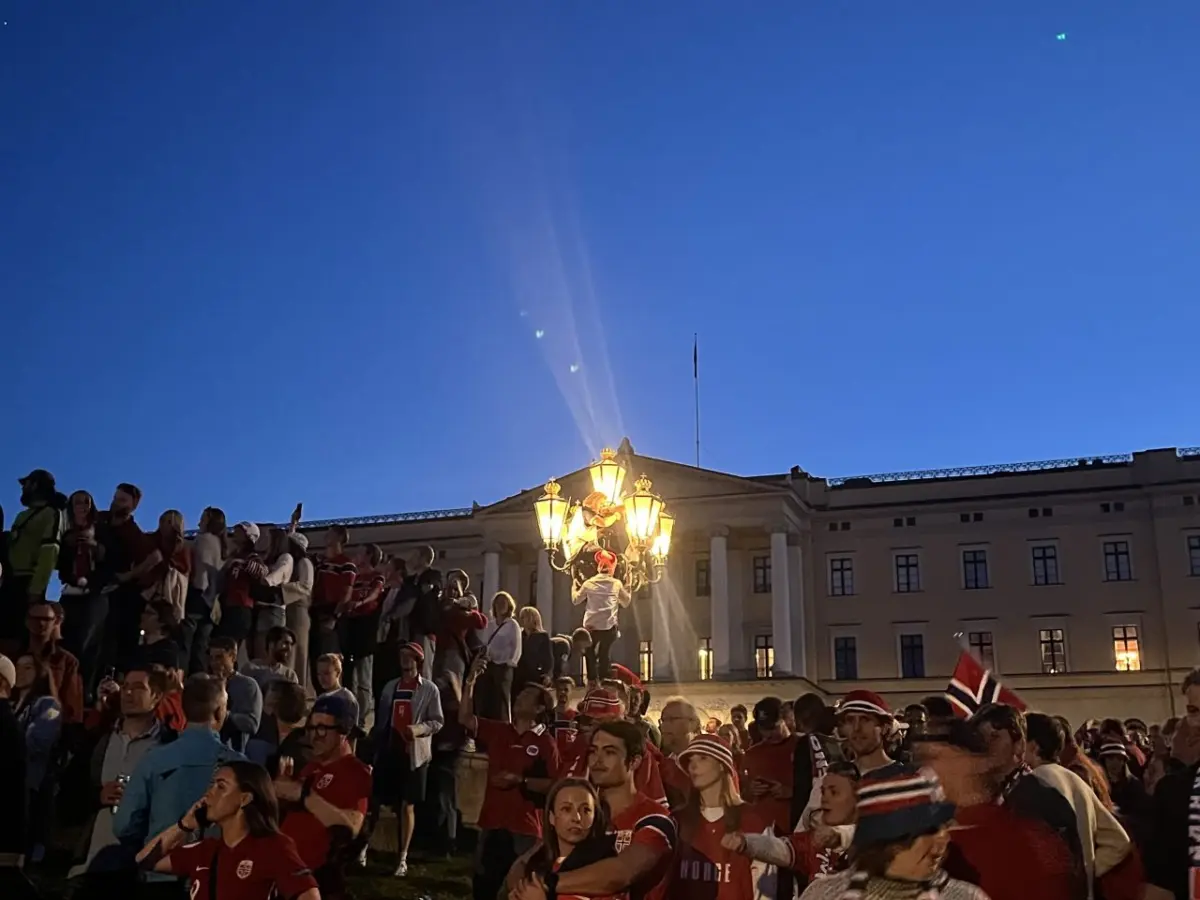
As the final whistle blew, the city of Oslo erupted. Supporters poured toward the palace square, chanting “Vi skal vekke kongen!” (“We’re going to wake up the king!”) to the tune of Twisted Sister’s “We’re Not Gonna Take It.” The collective movement was so synchronized and powerful that seismographs at the University of Oslo registered a series of tiny earthquakes coinciding with the match’s most decisive moments. The peak reading occurred right as fans across the city rowed in unison, conducted from thousands of miles away by team captain Martin Ødegaard.
The Historic Triumph Over Brazil
The quarterfinal-adjacent hype reached a fever pitch ahead of the match against Brazil—the most successful team in World Cup history. Bolstered by the cultural memory of Norway’s legendary 1998 upset, fans packed viewing venues across Oslo. The atmosphere blended nostalgia with modern fervor, highlighted by impromptu singalongs of Jahn Teigen’s 1989 Eurovision entry, “Optimist,” which served as the unofficial soundtrack of the tournament.
When Erling Haaland broke the deadlock with a glorious downward header, followed by a late-game insurance goal, the city dissolved into disbelief and jubilation. Revelers flooded Karl Johans gate, transforming the pedestrian street into a glittering red carpet of flag-waving supporters. An inflatable dinghy even made its way up the hill, its sole passenger rhythmically pulling imaginary oars against a human tide of dancing citizens.
The Heartbreak Against England and the Return to Silence
The magical run ultimately met its end in the quarterfinals against England, played under punishing heat and humidity in Miami Gardens, Florida. Despite outplaying England for stretches of the second half, Norway succumbed to fatigue. An equalizer by Jude Bellingham pushed the match into extra time, where a sleeping laptop screen abruptly plunged viewing parties into sepia-toned darkness as Norway exited the tournament.
Returning to the streets of Oslo at 3:00 AM, the author noted a stark transformation. The boisterous crowds had vanished, replaced by a profound, hushed stillness. The urban landscape returned to a different definition of ro—the noun signifying an absence of movement, a freedom from worry, and the quiet acceptance of an honorable defeat. The final message from home crossed the family group chat: supporters in the palace square were still rowing, altering their chant to “Vi skal trøste kongen!” (“We’re going to cheer up the king!”).
Supporting Context & Metrics
The cultural footprint of Norway’s World Cup campaign can be quantified through several distinct social and infrastructural metrics:
- Broadcast and Licensing Adjustments: The Norwegian government enacted temporary legislative exemptions allowing metropolitan bars to serve alcohol past the standard 3:00 AM cutoff to accommodate late-night time zones.
- Geophysical Impact: Seismological monitoring equipment operated by the University of Oslo recorded measurable micro-earthquakes during matches against Côte d’Ivoire and Brazil, directly correlating with mass celebratory movements and synchronized stadium rowing.
- Historical Context: Prior to the tournament, Norway had not qualified for the FIFA World Cup in nearly three decades (28 years), heightening the psychological significance of the team’s advancement past the group stage.
- Climatic Extremes: The quarterfinal match against England took place under extreme environmental conditions, with the heat index in the greater Miami area reaching nearly 110°F (43°C), heavily contributing to player fatigue in extra time.
Official Statements & Public Discourse
Throughout the tournament, the cultural implications of the "Viking Row" sparked intense debate among sociologists, marketing professionals, and everyday citizens:
- Marketing and National Branding: Experts noted that the phenomenon functioned as a dual psychological release. A prominent marketing professor observed: "Things are difficult in the US these days. People are sad, and they’re well aware of how the rest of the world sees them. In need of cheering up, the US welcomes this phenomenon with open arms." Consequently, while the slogan urged citizens to Ro for Norge (Row for Norway), the global audience found themselves rowing along in solidarity.
- The Debate Over Corniness and Nationalism: Public discourse frequently questioned whether the rowing ritual was overly nationalistic, embarrassing, or inherently cringeworthy. Defenders argued that its very corniness made it quintessentially Norwegian—an authentic expression of collective joy that surfaced precisely when international attention was fixed upon them.
- Acceptance of Defeat: Following the 4-1 loss to France in the group stage, and the subsequent elimination by England, public figures and fans alike emphasized the cultural value of being "good losers." As one fan noted, the post-defeat rowing demonstrated that national pride was not contingent solely upon victory, but on grace in the face of elimination.
Future Outlook
As the dust settles on Oslo’s streets and the seismographs return to baseline readings, the legacy of Norway’s 2028 World Cup journey extends far beyond the pitch. The tournament revitalized a dormant national sporting identity, proving that collective rituals can successfully bridge generational divides.
Moving forward, the phrase “Ro for Norge” and the iconic synchronized longship mime have secured a permanent place in the nation’s cultural lexicon. Whether the national team can replicate this athletic success in future qualifying cycles remains to be seen, but the summer of the Viking Row established a modern blueprint for how a nation can channel humor, unity, and shared vulnerability into an unforgettable cultural moment. As Norwegians officially slår seg til ro—making peace with the outcome and settling back into daily routines—they do so carrying the quiet confidence of a nation that proved it could weather any storm, provided everyone rows together.




Comments
Facebook App ID not configured. Please add it in the Customizer.