
Executive Overview
The United States immigration landscape is undergoing its most aggressive, heavily funded, and structurally radical transformation in modern history. At the epicenter of this shift is a dual-track strategy pursued by the Trump administration: the systematic dismantling of humanitarian protections for hundreds of thousands of foreign nationals, and a simultaneous, record-breaking surge in interior immigration enforcement.
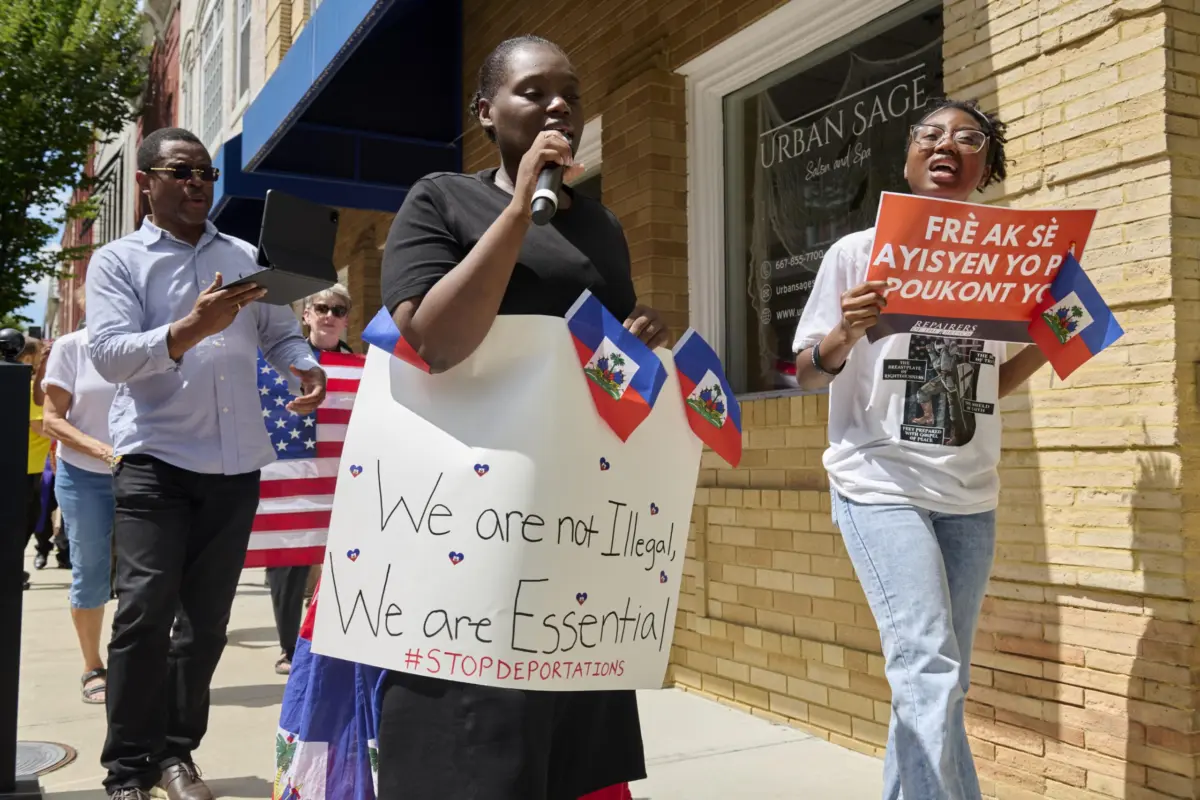
This multi-pronged enforcement push has crystallized around the termination of Temporary Protected Status (TPS) for approximately 350,000 Haitian nationals. Stripped of their legal protections following a pivotal Supreme Court ruling, these individuals now face immediate expulsion to an island nation paralyzed by systemic lawlessness, widespread gang warfare, and acute institutional collapse. Far from downplaying the human cost of these policies, the Department of Homeland Security (DHS) has taken to social media to broadcast the operations, utilizing provocative digital campaigns featuring handcuffed deportees set to upbeat musical backdrops.
Beyond the specific targeting of the Haitian community, recent data released by academic monitoring consortia reveals an unprecedented operational escalation within Immigration and Customs Enforcement (ICE). Fuelled by a massive influx of federal capital and a rapidly expanding workforce, ICE has broken historical arrest records in back-to-back summer months. Crucially, this dragnet has increasingly captured individuals with no criminal history whatsoever—including families with U.S.-born children and immigrants actively pursuing legitimate humanitarian relief through asylum or green card applications.
Read Also
This comprehensive investigative report examines the mechanics, metrics, and human consequences of the current deportation apparatus. By analyzing legal milestones, demographic shifts, enforcement data, and institutional responses, we present a definitive assessment of an administration executing an uncompromising, record-setting immigration crackdown.
Detailed Chronology: From Legal Protections to Mass Expulsions
The road to the current humanitarian crisis for Haitian TPS holders is paved with years of shifting legal battles, executive orders, and judicial interventions. Understanding how 350,000 individuals transitioned from protected residents to targets for immediate removal requires examining the precise timeline of events.
The Genesis and Collapse of Haitian TPS
Temporary Protected Status is a statutory mechanism designed to provide a safe haven to foreign nationals already residing in the United States whose home countries have been rendered unsafe due to armed conflict, environmental disasters, or extraordinary and temporary conditions. Haiti has qualified for these protections for over a decade, punctuated by compounding catastrophes including the catastrophic 2010 earthquake, devastating tropical storms, and the profound political vacuum created by the July 2021 assassination of President Jovenel Moïse. Since Moïse’s murder, large portions of the capital, Port-au-Prince, and surrounding regions have fallen under the brutal control of heavily armed gangs characterized by widespread extortion, mass kidnappings, and systemic sexual violence.
Despite these internationally recognized dangers—which have prompted the U.S. State Department to maintain a strict "Level 4: Do Not Travel" advisory for Haiti, warning Americans against visiting "for any reason" due to rampant crime, terrorism, civil unrest, and a collapsed healthcare infrastructure—the Trump administration moved aggressively last year to strip Haitians of their TPS designations.
The administration’s initial policy announcements met immediate legal roadblocks from civil rights organizations and immigration advocates. However, the legal architecture shielding these families collapsed definitively in June, when the U.S. Supreme Court issued a ruling clearing the way for the administration to terminate the protections.
The Execution of Removals and Public Relations Campaigns
With the legal barriers removed, the administration moved with swift execution. On a Thursday evening, the DHS official account on the social media platform X (formerly Twitter) published a provocative post declaring:
"Those with terminated TPS are in our nation Illegally. They have two options: LEAVE IMMEDIATELY or be DEPORTED."
Accompanying the statement was a video clip displaying chained Haitian immigrants boarding a removal flight, conspicuously edited to cheerful background music. This digital messaging underscored a broader strategy: utilizing aggressive, highly visible public relations to project maximalist deterrence.
By late August, these digital threats materialized into reality. A high-profile ICE deportation flight departed for Port-au-Prince, carrying families that included young children who were born on U.S. soil and hold American citizenship. The inclusion of U.S.-born minors on flights to a failed state has drawn intense condemnation from human rights watchdogs, pediatric associations, and international observers, who argue that the forced separation or involuntary exile of minor citizens violates core constitutional principles and international humanitarian norms.
Supporting Context & Metrics: The Mechanics of the ICE Surge
The targeting of Haitian TPS holders is not an isolated policy initiative; it is the spearhead of a broader, highly accelerated institutional mobilization across the entire immigration enforcement apparatus.
Record-Breaking Arrest Statistics
According to comprehensive immigration tracking data released by the Deportation Data Project—a joint research initiative managed by academics at UC Berkeley and UCLA—ICE enforcement operations have reached historic velocity. During the summer months, the agency achieved consecutive all-time monthly arrest highs:
- June: Approximately 43,000 administrative arrests.
- July: Nearly 50,000 administrative arrests in a single month.
This staggering output represents a fundamental shift in the operational profile of interior enforcement. For decades, interior enforcement priorities formally emphasized the apprehension and removal of high-threat noncitizens, such as those convicted of violent felonies or transnational gang offenses. However, empirical data from the summer surge reveals that non-criminals now constitute the primary engine of ICE’s numbers.
In July, immigrants whose sole infractions were civil immigration violations made up an outright majority of all arrests. A significant proportion of these detained individuals were not hiding in the shadows; rather, they were intercepted or detained while actively navigating the legal system—attending routine check-ins, appearing at local field offices, or pursuing legitimate pathways to relief such as asylum applications and green card adjustments.
Funding, Manpower, and Internal Benchmarks
The engine driving this unprecedented operational capacity is a combination of explosive workforce growth and a massive injection of federal capital.
Following the passage of the administration’s major budget reconciliation bill, which allocated an unprecedented $75 billion directly to ICE for detention expansion and deportation logistics, the agency’s fiscal constraints were essentially eliminated. This capital influx translated directly into personnel growth:
- January 2025: ICE maintained an active workforce of approximately 21,000 employees.
- June: Total agency headcount surged to 29,000 employees—an increase of roughly 38% in less than a year and a half.
Despite these record outputs, internal documents reveal that leadership views current achievements merely as a baseline. Internal agency targets reported by The New York Times indicate that ICE leadership has established a daily benchmark of 2,000 arrests per day. If sustained, this target would yield at least 60,000 arrests per month, solidifying a permanent, industrialized deportation apparatus that relies primarily on civil, non-criminal apprehensions to meet its quotas.
Official Statements and Institutional Perspectives
The widening chasm between the administration’s enforcement objectives and the warnings of humanitarian organizations has generated sharp public discourse.
The Department of Homeland Security
Administration officials have defended the aggressive posture not only as an enforcement imperative but as a restoration of the rule of law. DHS leadership maintains that Temporary Protected Status was never intended to morph into a de facto permanent residency program. In public statements and agency briefings, representatives emphasize that once the statutory conditions prompting a TPS designation are deemed by the executive branch (with judicial clearance) to have shifted—or when the administration elects to prioritize domestic enforcement over humanitarian continuation—foreign nationals are legally obligated to depart.
The deployment of multimedia campaigns, such as the widely criticized X video, is defended by administration defenders as an effective deterrent communication strategy designed to encourage self-deportation and clarify the legal consequences of non-compliance.
Human Rights and Legal Advocates
Conversely, human rights organizations, immigration attorneys, and international bodies have universally condemned both the rhetoric and the substance of the current campaign. Critics argue that branding vulnerable populations as "illegal" overnight—after they had built lives, established businesses, and raised families under legally sanctioned protections for years—represents a profound betrayal of American humanitarian traditions.
Legal scholars have raised grave constitutional concerns regarding the deportation of U.S.-born minor children. While children born on U.S. soil possess birthright citizenship under the Fourteenth Amendment, the practical effect of mass parental deportations forces these young citizens into an impossible choice: remain behind in the U.S. without their primary caregivers, or accompany their deported parents into an active war zone where basic survival needs—clean water, medical care, and physical security—cannot be guaranteed.
Future Outlook: The Long-Term Implications of Mass Enforcement
As the Trump administration cements its new enforcement paradigm, the long-term domestic and international repercussions are coming into sharp focus.
Operational and Judicial Horizons
With $75 billion in dedicated funding and an active workforce approaching 30,000 personnel, ICE possesses the logistical infrastructure to sustain high-volume arrests for the foreseeable future. Legal challenges will undoubtedly continue to move through the federal court system, particularly regarding due process violations during expedited removals and the collateral impact on U.S. citizen children. However, with the Supreme Court having already signaled a willingness to defer to executive authority on TPS terminations, civil rights litigators face an uphill battle in halting removals on statutory grounds.
Humanitarian and Geopolitical Fallout
Externally, the mass return of hundreds of thousands of individuals to fragile states like Haiti risks destabilizing already overwhelmed local economies and security structures. Rather than absorbing returning populations smoothly, nations experiencing deep internal conflict struggle to provide basic subsistence, thereby exacerbating regional instability and fueling secondary migration crises.
Domestically, the expansion of civil immigration arrests into everyday civic life—targeting individuals attending routine legal appointments or working in foundational industries—signals a permanent reshaping of American communities. The current administration has made it clear that interior enforcement is no longer a surgical tool reserved for high-threat offenders, but a sweeping, automated mechanism designed to reshape the demographic and legal fabric of the nation.





Comments
Facebook App ID not configured. Please add it in the Customizer.