

Executive Overview
The landscape of Pakistani television drama is bracing for what industry insiders and avid fans alike are already calling a defining cultural milestone. Mitti De Baway, a forthcoming television serial penned by celebrated writer Faiza Iftikhar and directed by the visionary Syed Wajahat Hussain, has officially released its inaugural teaser, instantly sending shockwaves through the South Asian entertainment ecosystem. At the heart of this immense anticipation is an unprecedented casting coup: the first-ever onscreen pairing of two of Pakistan’s most formidable and universally adored superstars, Mahira Khan and Wahaj Ali.
Set against the rustic, turbulent backdrop of late-20th-century Pakistan—specifically anchoring its narrative in the pivotal year of 1999 and bleeding into the dawn of the new millennium in 2002—the newly dropped trailer immediately dispels any notion of a conventional, rose-tinted romance. Instead, it unveils a gritty, emotionally punishing tale of passionate young love corroded by separation, societal cruelty, transformative trauma, and deep-seated resentment.
The teaser has not only captured the collective imagination of the viewing public but has also prompted an unprecedented outpouring of public endorsement from the upper echelons of the Pakistani fraternity. Heavyweight actors such as Kinza Hashmi, Bilal Abbas Khan, Maya Ali, Iqra Aziz, Hina Afridi, Yasir Hussain, and Shuja Asad have taken to various social media channels to voice their astonishment at the project’s high-production aesthetic, atmospheric depth, and electrifying lead performances. As Mitti De Baway prepares to take over prime-time television, this comprehensive report delves into the narrative architecture of the drama, the creative forces driving its production, the seismic reaction of the entertainment industry, and what this landmark collaboration signifies for the trajectory of contemporary Pakistani storytelling.
Read Also
Detailed Chronology: The Narrative Arc of Mitti De Baway
Act I: The Crucible of 1999 – Innocence and the Looming Curse
The narrative framework of Mitti De Baway, as established in the explosive teaser, utilizes a non-linear chronological approach rooted firmly in the cusp of a changing world. The year is 1999—a time of intense socio-political transition globally, which serves as a fittingly volatile canvas for a tale of doomed affection.
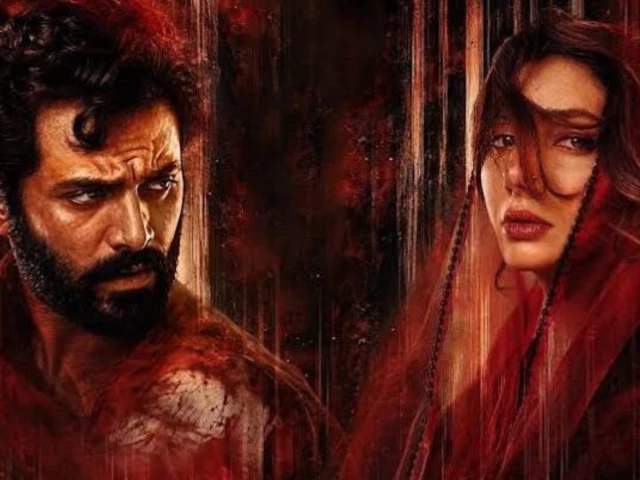
The audience is introduced to Mahira Khan in the role of Billo, a spirited, fiercely passionate 19-year-old woman whose worldview is entirely upended when she crosses paths with Baala, portrayed with raw intensity by Wahaj Ali. Baala carries a heavy, inherited burden: his family is widely believed within their community to be inextricably cursed when it comes to the domain of the heart. Every romance connected to his lineage is whispered to end in tragedy.
Despite the superstitious dread that surrounds Baala’s lineage, Billo and Baala embark on a tender, breathless, and defiant love affair. The early vignettes of the trailer showcase a visceral, almost painful chemistry between Khan and Ali, capturing the reckless abandon of youthful devotion against an unforgiving rural landscape. However, this idyllic phase of their connection is abruptly truncated. In a dramatic twist of fate that is shrouded in mystery within the teaser, Baala is torn away from Billo and sentenced to a lengthy prison term for an undisclosed crime. The incarceration of Baala serves as the catalyst for the story’s agonizing fracture, plunging both characters into years of isolated suffering.
Act II: The Transformation – The Years Behind Bars and Beyond
While Baala languishes behind prison walls, the passage of time becomes a character in its own right. The narrative transitions to the year 2002, revealing a transformed world where the innocent dynamics of 1999 have been utterly incinerated.
Billo’s trajectory is nothing short of shocking. The tender, lovestruck teenager of the late nineties is entirely gone, replaced by a formidable, enigmatic figure: she has ascended to become a pir (a spiritual guide and mystic leader). The teaser portrays her commanding a devoted following, draped in authority, and appearing light-years away from the vulnerable girl who once loved Baala. Yet, beneath the austere, commanding exterior of the spiritual leader lies a simmering well of deep-seated resentment and unresolved emotional trauma. Her transformation hints at a woman who survived heartbreak by hardening her soul, forging a protective armor of spiritual supremacy.
Conversely, Baala’s emergence from incarceration in 2002 is depicted as equally violent and transformative. He does not return as the brooding, misunderstood young man of his youth; instead, he emerges hardened, physically weathered, and seemingly entirely acclimated to a world of lawlessness and firearms. Flash cuts in the trailer depict him engulfed in volatile, bloody encounters, suggesting that the prison system did not reform him, but rather forged him into a weapon.
Act III: The Collision – Past Meets Present
The emotional climax of the narrative trajectory previewed so far lies in the inevitable, highly charged reunion between Billo and the hardened Baala. No longer the innocent youths of 1999, they are now strangers bearing the deep physical and psychological scars of their respective transmutations.
The teaser masterfully builds tension around their reunion, framing it not as a triumphant homecoming of star-crossed lovers, but as a dangerous collision between two volatile forces. Billo, who once loved Baala with every fiber of her being, now radiates a palpable sense of grievance and retribution. Baala, caught in a cycle of violence and survival, must confront the ghost of the life he left behind. Mitti De Baway promises to explore the harrowing psychological fallout of their separation: Can love survive the complete erosion of identity, or are Billo and Baala permanently trapped between the ruins of their past and the monstrous versions of themselves they were forced to become?
Creative Visionaries: Faiza Iftikhar and Syed Wajahat Hussain
A narrative of this profound psychological depth and atmospheric complexity requires master architects behind the scenes, and Mitti De Baway boasts a powerhouse creative duo in writer Faiza Iftikhar and director Syed Wajahat Hussain.
Faiza Iftikhar: The Queen of Emotional Realism
Faiza Iftikhar is no stranger to the upper echelons of Pakistani television writing. Renowned for her ability to dissect complex human relationships, socioeconomic pressures, and the intricacies of female autonomy, Iftikhar has consistently delivered scripts that resonate with emotional truth and structural integrity. Her penmanship avoids the lazy tropes often found in commercial melodramas, favoring instead slow-burn character development, razor-sharp dialogue, and deeply flawed, realistic protagonists.
In Mitti De Baway, Iftikhar appears to have leaned heavily into gothic romance and psychological tragedy. By setting the story at the turn of the millennium and introducing unconventional character arcs—such as a young woman transforming into a spiritual leader (pir) and a male lead descending into a life of armed conflict—she pushes the boundaries of traditional Pakistani drama storytelling. The narrative is expected to challenge audience perceptions of morality, spirituality, vengeance, and redemption.
Syed Wajahat Hussain: Mastering Visual Atmosphere
Directorial execution can make or break a script of this magnitude, and Syed Wajahat Hussain brings a proven track record of extracting cinematic brilliance from complex scripts. Known for his meticulous attention to detail, atmospheric framing, and an innate ability to elicit career-defining performances from his lead actors, Hussain has crafted a visual identity for Mitti De Baway that feels closer to an art-house feature film than standard serial television.
The cinematography showcased in the teaser—featuring muted, earthy color palettes, stark lighting contrasts representing the moral decay of the characters, and evocative framing of the rural Pakistani landscape in 1999—speaks volumes about Hussain’s directorial vision. Every visual cue in the trailer underscores the thematic weight of the title, Mitti De Baway (loosely translating to "Earthen Lamps" or "The Flickering Lights of the Soil"), suggesting that humanity, much like clay, can be easily molded, baked hard by trauma, and ultimately shattered if exposed to too much heat.
Star-Studded Endorsements: The Industry Reacts
The release of the Mitti De Baway teaser did not merely generate excitement among casual viewers; it triggered an unprecedented wave of public acclaim from fellow actors, directors, and cultural critics within the Pakistani entertainment fraternity. The sheer magnitude of the Mahira Khan and Wahaj Ali collaboration has galvanized the industry, serving as a testament to the mutual respect these artists command among their peers.
Critical Acclaim from Leading Peers
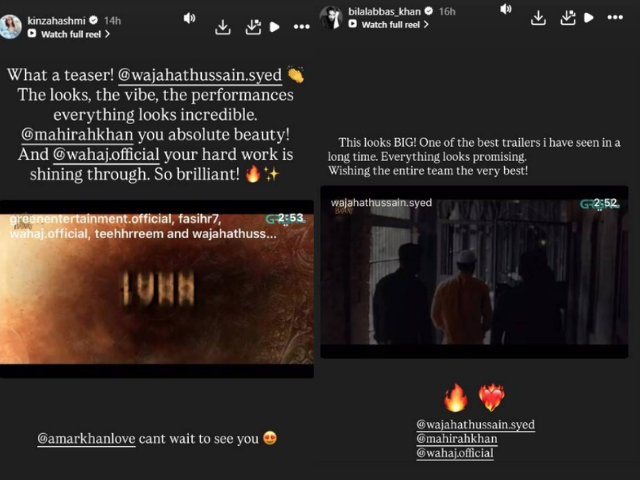
Among the first to voice their awe was celebrated actor Kinza Hashmi, who took to social media to praise the aesthetic and execution of the teaser:
"What a teaser! The looks, the vibe, the performances. Everything looks incredible," Hashmi declared, echoing the sentiments of thousands of fans who lauded the project’s high production values.
Fellow powerhouse performer Bilal Abbas Khan, known for his discerning eye for quality scripts and complex roles, echoed similar sentiments, signaling that Mitti De Baway represents a monumental shift in industry standards:
"This looks BIG! One of the best trailers I have seen in a long time. Everything looks promising. Wishing the entire team the very best!"
The outpouring of digital real estate dedicated to the teaser read like a veritable roll call of Pakistani television royalty. Stars including Maya Ali, Iqra Aziz, Hina Afridi, Yasir Hussain, and Shuja Asad publicly shared the teaser on their respective platforms, expressing unadulterated excitement to witness the complete masterwork unfold on their screens. This level of intra-industry camaraderie and cross-promotion is exceptionally rare, underlining the consensus that Mahira Khan and Wahaj Ali sharing the screen is a watershed moment for contemporary television.
Supporting Context & Metrics: The Paradigm Shift in Pakistani Media
To fully appreciate the cultural impact of Mitti De Baway, one must examine the broader socioeconomic and industrial context of the Pakistani entertainment landscape in the mid-2020s.
The Rise of Cinematic Television Standards
For decades, Pakistani television (Urdu drama) has maintained a global reputation for its poignant storytelling, strong family values, and grounded emotional quotient. However, in recent years, critics and audiences alike have occasionally voiced fatigue regarding repetitive domestic tropes, over-reliance on saas-bahu dynamics, and formulaic love triangles.
In response to this shifting audience appetite, networks and production houses have increasingly invested in high-concept, cinematic television. Projects like Mitti De Baway represent a strategic pivot toward prestige television—serials that boast film-grade cinematography, nonlinear storytelling, historically grounded settings, and darker, morally ambiguous character arcs. The willingness of top-tier icons like Mahira Khan (who has spent a significant portion of her career dominating the cinematic box office and international streaming platforms) to return to television in such a gritty, complex role demonstrates the growing maturation of the medium.
Digital Virality and Global Reach
The metrics surrounding the release of the Mitti De Baway trailer offer a fascinating glimpse into the digital economy of South Asian entertainment. Within hours of its drop across Instagram, YouTube, and X (formerly Twitter), the teaser trended across multiple jurisdictions, including Pakistan, India, the United Kingdom, and the United Arab Emirates.
| Metric / Indicator | Assessment / Observation |
|---|---|
| Primary Platforms | Instagram Reels, YouTube, X (Twitter) |
| Cross-Industry Support | Over 15 A-list Pakistani celebrities publicly endorsed the teaser within 48 hours. |
| Historical Setting | 1999 transition into 2002 (Millennium Era narrative framing) |
| Target Audience Demographic | Global South Asian diaspora, prestige television enthusiasts, cinema aficionados |
| Production Aesthetics | Film-grade color grading, raw rural art direction, psychological character framing |
Fan commentary across digital platforms highlighted a growing confidence in the domestic industry. Comments such as "Pure cinematic action" and declarations that "the Pakistani drama industry is currently at its absolute peak" flooded the comments sections of the official teaser releases. This organic enthusiasm underscores a hungry global audience eager for narratives that refuse to pander to safe, sanitized depictions of romance.
Future Outlook: What to Expect and Cultural Significance
As Mitti De Baway barrels toward its official premiere date, the stakes for the project could not be higher. It carries the weight of massive public expectations, unprecedented star power, and the creative ambitions of a writer and director determined to push television storytelling into uncharted territory.
Redefining Onscreen Chemistry
The pairing of Mahira Khan and Wahaj Ali represents a fascinating collision of acting styles. Mahira Khan is celebrated for her ethereal screen presence, nuanced emotional restraint, and an ability to convey devastating vulnerability with a single glance. Wahaj Ali, on the other hand, is renowned for his raw, intense, kinetic energy and his fearlessness in portraying deeply troubled, volatile characters. Seeing how these two titans trade dramatic blows—especially within a narrative arc that transforms them from lovers into bitter adversaries—will undoubtedly serve as a masterclass in screen acting.
Pushing Censorship and Thematic Boundaries
Furthermore, the inclusion of taboo or unconventional elements—such as a female protagonist ascending to the status of a spiritual pir, coupled with themes of systemic violence, familial curses, and institutionalized incarceration—suggests that Mitti De Baway will court intense critical discourse. Pakistani television audiences have proven increasingly receptive to dark, psychological narratives, provided they are handled with the narrative maturity that Faiza Iftikhar consistently provides.
Conclusion
Mitti De Baway is shaping up to be far more than just another high-profile television serial. It stands as a cultural litmus test for the Pakistani entertainment industry—a bold statement that local television can successfully marry cinematic aesthetics with complex, historically grounded, and emotionally harrowing storytelling. As Billo and Baala prepare to bring their tragic, turbulent saga to living rooms across the globe, one thing remains certain: television audiences will be watching, captivated, as the earthen lamps of their shared history flicker, burn, and ultimately threaten to consume everything in their path.




Comments
Facebook App ID not configured. Please add it in the Customizer.