
Executive Overview
The electronic reader landscape has entered a volatile phase of maturation. For over a decade, Amazon has maintained a near-hegemonic grip on the dedicated e-reader market, using hardware subsidies and a tightly integrated ecosystem to edge out competitors. However, the introduction of color E Ink technology has fundamentally disrupted the status quo, opening the door for rival brands to capture market share through superior hardware configurations, open ecosystems, and more aggressive pricing strategies.
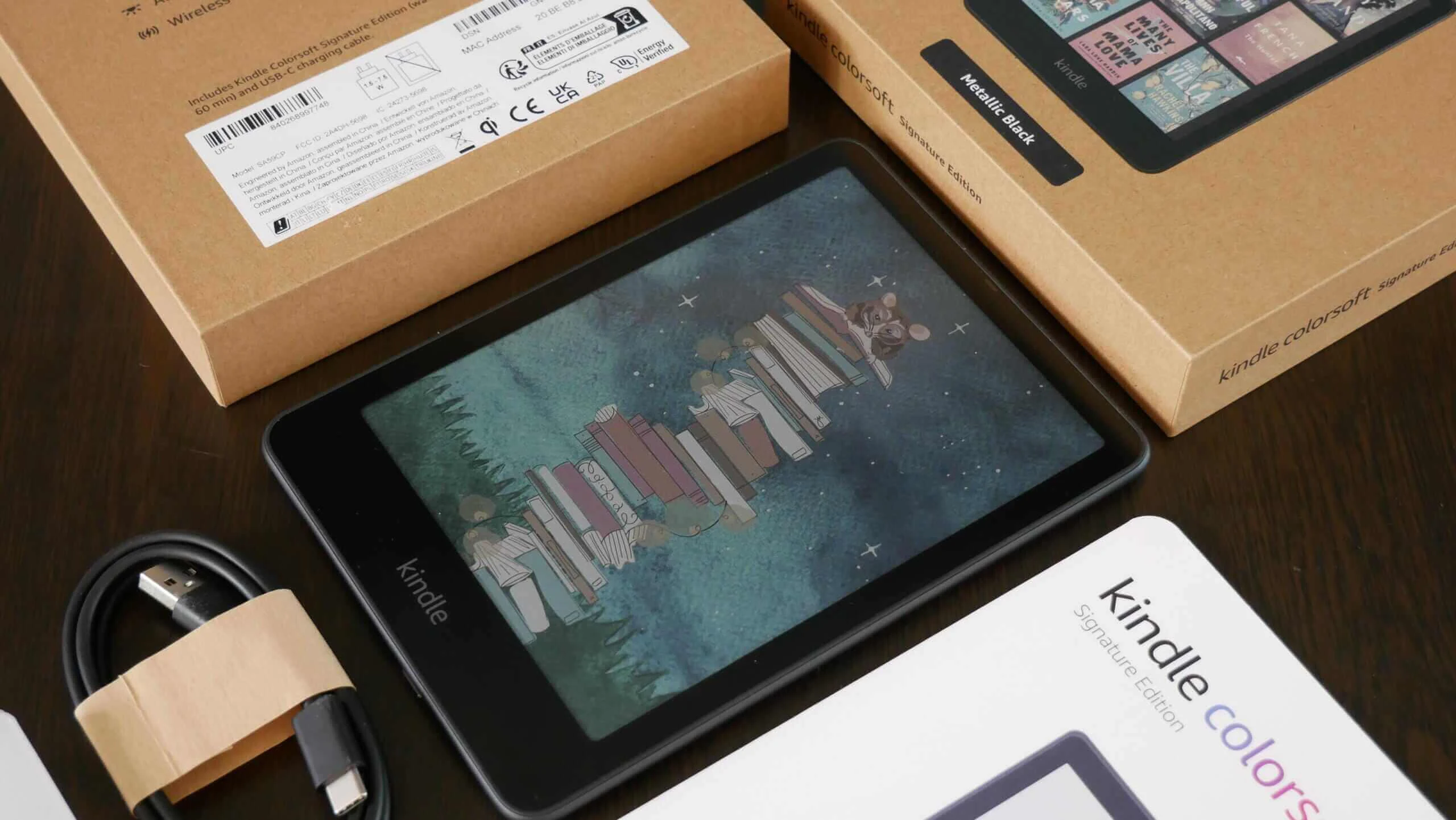
At the center of this shifting consumer battleground is the Amazon Kindle Colorsoft (16GB edition)—Amazon’s second major color e-reader iteration. Marketed as the ultimate device for graphic novel enthusiasts, comic book fans, children’s literature readers, and users who rely on color-coded highlights, the Colorsoft aimed to bridge the gap between traditional monochrome e-ink and full-color digital media.
Yet, the device’s market viability has been severely tested following a quiet, substantial mid-August 2026 price hike that saw its MSRP jump from $249 to $289. In an increasingly crowded and cost-conscious landscape, this sudden price increase has forced both casual readers and tech enthusiasts to reevaluate whether the Kindle Colorsoft still justifies its premium cost.
Read Also
This deep-dive analysis examines the factors behind the price surge, evaluates how the Colorsoft stacks up against stiff competition from Kobo, PocketBook, and Onyx Boox, and explores whether Amazon’s walled garden is enough to sustain the device’s dominance through 2026 and beyond.
Detailed Chronology: The Evolution of Color E-Ink and the Kindle Colorsoft
To understand the current predicament of the Kindle Colorsoft, one must trace the rapid technological evolution that brought color E Ink to the mainstream consumer market.
The Monochrome Foundation and the Shift to Color
For years, E Ink Carta screens reigned supreme, offering unmatched battery life and eye-friendly, paper-like reading experiences limited strictly to shades of grey. While perfectly adequate for prose, the rise of digital comics, illustrated children’s books, and textbook studying made the lack of color a persistent limitation.
When E Ink introduced Kaleido technology—and subsequently refined it into Kaleido 3—manufacturers finally had a viable medium to introduce color without sacrificing the core benefits of electronic paper. While black-and-white text remained sharp at 300 PPI, color elements were rendered at 150 PPI by layering a specialized color filter array on top of the E Ink panel.
Amazon’s Entry into the Color Market
Amazon’s initial hesitation to enter the color e-reader market gave competitors a crucial head start. When the tech giant finally introduced the Kindle Colorsoft (16GB edition), it was positioned as a premium lifestyle device. It targeted a specific demographic: readers who wanted to see book covers in full vibrance, students utilizing color-coded highlights for research, and comic book lovers looking for an easier-on-the-eyes alternative to standard LCD or OLED tablets like the iPad or Samsung Galaxy Tab.
The Mid-August 2026 Price Shock
The turning point for the device occurred in mid-August 2026. Without prior warning or a corresponding hardware refresh, Amazon altered its pricing structure, pushing the Kindle Colorsoft from its initial $249 price point up to $289.
In a consumer electronics market where rival hardware prices are either stabilizing or dropping due to healthy competition, a 16% price increase for an existing product raised eyebrows across the tech community. Analysts noted that the move risked alienating budget-conscious buyers who were already on the fence about the compromises inherent in first- and second-generation color E Ink technology (such as the slightly darker screen background caused by the color filter layer).
Supporting Context & Metrics: How the Competition Outpaces Amazon
The primary reason the Kindle Colorsoft’s price hike has proven so contentious is the aggressive posture of Amazon’s competitors. In 2026, the color e-reader ecosystem is no longer a one-horse race; rather, it is a hotbed of innovation where alternatives frequently offer superior hardware features at lower price points.

1. Kobo: Value and Versatility
Rakuten Kobo has emerged as Amazon’s most formidable rival in the traditional e-reader space, offering hardware that directly challenges Kindle’s feature set:
- Kobo Clara Colour ($179.99): Frequently discounted during promotional sales, this compact color e-reader undercuts the Colorsoft by over $100, making color e-reading vastly more accessible to casual consumers.
- Kobo Libra Colour ($259.99): Even when comparing Amazon’s device to Kobo’s premium 7-inch offering—which matches the Colorsoft’s screen dimensions—the Libra Colour pulls ahead. It features physical page-turn buttons, double the native storage capacity, and full compatibility with a stylus (sold separately), all while remaining $29 cheaper than the newly inflated Colorsoft price.
2. PocketBook: Open Formats and Kaleido 3 Precision
PocketBook has carved out a loyal following by leveraging advanced E Ink Kaleido 3 technology, which displays up to 4,096 distinct colors alongside a sharp 300 PPI monochrome resolution.
- Ecosystem Freedom: Operating on a lightweight, custom Linux OS, PocketBook devices support an expansive array of digital formats (EPUB, PDF, CBR, CBZ, etc.) without locking users into a proprietary bookstore ecosystem.
- Pricing Strategy: The entry-level PocketBook Verse Pro Color retails for an aggressive $159, while their premium 7-inch flagship, the Era Color, matches Kobo at $259.99—still significantly cheaper than the $289 Kindle Colorsoft.
3. Onyx Boox: The Power of Full Android
For power users who refuse to be tethered to a single bookstore, Onyx Boox represents the pinnacle of e-paper versatility. Unlike the closed operating systems of Amazon and Kobo, Onyx Boox color devices run full, uncompromised Android operating systems equipped with the Google Play Store.
- App Integration: Users can natively download and run apps like Kindle, Kobo, Libby, Hoopla, and Comixology directly on the e-reader.
- Hardware Highlights: The Onyx Boox Go Color 7 Gen II E Ink Tablet offers Kaleido 3 technology for $269.99—undercutting the Colorsoft while running a full Android environment.
- The Cutting Edge (Palma 2 Pro): For users seeking a premium, smartphone-sized e-paper device, the Onyx Boox Palma 2 Pro runs on Android 15 and introduces a groundbreaking feature: cellular data support. This allows users to stay connected on the go without relying on Wi-Fi or tethering. While it commands a premium price of $399.99 USD, it provides an entirely different tier of utility that far surpasses the static nature of the Kindle Colorsoft.
| Device Model | Screen Size | Operating System | Key Advantages | Retail Price (USD) |
|---|---|---|---|---|
| Amazon Kindle Colorsoft (16GB) | 7-inch (Est.) | Closed Amazon OS | Deep Kindle ecosystem integration | $289.00 (Increased) |
| Kobo Libra Colour | 7-inch | Closed Kobo OS | Page-turn buttons, 2x storage, stylus support | $259.99 |
| Kobo Clara Colour | 6-inch | Closed Kobo OS | Highly affordable entry point | $179.99 (frequently on sale) |
| PocketBook Era Color | 7-inch | Custom Linux OS | Open format support, Kaleido 3 tech | $259.99 |
| PocketBook Verse Pro Color | 6-inch | Custom Linux OS | Budget-friendly color E Ink | $159.00 |
| Onyx Boox Go Color 7 Gen II | 7-inch | Full Android / Play Store | Runs native apps (Kindle, Libby, etc.) | $269.99 |
| Onyx Boox Palma 2 Pro | Smartphone-size | Android 15 | Cellular data support, premium portability | $399.99 |
Official Statements & Industry Perspectives
Industry analysts and publishing insiders have weighed in heavily on the shifting dynamics of the e-reader market following Amazon’s pricing adjustments.
Speaking on the broader state of color e-paper adoption, hardware reviewers note that while consumer demand for color is at an all-time high, buyers are becoming increasingly intolerant of software restrictions paired with rising costs.
"The e-reader market has reached a maturity level where proprietary ecosystems are no longer enough to mask hardware or pricing shortcomings," notes industry commentary from reading technology analysts. "When competitors like Kobo and Onyx Boox offer expandable utility, open file compatibility, physical navigation buttons, or full Android access at or below the cost of a Kindle, Amazon can no longer rely purely on brand momentum."
Furthermore, consumer advocacy groups and tech forums have criticized the mid-August price hike as a test of brand loyalty. Because color E Ink technology inherently requires a slightly darker display panel to accommodate the color filter layer (often necessitating brighter front lights that impact battery life), forcing consumers to pay a $289 premium for second-generation hardware has created a friction point. Industry sentiment suggests that buyers expect generational price drops or feature enhancements—not unexpected price hikes—for products that still carry foundational display trade-offs.
Future Outlook: Where Does the Kindle Colorsoft Go From Here?
As we look toward the remainder of 2026 and into 2027, the trajectory of color e-readers will depend heavily on technological breakthroughs and consumer pushback against closed ecosystems.
Will Amazon Adjust?
Amazon faces a critical juncture. If sales of the Kindle Colorsoft slow down significantly due to the $289 price barrier and fierce competition from devices like the Kobo Libra Colour and Onyx Boox Go Color 7, the company may be forced to introduce promotional discounts or fast-track a hardware revision. To truly dominate the color space, future Kindle iterations will likely need to address consumer demands for physical page-turn buttons, expanded storage tiers, and stylus support—features that competitors have already normalized in the sub-$260 price bracket.
The Verdict for Consumers
Ultimately, whether you should purchase the Amazon Kindle Colorsoft depends entirely on your reading habits and ecosystem commitment:
- The Case for Buying: If you are deeply entrenched in Amazon’s ecosystem—utilizing Kindle Unlimited, owning a massive library of purchased Kindle books, and relying on Amazon’s cloud syncing—the Colorsoft remains the most seamless, frictionless way to view color covers and highlights within that specific walled garden.
- The Case Against Buying: If you are open to managing your own book files (EPUBs), prefer physical navigation buttons, want note-taking capabilities via a stylus, or demand the freedom to run third-party apps like Libby and Kobo via Android, your money is undeniably better spent on a Kobo, PocketBook, or Onyx Boox device.
The Kindle Colorsoft is no longer an uncontested pioneer; it is a contender in a brutal, highly innovative marketplace. For consumers, this competition is a win—provided they look beyond the Amazon brand name before making their next reading investment.


Comments
Facebook App ID not configured. Please add it in the Customizer.