
Executive Overview
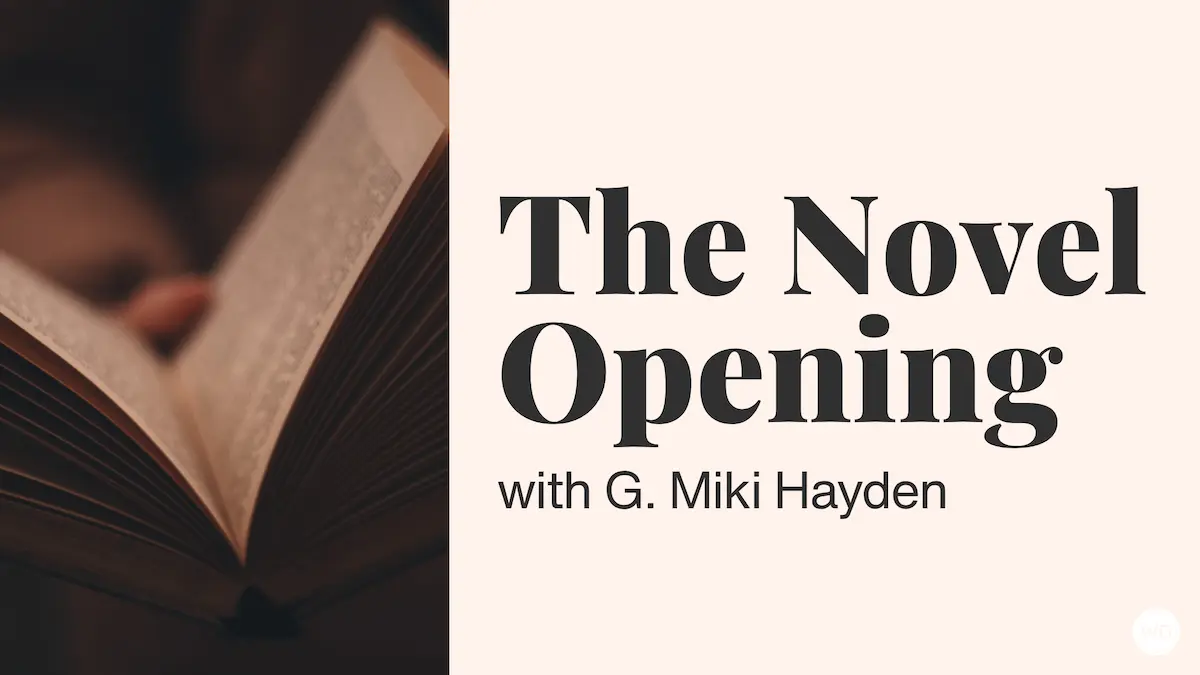
For aspiring novelists, the journey from a blank page to a published book is paved with distinct, high-stakes hurdles. While crafting a compelling query letter is essential to capturing the attention of literary agents and acquisitions editors, it represents only the first line of defense in a fiercely competitive industry. The true test of a manuscript’s viability occurs when an industry professional opens the first chapter. If the initial pages fail to deliver an immediate, immersive experience, even the sharpest, most brilliantly pitched query will result in a swift rejection.
Recent industry analyses and specialized educational initiatives underscore a fundamental truth of modern publishing: an infallible story opening relies on a delicate synthesis of driving action, distinct narrative voice, immediate character empathy, and a genre-tailored hook. To demystify this process, industry veterans are stepping forward with specialized courses designed to simulate the discerning eyes of publishing gatekeepers.
Simultaneously, the broader literary community is expanding avenues for creative engagement through immersive international retreats and flash-fiction competitions. Writer’s Digest has officially announced its upcoming 2027 writing retreat in the picturesque Tuscan countryside, offering authors a rare blend of professional instruction and restorative travel. Coupled with the ongoing “Your Story” flash-fiction challenges—where writers compete by crafting precise 100-word drabbles—these developments highlight a vibrant ecosystem dedicated to honing the literary craft. This report explores the anatomy of a foolproof novel opening, evaluates upcoming professional development opportunities, and details the latest milestones in community-driven creative competitions.
Read Also
Detailed Chronology
Understanding the evolution of manuscript evaluation and the timing of writer-centric programs provides essential context for navigating today’s literary marketplace. The structured pipeline from initial concept to global publishing events unfolds across several key phases:
- The Query and Pitch Phase: Authors spend months, sometimes years, polishing a query letter and synopsis. Historically, this document served as the primary filter for agents. However, contemporary digital workflows have accelerated the review process. Agents frequently skim query letters before diving directly into the first two pages of the manuscript. If the opening lacks narrative momentum, the submission process ends immediately.
- Curriculum Development and Workshop Launch: Recognizing a persistent gap in debut manuscripts—where writers spend too much expositional time setting the scene rather than hooking the reader—educational platforms began deploying targeted modules. These workshops are specifically engineered to audit the first chapter through the psychological lens of an acquisitions editor, focusing on character identification, genre expectations, and intrinsic dramatic questions.
- International Retreat Announcements (Looking Ahead to 2027): Planning for high-end literary retreats requires years of logistical coordination. Writer’s Digest formally announced its return to Italy for April 2027, locking in the Tuscan countryside as a premier destination for intensive craft workshops, peer networking, and mentorship under published authors.
- The "Your Story" Competition Cycle: Operating on a continuous monthly or bi-monthly cadence, the Writer’s Digest "Your Story" challenges maintain an ongoing rhythm of community participation.
- Phase One (Submission): Writers review a newly released photographic prompt and compose a strictly constrained 100-word drabble.
- Phase Two (Editorial Shortlisting): Out of a dense pool exceeding 100 entries per cycle, the editorial team narrows the field down to five exceptional finalists.
- Phase Three (Public Voting & Winner Reveal): The literary community engages in public voting to determine the ultimate favorite, immediately followed by the launch of the subsequent prompt cycle (such as the transition from "Your Story #143" to "Your Story #144").
Supporting Context & Metrics
The art of the opening page is not merely a matter of subjective taste; it is governed by measurable reader psychology and industry realities. To understand why certain manuscripts succeed while others stall, we must examine the quantitative and qualitative factors shaping contemporary publishing.
The Anatomy of an Infallible Opening
Industry statistics indicate that a literary agent or acquisitions editor spends an average of two to three minutes on a query sample before making a preliminary decision. Within that narrow window, the opening pages must achieve four critical objectives:
- Action and Momentum: The story must begin in media res or on the precipice of a significant shift. Stagnant scene-setting or prolonged infodumping immediately signals an inexperienced writer.
- Distinct Narrative Voice: Whether third-person close or first-person, the prose must carry an unmistakable rhythm and tone that reassures the reader they are in the hands of a capable storyteller.
- Immediate Character Investment: Readers must connect with the protagonist’s emotional state, internal conflict, or high-stakes dilemma before they care about the broader plot mechanics.
- Genre-Specific Expectations: While a literary fiction opening may prioritize lyrical introspection and atmospheric tension, a thriller demands an immediate disruption of the status quo, and a romance requires instant chemistry or emotional resonance.
The Power of Flash Fiction: The 100-Word Drabble
In an era dominated by hyper-short attention spans and digital content consumption, the discipline of flash fiction has seen a resurgence. The "Your Story" competition model—demanding a complete narrative arc within exactly 100 words—forces writers to strip away narrative fat.
- Constraint Breeds Creativity: Writers cannot rely on sprawling world-building or extensive backstory. Every single word must perform double duty, advancing character, plot, and theme simultaneously.
- High-Volume Competition: With routinely over 100 entries per prompt, the competition serves as a microcosm of the broader publishing landscape. Standing out among five finalists requires absolute mastery of pacing, subtext, and emotional resonance.
Immersive Retreats as Professional Catalysts
Writing is fundamentally an isolated endeavor, yet the publishing business relies heavily on community, mentorship, and professional networking. Data compiled from writers’ workshops and international retreats indicate that concentrated, off-site craft immersion dramatically accelerates a manuscript’s completion rate. By removing domestic distractions and placing authors in direct contact with industry professionals—such as experienced instructors who maintain active publishing records—writers gain actionable feedback that saves months, if not years, of misguided revisions.
Official Statements & Expert Perspectives
Industry leaders and seasoned educators consistently emphasize that perfecting the beginning of a novel is both a technical skill and an empathetic art form.
On Crafting the Opening Chapter
Publishing veterans note that the most common flaw in unsolicited manuscripts is "throat-clearing"—the tendency for writers to spend the first five pages describing the weather, waking up the protagonist, or explaining complex lore before the actual story begins.
"While a sharp query goes a long way to inviting in the agent and editor, even that won’t pique their curiosity if they skip ahead to the novel start and the pages don’t deliver," industry instructors emphasize. “Can readers identify with the characters? Do they feel an immediate draw to the situation—regardless of the genre? Do they have burning questions about what you present?”
Experts acknowledge that familiarity in genre fiction is not an automatic disqualifier. Readers love tropes—from cozy mysteries to epic fantasy quests—but execution is everything.
"If this is a genre novel we’ve seen before, that can be okay, but something has to click. Everything old can be recycled, but some element has to fully excite. Instructors who have been selling steadily know the sweet spot; they know how you can refresh your pages and magnify the draw."
On International Writing Retreats
The motivation behind organizing immersive retreats, such as the upcoming 2027 excursion to Tuscany, stems from a desire to merge artistic rejuvenation with rigorous professional development.
“Escape to the peaceful Tuscan countryside to spend a week dedicated to making time for writing, improving your craft, and learning from publishing professionals, all while enjoying a taste of Italy,” organization representatives share regarding the upcoming tour, which promises a comprehensive itinerary designed to elevate both the mindset and output of attending authors.
On Creative Challenges and Micro-Fiction
Regarding ongoing engagements like the "Your Story" competitions, editorial staff maintain that short-form writing exercises are vital for keeping creative muscles agile.
"You can be funny, poignant, witty, etc.; it is, after all, your story," editors remind participants, emphasizing that the rigid 100-word drabble constraint serves as a liberating framework rather than an artistic restriction.
Future Outlook
As the literary landscape continues to evolve alongside shifting reader habits and technological disruptions, the foundational rules of storytelling remain remarkably steadfast. Looking ahead, several trends are poised to define the trajectory for developing authors:
- Heightened Scrutiny on Debut Openings: With digital slush piles growing ever larger due to streamlined submission portals, literary agents and editors will increasingly rely on automated or rapid-fire evaluation of opening chapters. Authors who master the art of the immediate hook will hold a distinct competitive advantage.
- The Rise of Hybrid Professional Development: While large-scale international retreats like the 2027 Italy tour will continue to attract writers seeking deep, analog immersion, targeted digital workshops simulating the editorial mindset will remain essential tools for fine-tuning individual manuscripts prior to submission.
- Micro-Content and Agility: Competitions focusing on ultra-short formats—such as the 100-word drabble challenges—will likely expand as writers seek rapid validation, community engagement, and concise ways to prove their narrative control in a crowded marketplace.
Ultimately, whether an author is tackling the daunting task of rewriting Chapter One under the guidance of a seasoned instructor, drafting a microscopic 100-word story for an online audience, or planning a restorative writing escape in the heart of Tuscany, the core mission remains unchanged: to connect deeply, authentically, and memorably with the reader from the very first word.

Comments
Facebook App ID not configured. Please add it in the Customizer.