
Executive Overview
In the modern social landscape, being labeled a "people pleaser" is often worn as a badge of well-meaning compliance. It conjures images of the helpful colleague, the accommodating partner, or the perpetual host who only wants everyone to get along. However, beneath the veneer of perpetual agreeableness lies a complex behavioral web that psychological researchers are increasingly reframing through a more critical lens: a frequent manifestation of chronic self-deception and interpersonal falsehood.
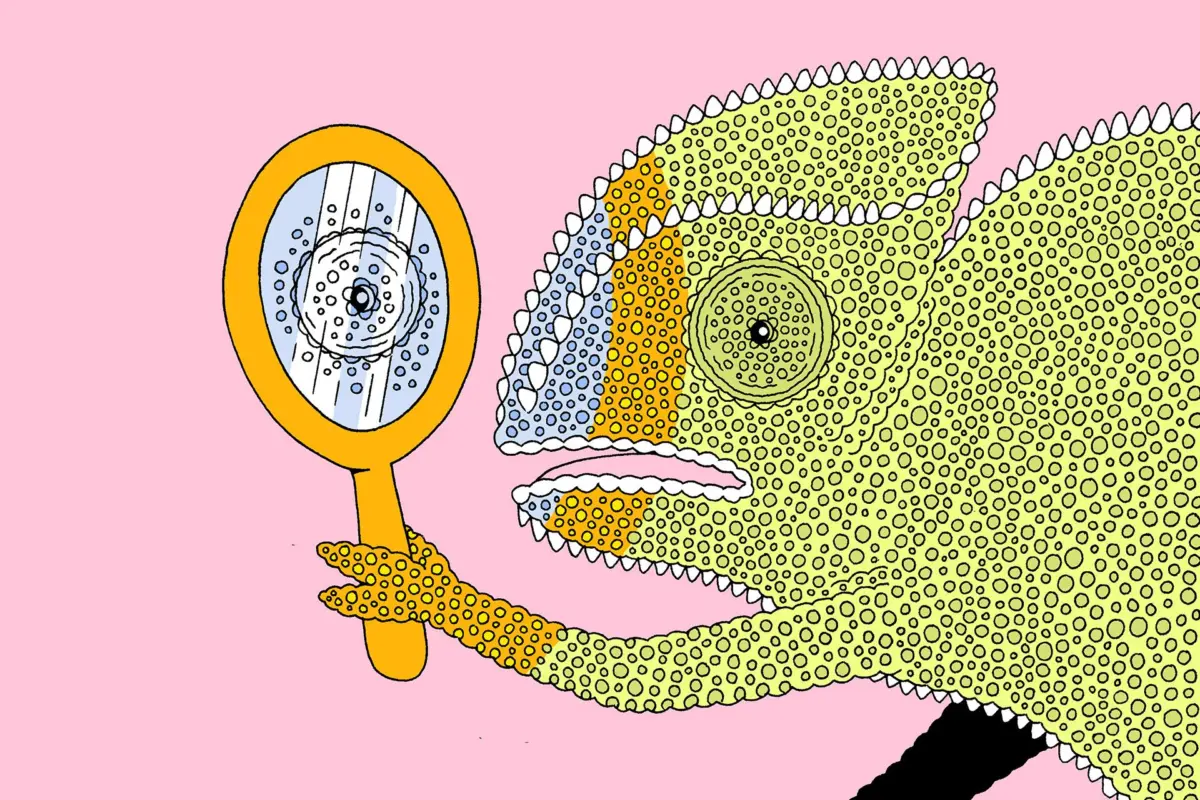
In guest columns and contemporary psychological evaluations, science journalists and behavioral researchers are challenging the comfortable euphemism of "people-pleasing." Empirical studies on deception reveal that the desire to maintain social harmony and appear agreeable is actually one of the most prevalent motivations for lying—frequently eclipsing personal gain or malice. For chronic "chameleons"—individuals whose behavioral modes morph depending on their company—this realization triggers a profound identity crisis. If every interaction is mediated by an impulse to placate, who remains when the audience leaves?
This article investigates the mechanics of people-pleasing, exploring why psychological literature categorizes adaptive agreeableness as a form of deception, how the brain conceptualizes the "true self," and why Eastern philosophical traditions suggest that the search for a rigid, unchanging identity might be entirely beside the point. By bridging empirical social science, psychological frameworks, and ancient philosophy, we examine how individuals can escape the trap of the social weathervane and cultivate genuine, unvarnished human connection.
Read Also
Detailed Chronology: The Evolution of the "True Self" and the Science of Agreeableness
To understand why people-pleasing feels so natural yet proves so psychologically damaging, it is helpful to trace how humanity has historically conceptualized identity, authenticity, and social conformity.
[Ancient Philosophical Era]
   └── Concept of 'Atman' (Eternal Soul) vs. 'Anatman' (No Self / Impermanence)
[Mid-20th Century Psychology]
   └── Emergence of humanistic psychology; Carl Rogers and the exploration of incongruence
[Late 20th to Early 21st Century]
   └── Empirical social psychology begins quantifying deception motivations (DePaulo et al.)
[Modern Behavioral Science]
   └── Rebecca Schlegel & colleagues research the functional utility of the "True Self" heuristic
[Present Day]
   └── Integration of cognitive science, relational psychology, and mindfulness in breaking the chameleon habit
1. The Historical Quest for the Core
For millennia, thinkers have wrestled with the continuity of human consciousness. Early spiritual and philosophical traditions posited the existence of an unchanging essence—the Hindu Atman, akin to an eternal soul. However, as early as the 5th century BCE, Buddhist traditions offered a radical counter-theory: Anatman (non-self). The Buddha argued that because physical forms, thoughts, emotions, and perceptions are perpetually in flux, clinging to the idea of a fixed, singular "self" is a fundamental error that breeds suffering.
2. The Rise of the Social Mask
In Western psychology, the 20th century introduced structural frameworks for understanding how social pressure alters behavior. Psychoanalysts and humanistic psychologists like Carl Rogers observed the tension between an individual’s authentic organismic experience and the "conditions of worth" imposed by society. To secure love, approval, and safety, individuals began developing what modern literature terms the chameleon persona—sublimating their internal reactions to mirror the expectations of family, peers, and authority figures.
3. Empirical Turning Points in Deception Research
By the late 1990s and 2000s, empirical psychologists began systematically categorizing everyday dishonesty. Seminal studies on deception (such as those by Bella DePaulo and colleagues) shattered the assumption that lies are primarily malicious or self-serving. Instead, data revealed that prosocial lies—deceptions designed to protect someone’s feelings, smooth over social friction, or project a more agreeable persona—make up a vast proportion of daily mistruths. People-pleasing was no longer viewed merely as an overabundance of empathy; it was recognized as a systemic pattern of communicative dishonesty.
4. The Contemporary Science of Authenticity
In the past two decades, researchers like Dr. Rebecca Schlegel at Texas A&M University have shifted the focus from discovering a biological seat of the true self to examining how people use the concept of the true self as a psychological tool. Their findings indicate that while the true self may not be a localized neural hub, believing in one’s true self—and making choices aligned with it—dramatically increases life satisfaction, meaning, and psychological resilience.
Supporting Context & Metrics: The Cost of the Chameleon Persona
The behavioral profile of a chronic people-pleaser is characterized by hyper-vigilance, emotional contagion, and social mirroring. When placed in a conversation, chameleons do not merely listen; they absorb the vocabulary, political stances, emotional tone, and worldview of their interlocutors. While this fosters temporary smoothness in social interactions, it incurs severe psychological and relational tolls.
The Anatomy of Prosocial Deception
Psychological studies published in journals such as Personal Relationships define a lie as any message deliberately communicated to deceive another. When a person smiles and agrees with an opinion they despise strictly to avoid an awkward silence, they have engaged in prosocial deception.
- Prevalence: Research into everyday communication indicates that over 60% of lies told in social settings are motivated by a desire to appear agreeable, protect another person’s ego, or prevent interpersonal conflict.
- The Cost of Distance: As veteran service industry workers and social psychologists note, relationships built on chronic agreeableness lack genuine intimacy. When one party acts primarily as a mirror, the other party interacts with a reflection rather than a real human being. This dynamic generates a subtle, persistent interpersonal distance that prevents deep bonding.
The Metrics of Authenticity and Decision-Making
Empirical investigations into human decision-making highlight the tangible benefits of aligning actions with perceived core values:
- Choice Satisfaction: In experimental paradigms led by Schlegel and her colleagues, participants instructed to frame decisions through the lens of their "true self" reported significantly higher satisfaction levels than those who relied purely on rational cost-benefit analysis or external advice.
- The Moral Core: When surveyed about which attributes comprise their "true" self, participants overwhelmingly point to morally positive traits (e.g., generosity, empathy, fairness) rather than morally neutral or negative impulses. Consequently, utilizing moral attributes as an internal compass provides reliable guideposts for authentic behavioral choices.
Official Perspectives and Academic Insights
Leading researchers in behavioral psychology and philosophy offer nuanced perspectives on how individuals can untangle themselves from the compulsion to please.
"When people make a decision that they think aligns with their own true self, it regularly leads to feeling more satisfaction with that decision—more so than choices steered by considering what other people want, by religious belief, or by advice from others."
— Dr. Rebecca Schlegel, Social Scientist, Texas A&M University
Schlegel’s research emphasizes that the utility of the "true self" does not depend on proving it exists as an anatomical structure in the brain. Rather, it functions as a vital psychological heuristic. When individuals pause to ask, "What would my true self do?" they interrupt the automatic loop of people-pleasing and ground their decisions in internal coherence rather than external appeasement.
From a philosophical standpoint, integrating Eastern frameworks like Anatman offers a release valve for identity anxiety. Modern commentators note that the pressure to locate a rigid, permanent "essence" often drives people-pleasers to panic when they realize how easily their behaviors shift depending on their environment. Recognizing that the self is an ever-evolving process rather than a static artifact frees the individual from the burden of defending a fixed persona.
Future Outlook: Navigating Identity Beyond the People-Pleasing Trap
Breaking a lifelong habit of chronic agreeableness requires a deliberate recalibration of how one approaches communication, internal motivation, and personal evolution. For the recovering chameleon, the path forward involves three core shifts:
1. Reframing the Nature of Honesty
Moving away from people-pleasing begins with accepting a harsh but liberating truth: hiding your real thoughts to keep the peace is a form of deception. By viewing chronic agreeableness not as saintly self-sacrifice, but as a barrier to genuine intimacy, individuals can develop a healthier respect for the people around them. Trusting that friends, colleagues, and partners can handle authentic disagreement is a prerequisite for real connection.
2. Utilizing the "True Self" Heuristic
Because believing in a true self enhances psychological well-being, chameleons can weaponize this belief constructively. By explicitly identifying core moral values—such as kindness, creativity, or fairness—individuals can construct a behavioral baseline. When faced with a social demand, asking "Does this align with my best qualities, or am I just folding to keep the peace?" shifts agency back to the individual.
3. Embracing Fluidity and Relinquishing the Search for Perfection
Finally, adopting the mindset of Anatman can dissolve the existential panic of not knowing "who I am when I’m alone." There is no final, static version of you waiting to be excavated from beneath layers of social adaptation. Identity is dynamic, continuous, and shaped by choices made in the present moment.
For those caught in the web of the social weathervane, the future is not about discovering a pre-existing statue buried in the mind, but about consciously deciding who to become with every unvarnished choice.





Comments
Facebook App ID not configured. Please add it in the Customizer.