
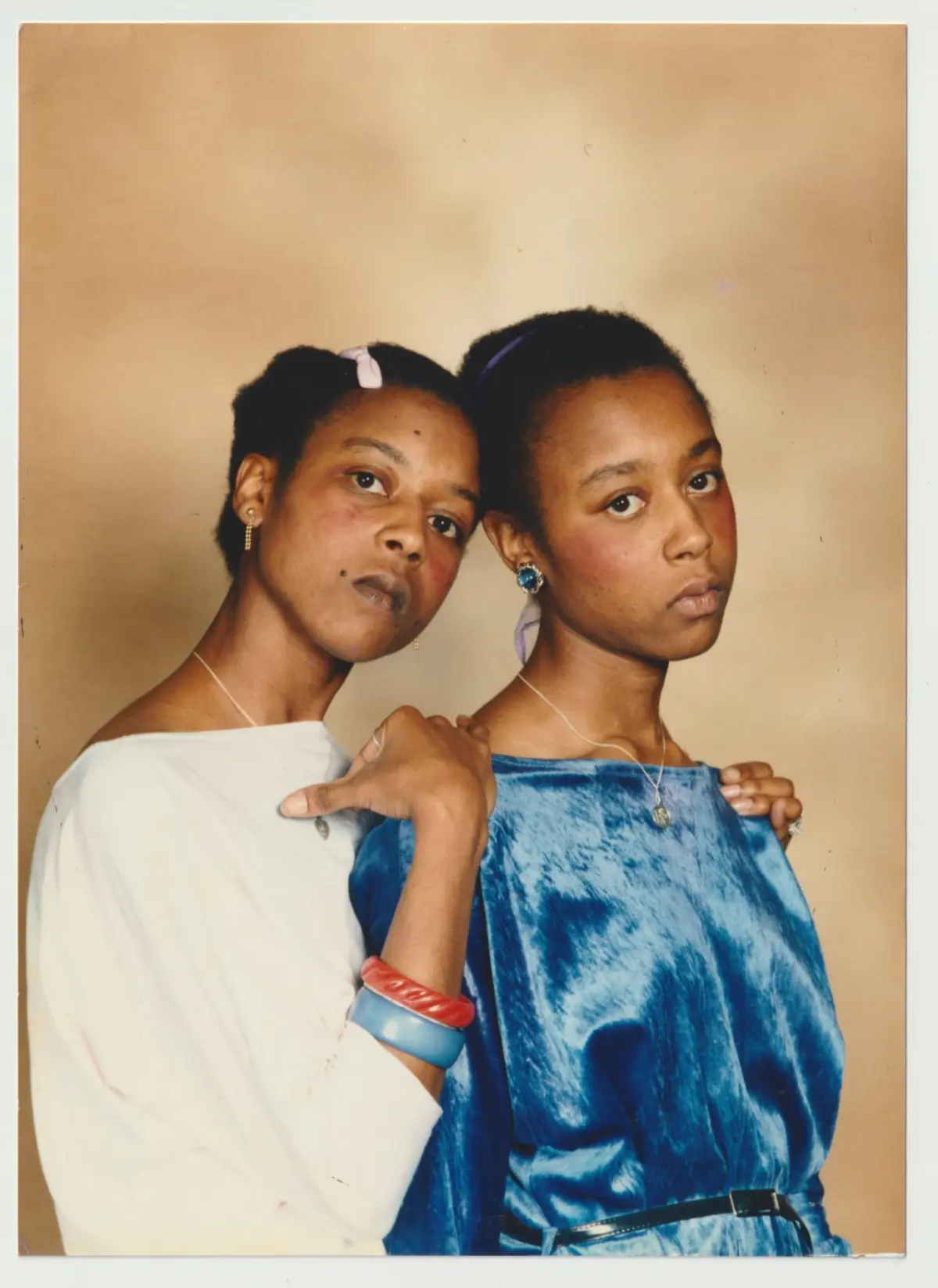
The recent literary reappraisal of June-Alison and Jennifer Gibbons—the infamous "Silent Twins" of twentieth-century British folklore—offers a profound recalibration of how society evaluates outsider art, trauma, and institutional overreach. Long sensationalized by the true-crime industrial complex, the twins’ narrative has historically been reduced to a pathological curiosity: a pair of Black British girls who refused to speak to anyone except each other, perpetrated petty crimes, and were ultimately locked away indefinitely in Broadmoor, Britain’s most secure psychiatric hospital.
However, the recent republication of June-Alison’s 1981 debut novel, The Pepsi-Cola Addict, alongside the posthumous rescue of Jennifer’s 1980 manuscript Discomania, demands an overdue shift in perspective. Far from being mere psychiatric anomalies or passive subjects of state failure, the Gibbons sisters were fiercely prolific, experimental authors. Driven by a voracious consumption of American pop culture—gleaned from television broadcasts, military base neighbors, and popular magazines—they constructed an elaborate, stylized literary universe. Their works, characterized by linguistic deformations, high-camp melodrama, and a relentless obsession with adolescent nihilism, position them alongside twentieth-century literary provocateurs like Jean Cocteau and the Brontë sisters.
This journalistic inquiry explores the journey of the Gibbons archive, tracing their path from the isolated military outposts of their youth to the harrowing halls of Broadmoor, and finally toward their contemporary rehabilitation as vital voices in modern literature.
Read Also
Detailed Chronology
1963–1979: Imperial Disillusionment and the Vow of Silence
Born ten minutes apart in January 1963 at a British army hospital in Yemen, June-Alison and Jennifer were the daughters of Gloria and Aubrey Gibbons, Barbadian emigrants to the United Kingdom who sought the prosperity promised by the British Empire. Instead, the family faced systemic isolation as they were shuttled across austere military bases in unaccommodating towns unaccustomed to Black foreigners.
In early childhood, the twins were communicative, but as toddlers, standard English speech largely eluded them. By their early years in school, their communication had devolved into rapid, incomprehensible staccato flutters. Faced with institutional pressures—ranging from speech therapy and tape-recording exercises to invasive mouth surgeries—the sisters made a pact by age eight: if the outside world refused to understand them, they would abandon spoken language entirely.
Retreating into an impenetrable bubble of twinship, they engaged in bizarre, synchronized behaviors: walking home in lockstep goose-steps and eating soup at a mathematically identical, agonizingly slow pace. By age sixteen, they dropped out of school entirely, retreating to a shared bedroom where they communicated with their family solely through written notes.
1980–1981: The Explosion of the Written Word
Within the confines of their self-imposed isolation, the sisters birthed an expansive imaginary universe modeled after suburban America. They devoured classic literature, maintained exhaustive vocabulary lists, and enrolled in a correspondence creative writing course under a single student number (8201).
- January 1980: June-Alison writes The Pepsi-Cola Addict, a pulpy, feverish novel about a fourteen-year-old Malibu resident named Preston Elvis Wildey-King whose sole desires are drinking bulk Pepsi and obsessing over his cheerleader ex-girlfriend, Peggy.
- 1980: Jennifer writes The Pugilist and begins drafting Discomania, an unhinged picaresque following a gang of disco-loving American teenagers caught in a violent, drug-fueled spiral of murder and cross-country flight.
- 1981: Pooling their state welfare checks, the twins self-publish The Pepsi-Cola Addict through the British vanity press New Horizon, utilizing Jennifer’s photographs of June-Alison for the dust jacket.
1981–1993: Crime, Trial, and Broadmoor
Emboldened by their literary fantasies, the sisters sought real-world experience, stalking three rebellious local boys dubbed "the Kennedys" by journalist Marjorie Wallace. Imbued with a reckless, destructive energy, the twins engaged in a spree of petty theft, vandalism, and arson—culminating in the torching of a tractor dealership in late 1981.
Arrested after hurling a brick through a technical college window, police recovered their voluminous diaries, which prosecutors weaponized against them in court. Despite counsel advising a plea of remorse to secure psychiatric care over penal incarceration, the sisters mumbled half-hearted guilty pleas, distracted entirely by the humiliating prison-issue clothing forced upon them.
Committed indefinitely to Broadmoor Hospital under the Mental Health Act at just eighteen years old, they became the youngest patients ever held at the facility. For nearly eleven years, they endured forced antipsychotic regimens, intense isolation, and a brutal institutional culture—interrupted only by the publication of Marjorie Wallace’s bestselling 1986 book, The Silent Twins, which brought international attention to their plight.
1993–Present: Release, Tragedy, and Literary Resurrection
- March 1993: Transferred to a medium-security facility in Wales as part of their long-sought release, tragedy struck on the journey. Jennifer, who had repeatedly joked about being exhausted during their final church mass, fell asleep on June-Alison’s shoulder and could not be awakened. She died suddenly of acute myocarditis at age twenty-nine.
- 2018–Present: Rare book collector David Tibet befriended June-Alison, sparking a major archival rescue operation alongside artist Ania Goszczyńska. Their collective efforts have successfully facilitated the republication of The Pepsi-Cola Addict and the forthcoming release of Jennifer’s lost manuscript Discomania. Today, June-Alison lives in Pembrokeshire, writing daily as she reclaims her narrative from decades of true-crime exploitation.
Supporting Context & Metrics
The rehabilitation of the Gibbons sisters requires an examination of the systemic conditions that shaped their lives. The following quantitative and qualitative metrics contextualize their trajectory:
- Incarceration Duration: Approximately 11 years spent within the high-security walls of Broadmoor Hospital, flanked by nearly a year of remand at Pucklechurch.
- Age of Commitment: Exactly 18 years old, making them the youngest indefinite detainees in Broadmoor’s history at the time of their sentencing.
- Archival Preservation: The Gibbons archive—stored in Hastings by Ania Goszczyńska and David Tibet—contains dozens of uncollected short stories, dense personal diaries, cassette recordings, and unpublished novel drafts, including The Pugilist, The Taxi Driver’s Son, and Discomania.
- Literary Influences: A unique synthesis of canonical British literature (Emily Brontë, Jane Austen, D.H. Lawrence) filtered through the hyper-stylized lens of American cinema, television, and radio broadcasts.
| Metric / Indicator | Historical Context | Contemporary Status |
|---|---|---|
| Primary Medium | Private diaries, self-published vanity press editions | Academic critical analysis, professional literary reissues |
| Public Perception | "Silent," "zombie-like," pathologized criminal anomalies | Prolific, avant-garde outsider authors and stylists |
| Institutional Response | Indefinite psychiatric detention, forced neuroleptics | Archival recovery, critical rehabilitation, and estate advocacy |
Official Statements & Archival Insights
The recovery of the Gibbons archive has allowed literary scholars to finally hear the twins in their own words, cutting through decades of journalistic ventriloquism.
Reflecting on her creative motivations in correspondence with researchers, June-Alison emphasized the deliberate rejection of conventional propriety:
"When we first set out to write, we wanted a teenage audience more than anything. We did the exact opposite of what was respectable because we wanted to be true to ourselves and set our own terms."
In stark contrast, institutional authorities during the 1980s viewed the twins’ intellectual output through a lens of profound contempt. Recalling her interactions with Broadmoor medical staff, journalist Marjorie Wallace noted the hostility directed at the sisters’ private notebooks:
"You can read this pornographic rubbish if you want to. They are wasting our time here."
Despite these institutional dismissals, contemporary evaluations of texts like The Pepsi-Cola Addict and Discomania reveal an acute stylistic brilliance. Reviewers and archivists have identified an electric, jittery vitality in their prose—what one critic describes as "words with the wet, slippery sheen of recent discovery." Far from the illiterate cipher depicted by mid-century prosecutors, Jennifer and June-Alison operated as sophisticated architects of camp, turning the linguistic limitations of their isolated upbringing into an asset of surreal, high-impact art.
Future Outlook
The rediscovery and proper attribution of the Gibbons sisters’ literary canon mark a permanent turning point in cultural history. For decades, the narrative surrounding June-Alison and Jennifer was hijacked by true-crime voyeurs, academic theorists seeking convenient symbols of state failure, and journalists prone to exoticizing racialized trauma.
With the preservation of their complete archive in Hastings, the publication of Discomania, and June-Alison’s return to fiction writing in Pembrokeshire, the literary world is undergoing a necessary reckoning. The Gibbons sisters are no longer trapped as static, mute victims of the British penal system; they are recognized as dynamic stylists, pioneering architects of outsider literature, and resilient chroniclers of the adolescent human condition. As new generations engage with their writing on its own terms—embracing its grammatical anomalies, its pulpy vibrancy, and its unyielding emotional honesty—the legacy of the Gibbons twins has evolved from a tragedy of silence into a triumph of expression.



Comments
Facebook App ID not configured. Please add it in the Customizer.