
Executive Overview
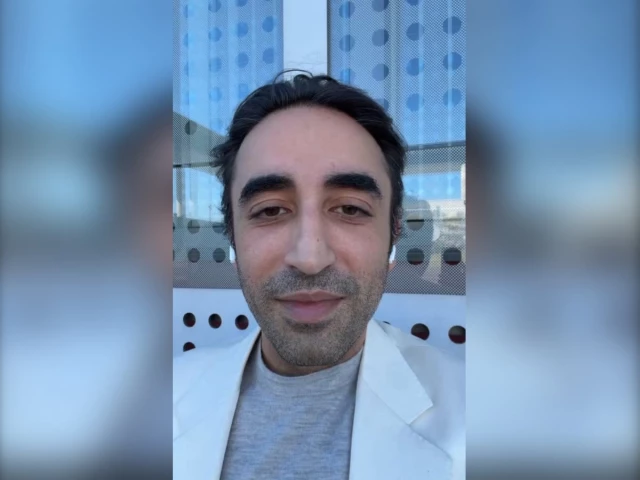
In the hyper-accelerated ecosystem of modern digital media, political figures exist not merely as policymakers or statesmen, but as perpetual characters in a decentralized, 24/7 reality soap opera. Few understand this dynamic quite as well as Pakistan People’s Party (PPP) Chairman Bilawal Bhutto-Zardari, a central fixture of South Asian politics whose personal life has long been a subject of public fascination. However, a routine Monday afternoon in late August 2026 transcended standard political gossip, evolving into a masterclass in internet folklore.
What began as an unfounded digital rumor concerning an impending high-society European wedding quickly metastasized into a viral phenomenon across X (formerly Twitter). The rumor mill claimed that the PPP chief was set to marry an Austrian royal figure identified as "Princess Gloria," with President Asif Ali Zardari allegedly traveling to Vienna to finalize the dynastic alliance. Despite a direct, categorical denial issued by Bhutto-Zardari himself, the internet refused to let the narrative die. Instead, the politician’s rebuttal served as jet fuel for a massive wave of internet culture, generating an avalanche of memes, political satire, and humorous cultural commentary.
This report provides an in-depth examination of the incident, exploring the anatomy of a viral political rumor in the digital age. It analyzes the chronology of the event, the mechanisms of Pakistani political satire on social media, the cultural context of public fixation on elite matrimony, and the broader implications of how digital platforms shape public perception and political reality in contemporary Pakistan.
Read Also
Detailed Chronology: From Whispers in Vienna to the Viral Explosion
The Genesis of the Rumor
The digital storm did not materialize overnight; it was constructed through a gradual accumulation of hyper-specific, unverified assertions circulating within niche corners of social media. In the days leading up to the public uproar, uncorroborated posts began surfacing, claiming that Bilawal Bhutto-Zardari was romantically linked to a European noblewoman of Austrian and Liechtenstein descent.
As the rumor gathered momentum, anonymous accounts escalated the narrative from casual dating to formal matrimonial arrangements. The fictional plot thickener involved high-stakes international diplomacy: President Asif Ali Zardari and select members of the Bhutto-Zardari family had allegedly embarked on a clandestine, high-level diplomatic mission to Vienna to negotiate the terms of the engagement and set a wedding date for later in the year.
To the average observer, the premise was transparently absurd. Yet, in an era where the boundary between political news and tabloid entertainment is increasingly blurred, the story struck a chord. The allure of a dynastic union between a leading Pakistani political dynasty and European royalty proved irresistible to digital algorithms and gossip-hungry users alike.
The Peak and the Rebuttal
By Monday afternoon, the rumor had transcended niche political circles, trending across Pakistani social media and forcing a direct response from the PPP chairman. Taking to X, Bhutto-Zardari sought to put the speculation to rest once and for all. In a post that mixed exasperation with characteristic public candor, he explicitly denied any knowledge of, or engagement to, anyone bearing the name "Princess Gloria," dismissing the reports as entirely fabricated fiction.
[Insert Placeholder: Timeline graphic illustrating the progression from initial unverified rumors to Bhutto-Zardari's official denial and subsequent meme explosion]Ordinarily, a direct, unequivocal statement from the primary subject of a rumor acts as a wet blanket on digital fires. In this instance, however, it had the exact opposite effect. Rather than signaling the conclusion of the story, Bhutto-Zardari’s denial was reinterpreted by the internet as a comedic invitation to escalate the joke. The fact that the PPP chairman felt compelled to formally address a mythical Austrian princess only validated the sheer ridiculousness of the situation, providing social media users with the ultimate punchline.
Supporting Context & Metrics: The Anatomy of a Viral Meme Economy
To understand why the "Princess Gloria" rumor resonated so profoundly, one must examine the unique sociopolitical landscape of Pakistan’s digital sphere. Platforms like X serve as national town squares where political discourse, dark humor, and cultural critique intersect daily.
The Meme Categories and Cultural Tropes
Once Bhutto-Zardari issued his denial, the platform’s creative class fragmented the narrative into several distinct categories of humor:
- The "Bhabhi" (Sister-in-Law) and Royal Comparisons: Users immediately began drawing parallels between the mythical European alliance and other recent cultural fixations—most notably, the societal obsession surrounding luxury imports such as Dubai chocolate. Commentators joked about what diplomatic gifts would be exchanged between Bilakwal’s political cabinet and the House of Liechtenstein.
- Satirical Reactions from Political Rivals: Internet humorists imagined the internal monologues and public reactions of veteran Pakistani politicians. Figures like Sheikh Rasheed Ahmed and former Prime Minister Nawaz Sharif were cast in satirical skits, reacting to the news of their political younger peer entering European high society with exaggerated bewilderment or envy.
- Nostalgic Linguistic Callbacks: No meme cycle featuring Bilawal Bhutto-Zardari is complete without a nod to his most memorable public speaking moments. Viral posts playfully lamented the cultural shock awaiting the hypothetical Austrian princess, referencing famous linguistic slips—such as his viral "Kaampay Tang Rahi Hain" (shivering legs) speech—as the primary obstacle to domestic marital bliss. One viral post quipped: "Dil tootne ki wajah Bilawal ki shaadi nahi, unka wo ‘Kaampay Tang Rahi Hain’ wala Urdu accent hoga jo dulhan ko roz sunna parega!" (The reason for heartbreak isn’t Bilawal’s marriage, but his ‘Kaampay Tang Rahi Hain’ Urdu accent that the bride will have to listen to every day!).
- Relatable Existential Humor: Amidst the political satire, a large demographic of social media users—particularly young women—used the trending topic to voice their own comedic frustrations regarding the modern dating market. Posts expressing mock dismay that European royalty was seemingly being snapped up while local eligible bachelors remained elusive ("Ek Mera Prince hai Jo abhi tak lapata hai") dominated the reply threads.
| Meme Category | Primary Focus | Cultural Resonance / Key Trope |
|---|---|---|
| Royal Parody | European royalty & diplomacy | Comparing Pakistani political dynasties to continental monarchies. |
| Political Satire | Rival leaders (e.g., Sheikh Rasheed, Nawaz Sharif) | Imagining generational political rivalry applied to personal milestones. |
| Linguistic Nostalgia | Iconic speech blunders | Playfully leveraging past public speaking moments for comedic value. |
| Existential Relatability | Singlehood & societal expectations | Juxtaposing high-society rumors with the mundane struggles of modern dating. |
Official Statements and Institutional Impact
While the digital populace treated the affair as a grand comedy, the episode underscores the precarious relationship between public figures and modern media narratives.
From an institutional standpoint, representatives of the Pakistan People’s Party maintained a lighthearted yet firm silence, allowing their leader’s direct statement to serve as the definitive final word. Privately, political insiders noted that while rumors regarding politicians’ personal lives are par for the course in South Asian democracy, the globalization of internet culture—where local political figures can be seamlessly woven into surreal, transnational fairy tales involving Austrian archduchesses—represents a novel challenge for public relations teams.
Bhutto-Zardari’s decision to address the rumor head-on was viewed by communications experts as a calculated risk. By acknowledging the chatter, he humanized himself to a skeptical digital electorate, demonstrating an ability to laugh at the absurdity of online culture. However, as the subsequent days proved, once a meme enters the bloodstream of X, it achieves a self-sustaining momentum that defies administrative control.
Future Outlook: The Digital Future of Political Personas
The "Princess Gloria" saga of August 2026 will undoubtedly be archived as one of the more surreal moments in Pakistani digital political history. Yet, it offers critical insights into how political figures must navigate the future of communication.
As artificial intelligence, deepfakes, and hyper-personalized digital narratives become more sophisticated, the line between verifiable truth and elaborate internet fiction will continue to blur. Political leaders can no longer rely solely on traditional press releases to manage their public image. Instead, they must operate within an ecosystem where narrative control is decentralized and distributed among millions of anonymous creators.
For Bilawal Bhutto-Zardari, the episode serves as both a cautionary tale and an unintended PR victory. By becoming the protagonist of a continent-spanning romantic comedy cooked up by internet strangers, he cemented his status as an inescapable pop-culture figure within Pakistan’s digital consciousness.
Ultimately, the official stance remains absolute: no engagement has occurred, no royal wedding is scheduled in Vienna, and the PPP chairman has never met the elusive Austrian princess. But in the grand theater of the internet, the truth was never really the point. The journey—fueled by bhabhi jokes, linguistic nostalgia, and peerless political satire—was what captured the nation’s attention, proving once again that in Pakistan’s digital arena, politics and entertainment are forever intertwined.



Comments
Facebook App ID not configured. Please add it in the Customizer.