
Executive Overview
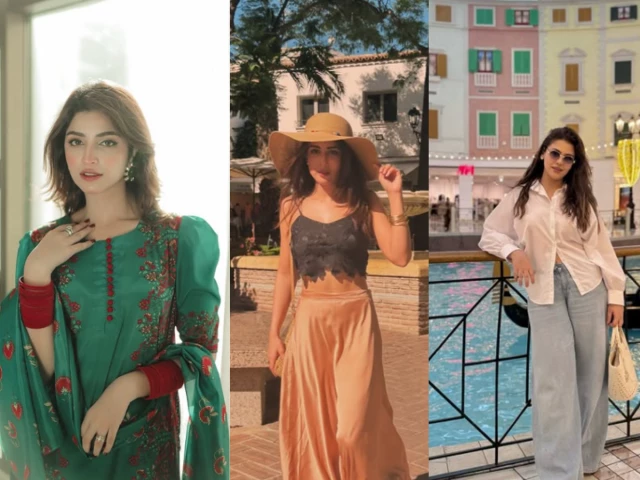
The landscape of Pakistani cinema is undergoing a profound evolution, transitioning from traditional romantic melodramas and conventional social dramas toward high-concept, genre-defying narratives that foreground female agency. Leading this charge is the upcoming anthology feature film Sheroes, a high-octane cinematic project headlined by three of the industry’s most bankable and critically acclaimed television and film stars: Kinza Hashmi, Zara Noor Abbas, and Ushna Shah.
Slated for a nationwide theatrical release across Pakistan on September 18, Sheroes is designed around a compelling structural premise: "Three women. Three worlds. Three stories that stand entirely on their own." Far from being a standard commercial entertainer, the anthology weaves together distinct, high-stakes narratives under the overarching thematic umbrella of personal autonomy, systemic resistance, and the relentless pursuit of justice.
With the official poster unveiled on a Friday in late August, followed rapidly by an action-packed, adrenaline-fueled official trailer just two days later, the promotional campaign has immediately captured the public imagination. The film’s tagline—“Three girls, three different battles and one decision for their rights”—crystallizes the core thesis of the project. Backed by the Sindh Information Department, presented by Tamasha Films, and distributed theatrically by Orient Distribution, Sheroes represents a concerted push toward diversified storytelling, combining institutional state support with high-caliber commercial craftsmanship.
Read Also
Under the visionary dual-direction of Saqib Khan and Badar Mehmood, and boasting a powerhouse writing trio consisting of Mohsin Ali, Hashim Nadeem, and Amna Mufti, the film is positioned not merely as a cinematic release, but as a cultural watershed. It follows closely on the heels of Sindh Films’ previous major release, Mera Lyari—which starred Ayesha Omar and Dananeer Mobeen—signaling an institutionalized momentum toward narrative-driven, socially resonant cinema designed for both domestic theatrical dominance and potential global OTT reach.
Detailed Chronology: From Concept to the Big Screen
The journey of Sheroes from a conceptual pitch to a finalized, release-ready theatrical feature reflects a streamlined, highly coordinated production pipeline characteristic of contemporary Pakistani cinema’s industrial maturation. While principal photography was executed under a shroud of relative secrecy, the promotional rollout commenced with calculated precision, creating maximum anticipation across digital and traditional media landscapes.
The Promotional Rollout
The formal introduction of Sheroes to the public began with the simultaneous release of promotional assets that defied conventional Pakistani cinematic marketing tropes. Rather than relying on standard musical singles or romantic poster reveals, the campaign opened with a striking theatrical poster that emphasized grit, determination, and stylistic noir-infused aesthetics.
Two days after the poster debut, the official trailer dropped, offering audiences an intricate, fast-paced window into the anthology’s tripartite structure. The promotional rollout was carefully calibrated to highlight the stark contrasts between the three segments, establishing early on that Sheroes is not a singular narrative stretched thin, but rather a curated collection of intense, genre-specific cinematic experiences.
The Three Worlds of Sheroes
The trailer’s meticulous editing breaks down the anthology into three distinct stylistic and thematic domains, each helmed by one of the lead actresses:
-
Kinza Hashmi’s Segment (The Intellectual and Psychological Thriller): Hashmi’s introduction takes place within the austere, sterile confines of an upscale art gallery. Her character is visually framed by high-end curation and wealth, yet the atmosphere is thick with deception. In a chilling moment, Hashmi is seen reciting a poignant Urdu translation of the famous historical aphorism: "A lie travels around the world before the truth has time to put its boots on." This narrative strand is heavily implied to revolve around high-stakes art forgery, intellectual deceit, and the psychological warfare of unmasking hidden truths in elite circles.
-
Zara Noor Abbas’s Segment (The High-Octane Action Thriller): Pivoting away from the quiet tension of the art world, Abbas plunges headfirst into pure adrenaline. Portraying a fearless, hyper-competent law enforcement officer, Abbas’s sequences are designed to rival mainstream action cinema. The trailer showcases her diffusing a live explosive device with methodical precision, navigating congested urban streets in high-speed vehicular pursuits, and arriving at a bustling police station astride a high-powered motorcycle. Abbas’s segment introduces a visceral, physical threat that tests both her character’s tactical acumen and her moral resolve.
-
Ushna Shah’s Segment (The Athletic and Personal Combat Drama): Shah steps into the squared circle as a dedicated, fiercely disciplined professional boxer. Eschewing glamour for sweat, grit, and physical endurance, the trailer tracks Shah through grueling training montages before culminating in high-stakes ring combat. Her battle is twofold: the physical violence of competitive boxing and the internal, societal hurdles a woman faces when entering a male-dominated sporting arena to reclaim her dignity and agency.
The Theatrical Milestone
With its premiere locked in for September 18, Sheroes enters a competitive theatrical window where it must prove that audiences are eager to embrace female-centric, non-romantic action and thriller anthologies on the big screen. The coordination between Tamasha Films and Orient Distribution ensures that the film will secure wide-scale prints across major urban centers and secondary markets alike, maximizing its box office potential prior to any subsequent digital or OTT deployment.
Supporting Context & Metrics: The Industrial and Cultural Framework
To fully understand the significance of Sheroes, one must examine the institutional mechanics, creative pedigree, and broader socioeconomic context that enabled its production. The film is not an isolated creative experiment; it is part of a deliberate, state-supported strategy to revitalize Pakistan’s cinematic footprint through culturally resonant and socially progressive storytelling.
Institutional Backing and Strategic Vision
The involvement of the Sindh Information Department as a primary backer underscores a growing governmental recognition of cinema as a vital tool for soft power, cultural expression, and regional economic stimulation. By financing projects that spotlight regional narratives, professional empowerment, and marginalized perspectives, provincial bodies are actively working to bridge the gap between commercial viability and public service broadcasting.
This strategy builds directly upon the groundwork laid by Sindh Films’ previous venture, Mera Lyari, which premiered in May. Directed toward grassroots empowerment, Mera Lyari starred Ayesha Omar as a resilient football coach mentoring young girls in the historically complex and vibrant neighborhood of Lyari, with social media sensation Dananeer Mobeen shining as her talented protégé. While Mera Lyari focused on sports-driven community upliftment in a specific geographical enclave, Sheroes expands this thematic canvas across diverse urban subcultures—the elite art gallery, the high-stress police department, and the brutalist discipline of the boxing ring.
The Creative Engine: Direction and Screenwriting
The sheer magnitude of Sheroes is anchored by its creative heavyweights. The film benefits from a dual-directorial approach, with Saqib Khan and Badar Mehmood sharing the reins. Both directors bring extensive television and cinematic acumen to the project, known for their ability to maintain breakneck pacing, extract nuanced performances, and manage complex narrative arcs without sacrificing emotional resonance.
Equally impressive is the writing triumvirate: Mohsin Ali, Hashim Nadeem, and Amna Mufti.
- Hashim Nadeem is widely celebrated for penning some of the most emotionally devastating and culturally profound literary adaptations and original screenplays in Pakistan’s modern entertainment history.
- Amna Mufti brings a razor-sharp sociological lens, celebrated for her deeply analytical scripts that dissect gender politics, institutional corruption, and familial power dynamics.
- Mohsin Ali contributes structural dexterity and mainstream cinematic pacing, ensuring that the thematic weight of the anthology never bogs down its kinetic energy.
Produced by Imran Hussain, the film represents a masterclass in resource allocation, balancing the production values required for high-speed action sequences with the intimate character studies demanded by dramatic storytelling.
Official Statements and Industry Insights
While formal press conferences and extended interviews leading up to the September 18 release continue to unfold, early promotional statements and loglines released by the production team provide deep insight into the ideological framework of Sheroes.
The official synopsis released by Tamasha Films cuts through industry jargon with crystal clarity:
“Three women. Three worlds. Three stories that stand entirely on their own.”
This emphasis on narrative independence is crucial. Rather than forcing an artificial intersection between the three protagonists—a common pitfall in poorly executed anthologies—Sheroes respects the individual integrity of each woman’s struggle, allowing their respective worlds to breathe and develop organically.
The core thematic mission of the project is further distilled in the official film theme:
“Three girls, three different battles and one decision for their rights.”
Industry analysts note that this framing represents a sophisticated evolution in how female characters are written in Pakistani media. For decades, mainstream narratives frequently cast women as either passive victims of circumstance or romantic foils within male-driven plots. Sheroes, by contrast, positions its protagonists as active combatants—whether they are fighting art fraudsters with intellect, criminals with tactical force, or opponents in a boxing ring with physical stamina.
In statements regarding the broader push for global outreach via OTT platforms—a strategy recently emphasized by cultural leadership regarding Sindh Films’ catalog—producers have highlighted that contemporary audiences demand authentic, high-stakes storytelling that transcends linguistic and geographic borders. By utilizing high production values, genre-blending structures, and stellar casting, Sheroes is purposefully engineered to resonate with international streaming audiences just as powerfully as it aims to captivate domestic theatergoers.
Future Outlook: The Road Ahead for Pakistani Anthology Cinema
As Sheroes prepares for its nationwide theatrical launch on September 18, its performance at the box office will likely serve as a crucial bellwether for the future of multi-protagonist, genre-fluid cinema in Pakistan.
Redefining Commercial Viability
Traditionally, Pakistani box office receipts have heavily favored lighthearted romantic comedies, family dramas, or large-scale historical epics. The commercial success of Sheroes would provide concrete empirical evidence that local audiences are increasingly hungry for gritty thrillers, action-oriented narratives, and multi-narrative anthologies. If Kinza Hashmi, Zara Noor Abbas, and Ushna Shah can successfully draw crowds into cinemas based on the strength of these hard-hitting premises, it will embolden producers and financiers to take greater creative risks in the future.
The Rise of Female-Centric Action and Thriller Genres
For too long, the action and thriller genres in South Asian commercial cinema have been male-dominated domains. By placing women at the very center of high-speed car chases, bomb disposals, combat sports, and psychological cat-and-mouse games, Sheroes actively challenges and expands the boundaries of genre representation. The film normalizes the archetype of the female action lead, opening doors for younger actresses and aspiring filmmakers to explore physical and psychological action narratives without commercial hesitation.
Institutional Continuity and Global Streaming Horizons
Following the trajectory set by Mera Lyari earlier in the year, Sheroes demonstrates that institutional backing from entities like the Sindh Information Department can successfully catalyze high-quality artistic output. Looking beyond the domestic theatrical run, the natural evolution for a project of this scale involves strategic licensing to global Over-The-Top (OTT) streaming platforms. Given the universal themes of justice, bodily autonomy, and personal resilience, Sheroes possesses the cross-cultural elasticity required to find a devoted international audience on digital streaming networks.
Ultimately, Sheroes stands as a testament to the shifting tides of Pakistani storytelling. By uniting top-tier acting talent, visionary direction, elite screenwriting, and robust institutional support, the film transcends the traditional boundaries of television and cinema. Whether viewers tune in for the intellectual intrigue of Hashmi’s art gallery, the adrenaline-fueled heroics of Abbas’s police officer, or the gritty determination of Shah’s boxer, they are bound to witness a cinematic milestone that asserts a powerful, unyielding truth: when women stand up for their rights, the battle lines are drawn, and there is no turning back.

Comments
Facebook App ID not configured. Please add it in the Customizer.