
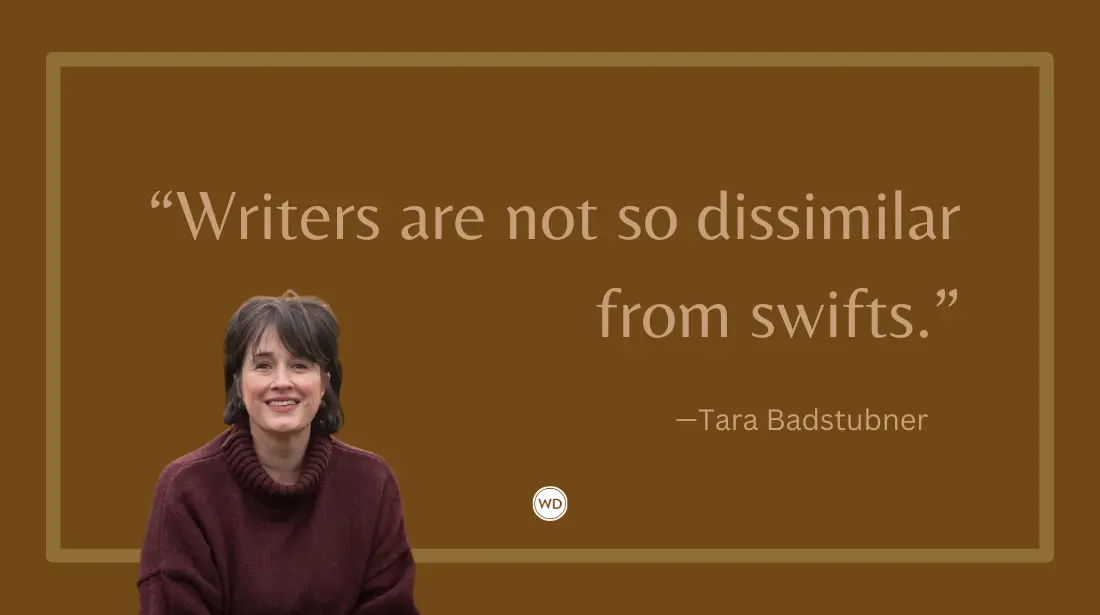
The intersection of biological instinct and the creative process offers a compelling lens through which to examine both ornithological migration and long-form literary composition. In the avian world, chimney swifts (Chaetura pelagica) execute grueling, transcontinental migrations spanning three to four thousand miles, guided exclusively by vector navigation—an internal, genetic GPS encoded within their DNA. Remarkably, human novelists navigate a parallel cognitive wilderness when embarking on long-form fiction. Devoid of a pre-mapped destination, writers rely on ancestral traditions of oral storytelling and deep subconscious navigation to draft compelling narratives.
Recent reflections from authors and naturalists highlight this profound cognitive symmetry. Just as caged migratory birds instinctively orient themselves toward their seasonal flight paths despite captivity, creative writers depend on what Vladimir Nabokov termed "subliminal co-ordinates"—the intuitive, subconscious flashes that plot a novel piece by piece. This comprehensive analysis explores the mechanics of avian migration, the neuroscience and psychology of the creative subconscious, and the practical methodologies authors utilize to survive the disorienting mid-novel phases of drafting. Through the insights of literary figures such as George Saunders and contemporary novelists navigating these very waters, we examine how patience, persistent revision, and trust in internal guidance systems allow both birds and writers to complete their arduous journeys.
Detailed Chronology & Observational Timeline
To understand the rhythm of creative work, one must first examine the temporal and physical realities of the natural world that mirror it. The relationship between a writer and their environment often acts as a metronome for the creative act.
Read Also
Phase One: The Arrival and Initial Discovery
- Spring Migration: Chimney swifts complete their 3,000-to-4,000-mile migration from Central and South America, arriving in the Midwest, Northeast, and Canada.
- The First Encounter: Homeowners frequently report a mysterious, unsettling hissing or rattling sound echoing within masonry chimneys, initially mistaken for mechanical failure or invasive pests.
- Observation and Acceptance: Close visual inspection typically reveals the acrobatic silhouettes of swifts spinning against the twilight sky. Once observed, their presence shifts from an environmental intrusion to a welcomed, permanent fixture of the domestic ecosystem.
Phase Two: The Symbiotic Working Environment
- Proximity to the Roost: Positioning a writing desk mere feet from an active chimney roost transforms the sonic environment of the author.
- The Acoustic Background: The low murmurs, sudden wing pulses, and high-pitched vocalizations of the chimney swifts provide a steady, companionable counter-melody to the solitary, often desperate pursuit of drafting a novel.
- Parallel Rhythms: As the birds launch into evening foraging flights or settle into nocturnal colonies, their movements synchronize with the author’s daily writing cadence, grounding abstract literary labor in visceral, physical reality.
Phase Three: The Genesis of the Manuscript
- The Germ of an Idea: Projects frequently originate at writers’ retreats or quiet moments of contemplation from simple, seemingly unoriginal premises—such as a young widow grappling with profound grief.
- Divergent Exploration: When direct narrative progression stalls, authors often utilize alternative creative mediums, such as minor watercolor sketches, to bypass cognitive blockades.
- Subconscious Manifestation: Inconsequential sketches—such as quick renderings of a fox, a crane, an Irish setter, and a snake—serve as catalysts, gradually revealing themselves through daily perseverance as central motifs or structural pillars of the developing manuscript.
Supporting Context & Metrics: Avian Navigation vs. Literary Architecture
The parallels between animal behavior and literary composition are not merely poetic metaphors; they are rooted in evolutionary biology and cognitive psychology.
The Mechanics of Vector Navigation
Migratory birds do not possess an explicit roadmap or historical memory of every landmark along their 4,000-mile migration route. Instead, they rely on vector navigation:
- Genetic Encoding: Information regarding the direction of flight and the duration of travel is hardwired into the bird’s DNA.
- Internal Compass: Swifts utilize celestial cues, the Earth’s magnetic field, and polarized light to maintain their trajectory across thousands of miles.
- The Caged Orientation Experiment: Decades of ornithological research demonstrate that migratory birds placed in circular cages during migratory seasons will persistently flutter and face the exact geographic direction they would be flying if free, proving that the drive is fundamentally physiological and internal.
Nabokov’s "Subliminal Co-Ordinates" and Literary Construction
Novelist Vladimir Nabokov famously described the subconscious architectural framework of a novel as its "nerves." These elements operate identically to avian vector navigation:
- Point-to-Point Progression: Writers rarely see past the immediate scene or the next line of prose. They move from Point A to Point B relying on internal intuition rather than a rigid structural blueprint.
- Subconscious Mapping: While conscious analytical thought struggles with plot holes and pacing, the subconscious mind acts as a native guidance system, mapping thematic terrain miles ahead of the writer’s current drafting position.
- The Evolution of Motifs: Just as a physical sketch of a crane can evolve through revision into a pivotal narrative location like "The Osprey House," subconscious impulses constantly refine raw creative material into sophisticated literary symbols.
Expert Insights and Official Perspectives
Navigating the long, often silent stretches of a novel-writing project requires psychological resilience. Esteemed authors have long addressed the anxiety of the "mid-novel slump" and the necessity of trusting one’s internal guidance system.
George Saunders on the "Heroic Subconscious"
In his extensive reflections on the mechanics of writing, award-winning author George Saunders offers a compassionate framework for evaluating rough patches in a manuscript:
"A rough patch in a story is not an error or a defect or evidence of our lack of talent or proof that we are imposters, missing some essential frequency being broadcast from Story Central. It’s an indicator that our heroic, brilliant subconscious is working out a problem as it stumbles towards beauty, and is asking for our help, and what it needs for us to do, just now, is have faith. And wait. And, while we’re waiting (as an active form of waiting), keep revising (revising that bit and everything around it)."
The Psychology of Creative Persistence
Psychologists studying creative output note that prolonged engagement with complex problem-solving tasks triggers the brain’s default mode network (DMN). This state mimics the instinctive drive observed in animal migration:
- Active Waiting: Patience in writing is not passive inactivity; it is the rigorous continuation of daily practice (showing up at the desk) while the subconscious resolves structural deficiencies.
- Overcoming Imposter Syndrome: Recognizing that silence or confusion in a manuscript is a natural byproduct of deep narrative exploration prevents premature abandonment of viable artistic projects.
Future Outlook: The Endless Flight of the Writer
As urbanization and environmental shifts alter the nesting grounds of chimney swifts, conservationists increasingly emphasize the preservation of traditional masonry chimneys. These urban habitats are critical for maintaining the migratory populations of species that have adapted to human architecture.
Similarly, in the literary landscape, the rise of algorithmic assistance, automated plot generators, and rapid-content tools threatens to streamline the messy, organic process of storytelling. Yet, the core thesis remains unchanged: true literary resonance cannot be computed via straight lines or pre-fabricated blueprints. It requires the arduous, uncertain journey of the human subconscious.
For both the chimney swift returning from South America and the novelist staring at a blank page, the path forward is forged through a combination of biological heritage, relentless persistence, and absolute trust in an unseen destination. By embracing the silences, respecting the quiet periods of structural incubation, and maintaining dogged faith in their internal guidance systems, writers can continue to produce complex works rich with the layers, symbols, and themes that conscious analysis alone could never conceive. The story will land, but for now, let it fly.



Comments
Facebook App ID not configured. Please add it in the Customizer.