
Executive Overview
Every writer knows the sensation: sitting down at the keyboard with the absolute intention to create, only to be met by a flashing cursor that feels less like an invitation and more like an accusing finger. Ten uncomfortable minutes pass. Sentences are typed, deleted, and regretted. Suddenly, doing taxes, calling a notoriously difficult cable provider, or meticulously scrubbing kitchen grout with an old toothbrush all emerge as urgent, highly preferable alternatives to staring at a blank screen. Hours later, returning to the desk yields the same silent, mocking cursor.
While traditional literary discourse often lumps this phenomenon under the broad, vague umbrella of "writer’s block," psychological and creative experts argue that true writer’s block—stemming strictly from a lack of plot direction or knowing what comes next—is entirely distinct from the agonizing inability simply to start.
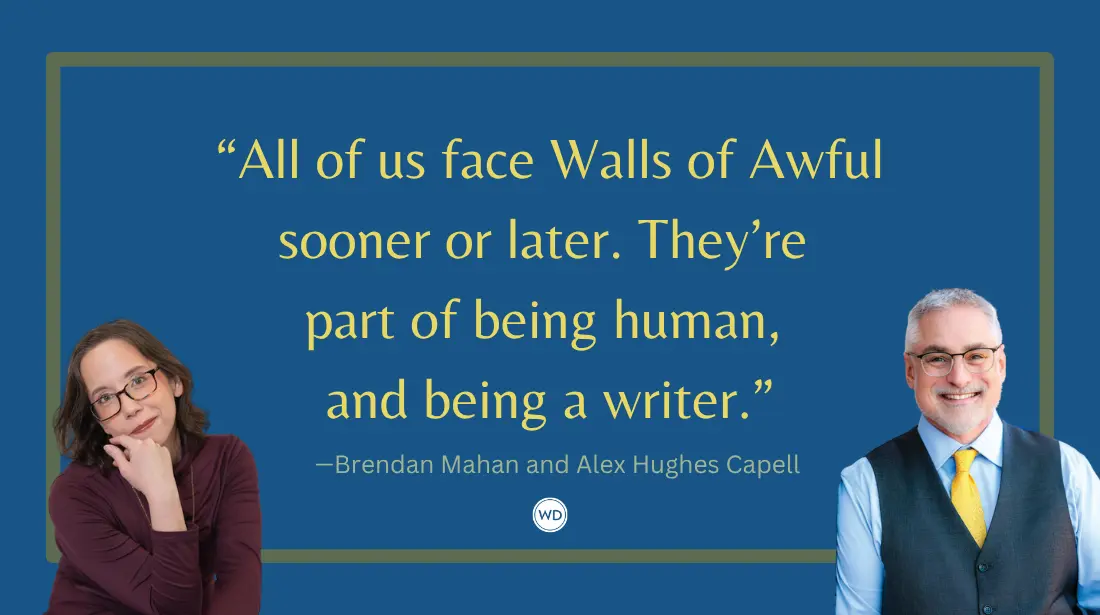
This specific paralysis is better understood as the "Wall of Awful," a term coined to describe the towering accumulation of negative emotional baggage surrounding the act of writing. Built brick by brick from past criticisms, scathing editorial remarks, self-doubt, and deadline anxieties, this psychological barricade sits squarely between the author and the work they love. Far from a simple lack of discipline, the Wall of Awful is an involuntary anxiety response—the human "fight, flight, or freeze" mechanism misfiring in the face of emotional threats rather than physical ones.
Read Also
However, emerging insights from productivity experts, cognitive psychology, and creative coaching reveal that the Wall of Awful is entirely normal, and more importantly, navigable. By utilizing structured strategies designed to soothe emotional agitation and activate interest-based nervous systems, writers can learn to punch doors straight through their creative barricades.
Detailed Chronology: The Anatomy of a Creative Breakdown
To understand how to dismantle the Wall of Awful, one must first examine the precise sequence of events that occurs when a writer attempts to begin their work. This modern creative cycle unfolds in several distinct psychological phases:
Phase 1: The Initial Approach and Anticipatory Dread
The cycle typically begins with high intentions. A writer clears their schedule, makes a cup of coffee, and opens their word processor. Almost immediately, an invisible threshold is crossed. The brain does not merely perceive a blank document; it subconsciously retrieves memories of every prior rejection, every harsh critique from a middle school English teacher, every cutting remark from a skeptical relative, and the heavy stress of past deadlines.
Phase 2: The Physiological Freeze Response
Because the human brain processes emotional pain and social rejection through neural pathways closely overlapping with those handling physical threat, the cumulative weight of these past experiences registers as danger. The sympathetic nervous system engages. Because there is no physical predator to fight or flee from, the body defaults to the third evolutionary survival mechanism: freezing.
Muscles tense, executive functioning in the prefrontal cortex dips, and the body attempts to protect the psyche by convincing the conscious mind that any other activity—no matter how tedious—is safer than writing.
Phase 3: The Avoidance Spiral
Unable to move forward, the writer experiences acute discomfort, self-loathing, and frustration. To escape this emotional spike, they pivot to fast-payoff, low-stakes chores. Kitchen surfaces are cleaned; administrative backlogs are cleared. This provides a temporary dopamine hit, reinforcing the avoidance behavior.
Phase 4: The Return and Amplified Shame
Hours later, when the writer returns to the desk, the avoidance has compounded the problem. Now, not only is the original emotional barrier intact, but an additional layer of shame regarding lost time and perceived laziness has been added to the top of the Wall. The cursor blinks with renewed hostility.
Supporting Context & Metrics: The Psychology of Avoidance and Activation
Overcoming this intricate cycle requires moving past willpower alone. According to psychological frameworks popularized by ADHD and executive function experts—such as the insights shared by Brendan Mahan and Alex Hughes Capell in their seminal work Overcoming the Wall of Awful—emotional regulation and motivational science are the true keys to unlocking productivity.
The Misdiagnosis: Differentiating Blocks from Barricades
A critical step in solving creative paralysis is accurate diagnosis. Not every delay at the keyboard constitutes a Wall of Awful. Writers must first audit their circumstances against three common impostors:
- Lack of Transition Time: Expecting the human brain to pivot instantaneously from high-stress family dynamics, chaotic professional environments, or menial administrative chores into deep, focused creative flow is a recipe for cognitive rebellion. The brain requires a decompression window—often 15 to 30 minutes of quiet breathing or physical movement—to reset.
- Invisible Prep Work: Thinking, plotting, and mentally "noodling" on a narrative problem often masquerades as procrastination. In reality, conceptual incubation is an indispensable phase of the writing process.
- Information Deficits vs. Emotional Barriers: If a writer is stalled because they do not know how to resolve a plot hole or structure a narrative arc, the barrier is informational, not emotional. While emotional walls can attach themselves to story problems, solving a structural issue requires logic, brainstorming, and outlining rather than emotional soothing.
The INCUP Model: Activating the Interest-Based Nervous System
For many creative individuals, traditional motivational tactics rooted in "importance" or "discipline" fail entirely. Renowned psychiatrist Dr. William Dodson observed that many neurodivergent and creative brains are not importance-based; they are interest-based.
When a brain refuses to engage with an important task, it is not due to a character flaw, but rather a lack of neurochemical activation. To bypass the Wall of Awful once calm has been restored, writers must introduce elements of the INCUP framework:
- I – Interest: Leaning into aspects of the project that genuinely spark natural curiosity.
- N – Novelty: Changing the physical environment, writing in an unconventional location, using a new software, or adopting an unfamiliar drafting method (such as writing in a different font or dictating text).
- C – Challenge: Establishing playful stakes, word-count benchmarks, or gamified writing exercises.
- U – Urgency: Employing time-boxed sprints (such as the Pomodoro technique) or utilizing software designed to raise the stakes.
- P – Passion / Values: Reconnecting deeply with the core philosophical or emotional reasons why the project matters to the author on a fundamental level.
Official Insights & Expert Perspectives
Creative coaches and publishing professionals increasingly emphasize that treating creative blocks as purely logistical problems misses the mark.
"When you identify the Wall and accept it, you take away a lot of its power," notes creative workflow literature circulating within writer development communities. "The more frustration and shame you feel about struggling, the higher the Wall gets. Instead, realize this struggle is normal! Everybody has a Wall of Awful about something."
Mental health advocates and executive function coaches stress that self-compassion is not merely a comforting sentiment—it is a functional prerequisite for neurological de-escalation. By reframing the inability to write as an autonomic anxiety response rather than moral failure, writers remove the fuel that feeds the fire of avoidance.
Furthermore, literary institutions are beginning to recognize that building a sustainable writing career mirrors physical conditioning. Just as an athlete cannot transition from a sedentary lifestyle immediately to running a marathon without proper pacing and conditioning, a writer cannot force severe emotional resistance into submission through sheer grit alone. Sustainable progress requires building writing muscles gradually, respecting rest intervals, and intentionally constructing "doors" through emotional barricades when they inevitably appear.
Future Outlook: Redefining Productivity in the Creative Industries
As the literary landscape evolves alongside shifting understandings of mental health, neurodiversity, and cognitive science, the conversation around writing productivity is undergoing a paradigm shift. The era of glorifying grueling, self-flagellating work habits is slowly giving way to sustainable, psychologically informed methodologies.
In the future, writing education will likely integrate emotional regulation and executive function training directly into creative writing MFA programs and craft books. Authors will be taught not only how to structure a three-act plot, but how to recognize the somatic markers of anxiety, how to soothe their nervous systems when facing high-stakes manuscripts, and how to intentionally apply tools like novelty and urgency to maintain momentum.
Ultimately, the Wall of Awful will never completely disappear; it remains an inevitable byproduct of caring deeply about creative expression. However, armed with the understanding that resistance is a biological response rather than a permanent seal of inadequacy, writers can approach the blank page with renewed confidence. By leaning into self-compassion, mastering emotional regulation, and strategically deploying the tools of interest and novelty, authors can consistently transform towering emotional barriers into open doors—paving the way for the stories only they can tell.





Comments
Facebook App ID not configured. Please add it in the Customizer.