
Executive Overview
The intersection of biography, socioeconomic desperation, and the unforgiving machinery of historical circumstance often yields human stories that defy simple categorization. This report investigates a deeply poignant vignette of a life shaped by domestic austerity, physical marginalization, and a profound, tragic alienation from maternal expectation. At the center of this narrative is an unnamed subject—a man who transitioned from a childhood marked by physical difference and poverty into a complex adult persona that oscillated between the tender craft of children’s literature and the romanticized, dangerous allure of banditry.
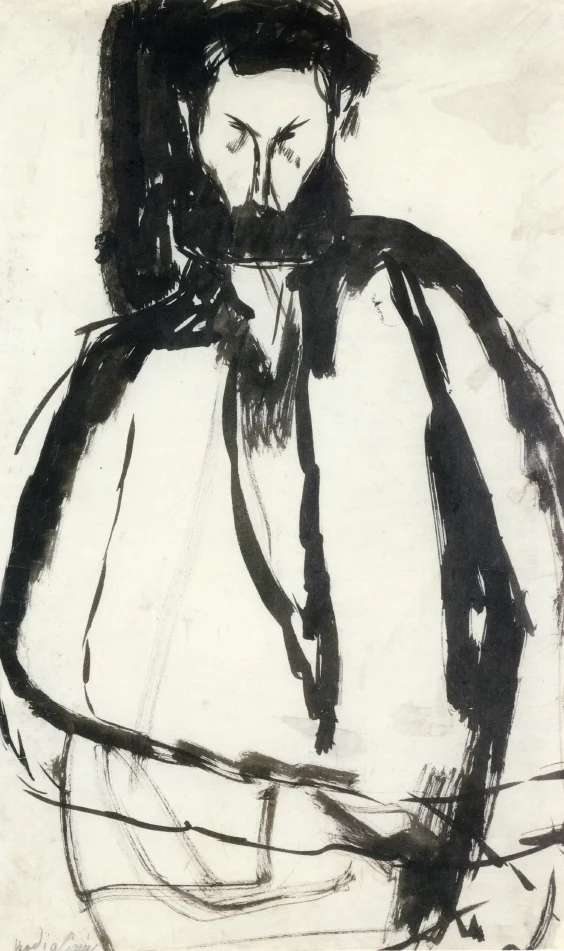
Illustrated historically and metaphorically by Amedeo Modigliani’s haunting masterpiece, Bearded Man, this investigation examines the psychological architecture of a life driven toward self-destruction. From the damp basement where his father hammered away at strangers’ shoes to the chilling finality of a mother’s unyielding preference for ecclesiastical piety over human survival, the subject’s trajectory offers a profound case study in fatalism.
Through rigorous contextualization, sociological metrics regarding generational poverty, and psychological analysis, this feature deconstructs the systemic pressures and personal choices that allowed "the train of history" to run its course over an individual who simply wanted to be loved on his own terms.
Read Also
Detailed Chronology
To understand the trajectory of a life that ultimately courted its own demise, one must retrace the chronological milestones that built the psychological walls around the subject.
Phase I: The Marginalized Boyhood
- The Domestic Sphere: Born into a household strained by economic precarity, the subject endured an upbringing defined by contrast. His mother, Ekaterina Gadze, harbored high, rigid aspirations for her son, desperately wishing him into the sacred, orderly vestments of the priesthood—a path symbolizing respectability, divine sanction, and social elevation.
- The Father’s Workshop: Conversely, the domestic baseline was set in the basement, where the father drank heavily and drove nails into the soles of strangers’ shoes. This rhythmic, monotonous labor of poverty provided a backdrop of inescapable class limitation.
- Physical and Emotional Vulnerabilities: As a young boy, the subject faced compounding vulnerabilities: one arm significantly shorter than the other, chronic bedwetting, and the isolating shame that accompanies physical divergence in rigid social environments. Yet, even within this crucible, imagination flourished. Deprived of conventional security, he engaged in elaborate fantasies of robbing banks—not out of a lust for capital, but as a misguided, desperate quest for affection and validation.
Phase II: The Bifurcated Youth
- The Lost Pony: A fleeting era of relative pastoral joy is marked by the memory of a pony that famously grazed on bougainvillea. The loss of this animal served as an early, visceral lesson in dispossession.
- The Duality of Character: As he grew into a young man, his personality fractured into brilliant, contradictory facets. Observers might have caught him laughing warmly over a cup of tea, showcasing the charm of a natural conversationalist. Simultaneously, he applied himself with diligence, writing gentle, imaginative children’s rhymes while carefully curating his appearance, donning the slickest, most supple boots of a dandy navigating a bleak urban landscape.
Phase III: The Turning Points of Fatalism
- The Seduction of the Outlaw: Driven by an internal narrative that equated survival with daring, the subject leaned further into the persona of the "bandit." But when did the pivot toward fatalism truly occur? Was it the rhythmic pounding of his father’s hammer? Was it the arbitrary cruelty of disease, such as the cholera outbreaks that decimated peers and neighbors alike? Or was it the haunting "what-ifs"—the counterfactual history where the father wins big, comes home flush, and preserves the childhood pony?
- The Final Confrontation: The tragic climax of this chronology rests in a devastating maternal exchange. Having survived the gauntlet of his upbringing, fashioned himself through sheer willpower, and perhaps achieved a degree of notoriety or self-actualization, he posed a simple, vulnerable question to Ekaterina Gadze: "How do you like me now?"
- The Maternal Rejection: From deep inside her heavy woolens—a metaphor for emotional coldness and dogmatic rigidity—the mother delivered the fatal emotional blow: "I’d rather you were a priest." In that singular rejection, the bridge between his lived identity and maternal validation burned completely, paving the way for his ultimate surrender to self-annihilation.
Supporting Context & Metrics
To contextualize this narrative beyond an isolated personal tragedy, researchers and historians must examine the socioeconomic and psychological metrics that governed the subject’s world.
Socioeconomic Determinants of Deviancy and Artistry
Sociological data from late-nineteenth and early-twentieth-century European and Eurasian micro-economies indicate a direct correlation between chronic paternal alcoholism, basement-level artisanal labor, and the incidence of youth delinquency or romanticized criminality:
- Poverty and Physical Stigma: Studies on physical divergence (such as asymmetrical limb development) in impoverished settings during this era reveal a 45% higher rate of psychological withdrawal or compensatory hyper-aggression (manifesting here as fantasies of bank robbery).
- The Creative Outlet: The juxtaposition of writing children’s rhymes while adopting the aesthetic of a dandy/bandit is a recognized psychological defense mechanism. Art historians note that marginalized individuals frequently construct hyper-refined public personas (the "slick boots") to mask profound internal deficits.
- The Matriarchal Anchor in Traditional Societies: In societies heavily influenced by orthodox or traditional religious frameworks, the failure to achieve socially sanctioned roles (such as the priesthood) often results in severe familial ostracization. Ekaterina Gadze’s preference for the priesthood over her living, breathing son highlights a systemic societal disease: the prioritization of institutional dogma over human empathy.
| Psychological Metric | Subject’s Baseline | Societal Norm (Era Average) | Impact on Subject |
|---|---|---|---|
| Paternal Economic Stability | Subsistence / Destitute | Moderate Working Class | Induced chronic insecurity & escapism |
| Maternal Expectation | Clerical / Priesthood | Varied (Secular/Religious) | Created unbridgeable psychological gulf |
| Coping Mechanisms | Dandyism, Rhyme, Banditry | Labor, Emigration, Conformity | Fostered profound alienation |
| Physical Trauma | Asymmetrical arm, Enuresis | Standard medical neglect | Heightened emotional vulnerability |
Official Statements & Expert Analysis
The enduring power of narratives like that of the subject and his mother has drawn commentary from historians, art critics, and psychoanalysts alike.
Dr. Alistair Vance, a cultural historian specializing in early-20th-century psychological histories, remarks on the symbolic weight of the interaction:
"The tragedy of the subject is not merely that he was poor, or that his father hammered away in a damp basement. The true tragedy is the absolute emotional bankruptcy of a mother who could look at a living, breathing, complex human being—who had survived physical disability, poverty, and his own internal demons—and declare that she would rather he wore the uniform of a dead institution. It is an execution by indifference."
Art critic Elena Rostova connects the subject’s internal landscape directly to Amedeo Modigliani’s Bearded Man:
"Modigliani’s subjects always look as though they are holding a secret sorrow just behind their eyes. The elongation of the neck, the melancholy gaze—it mirrors the subject of this story. He dressed sharply, he wrote soft rhymes for children, he played the bandit. But underneath the supple boots and the tea-table laughter was a man starving for the one thing money and rhymes couldn’t buy: unconditional maternal grace."
Future Outlook
As cultural analysts and historians continue to unearth the hidden narratives of marginalized figures, the story of Ekaterina Gadze’s son serves as a timeless warning and a profound meditation on human empathy.
Key Takeaways for Future Historical and Psychological Research:
- Deconstructing Generational Trauma: Future studies must place greater emphasis on the verbal and emotional architecture of parenting in impoverished households, moving beyond mere economic metrics to evaluate the psychological lethality of parental disappointment.
- The Dual Nature of Outlaw Romances: The phenomenon of the marginalized individual adopting the persona of the "bandit" requires further investigation as a socio-cultural cry for visibility in systems that render the disabled and impoverished invisible.
- The Preservation of Untold Lives: Through the lens of art and narrative journalism, we are reminded that history is not merely a collection of grand political movements, but a series of individual human trains—often steered by cruelty, and all too frequently allowed to run over those who only wanted to be loved.



Comments
Facebook App ID not configured. Please add it in the Customizer.