
Executive Overview
To the uninitiated observer, Olympic weightlifting is an exercise in brutal simplicity. A barbell loaded with dense iron plates rests on the platform. An athlete approaches, grips the knurled steel, and in a matter of seconds, hovers the weight overhead through an explosive arc of human kinetic energy. The competition reduces to a singular, undeniable metric: who can lift the most weight.
Yet, beneath this veneer of straightforward athleticism lies one of the most technically demanding, psychologically punishing, and strategically complex disciplines in the global sporting ecosystem. Governed by just two movements—the snatch, and the clean and jerk—Olympic weightlifting is less a test of raw, unbridled brute force and more a high-stakes masterclass in physics, millimeter-precise biomechanics, neural efficiency, and tactical chess.
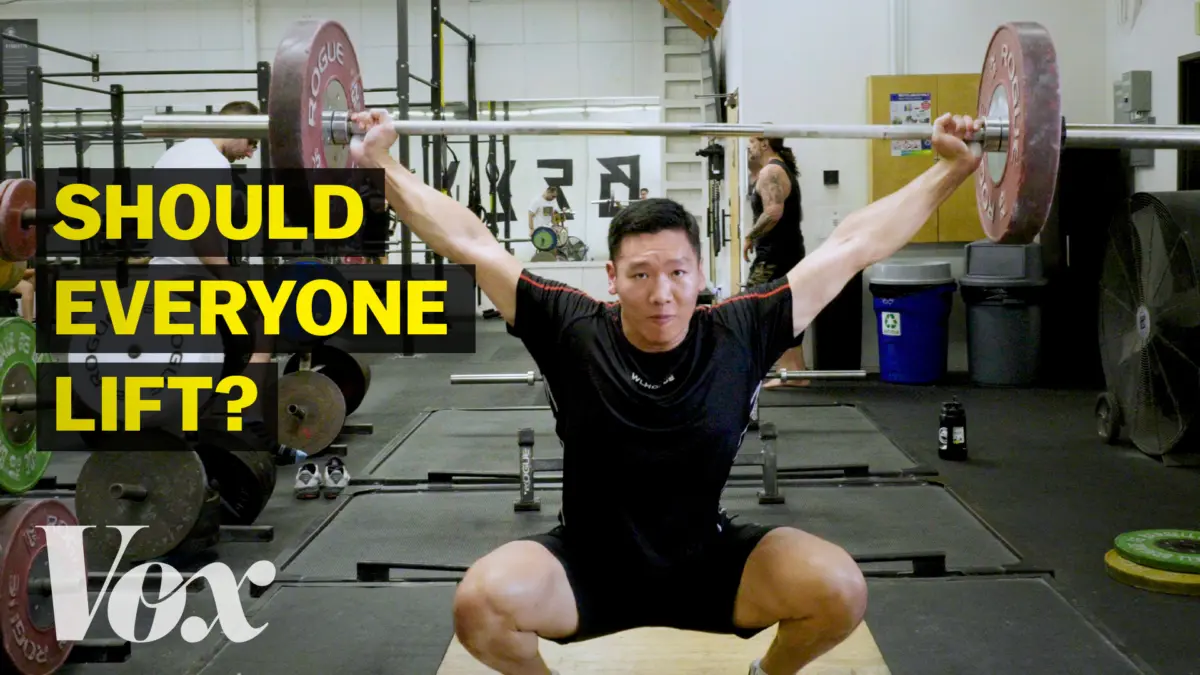
To deconstruct the anatomy of these lifts and uncover the hidden layers of elite competition, we spoke with Matthew Tung, a premier competitive weightlifter representing Hong Kong on the international stage. Tung offers an insider’s perspective on the hyper-specialized world of professional lifting, illuminating the mechanics of the platform, the psychological warfare of tactical weight changes, and the baffling paradox of how an elite competitor can bomb out on four of their six total attempts and still walk away with a gold medal.
Read Also
Beyond the chalk dust and the thunderous impact of bumper plates hitting the platform, elite weightlifting offers profound lessons for the broader world of strength training and human performance. It is a sport where fractions of a second dictate success or catastrophic failure, where mobility and stability are equally prized, and where the mind must remain as rigid as the steel overhead. This feature investigates what it truly takes to compete at the absolute pinnacle of Olympic weightlifting, exploring the mechanics, the strategy, the psychology, and the future of a sport forged in iron.
Detailed Chronology: The Anatomy of a Competition and the Evolution of a Lift
To understand the weightlifter’s journey, one must first examine the temporal and structural reality of a major competition. A weightlifting meet is not merely a single test of strength; it is a meticulously scheduled, highly stressful orchestration of physical peaking, nervous system activation, and real-time tactical adjustments.
The Warm-Up Hall: The Invisible Battleground
Long before an athlete steps onto the platform under the blinding glare of arena lights and television cameras, the true competition is won or lost in the warm-up hall. Here, time management is just as critical as muscular output.
Athletes and their coaches must calculate their opening attempts based on a precise countdown clock. A lifter must sequence their progression from an empty bar to intermediate loads, and finally to heavy singles, timing their physiological peak to coincide precisely with their name being called to the platform. Warm up too early, and the central nervous system cools down, leading to lethargy and missed attempts. Warm up too late, and the athlete risks injury or steps onto the platform with a fatigued, unprepared body.
The Platform: The Snatch and the Clean and Jerk
Once on the platform, the lifter faces two distinct challenges, separated into two distinct halves of the competition:
- The Snatch: The first movement executed in a competition is the snatch. The athlete must lift the barbell from the platform to arm’s length overhead in a single, uninterrupted, fluid motion. The speed required is staggering; the transition from the pull under the bar to the catch in a deep, compressed overhead squat happens in the blink of an eye—often in less than 400 milliseconds.
- The Clean and Jerk: Following a brief intermission, athletes return for the clean and jerk. This is a two-part sequence. First, the "clean": the bar is pulled from the floor to the shoulders in an explosive leap and front squat recovery. Second, the "jerk": the athlete drives the weight overhead using a powerful leg drive, splitting their legs or dipping and driving to lock the arms out completely.
The Tactical Chess Match: Declared Weights and Mid-Competition Shifts
One of the most fascinating elements of competitive weightlifting—and one deeply misunderstood by casual viewers—is the tactical shifting of declared weights. In an international competition, lifters submit their opening attempts prior to the session. However, as the competition unfolds, coaches and athletes are legally permitted to change their requested weights based on what their competitors are doing.
This creates a dynamic psychological battleground. If a leading lifter misses an attempt, rival coaches may instantly drop their athletes’ weights to secure a lower total, or conversely, raise the stakes to pressure their opponents. Matthew Tung explains that understanding the strategy behind these mid-competition weight changes is often the difference between a podium finish and total obscurity. Athletes must remain entirely insulated from the chaos of the scoreboard, focusing solely on their own physiological readiness while their coaches play high-stakes poker with the jury box and the clock.
Supporting Context & Metrics: Physics, Physiology, and Paradoxical Scoring
To truly appreciate the feats accomplished by international competitors like Matthew Tung, we must examine the quantitative reality of elite weightlifting through the lenses of physics, human physiology, and competition strategy.
The Physics of Human Leverage
When a 73-kilogram athlete hovers 170 kilograms overhead, they are defying conventional expectations of human leverage. The biomechanics of the lift require a delicate balance of torque, center of gravity, and vector alignment.
- The Pull: During the first and second pulls, ground reaction forces can exceed three to four times the athlete’s body weight.
- The Catch: When dropping under a maximal snatch, the shoulder girdle, thoracic spine, and wrists must absorb the kinetic energy of a mass that is more than double the lifter’s body mass, all while maintaining a locked-out elbow angle and an upright torso.
The Paradox of the Six-Attempt Limit
A common point of confusion for spectators is the unique scoring structure of Olympic weightlifting. Each athlete receives three attempts in the snatch and three attempts in the clean and jerk, culminating in a combined total score.
However, a bizarre quirk of competition strategy can lead to scenarios where a lifter misses multiple attempts and still secures a gold medal. For example, if an elite gold-medal favorite aggressively opens with world-record-level weights and misses their first three snatch attempts, they can theoretically bomb out of the competition entirely. Conversely, if a clever strategist plays it safe, successfully hits their opening weights while others falter, and accumulates enough total weight early on, they can afford to miss subsequent heavier attempts (such as failing four total attempts across the two lifts) and still stand atop the podium if their cumulative total remains unsurpassed by the remaining field.
| Metric / Parameter | Elite International Standard | Physiological Significance |
|---|---|---|
| Execution Speed | < 400 milliseconds (Pull to Catch) | Demands maximal fast-twitch muscle fiber recruitment. |
| Relative Strength | 2.5x to 3x Body Weight (Clean & Jerk) | Highlights extreme neural efficiency and structural integrity. |
| Attempt Structure | 3 Snatch / 3 Clean & Jerk | Tests consistency, recovery, and tactical pacing under fatigue. |
| Mobility Index | Extreme ankle, hip, and shoulder flexion | Required to achieve a stable deep-squat overhead position. |
Official Insights: Perspectives from the International Platform
Conversations with elite practitioners like Matthew Tung strip away the myths surrounding strength sports and replace them with the unvarnished realities of high-performance training.
Weightlifting at the international level is not merely about how much weight an athlete can hoist on any given Sunday; it is the culmination of years of meticulous movement screening, injury prevention, periodized programming, and mental conditioning. Tung emphasizes that the margin for error in international competition is virtually nonexistent. A millimeter off-center in the grip, a fraction of a second late in the third pull, or a momentary lapse in mental focus can spell the difference between a successful lift and a devastating miss.
Furthermore, elite athletes must navigate the intricate politics of weight classes, anti-doping protocols, and international federation guidelines. The mental resilience required to step onto a platform after months of grueling, repetitive training cycles—knowing that the entire endeavor hinges on a few seconds of execution—demands a psychological fortitude that few other sports can match.
Note: This feature presentation is proudly supported by Colgate. While Colgate exercises zero editorial control over our investigative journalism, brand partnerships of this nature make comprehensive, in-depth sports coverage and elite athlete profiles possible.
Future Outlook: The Evolution of Strength Sports in the Modern Era
As we look toward the horizon of Olympic weightlifting, the sport stands at a fascinating crossroads of tradition and technological innovation.
Technological Integration in Training
The days of purely intuitive, trial-and-error weightlifting training are long gone. Modern elite programs now incorporate advanced motion capture, high-speed camera analysis, barbell velocity trackers (such as linear position transducers), and sophisticated heart-rate variability (HRV) monitoring. These tools allow coaches like those working with Matthew Tung to measure bar path deviations down to the millimeter and track central nervous system fatigue in real time, drastically reducing non-contact injuries and optimizing the peaking process for major international events.
Global Growth and Accessibility
The democratization of information through digital media has also transformed the landscape. Techniques once guarded closely by traditional weightlifting powerhouses are now shared globally. This cross-pollination of coaching methodologies has led to a surge in international competitiveness, with nations historically unrepresented on the weightlifting podium now producing world-class contenders.
The Ongoing Quest for Integrity and Reach
As the International Weightlifting Federation (IWF) continues to reform its governance, anti-doping frameworks, and structural relationship with the International Olympic Committee (IOC), the sport is modernizing to ensure its long-term viability on the global stage. The emphasis has shifted toward transparency, athlete welfare, and engaging a new generation of sports fans who appreciate the intricate blend of human power and technical artistry.
Ultimately, Olympic weightlifting remains a pure manifestation of human potential. Through the eyes of competitors like Matthew Tung, we are reminded that behind every bar loaded with iron lies a rich tapestry of human dedication, tactical brilliance, and an unwavering pursuit of absolute physical mastery.





Comments
Facebook App ID not configured. Please add it in the Customizer.