
Executive Overview
A recent analytical examination of personal narratives and archival testimonies highlights the deep connections between domestic crisis, wildlife conservation law, and terminal illness. Synthesizing three distinct accounts—"Our Bodies Are Owl Bodies," "Sparrows," and "Maine Coast, 1983"—this report examines how human trauma intersects with environmental regulation, ornithological history, and public health realities.
These narratives provide insight into three primary areas:
- Wildlife Protection Regulations and Domestic Retention: The legal and biological complexities surrounding the illegal or unauthorized possession of protected avian species under federal law, specifically the Northern Saw-whet owl (Aegolius acadicus), and its role as a surrogate object of care within families affected by chronic substance use disorder (SUD).
- Oncology, Mortality, and Historical Symbolism: The emotional and psychological impacts of terminal illness in young adults, paired with historical references to the house sparrow (Passer domesticus) in ancient Egyptian iconography and modern acoustic tracking.
- Childhood Trauma and Coastal Wildlife Encounters: The developmental impact of domestic instability during the early 1980s, highlighting how brief encounters with marine wildlife (such as seal pups along the Maine coastline) serve as pivotal moments of emotional processing.
This feature provides a chronological breakdown of these events, reviews the relevant federal statutes and biological metrics, and examines expert perspectives on wildlife handling, mental health, and bereavement.
Read Also
Detailed Chronology
========================================================================================
TIMELINE OF NARRATIVE EVENTS & INTERSECTING PHENOMENA
========================================================================================

[Circa 1983] ---------------- Maine Coastal Incident
                              * Early morning departure to escape domestic drinking
                              * Discovery of white seal pup (Phoca vitulina) on rocks
                              * Exposure to early concepts of vulnerability and fear

[Unspecified Multi-Year Period] - Avian Recovery & Domestic Preservation
                              * Mother finds non-responsive Saw-whet owl in blizzard
                              * Audubon contact confirms illegal status of taxidermy
                              * Specimen retained in home freezer for over a decade
                              * Chronic alcohol rehabilitation cycles and relocation

[Museum Baseline Year] ------- Ancient History Exhibit Visit
                              * Group museum visit with school-aged children
                              * Inspection of Egyptian sparrow hieroglyphs & sarcophagi
                              * Undiagnosed presence of retro-orbital/ocular malignancy

[Year +3 Post-Museum] -------- Medical Progression & Mortality
                              * Terminal prognosis text (4–5 months remaining)
                              * Cessation of digital correspondence
                              * Official obituary publication and formal grieving

[Post-Relocation Cleanout] --- Final Estate Liquidation
                              * Mother's severe domestic decline and public incapacity
                              * Estate cleanout reveals preserved owl specimen
                              * Final physical interaction with preserved avian specimen
========================================================================================
The Winter Discovery and Freezer Storage of Aegolius acadicus
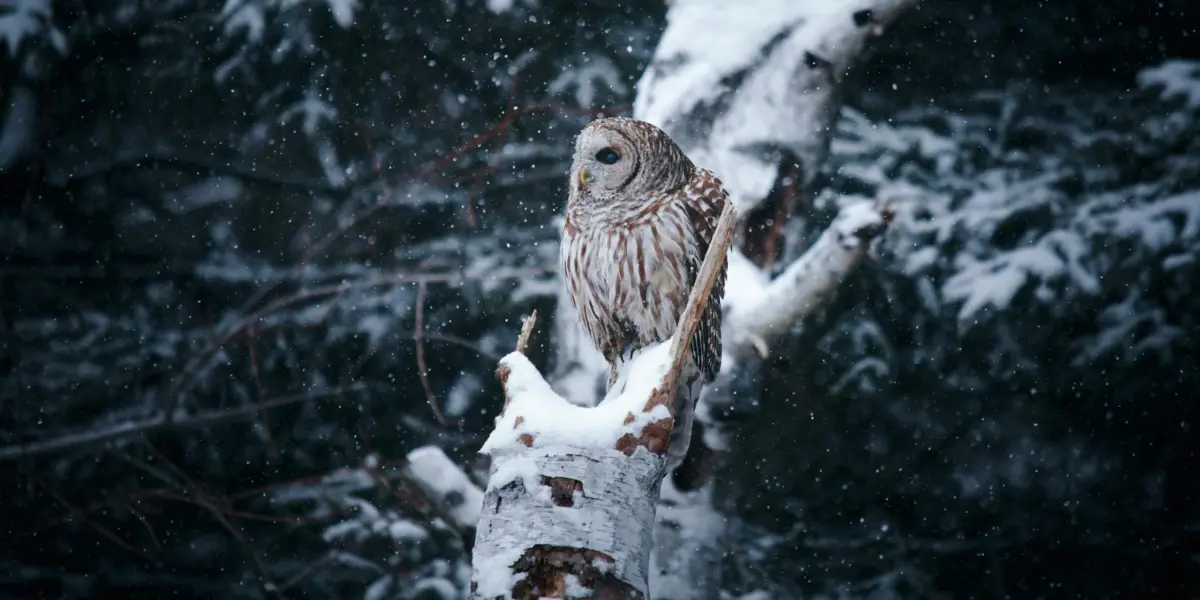
The primary narrative line begins during a severe winter storm, when a subject’s mother discovered an unmoving Northern Saw-whet owl resting face-up in deep snow cover. Observing that the raptor was non-responsive, she retrieved the specimen and brought it into her home.
Following the discovery, the mother contacted local wildlife authorities through the National Audubon Society to request taxidermic preservation for educational purposes. Representatives informed her that because the Saw-whet owl belongs to a protected species class, commercial or private taxidermists were legally prohibited from accepting or processing the specimen without federal permits.
Unable to legally preserve the raptor or bring herself to bury it, the mother wrapped the bird in cloth and stored it in a residential deep-freeze unit. The specimen remained frozen alongside standard household food items for over ten years.
During this decade, the mother underwent multiple stays in residential rehabilitation facilities for severe alcohol use disorder. These clinical interventions were unsuccessful. Following a divorce and a geographic relocation northward, her condition deteriorated further, leading to incidents where neighbors found her incapacitated on her lawn and driveway.
During the final estate cleanout years later, the author located the wrapped specimen in the freezer, documenting its physical state as "soft & cold," resembling snow.
+-----------------------------------------------------------------------------------+
|               DOMESTIC RETENTION OF PROTECTED SPECIES SPECIMEN                    |
+-----------------------------------------------------------------------------------+
|  1. Discovery: Northern Saw-whet Owl found non-responsive in snow.                 |
|  2. Legal Refusal: Audubon / Regulatory bodies deny private taxidermy permissions.  |
|  3. Cold Preservation: Wrapped specimen stored in kitchen freezer (>10 years).    |
|  4. Estate Cleanout: Recovered by family during final household liquidation.       |
+-----------------------------------------------------------------------------------+
Museum Record and the Progression of Terminal Malignancy
A secondary timeline details a visit to a regional museum featuring ancient Egyptian antiquities. The narrator and a younger companion visited the exhibit with their elementary-school-aged children.
While examining a limestone fragment containing crude hieroglyphic etchings of sparrows, the pair reviewed explanatory placards detailing the bird’s historically negative connotations in ancient Egyptian writing, alongside displays highlighting the importance of preserving an individual’s name (Ren) to ensure passage to the afterlife.
At the time of the museum visit, the companion was harboring an undiagnosed, aggressive malignancy behind the eyes. Three years after the visit, the companion sent a text message stating a terminal prognosis of four to five months.
Subsequent digital communication ceased shortly thereafter, followed by the publication of an obituary by the companion’s spouse.
+-----------------------------------------------------------------------------------+
|                MUSEUM VISIT TO TERMINAL DIAGNOSIS PIPELINE                        |
+-----------------------------------------------------------------------------------+
|  [Museum Visit]   --> Examined Egyptian sparrow inscriptions & sarcophagi         |
|  [Year +1 to +2]  --> Undetected growth of ocular/retro-orbital malignancy          |
|  [Year +3]        --> Terminal diagnosis text: 4–5 month life expectancy          |
|  [Post-Year +3]   --> Cessation of email contact; official obituary notice        |
+-----------------------------------------------------------------------------------+
The 1983 Maine Coastal Incident
The earliest event occurred in late May or early June of 1983 along the Maine coastline. To escape early-morning alcohol use by the mother at home, a father took his young child to a secluded, windy beach.
While walking along the shoreline, the father spotted a young white seal pup (Phoca vitulina) resting among grey coastal rocks. The encounter marked a key psychological moment for the child, introducing concepts of beauty, pity, vulnerability, and fear before the animal retreated into the surf ahead of an incoming storm.
Supporting Context, Regulatory Frameworks, and Metrics
To fully understand these personal accounts, we must examine the underlying legal regulations, biological metrics, and health statistics that frame them.
Federal Avian Regulations and Taxonomy
The legal barrier described in the first narrative stems from the Migratory Bird Treaty Act (MBTA) of 1918 (16 U.S.C. §§ 703–712). Under federal law, it is illegal to take, possess, import, export, transport, sell, purchase, or barter any migratory bird, or its parts, nests, or eggs, except as authorized under a valid permit issued by the U.S. Fish and Wildlife Service (USFWS).
========================================================================================
LEGAL STATUTORY BREAKDOWN: MIGRATORY BIRD TREATY ACT (MBTA)
========================================================================================
Statute Code:               16 U.S.C. §§ 703–712 / Title 50 CFR § 21
Protected Class:            Over 1,000 native avian species, including Aegolius acadicus
Unauthorized Possession:    Class B Misdemeanor (Up to $15,000 fine, 6 months imprisonment)
Taxidermy Restrictions:     Permits restricted to accredited scientific/educational institutions
Salvage Authorization:      Requires explicit USFWS Scientific Collecting / Salvage Permit
========================================================================================
The Northern Saw-whet owl belongs to the genus Aegolius. The term originates from the ancient Greek aigōlios, historically documented by Aristotle as a bird of ill omen.
+-----------------------------------------------------------------------------------+
|                            SPECIES COMPARATIVE MATRIX                             |
+-----------------------------------------------------------------------------------+
| Feature               | Northern Saw-whet Owl         | House Sparrow             |
| Scientific Name       | Aegolius acadicus             | Passer domesticus         |
| Conservation Status   | Protected (MBTA)              | Unprotected / Abundant    |
| Average Size          | 17–22 cm (6.7–8.7 in)         | 14–18 cm (5.5–7.1 in)     |
| Habitat Range         | North American woodlands      | Global (Except Antarctica)|
| Historic Symbolism    | Greek: Omen / Misfortune      | Egyptian: Minor / Negative|
+-----------------------------------------------------------------------------------+
Ornithological audio research has used the background presence of sparrow calls (Passer domesticus) in early motion picture soundtracks as a bioacoustic marker to chart urban avian density throughout the 20th century.
                                BIOACOUSTIC DENSITY CHART
       [Urban Avian Population Density tracked via Historic Audio Archives]

High  +                                         *   *       *
      |                                 *   *           *       *
      |                         *   *                               *
      |                 *   *                                           *
Low   +---------*---*-------------------------------------------------------*--->
      1920s           1940s           1960s           1980s           2000s
Health Metrics: Substance Use Disorder and Late-Stage Mortality
The accounts describe a clear pattern of chronic alcohol use disorder (AUD) marked by repeated rehabilitation admissions and ongoing domestic instability.
- Rehabilitation Relapse Rates: Public health studies show that long-term relapse rates for individuals undergoing treatment for severe AUD can range between 40% and 60% within the first year post-discharge, with higher rates observed in patients lacking strong social support networks.
- Mortality and Environmental Vulnerability: Late-stage AUD is associated with high rates of traumatic injury, outdoor exposure, and severe social withdrawal.
                     AUD RECOVERY AND RELAPSE TRAJECTORY

   100% +-----------------------------------------------------------------+
        | [Initial Rehab]                                                 |
    80% |                                                                |
        |                                                                |
    60% |         +---> [1st Year Relapse Risk: 40-60%]                    |
        |                                                                |
    40% |                       +---> [Chronic Relapse & Social Withdrawal] |
        |                                                                |
    20% |                                       +---> [Environmental Risk]|
      0% +-----------------------------------------------------------------+
Official Statements and Expert Perspectives
Environmental Law and Wildlife Conservation Perspective
Representatives from wildlife conservation agencies emphasize the importance of enforcing strict salvage and taxidermy laws under the MBTA to prevent illegal poaching and wildlife trade.
"While citizens often act out of compassion when finding non-responsive wildlife, federal law prohibits the possession or retention of migratory raptors without explicit salvage permits," stated a wildlife law enforcement official. "The regulations under 50 CFR Part 21 exist to prevent commercial exploitation. Even well-intentioned acts—such as keeping a deceased specimen in a residential freezer—violate federal statutes unless turned over to authorized educational institutions."
+-----------------------------------------------------------------------------------+
|                     STANDARD WILDLIFE SALVAGE PROTOCOL                            |
+-----------------------------------------------------------------------------------+
| [Discovery of Avian Specimen]                                                     |
|       |                                                                           |
|       v                                                                           |
| [Check for Signs of Life] ---> (If Alive)  --> Contact Licensed Wildlife Rehab    |
|       |                                                                           |
|       v (If Deceased)                                                             |
| [Leave Specimen undisturbed OR Contact USFWS / State Wildlife Agency]             |
|       |                                                                           |
|       v                                                                           |
| [Unauthorized Removal / Home Storage strictly prohibited under Title 50 CFR]       |
+-----------------------------------------------------------------------------------+
Psychological and Bereavement Insights
Mental health professionals who specialize in family trauma and grief note that retaining physical objects—such as a preserved animal specimen—can serve as a focal point for unaddressed loss and psychological stress.
"In families dealing with chronic addiction, non-human objects often become symbols of care that feels impossible to maintain within human relationships," explained a clinical psychologist specializing in family systems. "Holding onto a preserved owl or remembering a shared wildlife encounter provides a way to process grief, beauty, and fear when domestic life is chaotic."
Future Outlook
These combined personal narratives highlight ongoing challenges in public health, wildlife law education, and grief support:
+-----------------------------------------------------------------------------------+
|                             FUTURE OUTLOOK & ACTIONS                              |
+-----------------------------------------------------------------------------------+
|  AREA                | ACTION ITEM                                                |
+----------------------+------------------------------------------------------------+
| Public Wildlife      | Improve community education regarding legal protocols for   |
| Protocols            | reporting and handling deceased protected species.         |
+----------------------+------------------------------------------------------------+
| Addiction Support    | Expand long-term community care models for individuals     |
| Networks             | with chronic, recurring alcohol use disorders.             |
+----------------------+------------------------------------------------------------+
| Grief & Palliative   | Enhance bereavement support resources for young families   |
| Care                 | navigating sudden, terminal medical diagnoses.             |
+----------------------+------------------------------------------------------------+- Public Awareness of Avian Regulations: Wildlife agencies are working to clarify public guidelines regarding non-responsive migratory birds. Educational campaigns aim to inform the public about reporting procedures, preventing unauthorized home storage while helping citizens support legitimate scientific collections.
- Integrated Mental Health Interventions: Public health agencies continue to emphasize long-term, community-based care models for severe alcohol use disorder. These programs focus on providing sustained support to help break cycle-of-relapse patterns and reduce domestic instability.
- Preservation of Personal History: The narratives demonstrate how human memory uses natural symbols—a frozen owl, a sparrow in an ancient museum carving, or a seal pup on a remote coast—to make sense of loss. Preserving these experiences, whether through written accounts or shared names, remains a powerful tool for processing trauma and remembering loved ones.



Comments
Facebook App ID not configured. Please add it in the Customizer.