
Executive Overview
For decades, the unwritten contract of Indian cinema between leading actresses and the Hindi film industry was uncompromisingly straightforward: relentless visibility. Stardom demanded a perpetual cycle of round-the-clock shoots, back-to-back theatrical releases, and constant public appearances. To step away, even momentarily, was perceived as a professional misstep—a dangerous gamble with relevance in a hyper-competitive landscape.
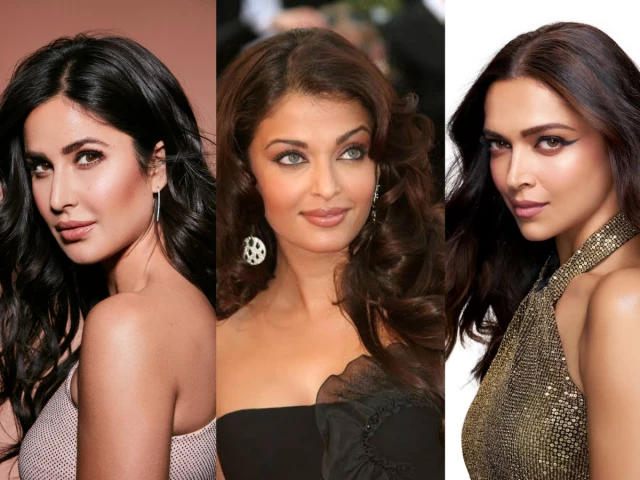
Today, that paradigm has fundamentally fractured. According to a landmark report by Variety, Bollywood’s premier female powerhouses—including Deepika Padukone, Kareena Kapoor Khan, Priyanka Chopra Jonas, Anushka Sharma, and Katrina Kaif—are deliberately recalibrating their careers. Rather than tying their entire cultural footprint to the box office, these iconic performers are adopting a deeply selective approach to cinema, favoring quality over quantity, and aggressively channeling their immense capital, influence, and star power into burgeoning business empires, strategic global investments, and high-concept streaming projects.
This strategic retreat from the traditional, relentless cinematic treadmill has not created a vacuum; rather, it has catalyzed a generational passing of the torch. A hungry, dynamic new wave of talent—led by Janhvi Kapoor, Kriti Sanon, Rashmika Mandanna, Ananya Panday, and Triptii Dimri—is stepping into the commercial limelight, maintaining high-volume production schedules to cement their own places in the industry.
Read Also
Yet, for the veterans, this shift is not an exit from entertainment. It is an evolution. By diversifying into venture capitalism, beauty conglomerates, direct-to-consumer children’s lines, and international streaming narratives, Bollywood’s elite are proving that modern superstardom is no longer confined to a two-hour theatrical release. Instead, they are dismantling the traditional celluloid ceiling, proving that films are no longer the exclusive measure of success, but merely one foundational pillar of a much larger, multi-industry empire.
Detailed Chronology: The Evolution of Bollywood’s Female Stardom
To understand the magnitude of today’s strategic realignment, one must trace the historical trajectory of female representation and career longevity in Hindi cinema.
Historically, an actress’s prime was rigidly defined by youth and continuous cinematic output. Actresses were frequently viewed as interchangeable commodities within male-dominated action and romance templates. Those who attempted to slow down or pivot often faced immediate professional depreciation. Pioneers like Aishwarya Rai Bachchan challenged this orthodox timeline decades ago, stepping away from the frenetic pace of mainstream commercial movies while successfully retaining her monumental global equity and brand appeal.
However, the late 2010s and early 2020s marked an inflection point. The traditional theatrical model began to groan under the weight of changing audience demographics, the meteoric rise of digital streaming platforms (OTT), and the post-pandemic economic realities of the box office.
- The Late 2010s: Actresses began hitting structural roadblocks in mainstream writing. While male stars anchored massive, tentpole action spectacles, female characters in high-grossing blockbusters were increasingly relegated to decorative, passive tropes. Concurrently, stars like Priyanka Chopra Jonas pivoted internationally, starring in projects like Quantico and The Sky Is Pink (2019), signaling a conscious desire to break geographical boundaries. Anushka Sharma, following her appearance in Zero (2018), began prioritizing production ventures (Clean Slate Filmz) and her personal life, signaling a departure from the rat race.
- The Pandemic and the OTT Boom (2020–2022): The global lockdowns forced a collective industry pause, accelerating the adoption of subscription video-on-demand (SVOD) platforms. Streaming services offered complex, morally ambiguous, and character-driven narratives that conventional studios routinely overlooked. Kareena Kapoor Khan’s haunting turn in Jaane Jaan (2023) and Alia Bhatt’s self-produced dark comedy Darlings (2022) demonstrated that digital platforms could deliver both critical acclaim and mass cultural cachet without requiring a multi-month theatrical promotional marathon.
- The Entrepreneurial Gold Rush (2021–Present): Moving beyond simple endorsement deals, A-listers began crossing the line from celebrity promoters to equity-holding founders. Katrina Kaif’s Kay Beauty became a market leader in the direct-to-consumer (D2C) cosmetic space; Deepika Padukone launched her lifestyle and self-care brand 82°E alongside strategic venture investments; and Alia Bhatt scaled her conscious children’s clothing label, Ed-a-Mamma.
- The Current Landscape: Today, the industry is witnessing a clear bifurcation. Established icons pick projects with surgical precision, while younger talents like Kriti Sanon, Janhvi Kapoor, and Rashmika Mandanna occupy the high-frequency cinematic space, ensuring the box office machine keeps turning.
Supporting Context & Metrics: The Economics of the Shift
The transformation of Bollywood’s A-list actresses from salaried performers to diversified moguls is underpinned by hard economic realities. The sheer opportunity cost of committing to a traditional theatrical film—which demands months of exhaustive preparation, principle photography, and grueling nationwide promotional tours—has skyrocketed when weighed against alternative revenue streams.
The Math of Modern Stardom
Consider the financial equation of a modern celebrity empire:
- Equity Over Endorsements: Historically, stars commanded flat fees for brand endorsements. Today, top actresses take equity stakes in early-stage startups, fashion labels, and wellness tech companies. When these brands scale, the financial returns eclipse a standard movie paycheck manifold.
- The Digital Equalizer: According to industry insiders, top-tier streaming platforms pay A-list actresses parity wages compared to their historical theatrical rates. Streaming affords these stars top-tier compensation without the punishing, multi-city promotional circus required by traditional theatrical releases.
- Global Monetization and Events: Private appearances, high-profile international destination weddings, global fashion weeks, and strategic brand activations yield immense financial returns for a fraction of the time investment required to shoot a feature film.
The Cinematic Vacuum: The Rise of the Hyper-Masculine Spectacle
A critical catalyst driving actresses away from high-volume film schedules is the changing nature of the Bollywood box office. In recent years, hyper-masculine, large-scale action spectacles have dominated commercial earnings.
Films like Sandeep Reddy Vanga’s Animal and Sukumar’s Pushpa shattered box office records, yet drew intense scrutiny from critics and industry professionals alike regarding their regressive treatment of female characters. When cinematic supply skews heavily toward testosterone-driven epics where female roles are routinely marginalized, critically discerning, established actresses naturally choose to opt out rather than compromise their artistic integrity or personal brand equity.
Official Statements and Industry Insights
The industry-wide ramifications of this shift have sparked intense debate among leading filmmakers, distributors, and critics.
Renowned filmmaker Rahul Dholakia emphasized that the audience’s appetite for these leading women remains insatiable, laying the onus squarely on the creative community to step up its writing:
"These are top billing actresses who are extremely popular, the audiences would love to see more of them on screen. At the same time, their priorities might be elsewhere. Also, we need to write better roles that can inspire them."
Weighing in on the economic parity offered by digital alternatives, acclaimed director and producer Suparn Verma noted that streaming platforms have fundamentally leveled the playing field:
"Actresses are being paid as per status. It is not a step down in terms of money." Verma highlighted that OTT has liberated actors from the tyranny of Friday-night box office collections, opening doors to nuanced storytelling that respects an artist’s stature and financial worth.
Critiquing the current creative trajectory of mainstream blockbusters, filmmaker Mudassar Aziz pointed directly to the tectonic shift in audience preferences and the resulting artistic alienation of top talent:
"The less said about the female characters in those movies, the better," Aziz remarked, addressing the proliferation of hyper-masculine action dramas that have crowded out substantial, multi-dimensional female narratives.
Exhibitor and distributor Akkshaye Rathie offered a pragmatic commercial perspective, noting that true stardom eventually buys absolute autonomy:
"Actresses such as Kareena and Aishwarya have spent decades building their stardom, giving them the freedom to slow down while allowing younger actresses to take centre stage."*
This generational handoff ensures that while the veterans curate their cinematic appearances with surgical precision, an ambitious roster of rising stars—including Kriti Sanon, Triptii Dimri, and Ananya Panday—maintains the necessary box-office velocity.
Future Outlook: The Next Era of Indian Entertainment
As the dust settles on this transitional era, the roadmap for Bollywood’s elite is remarkably clear. The era of the ubiquitous movie star—bound to a studio treadmill and measured solely by Friday-night opening numbers—is officially a relic of the past.
- Hybrid Career Models: Future generations of actors will look to pioneers like Padukone, Chopra Jonas, and Bhatt as templates for success. The expectation to star in four to five films a year will be permanently replaced by a hybrid model: one meticulously chosen, high-impact cinematic or streaming project annually, balanced alongside robust entrepreneurial ventures.
- Institutional Power: As these actresses continue to found venture funds, build beauty conglomerates, and produce their own content (via production houses like Clean Slate Filmz, Eternal Sunshine Productions, and Kaos Productions), they will exercise direct creative control over greenlighting stories that center women authentically.
- Global Integration: The blurring lines between Bollywood, Hollywood, and global streaming ecosystems will accelerate. Stars will no longer be geographically or culturally siloed; their brands will operate on a truly borderless, multinational scale.
Ultimately, Bollywood’s leading ladies are not stepping away from cinema out of fatigue or disinterest. Instead, they are stepping into a vastly superior, more lucrative form of power. By transforming films from an all-consuming obligation into just one vital component of a sprawling business empire, they have permanently rewritten the rules of what it means to be a modern icon.



Comments
Facebook App ID not configured. Please add it in the Customizer.