
Executive Overview
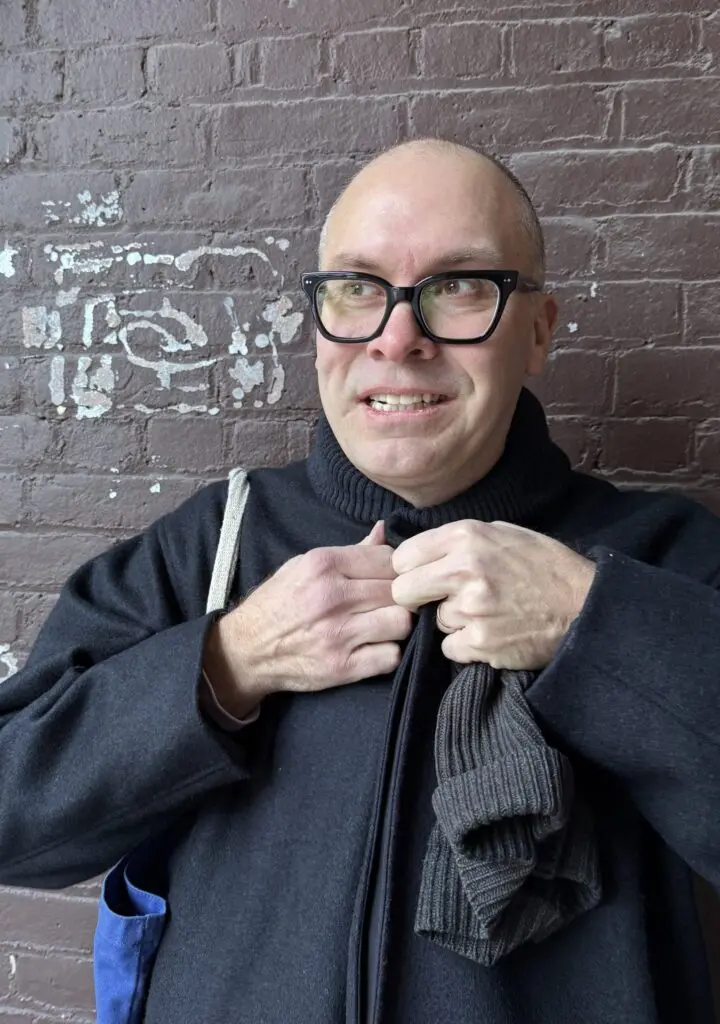
In the sprawling, perpetually morphing landscape of contemporary American letters, few poetic voices capture the brutalist romanticism of New York City quite like Mike Carlson. Selected as the Missouri Review Poem of the Week for August 10, 2026, Carlson’s piece, "Anonymous Report of Unsafe Conditions," serves as both a masterclass in urban phenomenology and a poignant meditation on loss, memory, and the strange, mechanical resilience of the metropolis.
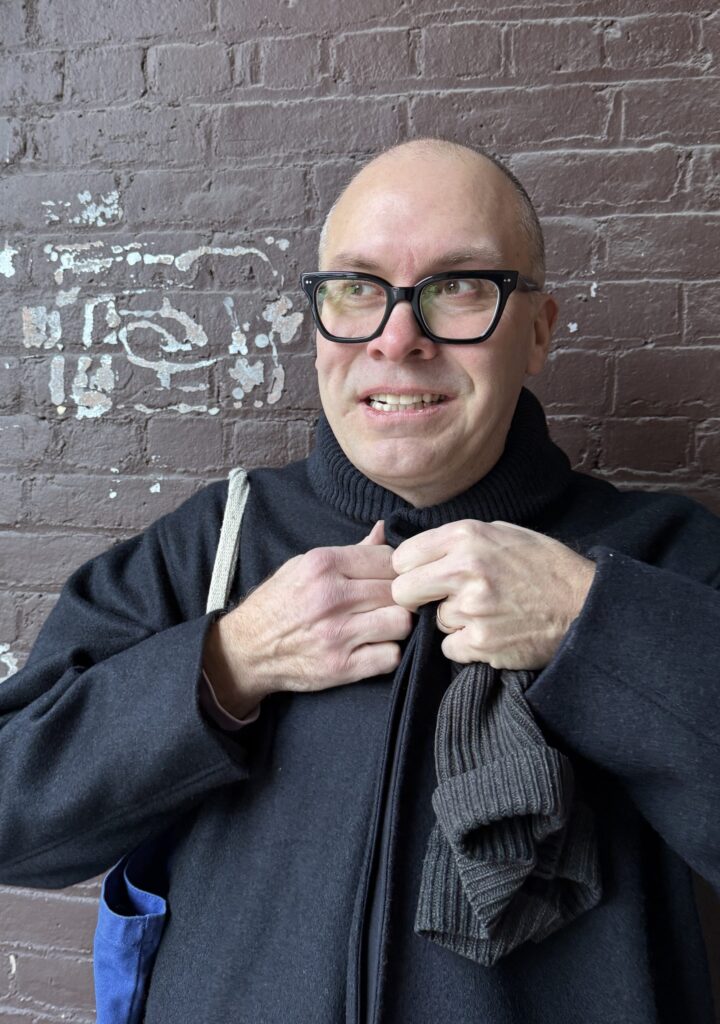
Carlson, an established voice in contemporary poetry and a public school educator at P.S. 107 in Brooklyn, brings an educator’s eye and a native’s grit to his craft. Best known for his Juniper Prize-winning debut collection, Cement Guitar, and his 2025 Tupelo Press publication, Tips to Help You Do Your Best, Carlson explores the precarious friction between what a city presents to its inhabitants and what it quietly, ruthlessly buries beneath the asphalt.
"Anonymous Report of Unsafe Conditions" is not merely a poem about stolen property or fleeting seasons; it is a structural autopsy of urban alienation. It interrogates the specific brand of desolation unique to the five boroughs—where historical violence, corporate artifice, and everyday inconveniences fold into one another seamlessly. Through a close examination of the poem, its structural mechanics, the author’s revealing creative genesis, and its placement within the wider landscape of contemporary literary curation, this report unpacks the rich layers of a text destined to define the mid-2020s poetic landscape.
Read Also
Detailed Chronology: The Genesis and Evolution of a Poem
To understand the weight of "Anonymous Report of Unsafe Conditions," one must trace its lineage backward through nearly two decades of urban living, creative revision, and literary maturation.
The Inciting Incident (c. 2008)
The conceptual seed of the poem was planted eighteen years prior to its prominent publication, born from a mundane yet formative crisis of daily life in New York City. Fresh off a shift at work, Carlson discovered that his primary mode of transit—a bicycle he had owned since the eighth grade, originally purchased with hard-earned wages from his first job as a busboy—had vanished into the ether of the city.
When he returned home and was asked by his girlfriend (now his wife) about the missing bicycle, Carlson’s reply was starkly laconic: "I don’t know. I guess someone stole it."
This unbothered, matter-of-fact response inadvertently struck a stylistic chord, channeling the detached, absurd existentialism reminiscent of an Albert Camus protagonist. Yet, it took years for this lived experience to transmute from an anecdote into art.
The Composition and Crafting Phase
The first line of the poem—"What is true about New York is that / your bike will be stolen"—was penned years after the incident, serving as an anchor for a protracted process of accretion and subtraction. Carlson has noted that he continuously added and stripped away facts and images until the poem achieved a precise tonal equilibrium. His self-stated benchmark for the piece was formidable: he sought a balance of imagery that Milton Glaser, the legendary designer behind the iconic "I ♥ NY" logo, might appreciate if he happened to spot it scribbled on a greasy napkin at the back of a taxi.
Publication and Critical Reception (August 2026)
Following the publication of his acclaimed poetry collection Tips To Help You Do Your Best by Tupelo Press in 2025, Carlson’s literary footprint expanded significantly. The selection of "Anonymous Report of Unsafe Conditions" by the Missouri Review in August 2026 marked a high-water mark for his ongoing exploration of urban fragility. Positioned within a dynamic summer slate of contemporary verse—alongside works by writers like Anna Drasko, Michael Broek, and Amanda Gaines—Carlson’s poem quickly resonated with readers and critics for its uncompromising, sharp-eyed lyricism.
Supporting Context & Metrics: The Literary Landscape of Mike Carlson
To properly contextualize Carlson’s work, one must examine the critical reception of his previous bodies of work, his stylistic lineage, and his dual life as both a New York City public school teacher and an avant-garde chronicler of the mundane.
Bibliographic Milestones
- Cement Guitar: Carlson’s debut collection of poetry. Praised for its gritty lyricism and rhythmic urgency, it earned the prestigious Juniper Prize, instantly cementing his place within contemporary American poetry circles.
- Tips to Help You Do Your Best (Tupelo Press, 2025): Published just a year prior to the release of his Missouri Review feature, this collection deepened Carlson’s thematic exploration of domesticity, urban exhaustion, and psychological endurance.
- Periodical Footprint: Carlson’s verse has steadily occupied space in some of the nation’s most discerning literary journals, including the Antioch Review, Gulf Coast, New Letters, Seneca Review, and The Southern Review.
The Classroom and the Page
Operating out of P.S. 107 in Brooklyn, Carlson belongs to a rich tradition of poet-teachers who ground their ethereal artistic impulses in the concrete, daily realities of working-class institutional spaces. This background manifests clearly in "Anonymous Report of Unsafe Conditions," where the syntax mimics the straightforward instruction of a public document while subverting it with devastating, surreal emotional insights.
Deconstructing the Text: A Close Reading of "Anonymous Report of Unsafe Conditions"
The poem opens with a blunt, declarative thesis on municipal inevitability:
What is true about New York is that
your bike will be stolen.
Decent apples cost too much.
Anyone might write a song.
From its inception, the speaker establishes an unromantic, observational authority. The items listed—the loss of property, the inflation of basic sustenance, the democratization of artistic output—are treated as baseline physical laws, akin to gravity or thermodynamics.
As the poem progresses, it delves into the sensory distortions of urban micro-climates:
Mist works differently
after it hits the traffic lights
on the most desolate part of Flatbush Avenue
with the box elders on one side
and the rest of your day on the other.
Here, Carlson captures the phenomenological weight of walking through Brooklyn. The landscape is cleaved in two: the botanical persistence of the box elder trees on one flank, and the psychological burden of a looming work shift or existential ledger on the other.
Perhaps the poem’s most striking pivot arrives when it confronts the manufactured nature of seasonal nostalgia:
You can turn onto Prospect Park West
and see old snow against the trees
in late summer and then see film trucks and realize
it’s only piles of cotton
with dead leaves in them set down
to embody the despair of early February.
This passage serves as a brilliant critique of how modern life—particularly mediated by the film industry that constantly colonizes New York streets—artificially manufactures the exact brand of melancholy that residents already experience organically. The juxtaposition of "old snow" with "piles of cotton" unmasks the theatricality of urban despair.
The poem concludes with a chilling meditation on human transience and administrative indifference:
In the movies, you call the police
and they say you have to go twenty-four hours
without seeing a person before
they’re officially missing. In New York,
they’re gone. They’re missing right now.
They stay that way.
By dismantling the cinematic tropes of missing persons and contrasting them with the callous, frictionless velocity of a city of eight million souls, Carlson achieves a universal statement on urban invisibility. People do not merely vanish; they are absorbed, smoothed over by the immense machinery of the metropolis, leaving behind only the ghosts of stolen bicycles and phantom snow.
Official Statements and Authorial Insights
In his official Author’s Note accompanying the Missouri Review feature, Carlson reflected on the dialectic tension that anchors his relationship with the city:
"New York City is incessantly surprising and heartbreakingly dependable. I’m always trying to put my finger on what it is about the precarious balance of pros and cons that compels me to live here."
This sentiment encapsulates the core philosophy driving "Anonymous Report of Unsafe Conditions." The poem acts as an ongoing experiment in accounting—a ledger where the loss of a childhood bicycle, the exorbitant price of fruit, and the grim discovery of a sunfish devoured by yellowjackets outside a German preschool balance precariously against the sudden, blinding beauty of a traffic light hitting the mist on Flatbush Avenue.
Future Outlook
As Mike Carlson continues to build upon the momentum of his 2025 Tupelo Press release and his high-profile appearances in elite literary journals throughout 2026, "Anonymous Report of Unsafe Conditions" stands as a crucial waypoint in his trajectory. It signals a mature voice operating at the absolute height of its powers—one capable of taking the raw, unvarnished grit of daily municipal survival and elevating it to the realm of high literature.
For readers, critics, and fellow poets, Carlson’s work offers an essential reminder: poetry does not need to escape into pastoral fantasies to find transcendence. Often, the most profound revelations are waiting on a Brooklyn sidewalk, tucked quietly beneath the weight of an ordinary, stolen day.

Comments
Facebook App ID not configured. Please add it in the Customizer.