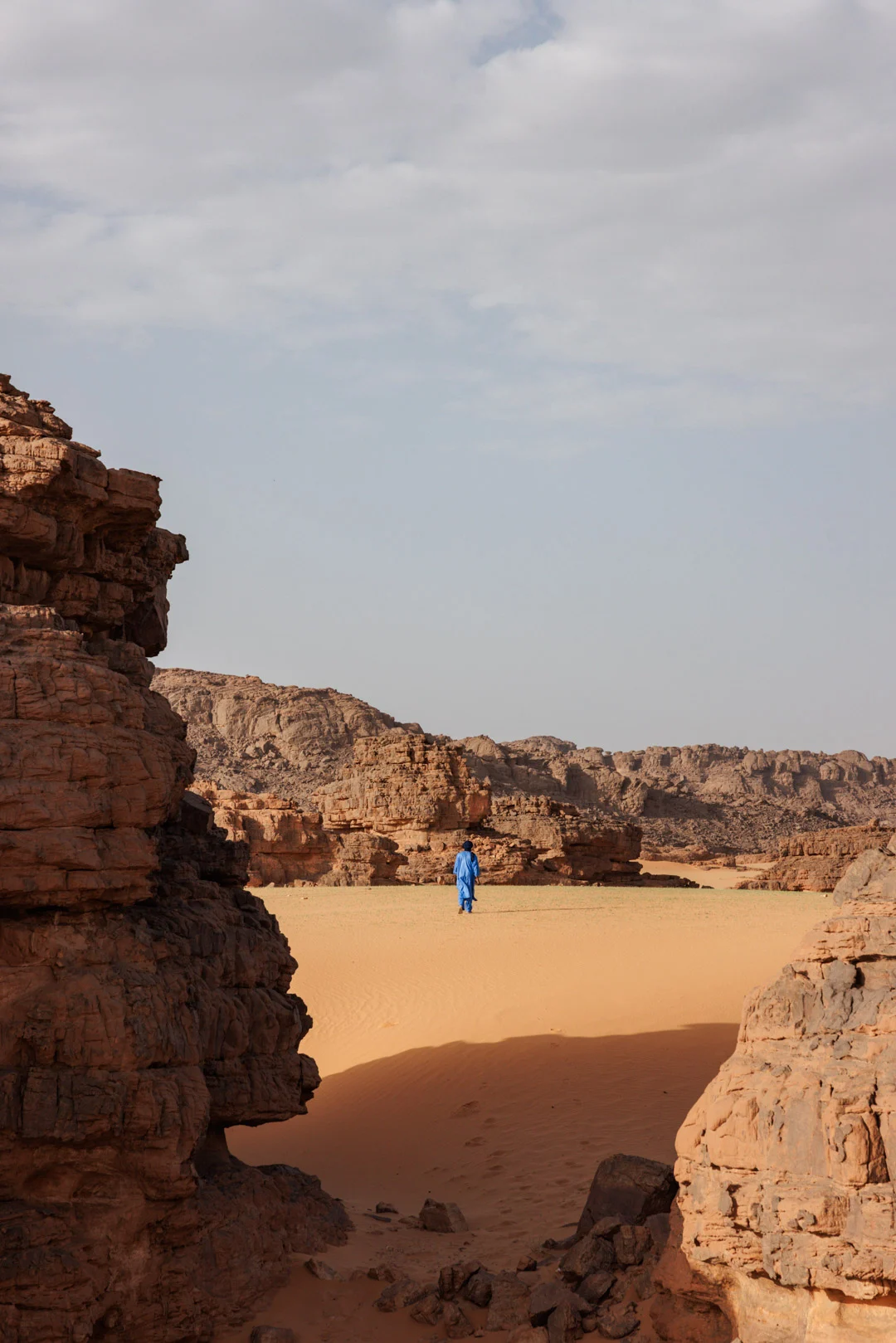
Deep in the remote reaches of the central Sahara, where the towering sandstone pillars of the Tassili n’Ajjer stand as silent sentinels against the wind, a profound and ancient transformation occurs. Following rare afternoon downpours, a faint, ephemeral green brushes the golden dunes—a visual reminder that the desert is not a place of permanent stasis or absolute emptiness, but a living, breathing landscape. Against this striking geological backdrop unfolds Sebeïba, a legendary festival tracing its origins back three millennia.
Staged in the oasis town of Djanet, Sebeïba is an annual day-long contest between two rival ksours (historic oasis communities): El Mihan and Zelouaz. Through hypnotic drumming, soaring ancestral poetry, and intense, rhythmic sword dances, the communities re-enact a centuries-old heritage. Yet, as journalists and documentarians Ben Buckland and Carissa Western observe, Sebeïba is far more than a static historical re-enactment. It is a living cultural ecosystem navigating the complex pressures of the modern world.
Today, this ancient festival exists at a delicate crossroads. Once part of a vast, transnational network of trans-Saharan gatherings that bound Imuhar (preferred self-identification for the indigenous communities commonly referred to as Tuareg) populations together across Algerian, Nigerien, and Libyan borders, Sebeïba has grown increasingly localized. Heightened regional security concerns have dismantled neighboring cross-border festivals, forcing Djanet to turn inward. At the same time, the rise of domestic tourism from northern Algeria, alongside the ubiquity of smartphones and digital media, injects both vital economic energy and the looming threat of commercial fossilization.
This in-depth report explores the historical roots, socio-cultural mechanics, and modern challenges facing Sebeïba, examining how an ancient desert community balances the preservation of its identity with the relentless march of globalization.
Detailed Chronology: From the Mediterranean Coast to the Deep Sahara
The Journey South: Through the Crucible of Algiers
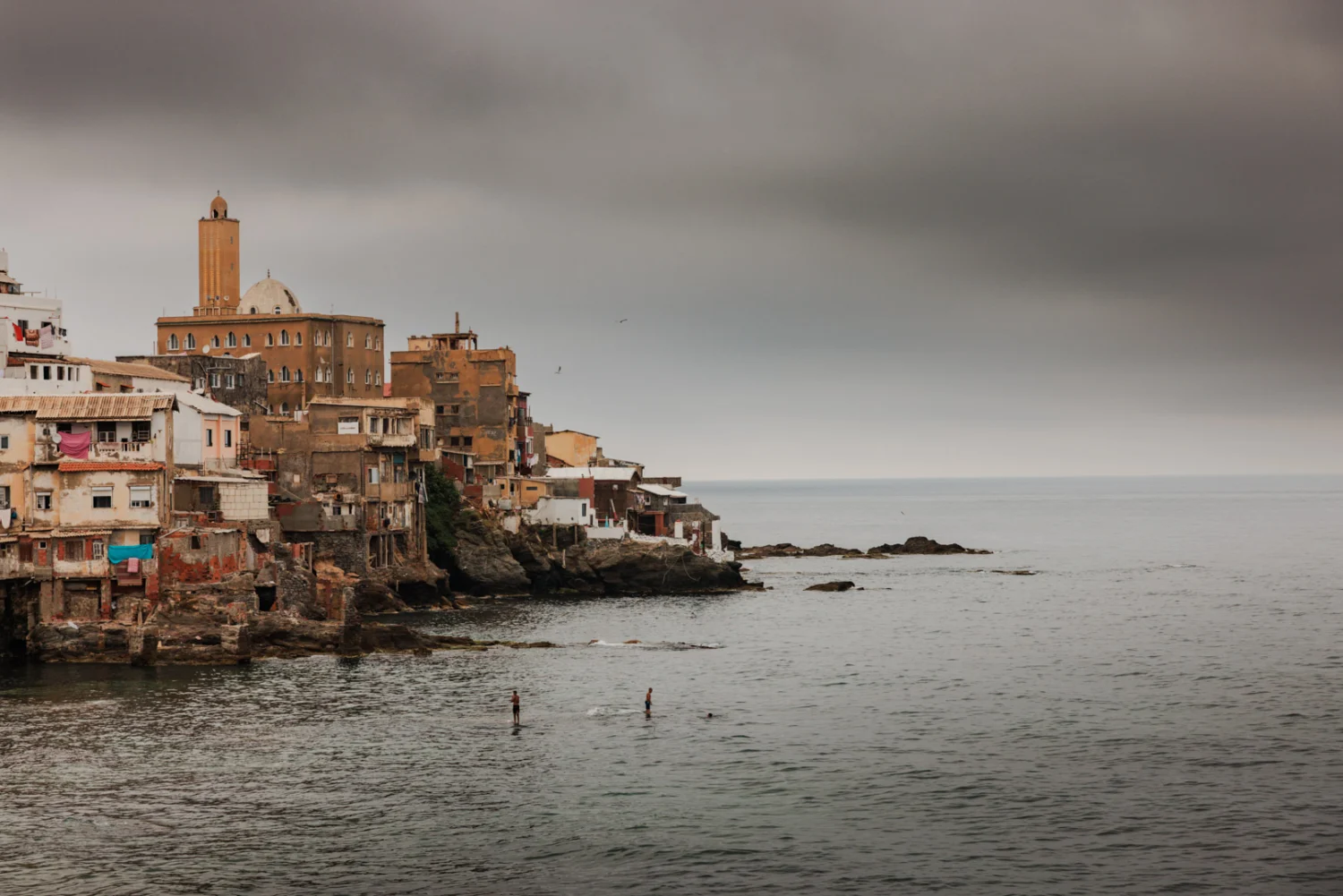
The journey to witness Sebeïba begins thousands of miles to the north, in the coastal capital of Algiers. Here, a cold, maritime fog rolls off the Mediterranean, creeping through the ancient alleys of the Casbah and wrapping the city’s historic minarets in long, white scarves.
The streets of Algiers bear the heavy, layered weight of modern history. This was the crucible of the twentieth century’s brutal anti-colonial struggle—the site of the harrowing urban warfare during the Battle of Algiers. Decades later, it bore witness to the uncounted casualties of the Algerian Civil War, leaving lingering historical questions that remain unresolved. Leaving this coastal metropolis behind, travelers board late-night flights bound for the deep Sahara. These nocturnal departures—dictated by cooler atmospheric conditions and the allocation of airspace—drop visitors into absolute darkness. Arriving on midnight tarmac, travelers are greeted by highways where wind-blown dunes sweep across the asphalt like rivers of sand, threatening to reclaim the infrastructure if human vigilance slips for even a moment.
Djanet and the Weeks of Preparation
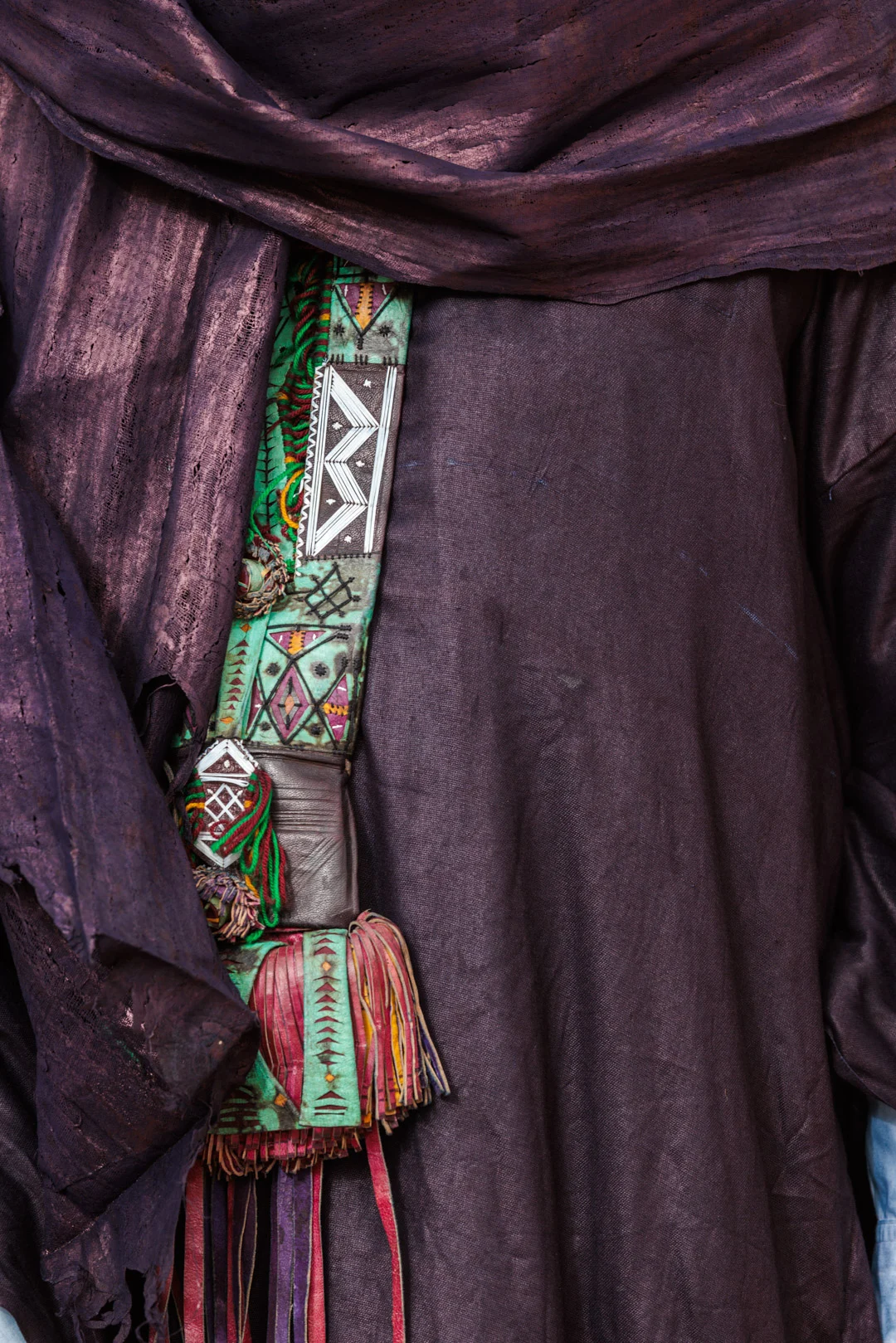
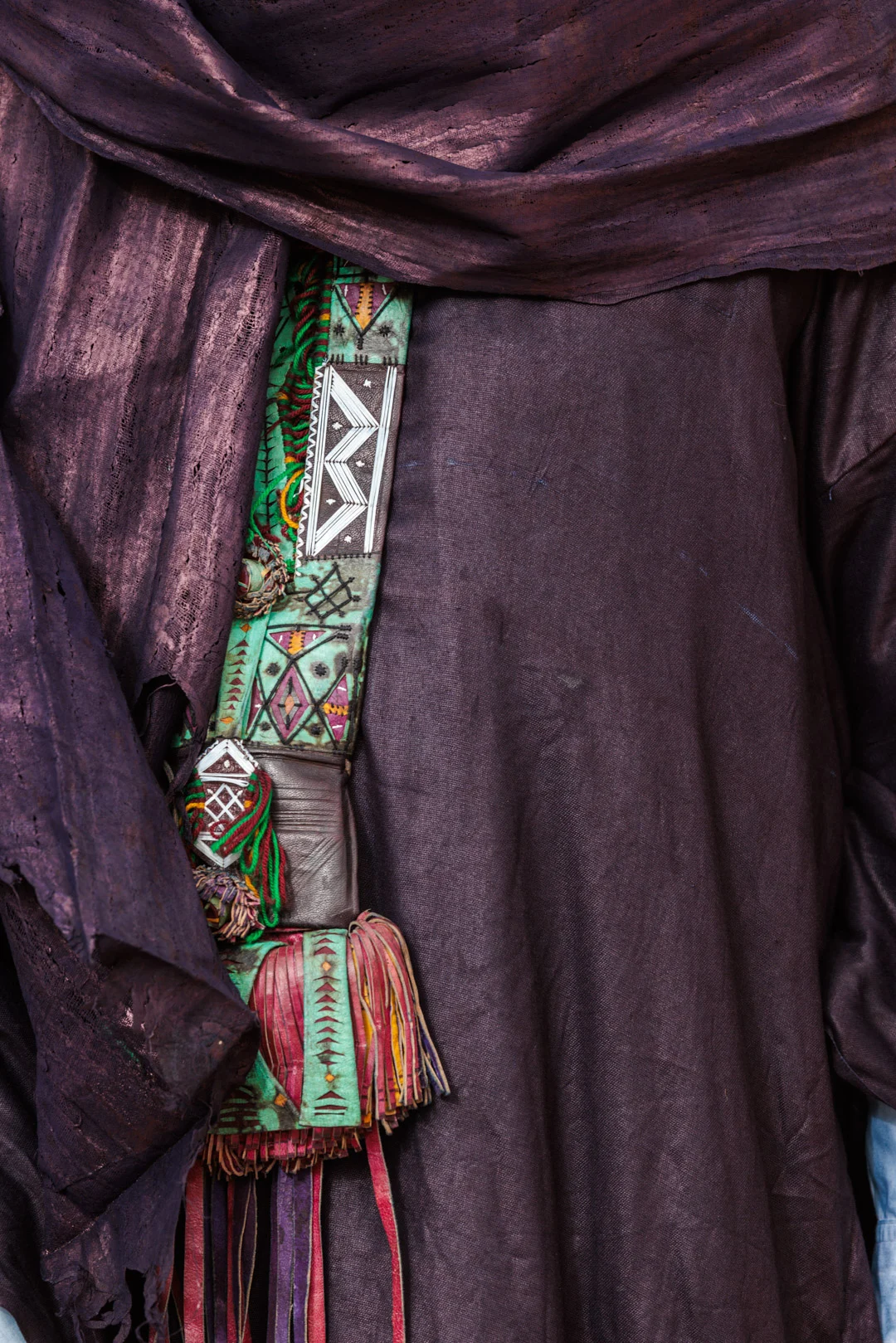
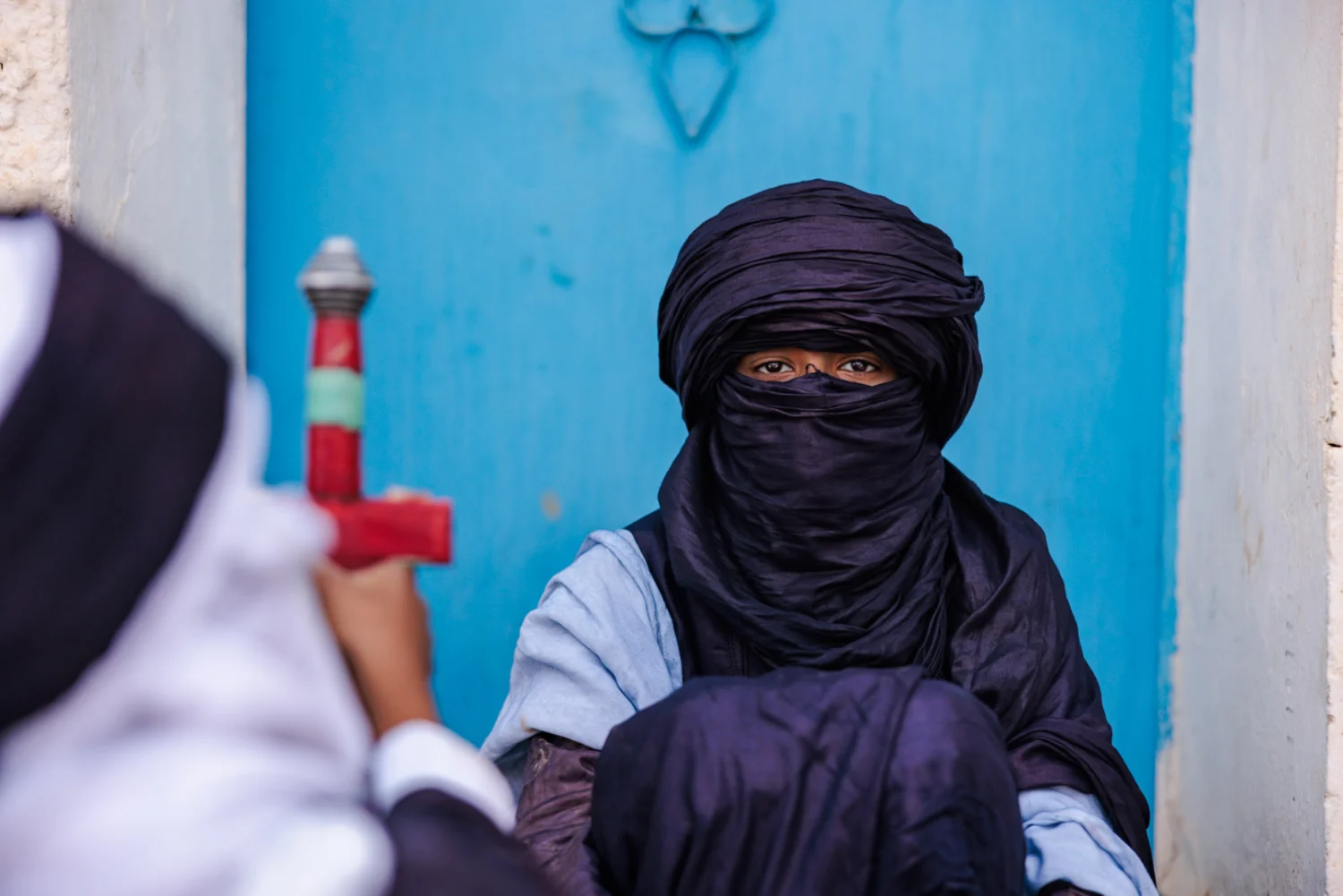
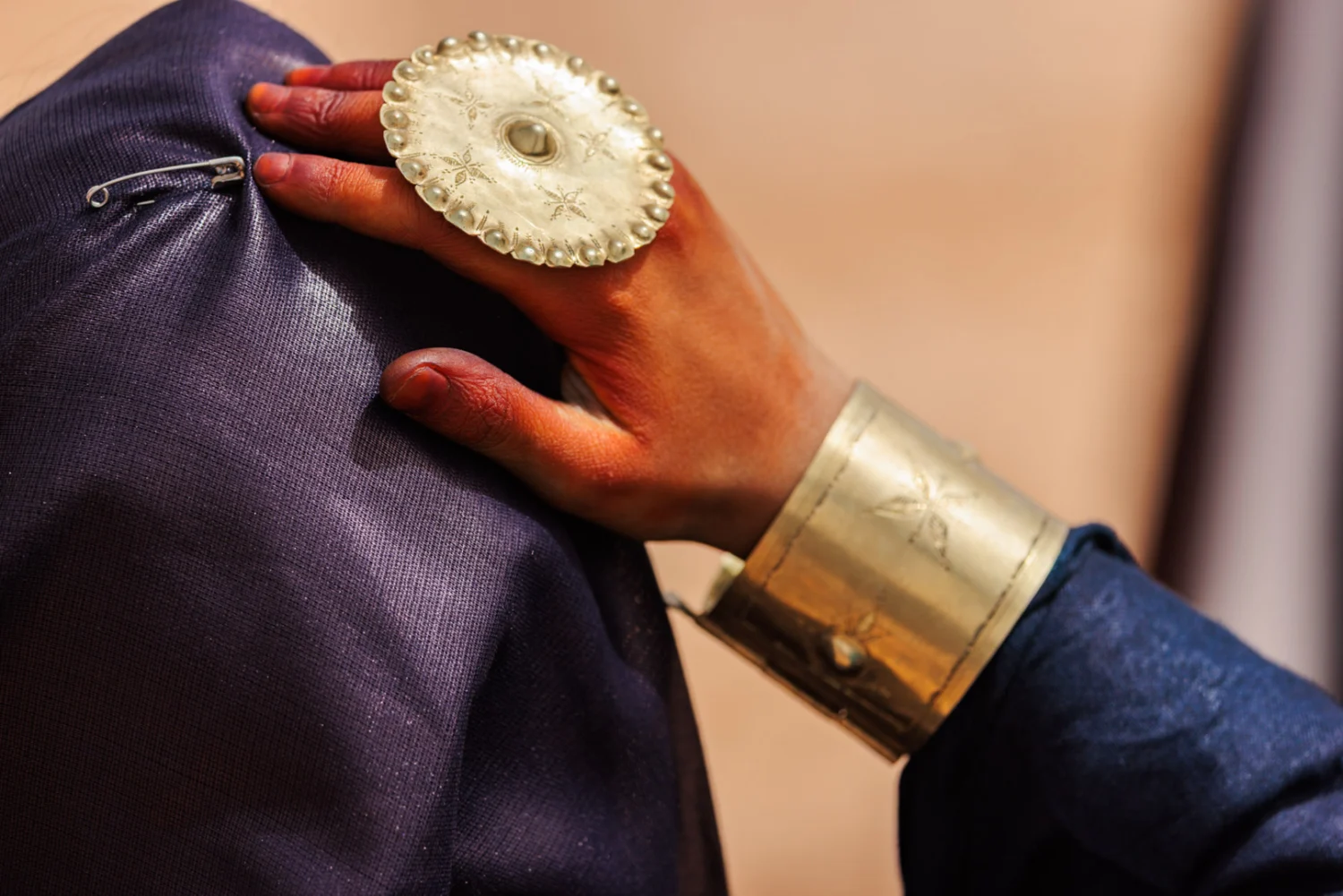
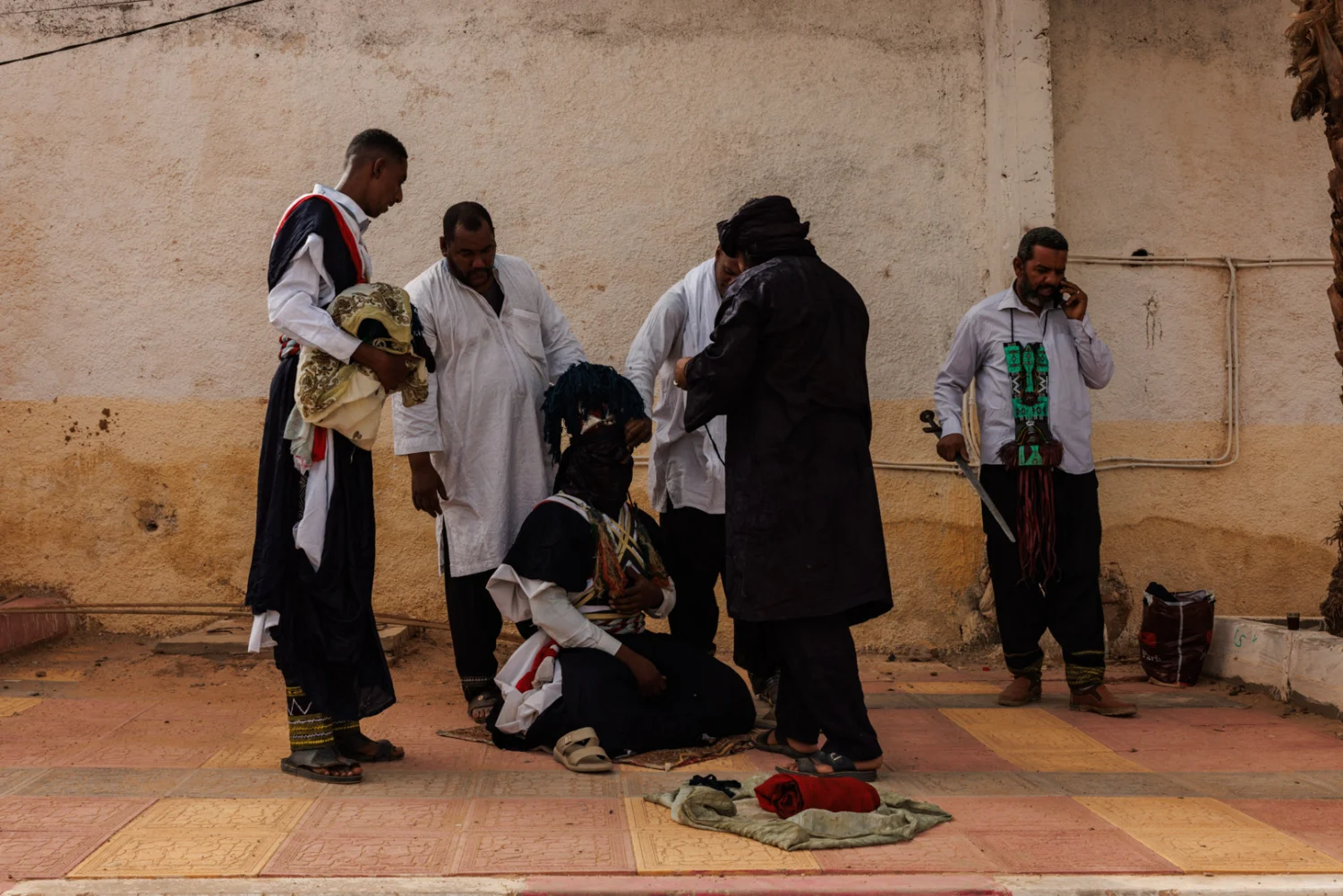
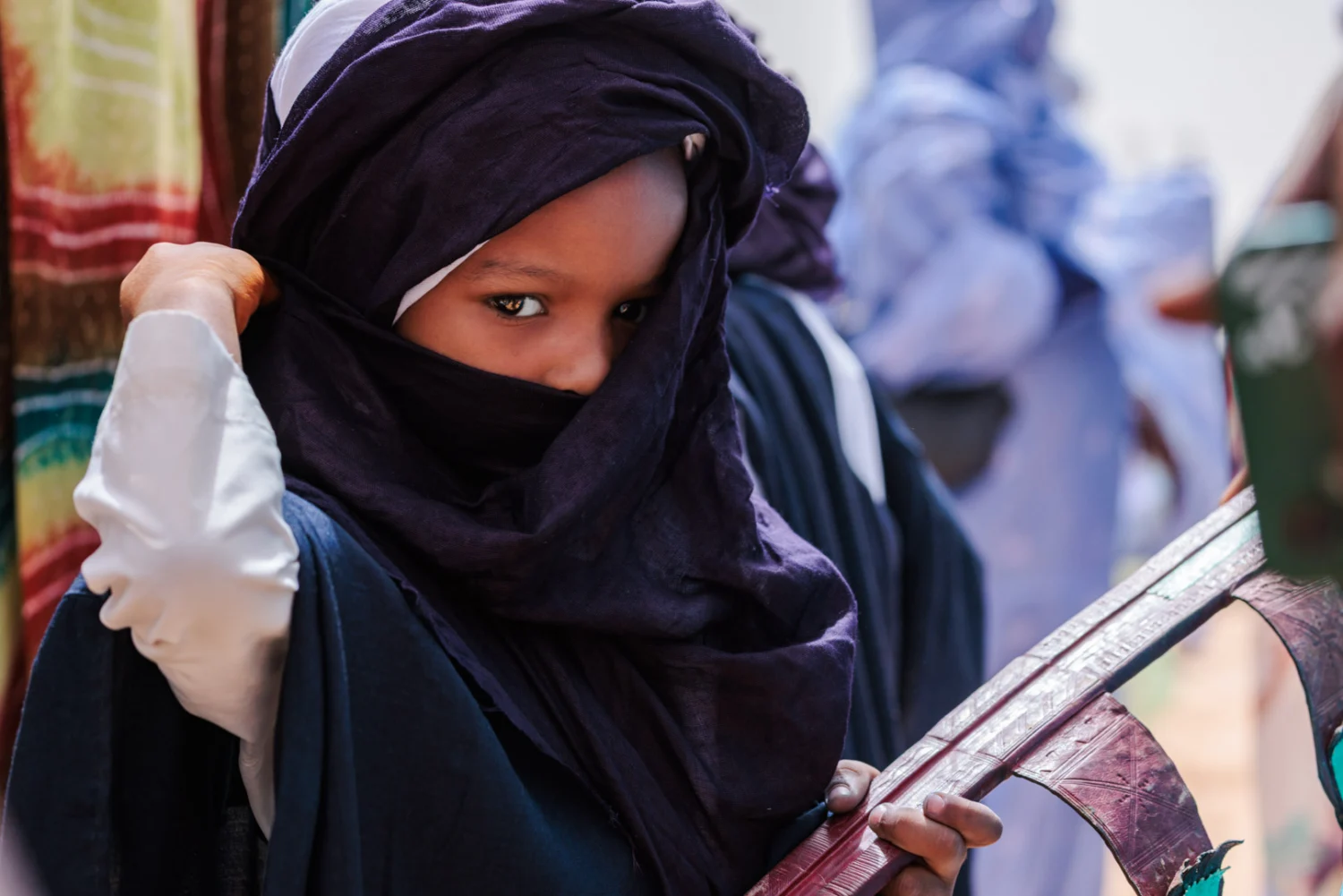
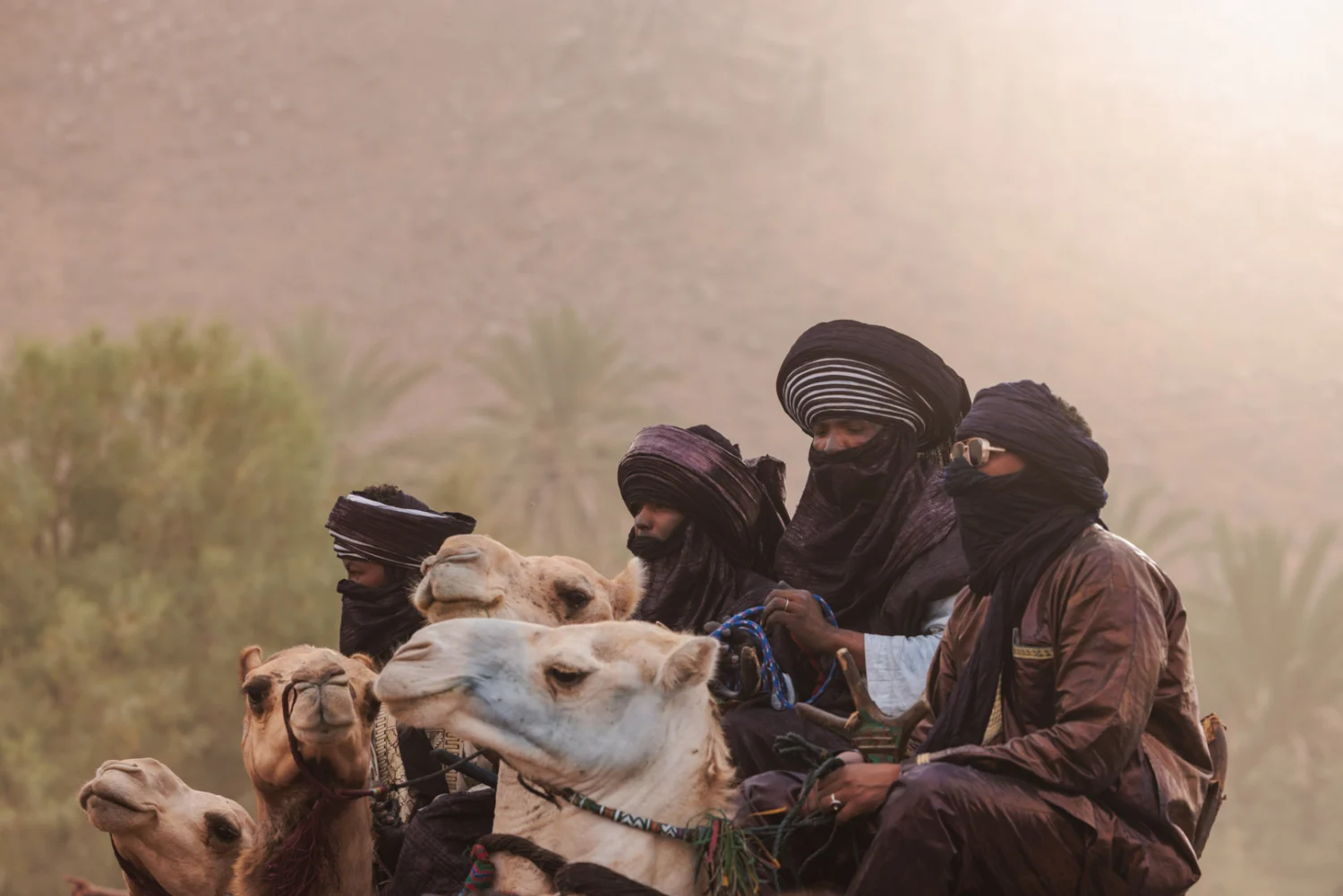
In the oasis town of Djanet, preparation for Sebeïba begins weeks before the official festival date. The community mobilizes in a synchronized rhythm of heritage preservation. Women labor over traditional cuisine, polish ancestral silver heirlooms, and inspect the tagelmust—the precious indigo veils that appear nearly black in the shade.
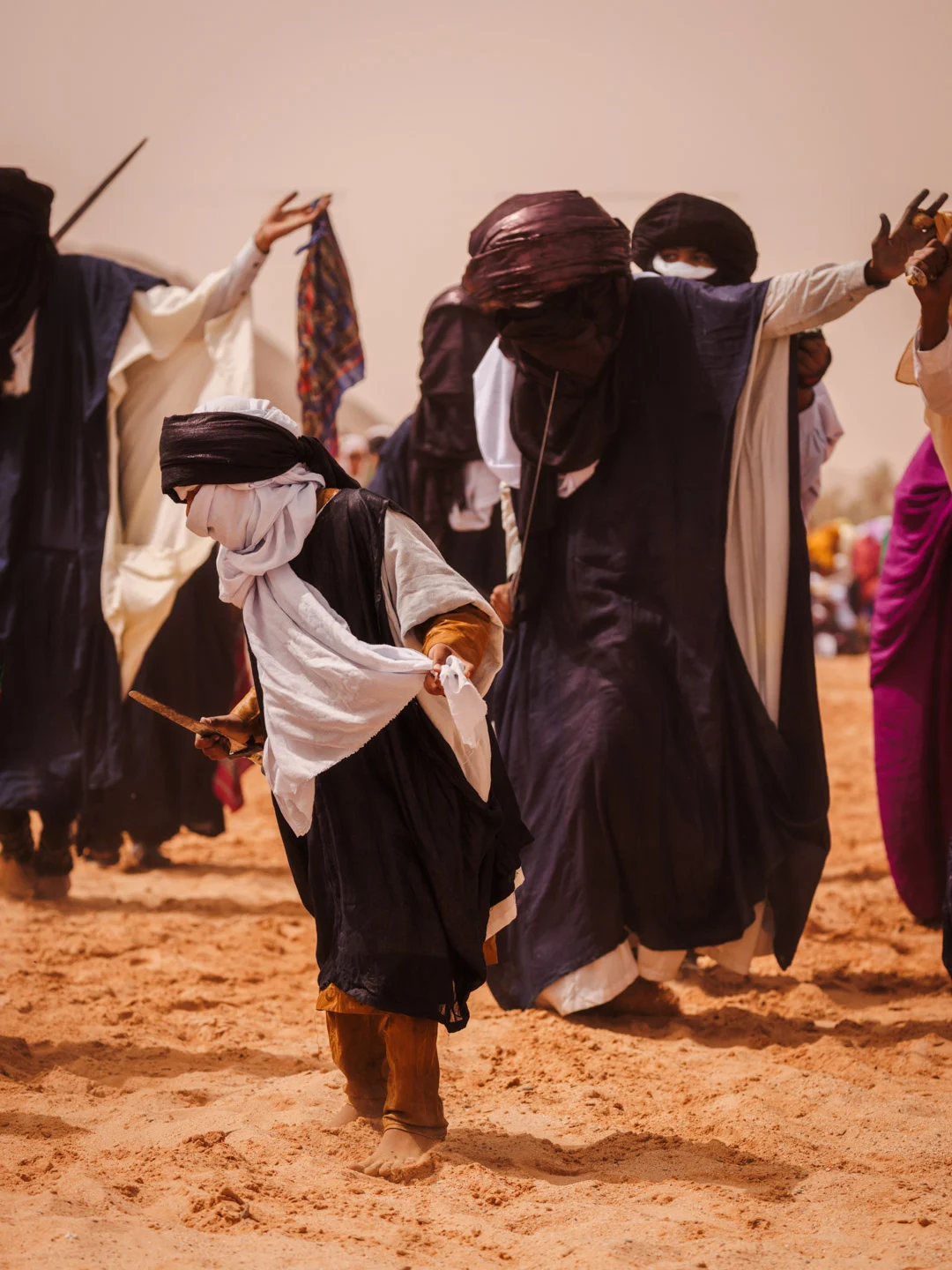
Simultaneously, musicians and dancers rehearse the intricate steps and percussive cues that will determine which half of the oasis emerges victorious. Historically, the most intense rituals and the central festival day were strictly guarded against the participation of very young children. Today, however, that boundary has softened. Elders deliberately invite the younger generation into the rehearsal spaces and preliminary rituals, recognizing that in an era of rapid modernization, instilling a visceral love for Sebeïba is essential to keeping the tradition alive.
The Festival Day: Tunfar and the Clashing of Swords
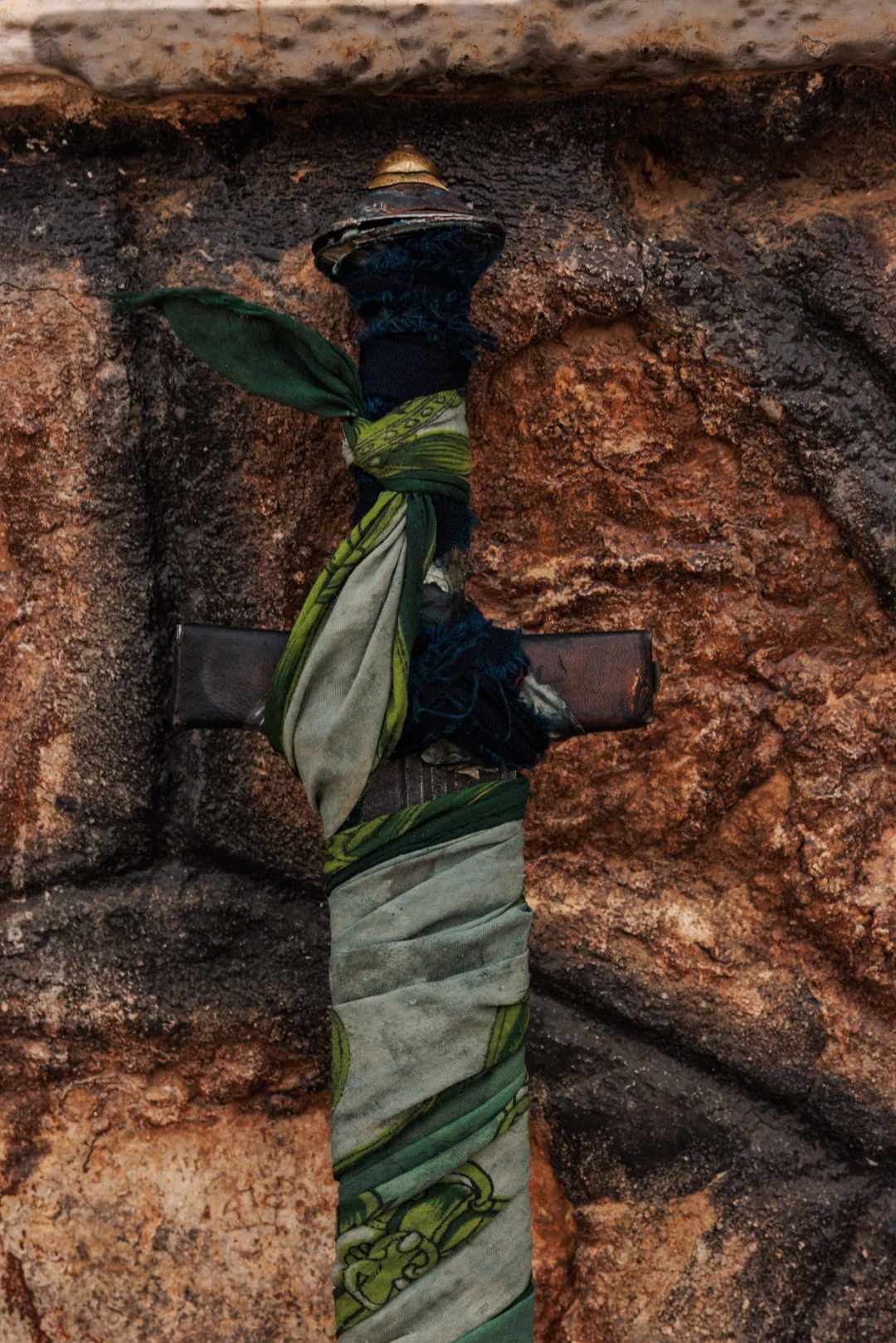
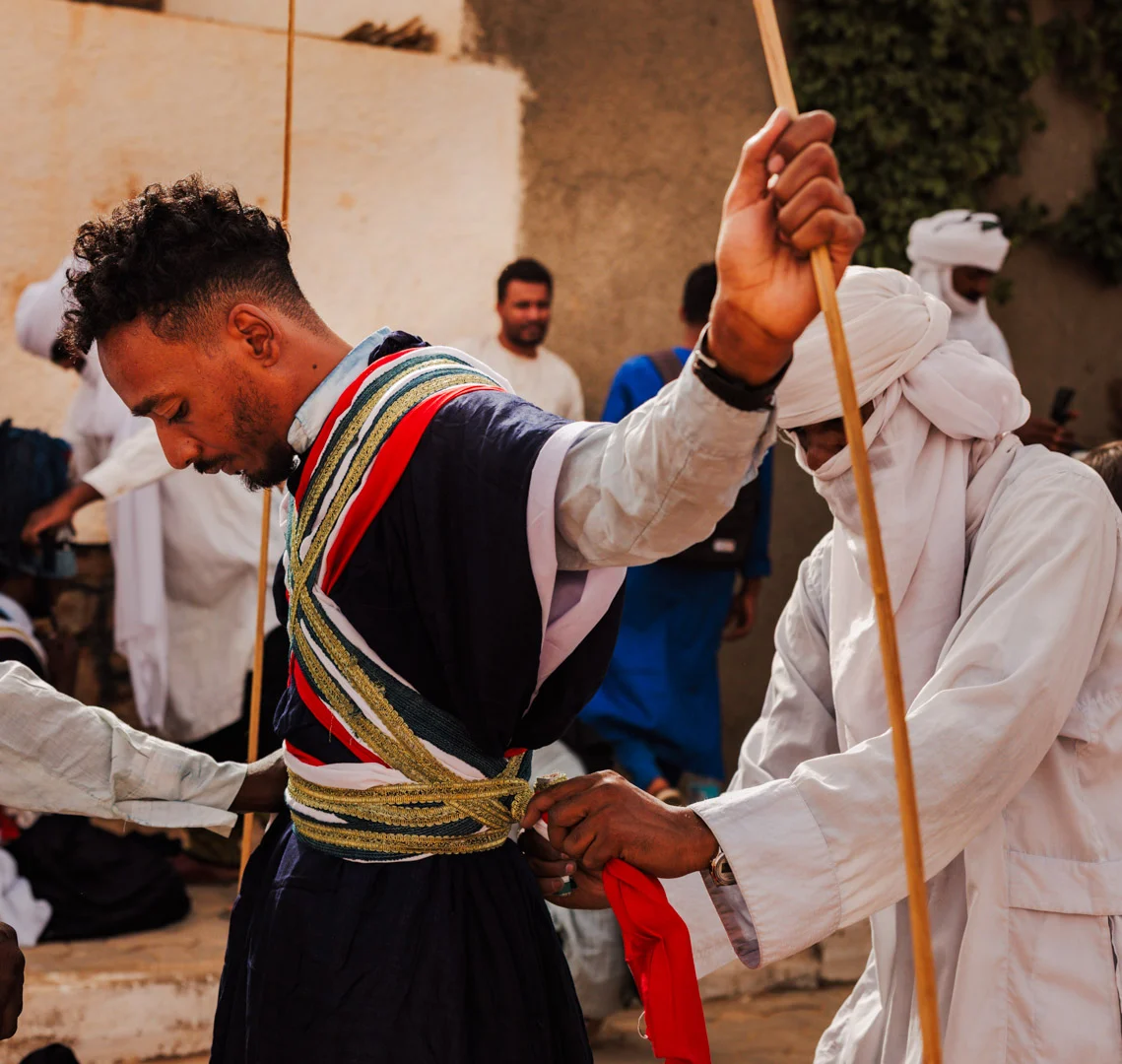
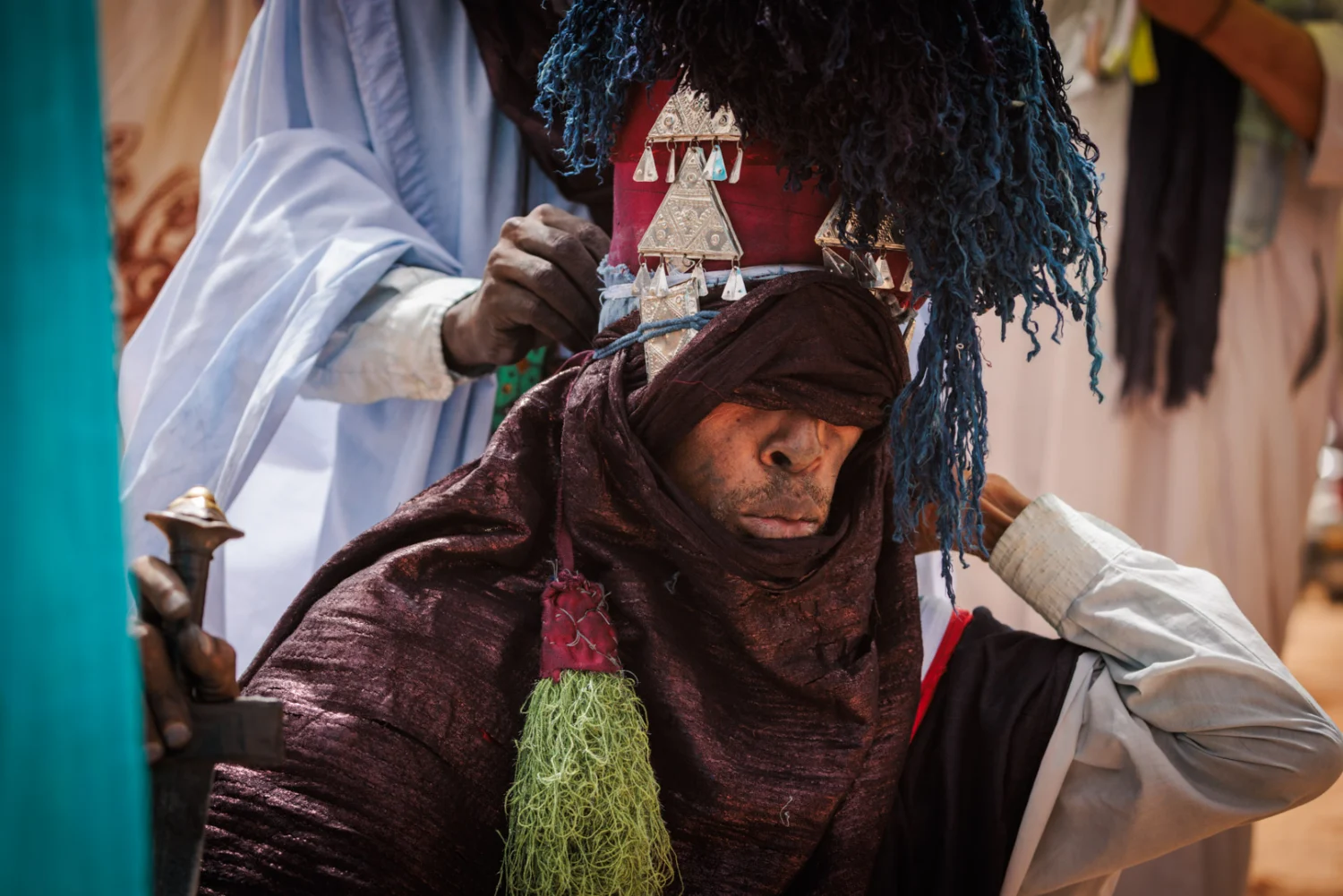
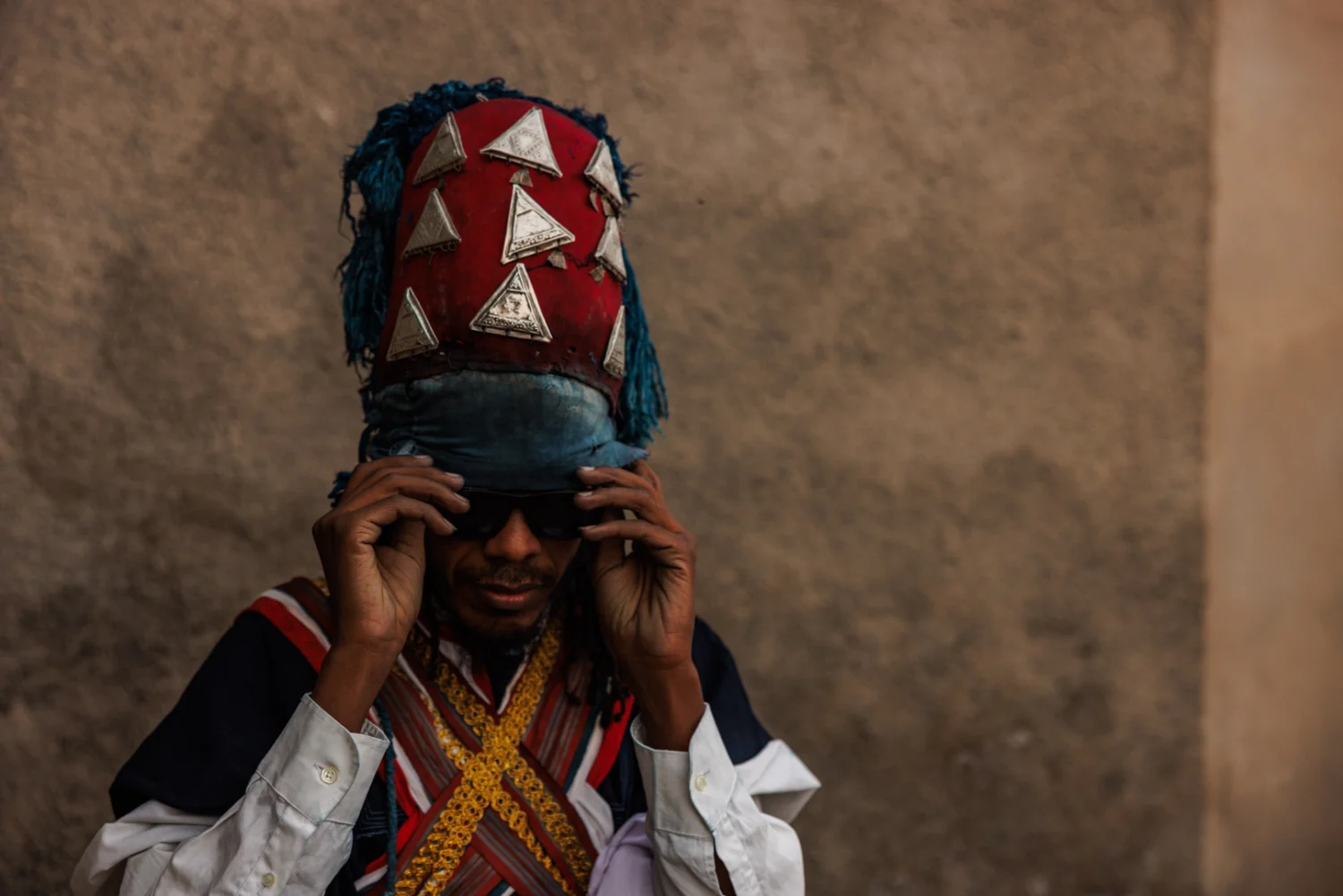
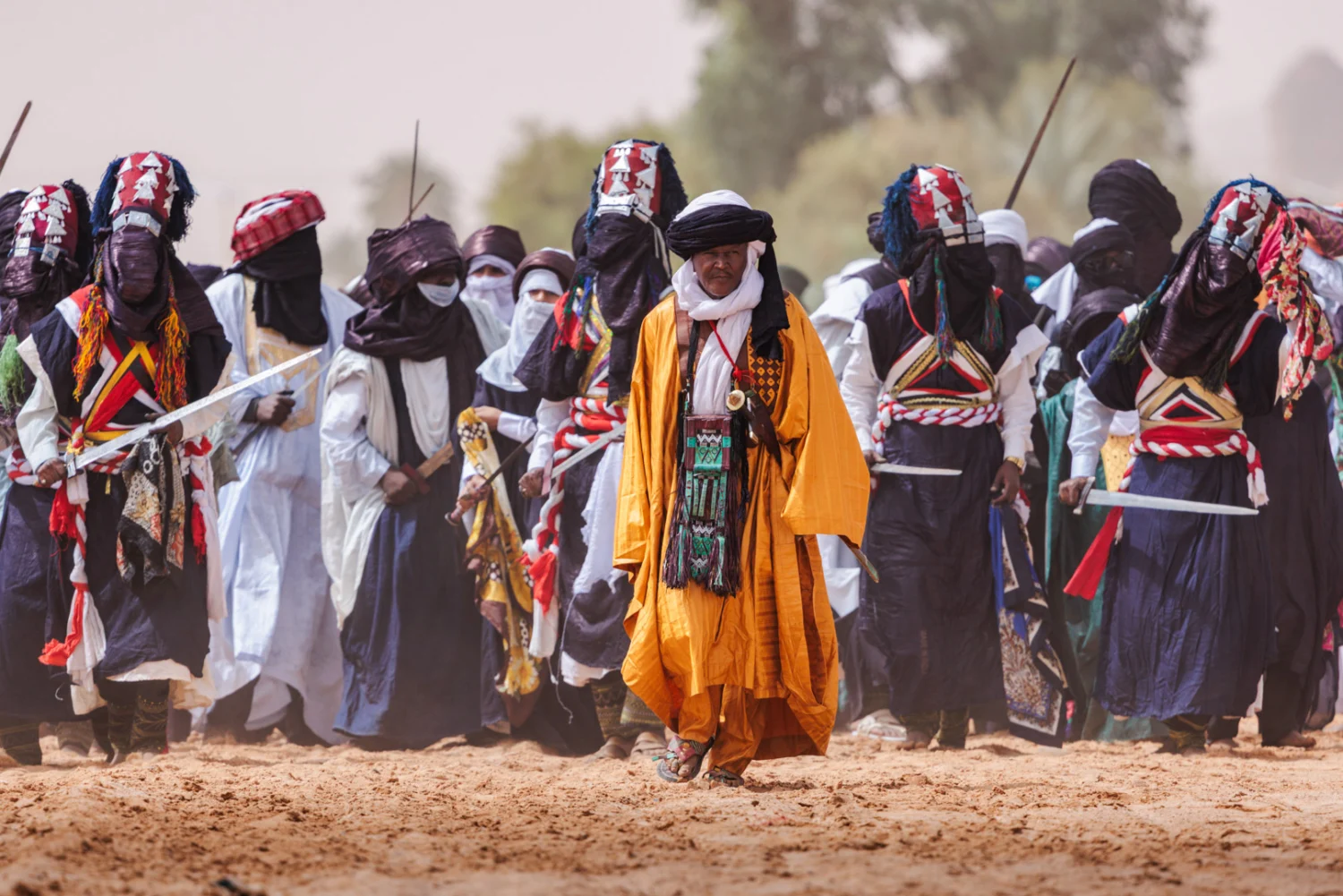
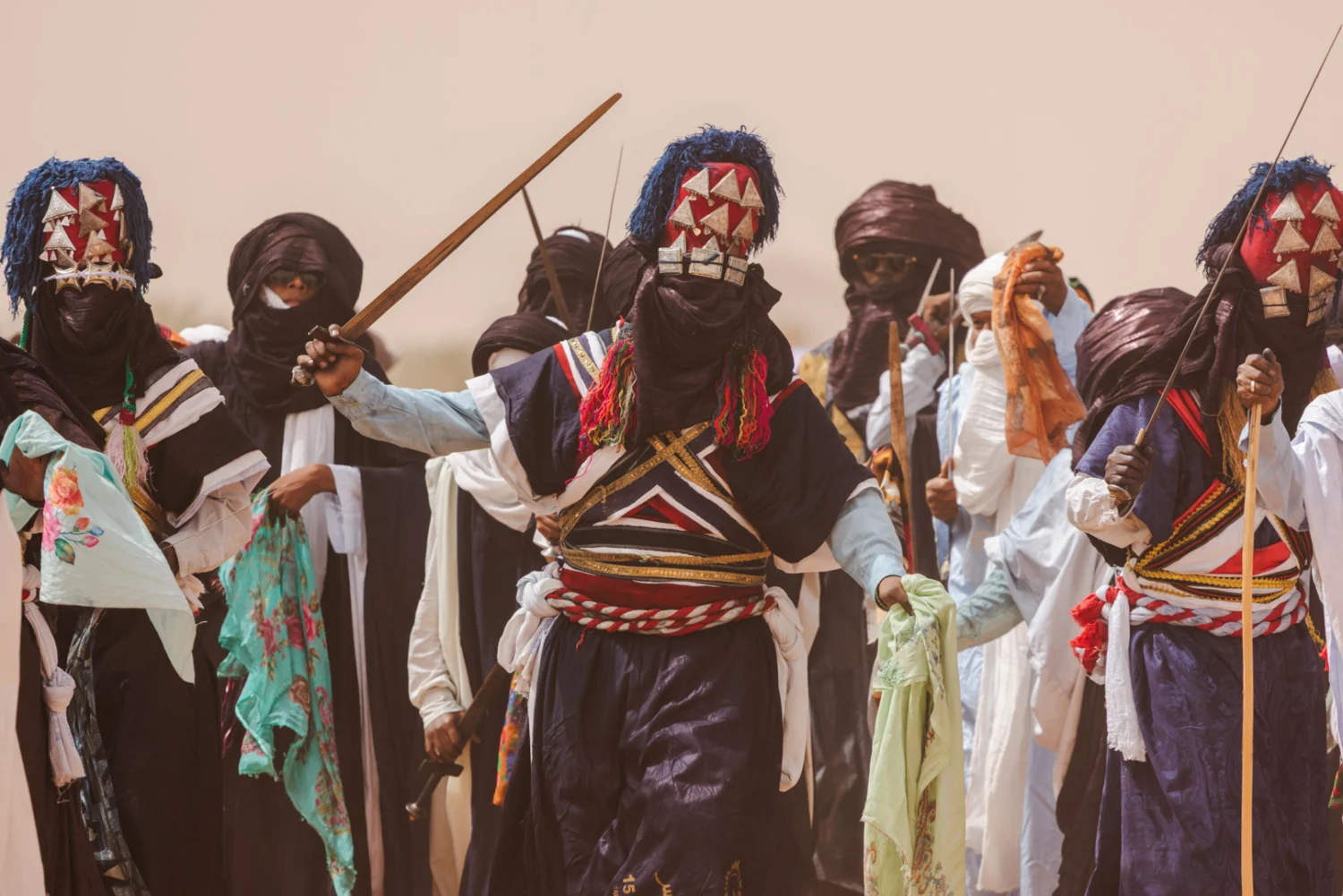
When the festival day finally arrives, the wadi comes alive with color, sound, and motion. The event opens with Tunfar—the morning judging phase—where community judges evaluate the participants based on strict, time-honored criteria: the quantity and craftsmanship of the tall red tkumbut hats (headdresses studded with silver triangles), the quality of traditional dress, and the number of Tekamest (sacred curved swords) brandished by the performers.
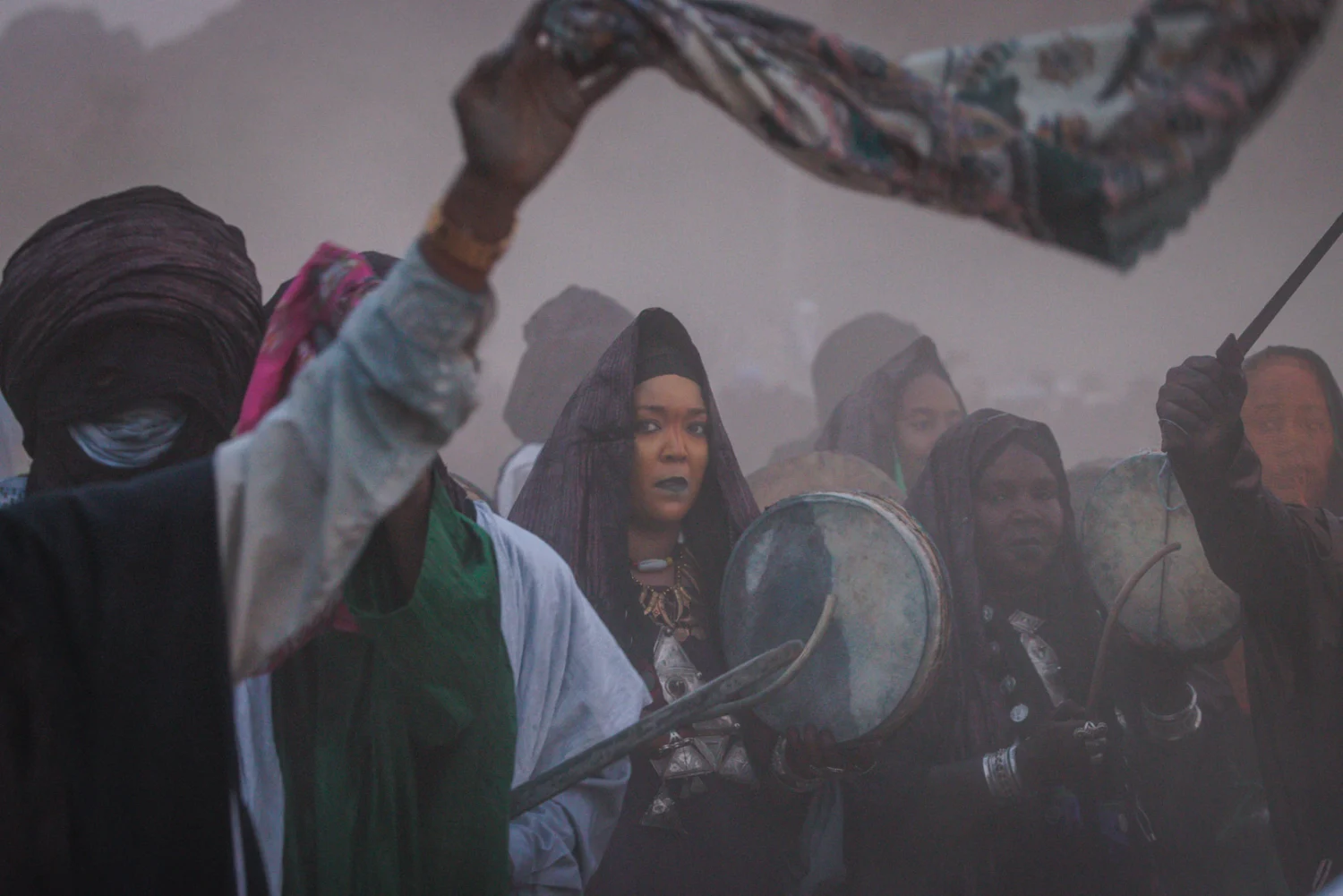
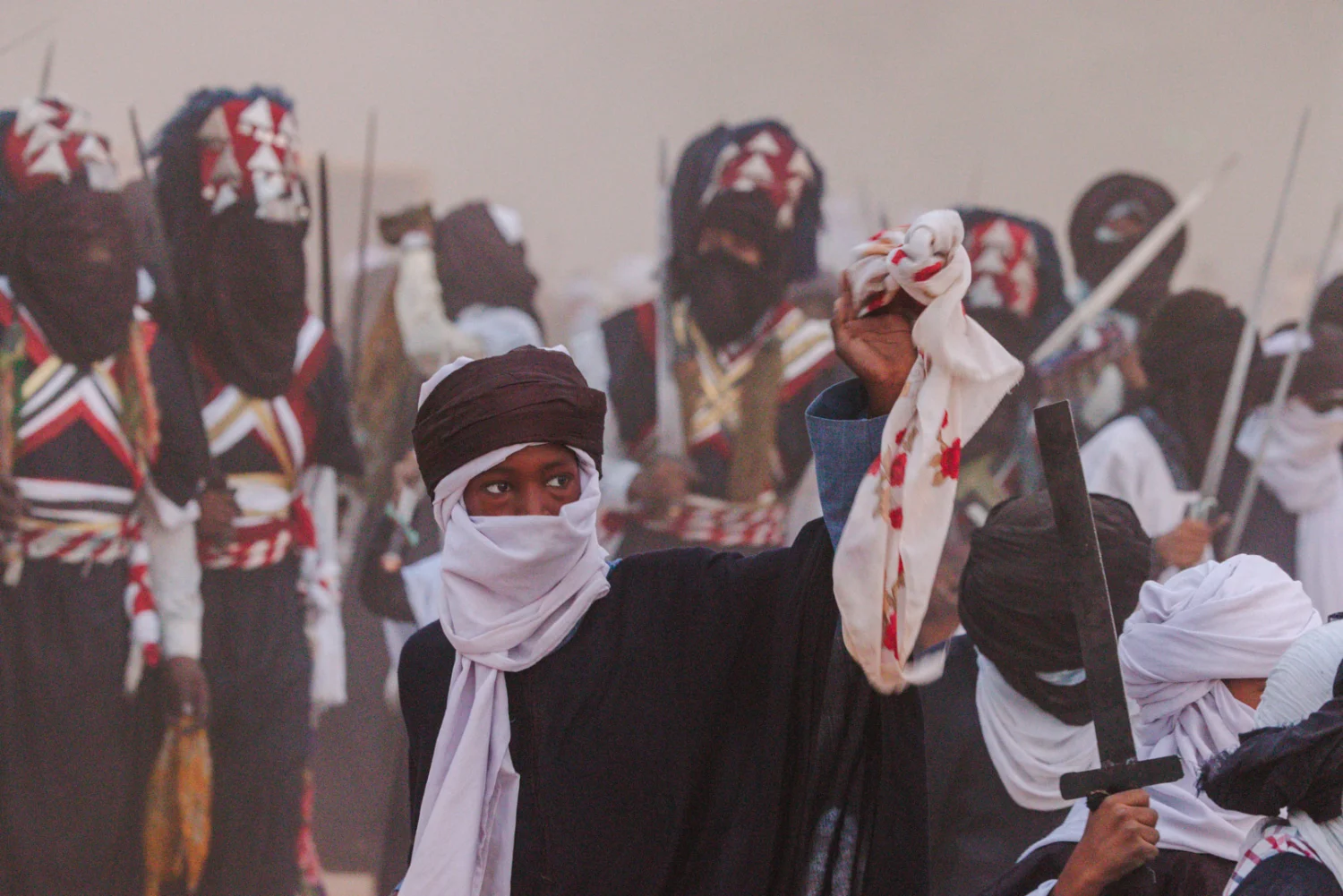
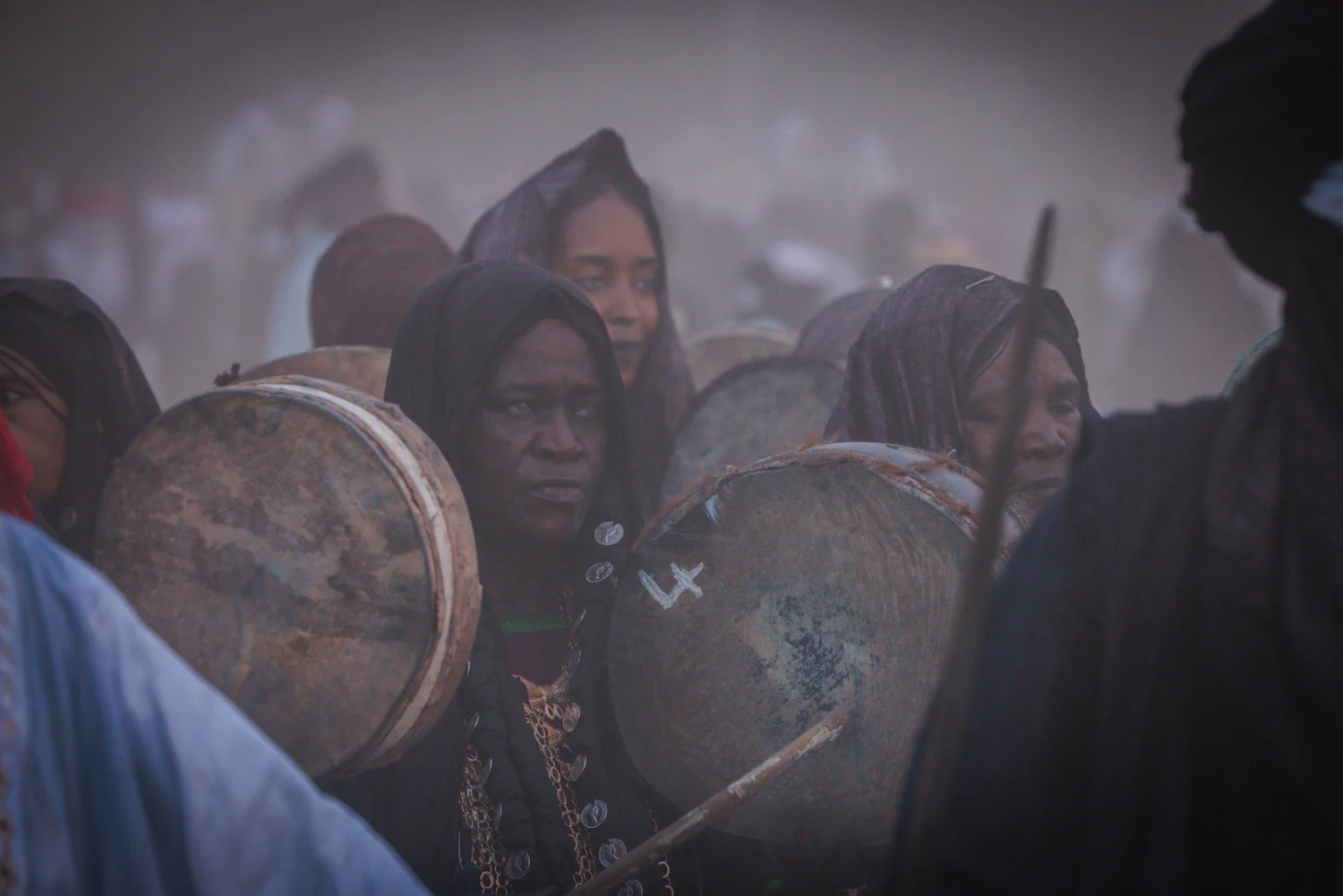
As the afternoon sun softens and a thick tesist (sand haze) hangs heavy in the air, the physical intensity of the festival reaches its climax. The men of El Mihan and Zelouaz form ranks, their plumed headdresses waving as they engage in the ceremonial sword dance. Moving to a low, lunging step, the swordsmen hold a blade in one hand and a white scarf of peace in the other. Their metal weapons clash and hum, creating an acoustic backdrop that blends with the rhythmic roar of the crowd.
Supporting Context & Metrics: Sociological and Cultural Dynamics
To fully comprehend the gravity of Sebeïba, one must examine the socio-cultural architecture that sustains it, as well as the quantitative and qualitative metrics used by the community to evaluate the festival.
The Matriarchal Engine of Sebeïba
A common misconception among outside observers is that Sebeïba is exclusively a showcase of male martial prowess. In reality, the festival is fundamentally matriarchal. As local scholar and historian Ibrahim explains, "Our society is matriarchal; the woman is at the base of everything."
Local performer Aicha reinforces this dynamic:
"All the poems are from women, all the music and rhythm is from the women, everything is from the women, the men just dance."
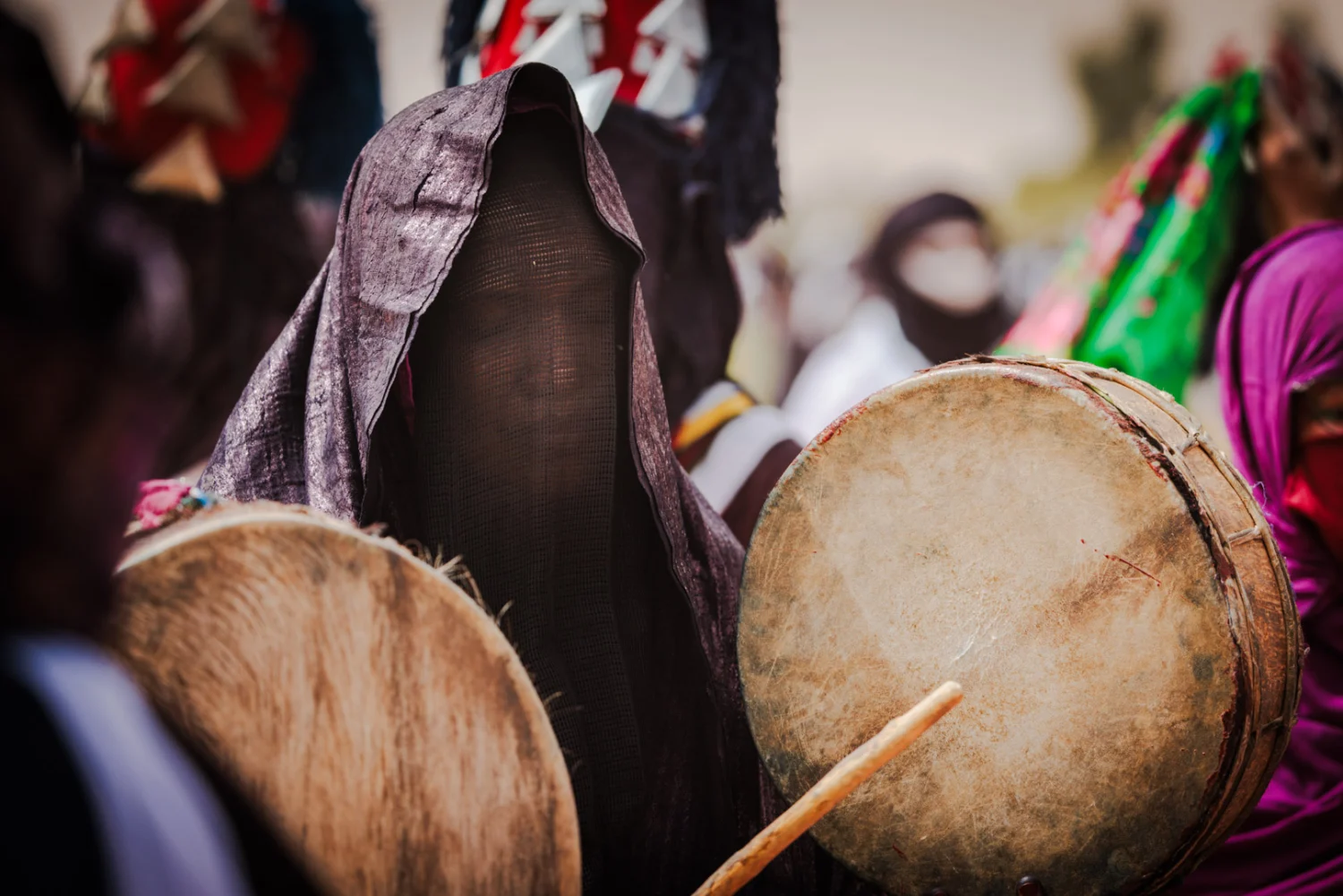
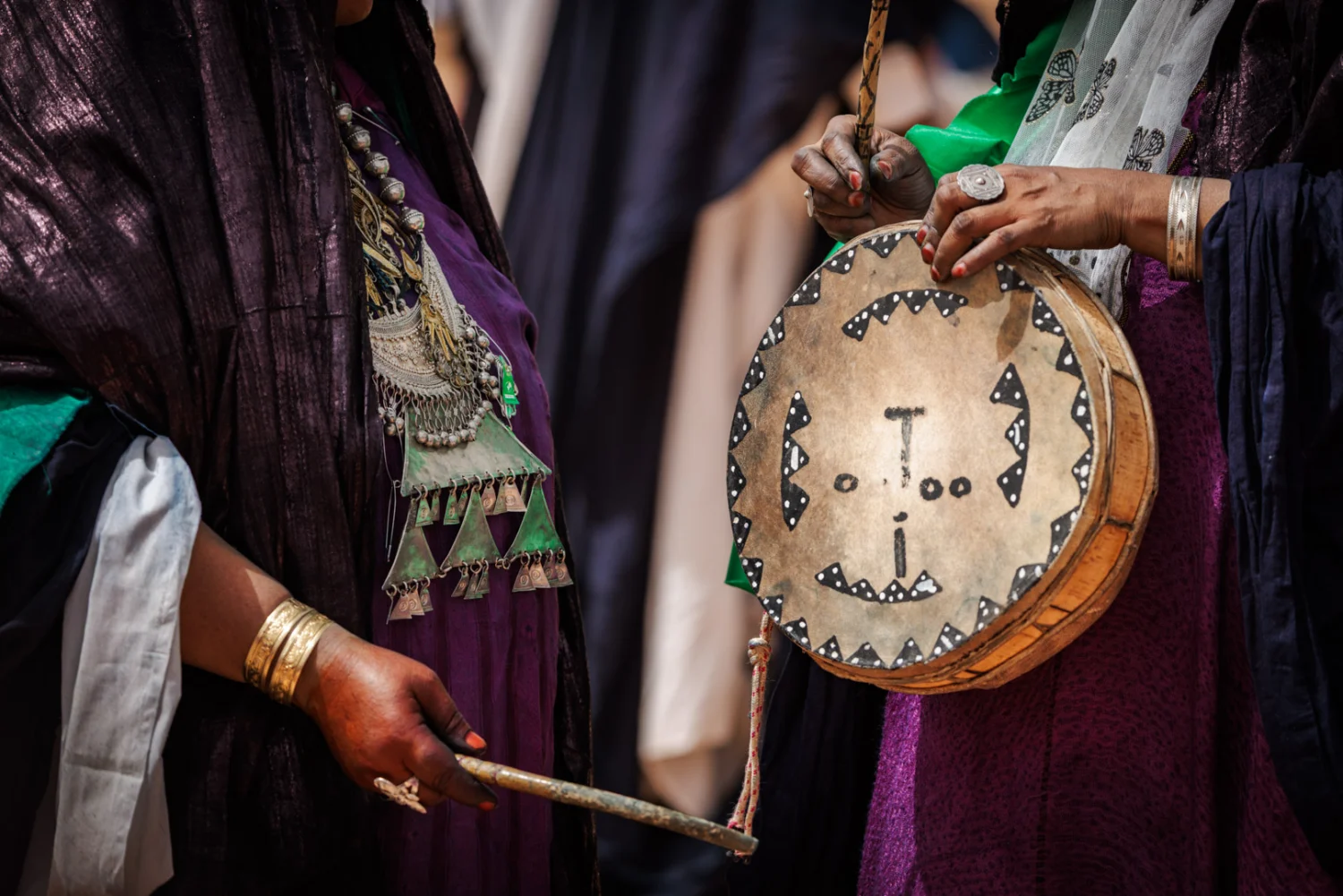
During the afternoon performances, women drive the massive elganga drums—instruments painted with traditional Tifinagh-inspired markings. They form the adjutum, a striking pyramid-shaped formation arranged strictly by age, stretching from the oldest matriarchs down to young girls who advance one position each year as they mature. The heavy, resonant beats of the elganga set the exact tempo that the men’s feet must follow, binding the entire field to a feminine-led rhythm.
Material Culture and Adaptation
The artifacts utilized during Sebeïba tell a story of gradual, continuous adaptation rather than unyielding stagnation:
The Tkumbut (Red Hats): Once strictly passed down as paternal heirlooms from father to son, these iconic red headwear pieces (which bear historical resemblances to Ottoman fezzes) are now frequently pooled by the community and assigned directly to the finest active dancers.
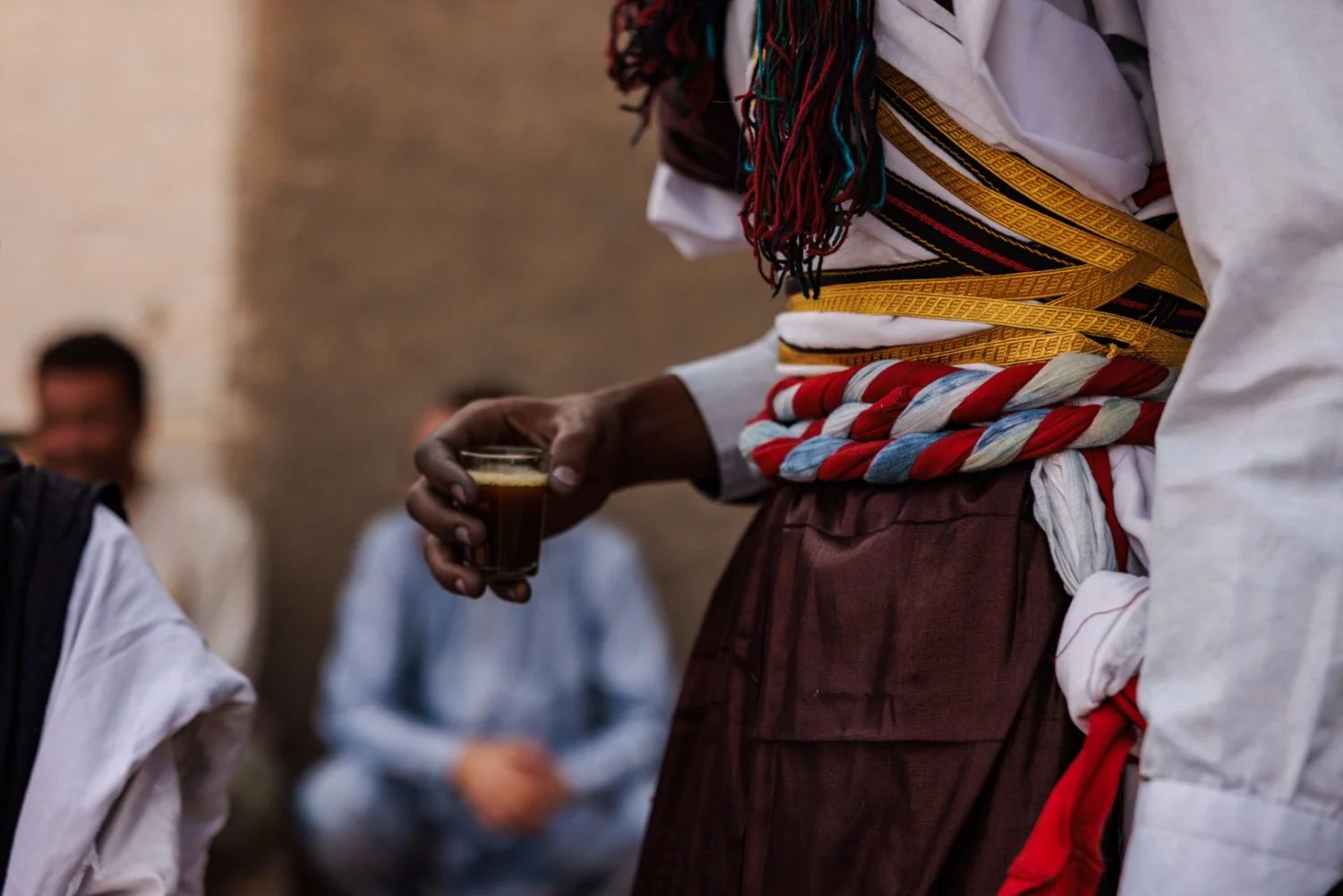
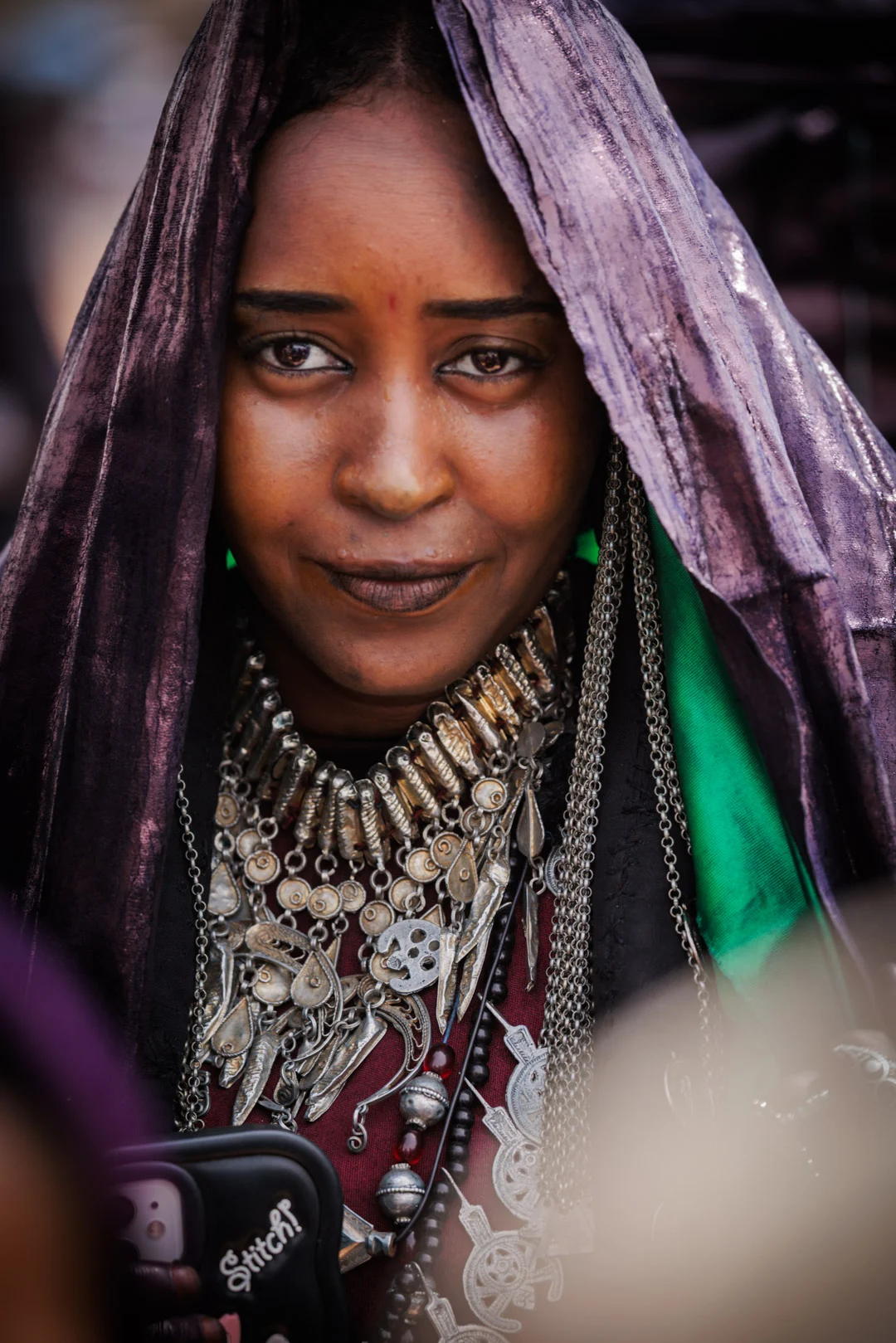
Silver and Adornment: Traditional Tuareg silversmithing, historically executed by the Inaden (hereditary artisans) using pure silver, has evolved. Modern economic pressures and material scarcity mean contemporary jewelry often incorporates nickel, zinc, and alternative alloys. Similarly, while indigo tagelmust veils remain the ultimate symbol of the amawal (nomad), modern fabrics such as shimmering Indian saris and glossy cottonade occasionally appear alongside traditional textiles.
The Loss of Heavy Instruments: Certain historical elements have faded due to demographic and physical constraints. For instance, the uzarnas—exceptionally heavy drums historically used by the Zelouaz camp—have largely vanished from the procession because fewer individuals possess the physical endurance required to carry and play them across the desert sands.
Official Statements and Community Perspectives
The preservation of Sebeïba is guided by local elders, historians, and culture-bearers who grapple daily with the tension between honoring the past and surviving the present.
Moussa, Djanet Native and Custodian of Sebeïba Tradition:
Reflecting on the deep personal and cultural significance of the festival, Moussa emphasizes its irreplaceable role in regional identity:
"Sebeïba is my ID card in the world… You will not find Sebeïba in other places."
He also notes the shifting narratives surrounding its origins, attributing its inception variously to the celebration of Moses’ victory over the Pharaohs, a memorial mourning the death of the Queen of Sheba, or simply an ancient cultural defense against the isolating fear of the desert winds.
Ibrahim, Veteran Historian and Educator:
Ibrahim offers a nuanced critique of how external tourism and state interest intersect with indigenous culture. While acknowledging that tourism provides vital economic oxygen, he warns against the danger of commercialization and fossilization:
"We fear that one day people will go looking for Sebeïba and we’ll be forced to buy a ticket… like at the cinema."
Furthermore, Ibrahim addresses the dangers of cultural dilution: "If you have changed, you will change again and again… if you falsify today, you’ll falsify your whole life."
Future Outlook: Navigating Identity in the Modern Sahara
As Sebeïba looks toward the future, it faces a complex matrix of geopolitical, economic, and cultural realities.
1. Transnational Isolation vs. Local Resilience
Historically, Sebeïba was part of a vibrant continuum of trans-Saharan gatherings, alongside events like the Tafsit and Ziyara of the Hoggar in Algeria, as well as sister festivals across the borders in Niger and Libya. Today, stringent regional security policies aimed at curbing cross-border transit have effectively severed these transnational links. Governments across the Sahel maintain deep anxieties regarding transnational gatherings among nomadic and indigenous populations. Consequently, Sebeïba has been forced to turn inward. Rather than judges traveling from Libya and Niger to evaluate the dancers impartially, the community now judges itself.
2. The Tourism Paradox
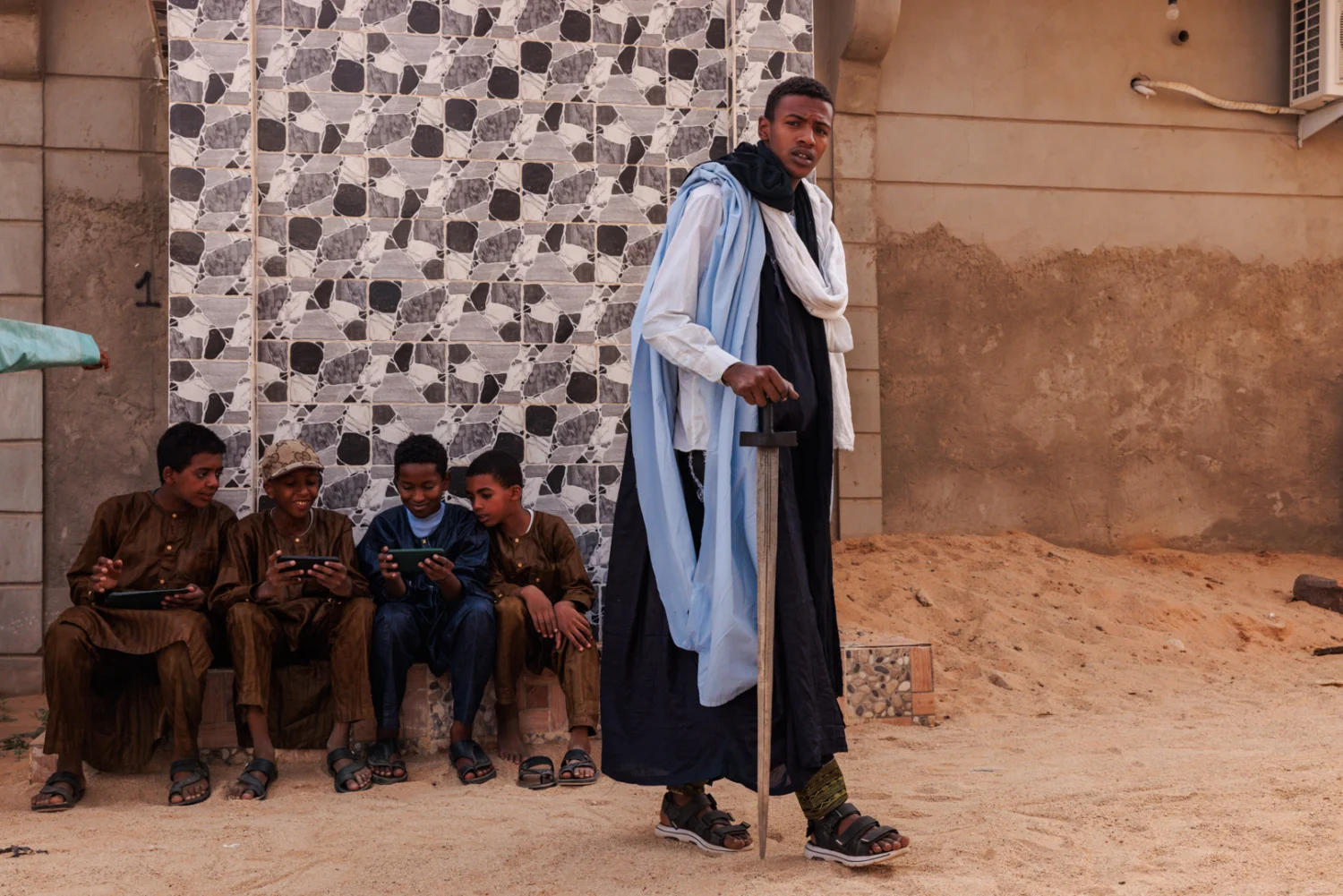
The opening of Algeria’s deep south to domestic tourists—primarily travelers from northern urban centers curious about a cultural heritage long marginalized in national discourse—has injected new life into Djanet. However, this influx brings the omnipresent glare of digital technology. Dancers wrapped in indigo veils now perform before rows of smartphones, drones, and television boom mics. The juxtaposition of ancient swords and teenagers bending over glowing screens highlights the central paradox of modern preservation: the very tourism that funds the festival’s continuation risks turning its living rituals into a mediated spectacle.
3. Conclusion: The Unbroken Thread
Despite these mounting pressures, when the dust rises over the wadi, the drums thunder, and the swords clash in the fading Saharan light, the noise of the modern world recedes. Sebeïba remains a testament to the resilience of the Imuhar of Djanet. As jackals dart silently across the Tassili sands and the moon rises over the stone towers, the festival proves that the desert—and the culture that inhabits it—is neither empty nor unchanged, but continuously adapting while fiercely guarding its soul.




Comments
Facebook App ID not configured. Please add it in the Customizer.