
Executive Overview
In the upper echelons of the secondary luxury market, true museum-grade garments rarely trade hands. Instead, they circulate privately among deep-pocketed foundations, institutional archives, and secretive private collectors. This dynamic, however, is set to shift on the evening of September 17. Aligning with the opening day of London Fashion Week, the online boutique auction house Fair Warning—in strategic collaboration with the legendary Kerry Taylor Auctions—will present an unprecedented sale titled “The Impossible Couture Collection.”
Curated by art collector Peter Brant Jr.—the prominent scion of publishing magnate Peter M. Brant and supermodel Stephanie Seymour—the auction represents a watershed moment for historical fashion acquisition. The evening will be anchored by a high-profile roster of twentieth- and twenty-first-century design legends, including Yves Saint Laurent, Elsa Schiaparelli, Azzedine Alaïa, Paco Rabanne, Alexander McQueen, and John Galliano.
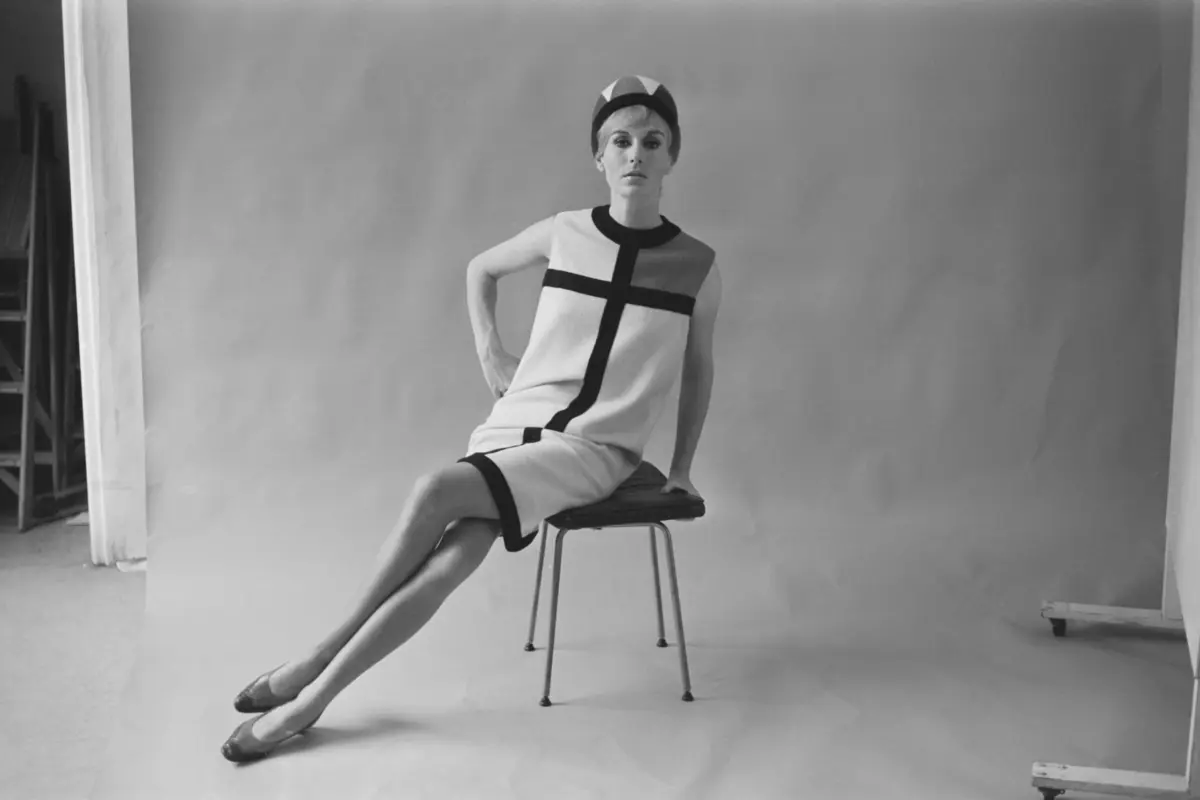
At the vanguard of the sale is an extraordinarily rare, historically vital Yves Saint Laurent Piet Mondrian dress from the 1960s. Having been immortalized by the lenses of twentieth-century photography titans such as David Bailey, Irving Penn, and Richard Avedon, the garment carries a pre-sale estimate of $200,000 to $500,000, making it the presumptive top lot of the evening. Yet, the Mondrian dress is merely the crown jewel in a catalog replete with cultural touchstones.
Read Also
Other heavy-hitting lots include a custom dress from Lee Alexander McQueen’s final collection, famously worn by supermodel Naomi Campbell, estimated between $600,000 and $1 million; a striking gold insect collar necklace by Elsa Schiaparelli; and an array of rare archival works by John Galliano. The latter offerings arrive under complex circumstances, testing the market’s appetite for historically significant design by creators shadowed by past controversies.
The auction will be conducted by none other than Jussi Pylkkänen, the former global president of Christie’s, signaling an institutional seriousness that bridges the worlds of high art and haute couture. As the lines between contemporary art collecting and fashion archiving continue to blur, "The Impossible Couture Collection" stands poised to rewrite the valuation metrics for wearable history.
Detailed Chronology: The Making of a Landmark Sale
To fully understand the weight of "The Impossible Couture Collection," one must trace the convergence of forces that brought it to a live-streamed digital block on the opening night of London Fashion Week. The sale is not merely a collection of vintage clothing; it is a meticulously curated retrospective of sartorial breakthroughs, shaped by familial pedigree, auction house maneuvering, and a strategic calendar placement.
The Curatorial Vision of Peter Brant Jr.
The genesis of the sale lies in the aesthetic education of its curator, Peter Brant Jr. Growing up surrounded by museum-grade contemporary art collected by his father, Peter M. Brant, and immersed in the global fashion ecosystem through his mother, supermodel Stephanie Seymour, Brant Jr. developed an eye that treats garments with the same reverence usually reserved for canvases by Andy Warhol or Jean-Michel Basquiat.
In conceptualizing "The Impossible Couture Collection," Brant sought to bridge a glaring gap in the market. While blue-chip modern and contemporary art benefit from transparent secondary markets and high-profile auction platforms, historical fashion has historically been fragmented across regional estate sales, specialized dealers, and boutique curators. Brant’s partnership with Fair Warning—a platform known for its curated, scarcity-driven approach to art sales—and Kerry Taylor Auctions, a world leader in vintage fashion auctions, brought institutional rigor to the sourcing process.
The September 17 Debut and Industry Convergence
Timing is everything in the fashion and luxury sectors. By scheduling the auction for the evening of September 17, coinciding with the opening salvos of London Fashion Week, the organizers ensured a captive, highly concentrated audience of international designers, editors, stylists, and wealthy collectors. Rather than burying the sale in a traditional off-season auction slot, Fair Warning has positioned the event as a premier social and financial anchor of the fashion calendar.
Guiding the proceedings will be Jussi Pylkkänen. Pylkkänen’s transition from presiding over multimillion-dollar fine art sales at Christie’s to auctioning historic haute couture underscores a broader macroeconomic shift: high-end fashion is increasingly viewed by alternative asset investors as a tangible, high-yield asset class. His experienced gavel-work is expected to drive aggressive bidding across both digital feeds and proxy phone lines.
Supporting Context & Metrics: The Star Lots Under the Microscope
The catalog for "The Impossible Couture Collection" reads like a masterclass in fashion history. Each featured lot carries not only exceptional craftsmanship but also a profound provenance rooted in pop culture, editorial milestones, and museum exhibitions.
The Yves Saint Laurent Piet Mondrian Dress
Pacing the sale is the definitive YSL Mondrian dress from the mid-1960s. Following Saint Laurent’s groundbreaking Autumn/Winter 1965 collection, which paid homage to the Dutch painter Piet Mondrian, these shift dresses revolutionized the relationship between art and apparel. Stripped of ornamentation, the wool-jersey dresses relied entirely on precise lines and primary color blocks, engineered to move effortlessly with the female form.
The specific iteration heading to Fair Warning is distinguished by its extraordinary photographic provenance. It has been captured by David Bailey, Irving Penn, and Richard Avedon—the trinity of mid-century fashion photography.
- Pre-sale Estimate: $200,000 – $500,000
- Market Significance: Industry experts note that it has been decades since a Mondrian dress of this caliber, condition, and pedigree has surfaced on the open market. It stands as one of the defining objects of twentieth-century design.
Lee Alexander McQueen’s Final Masterpiece
Representing the dark, theatrical genius of British fashion is a custom gown from Lee Alexander McQueen’s final, unfinished collection. Known for his technical wizardry and emotional depth, McQueen’s posthumous footprint remains among the most heavily coveted in fashion archiving.
- The Provenance: This specific custom dress was famously worn by supermodel Naomi Campbell, a close friend and muse to the designer.
- Pre-sale Estimate: $600,000 – $1,000,000
- Market Significance: As the top-estimated lot of the evening, this piece reflects the soaring market demand for authentic McQueen creations, which have seen exponential appreciation following major retrospective exhibitions like Alexander McQueen: Savage Beauty.
Elsa Schiaparelli’s Surrealist Gold Insect Collar
No collection of high-concept fashion would be complete without the surrealist wit of Elsa Schiaparelli. The sale features a museum-quality gold insect collar necklace, a testament to Schiaparelli’s obsession with natural history, illusion, and bold sculptural statement pieces created in collaboration with artists like Salvador Dalí and Jean Cocteau.
- Pre-sale Estimate: $15,000 – $30,000
- Market Significance: Offers an accessible yet highly prestigious entry point for collectors looking to secure wearable sculpture from the Surrealist movement.
The John Galliano Retrospective and the "Misia Diva" Gown
Perhaps the most complex narrative surrounding the auction involves the inclusion of works by John Galliano. The sale features five gowns, one original drawing, and three jewelry pieces crafted by Galliano during his tenure as creative director of Dior—a tenure that ended abruptly following his 2010 firing and subsequent 2011 French hate crime conviction for antisemitic remarks.
This inclusion arrives hot on the heels of the Metropolitan Museum of Art’s Costume Institute canceling a planned Galliano retrospective, a move that sparked intense debate within the cultural sector regarding the separation of art from the artist. Despite this institutional retreat, the market for Galliano’s design output remains undimmed.
The crown jewel of the designer’s offerings in the sale is his black gown from the Spring 1995 "Misia Diva" collection.
- Cultural Footprint: The dress boasts an extraordinary pop-culture pedigree. Madonna famously wore the gown in her 1994 music video for "Take a Bow," cementing its place in 1990s music history. Decades later, Kylie Jenner reignited public fascination with the archival piece by donning it at the 78th British Academy Film Awards in 2025.
- Collector Appeal: The gown showcases Galliano’s peerless mastery of bias-cut tailoring and historical pastiche, proving that historical demand often transcends contemporary moral debates.
Official Statements and Industry Perspectives
The collision of historical fashion, high-end art auctioneering, and institutional controversy has generated significant commentary from key figures involved in the sale.
In a press statement released ahead of the event, organizers emphasized the scarcity of the offerings:
“It has been decades since a Mondrian Dress of this significance has appeared at auction, making this an exceptionally rare opportunity to acquire one of the defining objects of twentieth-century fashion.”
Peter Brant Jr. addressed the broader cultural climate surrounding the auction in a candid interview with Vanity Fair. Discussing the recent controversies that have impacted the exhibition visibility of certain designers, Brant expressed his disappointment regarding the cancellation of the Met Museum’s Galliano exhibition:
“We were certainly disappointed about the cancelation… We were hoping that we would see some of these dresses on the red carpet.”
Brant’s comments highlight an ongoing tension within the fashion world: while museums and public institutions navigate cancel culture and reputational risk, private collectors and commercial auction houses are stepping into the vacuum, eager to trade in the contested yet undeniably brilliant artifacts of fashion history.
Future Outlook: The Evolution of Fashion as an Alternative Asset Class
As the digital hammer falls on September 17, the ramifications of "The Impossible Couture Collection" will extend far beyond a single evening’s ledger. The auction serves as a litmus test for several emerging trends in the global luxury and art markets:
- Institutionalizing Fashion Archives: As private museums and wealthy individuals increasingly view fashion history through the lens of fine art preservation, sales like this help establish standardized pricing models for archival garments. This transparency benefits both designers’ estates and institutional lenders.
- The Hybridization of Art and Apparel: The involvement of fine art auctioneers like Jussi Pylkkänen and platforms like Fair Warning signals that the boundaries separating traditional fine art collecting from couture acquisition are dissolving. Garments are no longer viewed merely as functional consumables, but as sculptural monuments to their respective eras.
- Navigating Provenance and Controversy: The inclusion of John Galliano’s work underscores a growing challenge for the secondary market: how to handle masterworks produced by creators whose personal actions sparked widespread condemnation. While public institutions may shy away from retrospective exhibitions, the private market continues to demonstrate that exceptional craftsmanship and cultural memory carry immense commercial pull.
Ultimately, "The Impossible Couture Collection" is more than a commercial enterprise—it is a cultural mirror. By gathering the radical geometry of Yves Saint Laurent, the surrealist wit of Elsa Schiaparelli, the theatrical darkness of Alexander McQueen, and the romantic decadence of John Galliano into a single digital room, Fair Warning and Peter Brant Jr. have positioned fashion where it has always belonged: at the absolute apex of human creativity.




Comments
Facebook App ID not configured. Please add it in the Customizer.