
Executive Overview
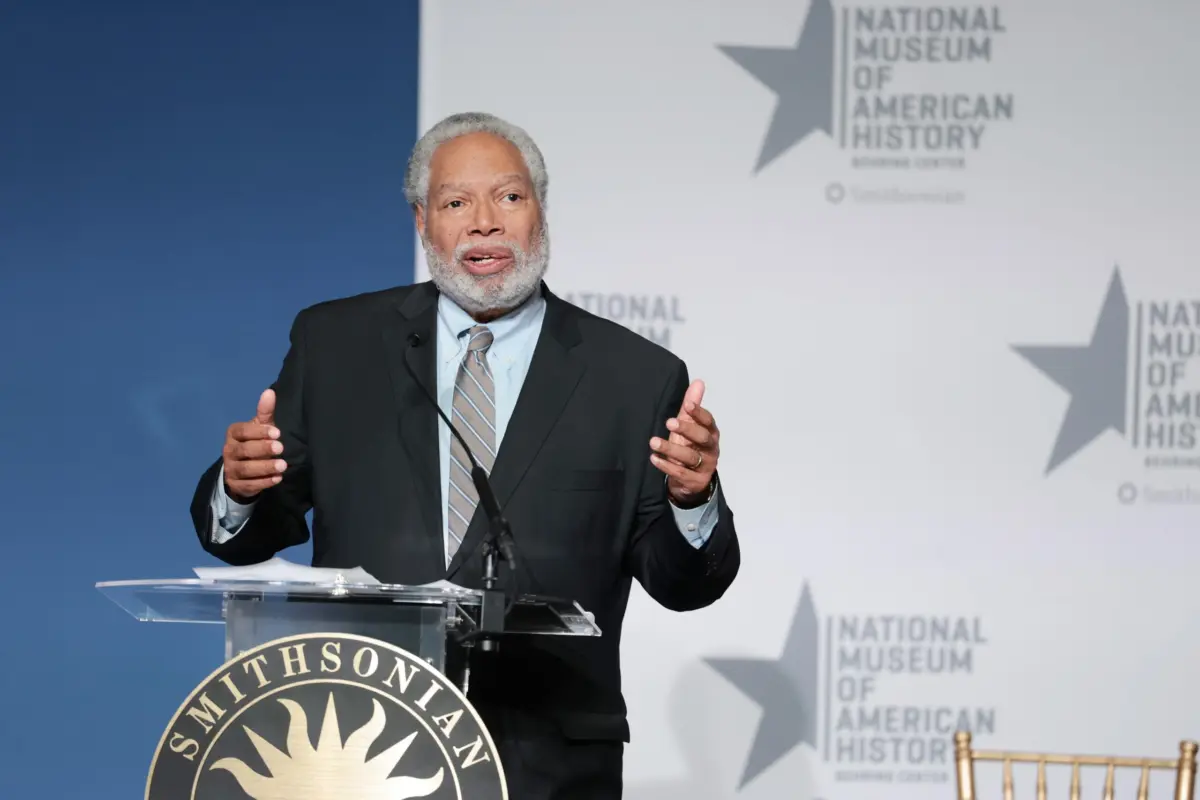
In a development that underscores the deepening friction between federal cultural institutions and the executive branch, Lonnie G. Bunch III announced on Tuesday that he will step down as the secretary of the Smithsonian Institution at the end of 2026. After more than seven years at the helm of the world’s largest museum, education, and research complex, Bunch’s impending departure closes a pivotal chapter in the history of American public memory.
While Bunch, who is 73 years old, has served longer than his two immediate predecessors and has reached a natural retirement age, his exit cannot be divorced from the punishing political reality of the past two years. Since the return of President Donald Trump to the White House, the Smithsonian has weathered a relentless barrage of attacks, federal funding threats, administrative overhauls, and intense ideological scrutiny. Describing the toll of the continuous political warfare, Bunch told The New York Times, "At a certain point, I’d like to wake up in the morning and not look at my cellphone."
The resignation of the Smithsonian’s first Black secretary—and the visionary founding director of the National Museum of African American History and Culture—signals a critical turning point. As the Trump administration presses forward with its aggressive campaign to purge what it terms "improper, divisive, or anti-American ideology" from public institutions, the control of the Smithsonian’s leadership structure has become the ultimate prize. With Bunch’s departure, the future independence of America’s attic is hanging in the balance, resting precariously on the shoulders of a Board of Regents that includes prominent Trump loyalists and is anchored by Supreme Court Chief Justice John Roberts.
Read Also
Detailed Chronology of the Conflict
The ideological skirmish between the Trump administration and the Smithsonian Institution did not materialize overnight, but it escalated rapidly following the administration’s return to power in early 2025.
Spring 2025: The White House Crosshairs
In March 2025, the White House published a sweeping fact sheet and executive action titled "Restoring Truth and Sanity to American History." The document launched a direct institutional assault on the Smithsonian system, accusing its museums, research centers, and educational programs of promoting narratives that "portray American and Western values as inherently harmful and oppressive."
The administration’s grievances targeted exhibits and historical interpretations that address structural racism, Indigenous displacement, and the complexities of America’s foundational contradictions. By framing these educational efforts as unpatriotic or revisionist, the White House laid the groundwork for federal intervention.
Summer and Fall 2025: Institutional Intimidation
Throughout the summer of 2025, the pressure campaign intensified from rhetorical attacks to operational interference. White House officials and congressional allies threatened the Smithsonian’s federal appropriations, leveraging the institution’s budget dependency as a mechanism for compliance.
The pressure yielded its first major casualty in August 2025, when the director of the National Portrait Gallery was forced out amid a broader administration-backed push to review and sanitize museum exhibits. Internal reviews ordered by the White House attempted to vet upcoming displays, though the Smithsonian’s complex, semi-autonomous governance structure initially blunted the executive branch’s capacity for total control.
Winter 2026: The Demand for Presidential Framing
By February 2026, the administration’s cultural crusade pivoted from a defensive purge to an offensive reclamation of public space. Reports surfaced that high-ranking administration officials had formally pressed Smithsonian leadership to develop and prioritize a major new exhibit at the National Portrait Gallery explicitly focused on President Donald Trump. The move was widely interpreted as an attempt to enshrine the administration’s political legacy within the nation’s premier historical repository.
September 2026: The Resignation
The compounding strain of defending the institution against political capture, combined with the daily administrative warfare, culminated in Bunch’s Tuesday announcement. By stating his intention to step down by December 31, 2026, Bunch effectively drew a boundary around his tenure while opening a high-stakes succession battle that will dictate the ideological trajectory of the Smithsonian for a generation.
Supporting Context & Metrics: The Smithsonian Under Siege
To understand the magnitude of Bunch’s resignation, one must examine the unique structural ecosystem of the Smithsonian Institution and the specific metrics of the conflict.
The Institution’s Scale and Vulnerability
- The Network: The Smithsonian comprises 21 museums, the National Zoo, and numerous research facilities, predominantly located in Washington, D.C., along with facilities in New York City, Virginia, and Panama.
- Federal Funding Dependency: While the Smithsonian relies on a combination of federal appropriations, private donations, grants, and business ventures (such as retail and publishing), its operating budget is heavily underpinned by congressional funding—making it acutely vulnerable to budgetary threats orchestrated by the White House and its congressional allies.
- Governance Architecture: Unlike standard executive agencies under the direct purview of the president, the Smithsonian is an independent trust instrumentality established by Congress in 1846. It is governed by a 17-member Board of Regents comprising the Vice President of the United States, the Chief Justice of the United States, three members of the U.S. Senate, three members of the U.S. House of Representatives, and nine citizen members appointed by joint resolution of Congress.
The Structural Dilemma of the Board of Regents
While the president does not possess an official, unilateral mechanism to appoint the secretary of the Smithsonian—a power reserved exclusively for the Board of Regents—the composition of the board makes it deeply susceptible to executive influence.
The presence of sitting political figures on the board, notably Vice President JD Vance and several conservative members of Congress, ensures that the administration’s voice is front and center during executive deliberations. Consequently, the board is primed for a fierce ideological tug-of-war. As noted by The Washington Post’s art and architecture critic Philip Kennicott, the survival of the Smithsonian’s institutional independence now relies heavily on the willingness of non-partisan citizen regents and, most importantly, the board’s chancellor—Supreme Court Chief Justice John Roberts—to resist partisan capture.
Official Statements and Perspectives
The unfolding crisis has drawn sharp contrasts between the executive branch’s vision for public history and the traditional academic independence championed by cultural stewards.
The White House Position
The Trump administration has made no secret of its objective to reshape how American history is taught and displayed in national institutions. In its foundational March 2025 policy documents, the White House asserted:
"The American story is one of exceptional courage, foundational liberty, and continuous moral striving. Federal institutions funded by the American taxpayer have a solemn duty to reflect this truth rather than disparage our national heritage through divisive and un-American frameworks."
Administration defenders argue that the push for exhibits focused on current conservative leadership and the scrubbing of critical historical frameworks represent a necessary course correction to restore balance and patriotism to federal spaces.
The Institutional and Academic Reaction
Speaking to The New York Times following his announcement, Lonnie G. Bunch III reflected on the exhausting nature of leading an institution caught in the crosshairs of the nation’s culture wars. Bunch, a respected historian who spent decades documenting the African American experience, emphasized the personal toll of managing an organization subjected to constant political surveillance.
Art critics, historians, and civil liberties advocates have sounded the alarm over the precedent being set. Writing in The Washington Post, Philip Kennicott warned that if the Board of Regents succumbs to pressure to install a political loyalist as the next secretary, the Smithsonian risks losing its credibility as an objective, evidence-based repository of human knowledge and American culture.
Future Outlook: The Succession Battle Ahead
As the countdown to December 2026 begins, all eyes turn to the Smithsonian Board of Regents. The process of selecting Bunch’s successor will serve as a definitive litmus test for the independence of America’s premier cultural and scientific infrastructure.
- The Search Committee: The Board of Regents is expected to form a bipartisan search committee to vet candidates for the secretary position. However, the internal deliberations are anticipated to be fractious, mirroring the broader polarization of Washington politics.
- The Loyalist Push: Political observers widely expect the Trump administration and its congressional allies to lobby aggressively for a candidate sympathetic to the White House’s historical framework—potentially a figure willing to restructure curatorial guidelines and prioritize administration-approved narratives.
- The Judicial Check: Because Supreme Court Chief Justice John Roberts serves as the chancellor of the Smithsonian Board of Regents, institutional preservationists are looking to him to provide a stabilizing, non-partisan anchor. Whether Roberts and the citizen regents can insulate the hiring process from executive coercion will determine whether the Smithsonian retains its scholarly integrity or bends to political orthodoxy.
Ultimately, Bunch’s departure marks the end of an era defined by expansive, inclusive historical storytelling. Whoever steps into his shoes will inherit not only a world-class collection of museums, but a fierce ideological battlefield where the soul and memory of the American republic remain fiercely contested.





Comments
Facebook App ID not configured. Please add it in the Customizer.