In a sweeping philanthropic gesture that further reshapes the landscape of European arts institutions, the prestigious D. Daskalopoulos Collection has announced the donation of 51 major contemporary and modern artworks. This cultural endowment is strategically divided among four prominent museums spanning Greece and Scotland: the National Gallery of Greece, the Metropolitan Organisation of Museums of Visual Arts of Thessaloniki (MOMUS), the Museum of Contemporary Art of Crete, and the National Galleries of Scotland.
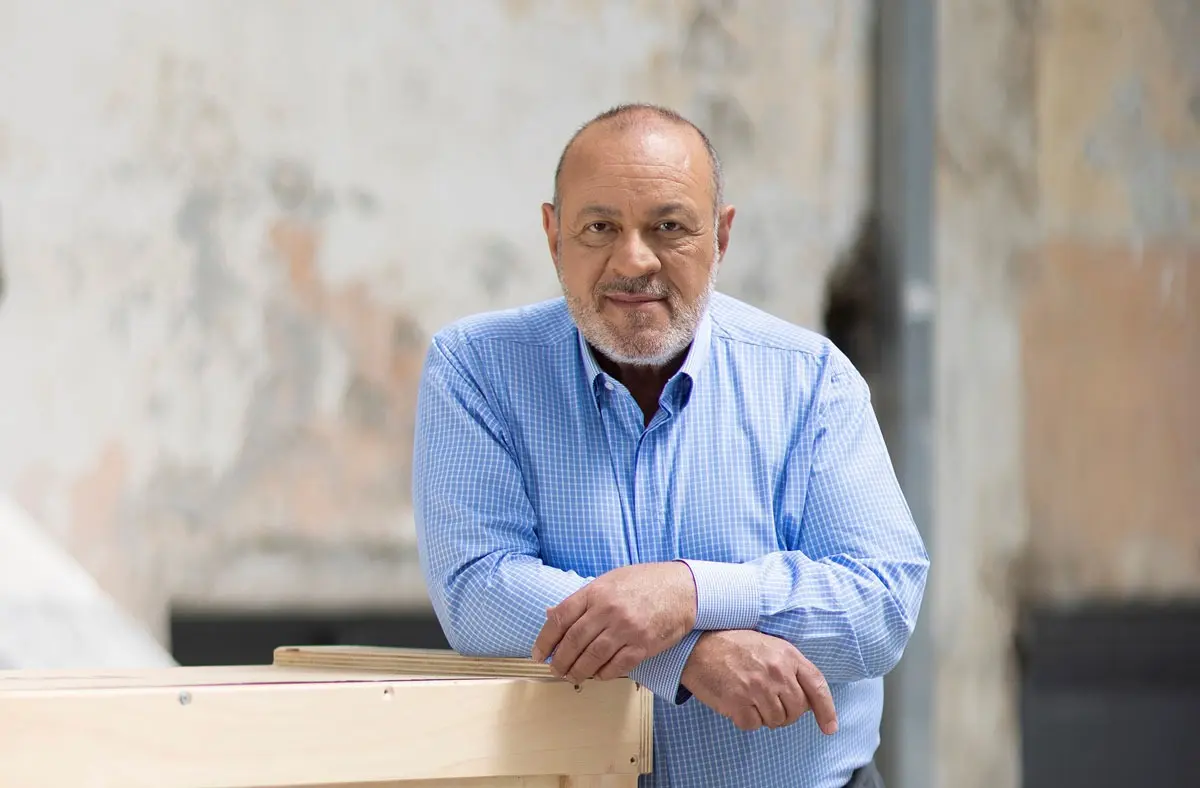
This latest institutional handover represents far more than a mere redistribution of material assets; it is the continuation of a meticulously orchestrated legacy project spearheaded by Dimitris Daskalopoulos, a towering figure in international art patronage and a recognized stalwart of the ARTnews Top 200 collectors list. For decades, Daskalopoulos has championed the ethos that contemporary art is a vital catalyst for societal dialogue, critical thinking, and cultural evolution. By dispersing these 51 works into the care of public institutions, the collection ensures that significant milestones of 20th- and 21st-century artistic production are removed from private seclusion and integrated permanently into the public trust.
The scope of this donation is both geographically expansive and aesthetically diverse. It reinforces historical narratives within Greek modernism while injecting contemporary international dynamism into regional museums. The beneficiary institutions are not merely receiving static objects; they are acquiring catalysts for future exhibitions, educational programs, and cross-cultural discourse. As private collections increasingly face questions regarding their long-term viability and public accessibility, the Daskalopoulos model offers a masterclass in strategic, visionary de-accessioning for the public good—securing the historical preservation of the works while keeping them vibrantly alive in the ongoing narrative of contemporary culture.
To fully understand the weight of this current 51-piece donation, one must examine it as the latest chapter in a long-standing, premeditated strategy of institutional gift-giving executed by Dimitris Daskalopoulos over the past several years.
The Foundational Years and Early Collecting
The genesis of this philanthropic trajectory lies in the formation of the D. Daskalopoulos Collection itself. Many of the pieces included in this recent cycle were acquired during the nascent stages of Daskalopoulos’s journey as a collector. In those early years, his acquisitions were driven by an intuitive yet rigorous desire to map the currents of international contemporary art, while simultaneously championing the domestic Greek avant-garde. These foundational acquisitions laid the groundwork for what would eventually evolve into one of the most respected and comprehensive private collections of contemporary art globally.
The 2022 Watershed Moment: A Global Splitting of the Trove
The defining watershed moment for the collection occurred in 2022. In an unprecedented move that sent ripples through the international museum community, Daskalopoulos orchestrated a massive, multi-institutional donation comprising more than 350 works—representing the vast majority of his collection. Rather than centralizing the gift or establishing a standalone private museum, he distributed this colossal trove across four powerhouse institutions representing different epicenters of the art world:
The National Museum of Contemporary Art (EMST) in Athens
Tate in London
The Solomon R. Guggenheim Museum in New York
The Museum of Contemporary Art (MCA) Chicago
This coordinated dispersal was designed to foster international dialogue, ensuring that Greek artists were placed in direct conversation with global masters within the permanent halls of the world’s leading museums.
The 2025 Guggenheim Bilbao Supplement
Demonstrating that the collection’s philanthropic mission is an ongoing, living process rather than a singular event, Daskalopoulos made an additional gift in early 2025. This iteration saw six significant works transferred to the permanent collection of the Guggenheim Bilbao, further cementing the collection’s structural ties to premier Spanish architectural and cultural spaces.
The Current 2024–2025 Distribution across Greece and Scotland
Building directly upon the momentum of the 2022 mega-donation and the 2025 Bilbao supplement, the current announcement targets a different tier of institutions. Recognizing that cultural decentralization is just as vital as global positioning, this phase allocates works to regional and national institutions in Greece and Scotland.
The breakdown of this allocation reveals a deep commitment to institutional strengthening:
The National Gallery of Greece (Athens): Receives 29 modern artworks by leading Greek artists spanning the 1960s to the 1990s.
MOMUS (Thessaloniki): Receives 16 contemporary works by international and Greek figures, carefully chosen to converse with existing holdings.
The Museum of Contemporary Art of Crete: Receives three works by dynamic contemporary female practitioners.
The National Galleries of Scotland (Edinburgh): Receives three works, bridging international installation art with Greek artistic expression.
A granular examination of the works donated in this cycle reveals the curatorial precision underpinning the initiative. Each museum has been gifted pieces that actively reinforce, expand, or complete their existing institutional profiles.
The National Gallery of Greece: Bridging Postwar Avant-Gardes
Receiving the largest share of this donation—29 modern artworks—the National Gallery of Greece in Athens experiences a vital fortification of its post-World War II holdings. This curation specifically targets the hyper-productive decades spanning the 1960s through the 1990s, a crucial era during which Greek artists grappled with dictatorship, modernization, and integration into international avant-garde movements.
The roster of artists entering the National Gallery’s permanent collection reads as a roll call of modern Greek artistic royalty:
Io Angeli
Konstantinos Andreou
Spyros Vikatos
George Vorres
Kostis Georgiou
Apostolos Yayannos
Giorgos Golfinos
Christos Karas
Costa Coulentianos
Yiannis Maltezos
Christos Sarakatsianos
Aristotelis Solounias
Yiannis Spyropoulos
Thanos Tsingos
Alekos Fassianos
Yiannis Psychopedis
These creators did not work in an isolationist vacuum; rather, their practices actively bridged domestic Greek sensibilities with international postwar trends such as abstraction, neo-figuration, and conceptualism. The inclusion of these 29 works allows the National Gallery to present a more robust, nuanced historical arc of modern Greek art history to both local visitors and international scholars.
MOMUS (Thessaloniki): Fostering International Dialogues
The Metropolitan Organisation of Museums of Visual Arts of Thessaloniki (MOMUS) is the recipient of 16 works that are explicitly designed to converse with its pre-existing collection. Rather than sitting as isolated items, these works build upon MOMUS’s strengths in contemporary international and Greek art.
The artists whose works are heading to Thessaloniki represent a formidable cross-section of global contemporary practice:
Jay Heikes
Subodh Gupta
Seth Price
Josh Tonsfeldt
Kelley Walker
Elias Kafouros
Haluk Akakçe
Catharina Van Eetvelde
Stefanos Tsivopoulos
Alex Hubbard
From Subodh Gupta’s monumental meditations on globalization and everyday Indian objects to Seth Price’s pioneering explorations of digital dissemination and material culture, these 16 works provide MOMUS with vital touchstones of 21st-century artistic inquiry. They equip the museum’s curators with the tools to stage complex thematic exhibitions that link Northern Greece with broader international discourses.
The Museum of Contemporary Art of Crete: Elevating Contemporary Voices
Situated in the historic town of Rethymno, the Museum of Contemporary Art of Crete receives a targeted trio of works by three distinct contemporary practitioners: Nobuko Tsuchiya, Ioanna Pantazopoulou, and Nana Sachini.
This compact yet powerful grouping highlights sculptural ingenuity, material transformation, and psychological interiority. By placing works by international and regionally rooted contemporary artists into a prominent Cretan institution, the donation directly supports cultural decentralization, ensuring that audiences outside the capital centers of Athens and Thessaloniki have direct, unmediated access to cutting-edge contemporary sculpture and installation.
The National Galleries of Scotland: International Icons Meet Greek Talent
Extending the collection’s footprint beyond the borders of Greece, the National Galleries of Scotland receives a triad of works that carry significant curatorial weight.
Two of these pieces—seminal works by American masters Mike Kelley and Bruce Nauman—share a direct institutional pedigree, having been featured prominently in the critically acclaimed 2013 exhibition “From Death to Death and Other Small Tales.” This exhibition explored themes of mortality, identity, and existential dread through the lens of post-minimalist and conceptual art. Placing these works in Edinburgh elevates the international profile of the Scottish galleries’ contemporary holdings.
The third work heading to Scotland is by Greek artist Margarita Myrogianni. This inclusion serves a vital diplomatic and artistic function: it places a contemporary Greek artist directly within the permanent spaces of a major Scottish national institution, ensuring that Greek contemporary art maintains a visible, active presence in the United Kingdom outside of London.
Official Statements and Institutional Philosophy
The philosophy guiding the D. Daskalopoulos Collection has always rejected the notion of art as a static commodity meant for private hoarding or passive investment. Instead, it posits art as an active agent of social connectivity.
In its official announcement, the collection reiterated this foundational ethos:
"This donation continues the collection’s commitment to making contemporary art accessible to wider audiences."
The statement went on to elaborate on the long-term stewardship responsibilities embraced by the initiative:
"This initiative seeks to ensure the long-term preservation of the works while sustaining an ongoing dialogue with the art of the future."
This dual focus—combining archival preservation with future-facing dialogue—addresses one of the most pressing challenges facing contemporary art stewardship today. Works created using ephemeral materials, digital mediums, or complex installation parameters require institutional commitment, specialized conservation strategies, and active curatorial engagement to survive. By transferring these pieces to accredited public museums in Greece and Scotland, Daskalopoulos guarantees that they will receive the professional conservation care and contextual framing required to endure for generations.
Furthermore, museum directors across the recipient institutions have privately and publicly lauded the granular thoughtfulness of the gifts. Unlike blanket donations that can overwhelm an institution’s storage facilities, each tranche of works delivered in this cycle has been hand-selected to fill specific gaps within the host museums’ permanent collections, validating the deep collaborative dialogue that took place between the collector’s team and the museum curators prior to the announcement.
Future Outlook: The Enduring Legacy of Strategic Philanthropy
As the dust settles on this latest distribution of 51 artworks, the art world is once again prompted to evaluate the evolving role of the mega-collector in the 21st century. In an era where public funding for the arts faces perennial austerity measures—particularly in nations navigating complex economic landscapes like Greece—private philanthropy often acts as the lifeblood of institutional vitality.
Dimitris Daskalopoulos has effectively redefined what it means to build, maintain, and ultimately disburse a world-class private collection. By refusing to establish a vanity museum that might struggle with long-term operational sustainability, and instead distributing his holdings among established public institutions across the globe—from EMST, Tate, the Guggenheim, and the MCA Chicago, to Bilbao, MOMUS, the National Gallery of Greece, Crete, and the National Galleries of Scotland—he has created a decentralized, resilient network of art historical touchstones.
Looking forward, the impact of these 51 works will unfold gradually through the exhibitions, educational initiatives, and research projects they inspire. For the young visitor walking through the National Gallery of Greece in Athens, these works will provide a window into the turbulent, creative decades of their grandparents’ generation. For the student in Thessaloniki or Rethymno, they will offer a tangible connection to global contemporary currents. And for scholars in Edinburgh, they will foster new comparative frameworks between Scottish, British, and Greek art histories.
Ultimately, the D. Daskalopoulos Collection’s ongoing distribution serves as a blueprint for modern cultural stewardship. It demonstrates that the truest measure of a collection’s value is not found in its market capitalization or the square footage of its private display rooms, but in its capacity to be shared, questioned, preserved, and loved by the public. Through this latest gift, 51 works of art have found their permanent homes, ensuring that the dialogue between the art of the past, the present, and the future remains unbroken.






Comments
Facebook App ID not configured. Please add it in the Customizer.