
Executive Overview
Higher education in the Western world is facing a profound institutional and moral reckoning. For decades, elite universities in both the United Kingdom and the United States have prided themselves on being bastions of rigorous inquiry, truth-seeking, and intellectual integrity. However, recent events suggest these institutions have increasingly subordinated academic standards to ideological expedience.
The tragic fall of Professor Jason Arday at Cambridge University and the disillusionment and subsequent resignation of Professor Tyler Austin Harper from Maine’s Bates College serve as twin lightning rods illuminating a deeper structural malaise. These cases lay bare an environment where diversity, equity, and inclusion (DEI) mandates routinely supersede meritocratic principles, transforming academic appointments into exercises in performative virtue.
Beneath the polished public relations campaigns of prestigious universities lies a culture of compliance, institutional cowardice, and systemic self-deception. When administrators prioritize political signaling over scholarly excellence, they create a fragile ecosystem of enablers. This environment exploits vulnerable scholars as tokens, punishes whistleblowers, and ultimately collapses at the first sign of external political pressure. This investigation examines how the pursuit of social justice metrics has hollowed out the core mission of higher education, leaving behind a landscape characterized by compromised standards, ideological conformity, and administrative hypocrisy.
Read Also
Detailed Chronology: The Rise and Fall of Jason Arday
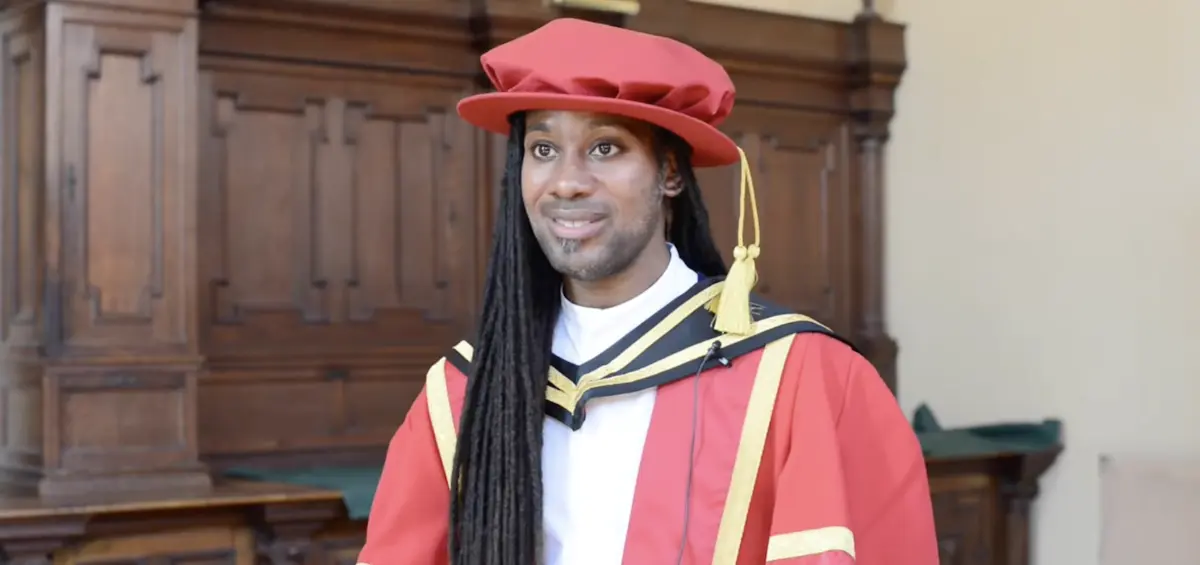
The trajectory and ultimate downfall of Jason Arday offer a sobering case study in the perils of institutional captured by identity politics. Appointed to a prestigious professorship at Cambridge University in 2023, Arday was immediately hailed by university leadership as a triumphant milestone in their ongoing campaign to redress racial injustice and foster genuine diversity.
The Fabrication of a Narrative
Arday, a scholar in the fields of sociology and education, possessed undeniable intellect and an acute sense of institutional opportunity. Recognizing the insatiable appetite of progressive academic circles for narratives of marginalization, he constructed a compelling, yet thoroughly fabricated, personal history. Arday claimed to have suffered from severe developmental and physical disabilities during a deeply impoverished childhood.
Within academic environments hyper-focused on intersectionality, the combination of a neurodivergent profile and a Black background proved irresistible. As critics later observed, the mere thought of elevating such a profile to the highest academic honors elicited profound enthusiasm among progressive elites. Arday leveraged this institutional vulnerability with remarkable entrepreneurial flair, realizing that the more disadvantaged his projected image, the less scrutiny his academic credentials would receive.
Whistleblowing, Retaliation, and Enablism
Almost immediately following his high-profile appointment, independent scholars and journalists began raising quiet questions regarding the validity of Arday’s publications and the integrity of his doctoral research. Academic experts who conducted independent audits of his doctoral thesis uncovered extensive, undeniable plagiarism.
Rather than initiating transparent internal investigations, Cambridge University officials and representatives from the institution that originally awarded his doctorate chose a path of aggressive denial and legal containment.
- When journalists prepared investigative exposés, legal teams intervened to suppress publication.
- When critics raised methodological or ethical concerns regarding his scholarship, Arday filed formal racism complaints against them with his employers.
- In at least one instance, a journalist investigating the claims was reported to local police for alleged racial harassment.
Protective enablers within the academic establishment rallied to his defense. In an open letter, prominent allies at Cambridge asserted that the integrity of higher education itself was under threat from "systematic attempts to erase Black scholarship." This institutional reflex—shielding a favored figure behind accusations of structural racism—ensured that accountability was systematically neutralized.
The Tragic Conclusion
The house of cards could not stand indefinitely. As public revelations mounted and the unverified nature of his academic foundation became impossible for mainstream institutions to ignore, Arday tendered his resignation on August 5. One week later, he tragically committed suicide.
Reflecting on the tragedy, former mentors and colleagues noted that Arday was as much an exploited participant as he was an exploiter. Heidi Mirza, one of his graduate school advisers, remarked prior to his death that Arday was ultimately "a pawn whose ambition made him vulnerable." David Harris, a fellow academic whose early warnings regarding scholarship integrity were systematically ignored, observed that Arday was surrounded not by critical friends, but by institutional enablers who valued his utility to their ideological agenda far more than his intellectual well-being.
Supporting Context & Metrics: The American Parallel and Tyler Austin Harper’s Disillusionment
While the Arday scandal exposed the raw nerve of British academia, a parallel crisis was unfolding across the Atlantic. In The Atlantic’s September 2026 feature, "Confessions of a Token Black Professor: Why I Lost Faith in Academia," Tyler Austin Harper detailed his deeply disillusioning tenure at Bates College, an elite liberal arts institution in Maine.
The Aftermath of 2020 and "Woke Jim Crow"
Hired in 2020 in the tumultuous wake of the George Floyd protests, Harper initially maintained an open mind regarding the institutional pivots sweeping American campuses. College leadership instituted sweeping reforms, most notably a plan mandating "Race, Power, Privilege, and Colonialism" (RPPC) coursework across every major discipline.
However, as Harper participated in faculty search committees, his romanticized view of affirmative action evaporated. He realized that rather than serving as a mechanism to identify under-resourced candidates with hidden potential while maintaining strict academic standards, the hiring process had inverted into something resembling a "woke Jim Crow." In this environment, racial identity superseded peer-reviewed output, teaching excellence, and scholarly promise. Radically separate standards were openly, if quietly, applied to candidates based on their racial categorization.
The Reality of Tokenism
Harper quickly recognized that his own presence on campus was viewed through a transactional lens. Senior administrators routinely slotted him into committee assignments dealing exclusively with minority issues, treating him not as an independent political and philosophical thinker, but as an irreplaceable commodity. As a Black friend wryly observed to him, he had become one of the "irreplaceable negroes"—a priceless token in the institutional marketing apparatus.
Harper ultimately resigned in 2025 not merely out of frustration with double standards, but due to a comprehensive realization that elite higher education had become intellectually and morally hollowed out. Commenting on campus culture, he noted the absurdity of institutional priorities—such as university-funded "sex weeks"—observing that Bates had devolved into "a place devoted to risk-free ideological masturbation" where affluent students and faculty could cosplay as radicals and victims without facing real-world consequences.
Official Statements and Institutional Responses
The institutional responses to both the Arday and Harper controversies reveal a deep-seated institutional aversion to transparency and self-correction.
Cambridge University’s Silence
In the wake of Arday’s resignation and subsequent death, Cambridge University’s official pronouncements have remained remarkably delicate. University spokespersons have consistently framed the narrative to avoid any admission of administrative negligence, systemic oversight failure, or the weaponization of race policies. Public statements have largely avoided acknowledging the documented instances of plagiarism and fabrication, preferring instead to memorialize Arday while deflecting inquiries regarding why internal warnings were ignored for years.
The Retreat at Bates College
The fragility of institutional conviction was further demonstrated at Bates College late in 2025. The RPPC curriculum requirement—championed by administrators and faculty members as an unassailable moral imperative essential for social justice—was quietly suspended.
Following shifting political winds and mounting external pressure from federal authorities regarding Diversity, Equity, and Inclusion (DEI) expenditures, college leadership abruptly advised the faculty to vote for the suspension of the initiative. Harper noted the profound irony of the retreat: an initiative defended with fierce, performative moral righteousness was abandoned overnight when institutional self-preservation required it.
Future Outlook: Rebuilding Academic Integrity
The convergence of the Arday scandal and Harper’s resignation signals a watershed moment for Western higher education. These events expose systemic vulnerabilities that cannot be dismissed as isolated anomalies.
+-----------------------------------------------------------------+
                 THE CYCLE OF INSTITUTIONAL DECAY
+-----------------------------------------------------------------+
         [ Ideological Mandates Imposed from Above ]
                              │
                              ▼
         [ Merit & Rigor Subordinated to DEI Metrics ]
                              │
                              ▼
         [ Whistleblowers & Critics Silenced / Punished ]
                              │
                              ▼
         [ Scandals Emerge / External Pressure Mounts ]
                              │
                              ▼
         [ Sudden Institutional Retreat & Cowardice ]
+-----------------------------------------------------------------+
The Cost of Silent Complicity
The complicity of faculty common rooms in Cambridge, Bates, and countless other institutions highlights a profound cultural failure. Academics who privately whispered about fraudulent research or unworkable curricula chose silence out of fear of professional retaliation, cancellation, or reputational destruction. When an entire professoriate abandons its commitment to truth-seeking in favor of ideological conformity, the university ceases to function as a center of learning.
Pathways to Reform
If elite universities are to reclaim their historical mandate, structural reforms must be enacted:
- Restoration of Meritocratic Standards: Admissions, hiring, and promotion must be strictly anchored in objective academic merit, peer-reviewed output, and verified competence, eliminating racial or ideological litmus tests.
- Protection for Dissident Scholarship: Institutions must establish robust legal and cultural protections for faculty members and journalists who expose academic fraud or question administrative orthodoxy.
- Decoupling from Ideological Fads: University leadership must be drawn from administrators who prioritize intellectual pluralism, free expression, and rigorous inquiry over short-term political compliance and public relations metrics.
Without a concerted return to first principles, universities will continue to operate as self-referential echo chambers—run by leaders lacking the moral courage to defend their own stated convictions, and ultimately failing the very students and scholars they are sworn to serve.





Comments
Facebook App ID not configured. Please add it in the Customizer.