
Executive Overview
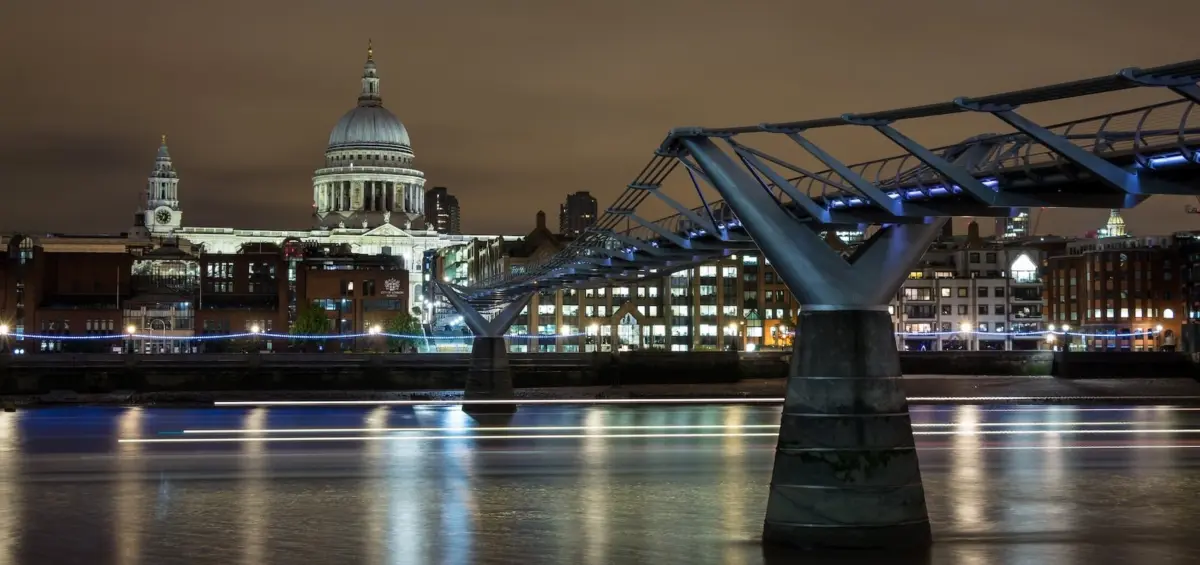
St. Paul’s Cathedral, Sir Christopher Wren’s towering masterpiece of English Baroque architecture, has struck a controversial chord in its quest to arrest declining attendance. Under a newly formalized partnership, the iconic London nightclub Fabric will serve as the exclusive curator of contemporary music events within the cathedral’s sacred walls. While church administrators pitch the agreement as an innovative mechanism to engage modern audiences and generate much-needed revenue, the move has ignited an intense global debate.
Critics, ranging from international Catholic prelates to traditionalist Anglicans, view the arrangement as a symptom of a deeper spiritual malaise—a surrender of the sacred to the secular. This institutional pivot unfolds against a backdrop of acute crisis for the Church of England. Plagued by evaporating congregations, sweeping parish closures, a severe shortage of clergy, and shrinking financial viability, the nation’s established church is desperately searching for relevance in an increasingly post-Christian society. Yet, as St. Paul’s opens its doors to the architects of London’s electronic music scene, the fundamental question remains: Can the church court the secular world without sacrificing the very holiness that sets it apart?
Detailed Chronology: From Synthesizers to Sanctuary
The integration of contemporary performance art into England’s holiest cathedrals is not an entirely unprecedented experiment, but the formalization of the St. Paul’s–Fabric partnership marks a dramatic escalation in scale and cultural collision.
Read Also
- 2022 (The Prototyping Phase): Fabric organizes a critically acclaimed concert inside St. Paul’s featuring Australian synth-pop artist RY X. Organizers lauded the event for injecting synthesizers, ambient electronics, and modern live performance into a sanctuary erected centuries before the invention of electric amplification. While deemed a success by modern arts promoters, traditionalists raised quiet alarms about the changing acoustic and spiritual profile of the space.
- The Precedent at Canterbury: Tensions regarding secular entertainment in medieval holy sites reached a boiling point with the infamous "rave in the nave" silent disco hosted inside Canterbury Cathedral. The backlash served as a stark warning to ecclesiastical authorities across the United Kingdom.
- Late 2024 (The Institutionalization): St. Paul’s Cathedral officially inks its partnership agreement with Fabric, designating the legendary nightclub as its exclusive partner for contemporary music programming. Cathedral officials rush to reassure critics, promising that future events will adhere to strict protocols: seated audiences, minimal acoustic amplification, and an overarching tone of reverence.
- Reactions and International Rebuke: The announcement immediately draws fire from abroad. United States-based Roman Catholic Bishop Robert Barron publicizes a scathing critique of Anglican leadership, accusing them of losing all discernment regarding the boundary between the sacred and the profane. Concurrently, London Mayor Sadiq Khan takes to social media to celebrate the partnership, inadvertently triggering a fierce cultural debate over the commodification of Christian landmarks.
Supporting Context & Metrics: The Crisis of English Anglicanism
The decision by St. Paul’s Cathedral to partner with a night-clubbing institution cannot be understood in a vacuum. It is a direct reaction to the structural and demographic collapse facing the Church of England—a denomination that has defined English civic and spiritual life since the Reformation.
The Numbers Behind the Empty Pews
The statistical reality of modern British religiosity paints a grim picture for ecclesiastical planners:
- Weekly Attendance: Only 5 percent of British adults attend church services on a weekly basis, a figure that edges up to a mere 13 percent among those who self-identify as practicing Christians.
- Clergy Shortage: The Church of England has witnessed a staggering 20 percent drop in its paid clergy since the turn of the century. Overstretched and underpaid vicars are routinely forced to manage multiple parishes simultaneously. Reverend Marcus Walker, rector of St. Bartholomew the Great in London, has publicly warned that the church is on a "path to annihilation."
- Property Closures: Between 2010 and 2019, 423 Anglican churches closed their doors permanently. The church’s official registry routinely lists dozens of shuttered houses of worship up for lease or outright commercial sale.
- Taxation Pressures: Financial burdens on historic properties have intensified following government policy adjustments, notably the application of a 20 percent Value-Added Tax (VAT) to grants distributed from the annual £23 million church restoration fund.
While the Church of England sits on an immense endowment fund valued at approximately £11.6 billion, individual parishes rarely see these capital reserves trickle down to address day-to-day operational expenses. Consequently, local leadership is forced into creative, often commercial, fundraising ventures to keep ancient masonry from crumbling.
Official Statements and Cultural Friction
The partnership has generated profound polarization among clergy, politicians, and cultural commentators, highlighting a deep fracture over national identity and sacred stewardship.
The Institutional Defense
Proponents of the partnership argue that historic churches must evolve to survive. Sandra Lynes Timbrell, St. Paul’s director of visitor engagement, defended the initiative to the Church Times, emphasizing that the upcoming events will be carefully curated "seated concerts" utilizing "minimal amplification" to ensure the dignity of the cathedral is preserved.
The Political Provocation
The cultural fault lines were laid bare when London Mayor Sadiq Khan posted a glowing endorsement of the alliance on social media:
"Fabric. St Paul’s Cathedral. Name a more iconic duo. Bringing together these two institutions will create a one-of-a-kind experience, pairing world-class music with one of our most special landmarks."
The framing of a premier Anglican cathedral as a generic "landmark" drew immediate condemnation from traditionalists who saw it as indicative of a broader civic disregard for Christian heritage. Journalist Tom Harwood sharply lampooned the mayor’s statement by suggesting analogous pairings, such as pairing a prominent gay nightclub (Heaven) with a major south London mosque (Baitul Futuh), underscoring the asymmetrical cultural reverence afforded to different religious traditions in modern Britain.
Theological Unease
Reverend Marcus Walker offers a nuanced perspective on the intersection of art and liturgy. While acknowledging that beauty can draw souls toward the divine—pointing to a deeply spiritual, candlelit performance by singer Nick Cave at St. Bart’s as a triumph of sacred art—he admits that partnering with an institution like Fabric introduces dangerous complexities. Fabric itself faced temporary closure in 2016 after drug-related tragedies claimed the lives of young patrons, making its brand an uncomfortable bedfellow for a cathedral church.
Bishop Robert Barron went further, castigating the leadership of the established church for erasing the theological line that separates the sanctuary from the marketplace.
Future Outlook: The Unshepherded Nation
The debate over the St. Paul’s–Fabric partnership transcends mere acoustics or event management; it strikes at the core of national identity. For centuries, the Church of England served as the moral and cultural anchor of British society—a unifying institution that bridged regional, class, and educational divides.
As formal religious affiliation plummets, the vacuum left by the retreating church is rapidly filling with a chaotic array of ideologies, ranging from secular civic nationalism to postmodern political movements. The English populace is drifting into unchartered waters, searching for meaning without traditional shepherds.
The Path Forward
For the Church of England to genuinely serve a lost society, it must offer what worldly venues, concert halls, and nightclubs fundamentally cannot:
- Transcendent Continuity: Unwavering adherence to tradition, custom, and sacred liturgy.
- The Encounter with the Divine: A physical and spiritual threshold where the worldly noise of daily life is left behind.
While commercial ventures like contemporary concert series may offer a temporary financial salve, they carry an existential risk. In their eagerness to welcome the secular world into the nave, England’s historic churches risk allowing the sacred to slip away. No acoustic concert, however respectful or refined, can replace the quiet, transformative majesty of a house of God kept holy for His people.





Comments
Facebook App ID not configured. Please add it in the Customizer.