
Executive Overview
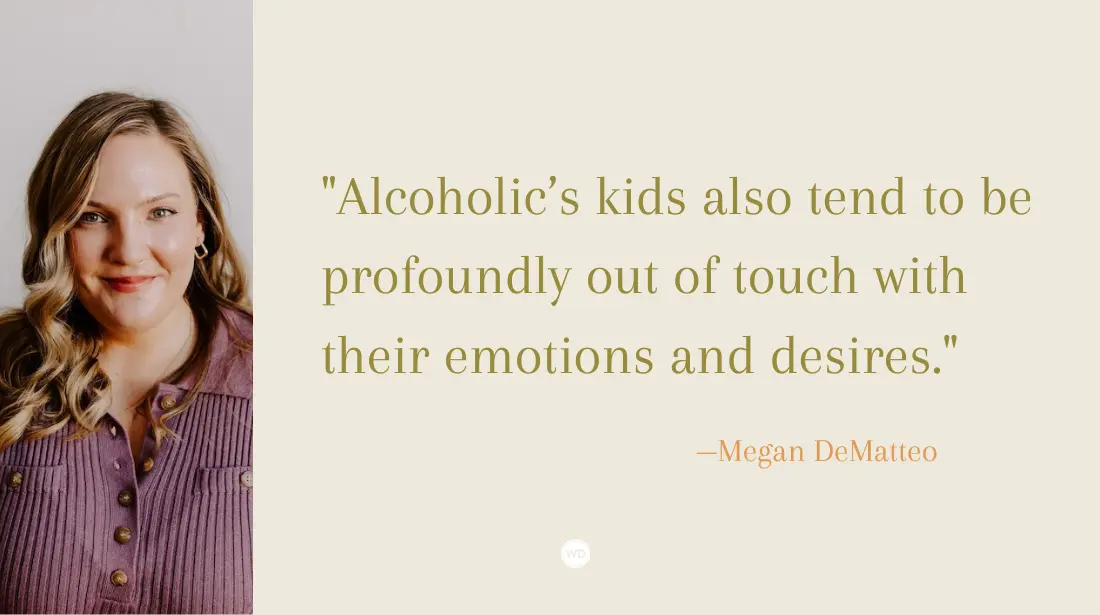
For decades, the cultural conversation surrounding substance use disorders has rightfully focused on the individual struggling with addiction. Yet, standing quietly in the periphery are the silent casualties of domestic dependency: the children of alcoholics (COAs). While psychological literature has long documented the trauma responses, hyper-vigilance, and emotional developmental delays experienced by these children, a less explored dimension is how this unique psychological imprint translates into profound creative power.
Writing is, at its core, an act of radical observation. It requires an acute sensitivity to sensory details, subtext, environmental shifts, and the unspoken emotional undercurrents of a room. For many adult children of alcoholics, these exact competencies were not learned in a creative writing MFA program; they were forged as high-stakes survival mechanisms in unpredictable childhood homes.
This article explores the intersection of developmental psychology and creative expression, examining how the hyper-attuned survival tactics of an alcoholic’s child evolve into literary tools. Drawing on pop culture touchstones like Mad Men and Runaway Bride, psychological frameworks such as "emotional dyslexia," and personal narrative, we investigate the transformative journey from scanning the environment for danger to discovering an authentic, independent self.
Read Also
Detailed Chronology: The Evolution of the Hyper-Vigilant Child
The psychological profile of a child raised in an environment dominated by parental alcoholism does not materialize overnight. It develops through a predictable, chronic chronology of environmental stressors, micro-adjustments, and coping mechanisms.
Phase One: The Calibration of the Environment (Early Childhood)
In the formative years of a child of an alcoholic, the domestic sphere is rarely a fixed, secure baseline. Instead, it is a volatile ecosystem. The child learns early to read the atmospheric pressure of the home long before they can articulate what is happening.
- Sensory Attunement: The child begins cataloging non-verbal cues. The crunch of gravel in the driveway, the distinct sound of a specific key turning in the lock, the heavy or light cadence of footsteps, and the atmospheric silence or sharp pitch of voices all become primary data points.
- The Internal Lighthouse: As depicted in creative writing workshops exploring this dynamic, the home transitions from a sanctuary into a landscape of surveillance. Headlights flashing through windows signal the end of safety and the beginning of performance management.
Phase Two: The Suppression of Self (Middle Childhood & Adolescence)
As the child matures, the burden of managing the emotional climate of the family shifts inward. This phase is characterized by the systematic erasure of personal needs.
- Hyper-Empathy Misdirected: The child develops an extraordinary capacity for empathy, but this empathy is fundamentally defensive. It is wasted on minute, inconsequential details—the precise sound of a latch, the texture of a welcome mat, the visual confirmation of a glossy, glazed look in a parent’s eyes.
- The Compulsion to Monitor: Instincts scream at the child to intervene, to check, to hover, and to assess the parent’s level of intoxication. Over time, the child learns to sit frozen through these biological tugs, suppressing their own impulses to maintain a fragile peace.
Phase Three: The Adult "Shape-Shifter" (Early Adulthood)
Entering adulthood, the former child of an alcoholic often struggles with what psychologist Tian Dayton terms "emotional dyslexia"—a profound disconnect from their own internal emotional states, preferences, and desires.
- The Search for False Belonging: Having spent a lifetime adopting whatever persona or emotional posture kept the peace at home, the adult COA often adopts a shape-shifting existence. Much like Maggie Carpenter in Runaway Bride, who cycled through various preferences for eggs depending on the tastes of her respective fiancés, adult children frequently lose sight of who they are when they are not actively managing or mirroring the desires of a partner or environment.
- The Crisis of Identity: When the external chaos of the childhood home is removed, the internal void remains. The adult finds themselves asking not just "What do I like?", but "Who am I when I am not worrying about someone else?"
Supporting Context & Metrics: Cultural Archetypes and Psychological Frameworks
To fully understand the psychological mechanics of the adult child of an alcoholic, it is helpful to examine how these patterns manifest both in sociological research and cultural storytelling.
The Sally Draper Paradigm: Inherited Anxiety
In television history, few characters embody the trajectory of a child of an alcoholic as comprehensively as Sally Draper across seven seasons of Mad Men. Viewers witness the generational transmission of anxiety and the agonizing process of reality-questioning:
- Waiting at the Threshold: Sally’s classic pattern involves watching the door for her father’s arrival, absorbing the chronic disappointment of ruined holidays, and navigating the confusing terrain of a parent who is physically present but emotionally and mentally absent.
- Inadvertent Gaslighting: Because alcoholism thrives on denial and minimization, children in these environments frequently doubt their own memories. When a parent disappears for days and offers vague, tearful apologies over out-of-state payphones, the child’s foundational grasp of reality is severely tested.
The Maggie Carpenter Syndrome: Emotional Dyslexia and Over-Responsibility
The 1999 romantic comedy Runaway Bride offers a surprisingly sharp psychological portrait of an adult child of an alcoholic under the guise of lighthearted cinema:
- Caregiving as Identity: Maggie’s trajectory—dropping out of school to manage an incapacitated, alcoholic father and physically hauling him home from local bars—illustrates the inversion of parent-child roles.
- The Cost of Over-Functioning: When a child prioritizes the survival needs of the family unit over their own developmental milestones, they enter adulthood with underdeveloped internal boundaries. Their professional and romantic choices become extensions of a deep-seated, subconscious belief that safety, acceptance, and stability can only be earned through accommodation and hyper-vigilance.
Statistical and Psychological Overviews
While exact figures vary due to underreporting and shifting diagnostic criteria, public health data consistently highlights the widespread impact of parental substance abuse:
- Prevalence: According to the Substance Abuse and Mental Health Services Administration (SAMHSA), millions of children in the United States live in households with at least one parent struggling with a past-year alcohol or illicit drug use disorder.
- Long-Term Impact: Adult children of alcoholics show statistically elevated risks for developing anxiety disorders, depression, perfectionism, and chronic relational difficulties, largely driven by early-life adaptations to unpredictable environments.
Official Statements and Clinical Perspectives
Mental health professionals specializing in family systems and addiction recovery emphasize that recognizing these behavioral patterns is the vital first step toward true emotional sobriety.
"The core wound of the child of an alcoholic is not merely that they experienced chaos, but that their survival depended on ignoring their internal landscape to manage everyone else’s. Recovery requires a profound and often terrifying pivot: turning the lens away from the external environment and directing it inward."
— Dr. Tian Dayton, Developmental Psychologist and Author on Adult Children of Alcoholics
Clinical literature underscores that while addiction forces the individual struggling with substance use to confront the question, "Who am I without my drug of choice?", the adult child faces a parallel, equally demanding inquiry: "Who am I when I am not actively managing, fixing, or worrying about someone else?"
Therapists note that creative outlets—such as fiction writing, journaling, and memoir—often serve as unexpected bridges for healing. By translating the hyper-vigilant observations of childhood into narrative art, the adult regains agency over their memories. What was once a traumatic tool of surveillance becomes an instrument of deliberate artistic creation.
Future Outlook: The Transformational Journey to Self-Discovery
The journey of an adult child of an alcoholic who enters recovery—whether through traditional therapy, support groups like Al-Anon, or creative expression—is rarely linear. It is a process of unlearning.
Moving from Surveillance to Solitude
The ultimate frontier for the adult child of an alcoholic is the reclamation of solitude. For so long, quiet moments were fraught with anticipation of the next disruption. Transforming that space into a sanctuary of authentic self-discovery requires patience and courage.
- Reclaiming Preferences: Just as discovering whether one likes eggs scrambled, fried, or not at all might seem trivial to outsiders, for the recovering shape-shifter, defining personal boundaries and genuine preferences is a radical act of self-authorship.
- The Fruitfulness of the Unanswered Question: Embracing the winding, unanswerable questions of identity opens the door to a more robust, emotionally honest life.
Conclusion: The Writer’s Redemption
The skills honed in the shadow of addiction—deep empathy, microscopic observation, and emotional radar—do not have to remain instruments of anxiety. When integrated through self-awareness and creative expression, they become the bedrock of profound storytelling and personal liberation.
In the end, the child who sat frozen in the kitchen listening for footsteps learns that they no longer need to scan the dark for headlights. The light they have been searching for was inside them all along.




Comments
Facebook App ID not configured. Please add it in the Customizer.