
Executive Overview
The intersection of global geopolitics and live entertainment has rarely been as starkly illuminated as it was during Ed Sheeran’s recent U.S. concert tour stop at Philadelphia’s Lincoln Financial Field. Addressing tens of thousands of fans, the British pop megastar broke his silence regarding a raging controversy that had consumed the music industry for over a week: the abrupt removal of rapper Macklemore from his supporting lineup.
The fallout exposed the deep fractures within the Western cultural landscape regarding the ongoing Israeli-Palestinian conflict. Macklemore, an outspoken critic of Israeli military actions, had been dropped from upcoming stadium dates following pressure from venue stakeholders, including New England Patriots owner Robert Kraft. In response, supporting acts—including the traditional Irish folk group Beoga—withdrew from the tour in solidarity, triggering an avalanche of cancellations, public boycotts, and intense soul-searching from Sheeran himself.
Standing on stage at Lincoln Financial Field, Sheeran offered a nuanced, highly emotional mea culpa. He walked back his earlier stance that concert venues should remain entirely divorced from political discourse, labeling Israel’s military campaign in Gaza as "catastrophic, unjustifiable, and disproportionate." Simultaneously, he condemned the systemic injustices in the West Bank and expressed deep alarm over the policing of performer speech by powerful venue owners.
Read Also
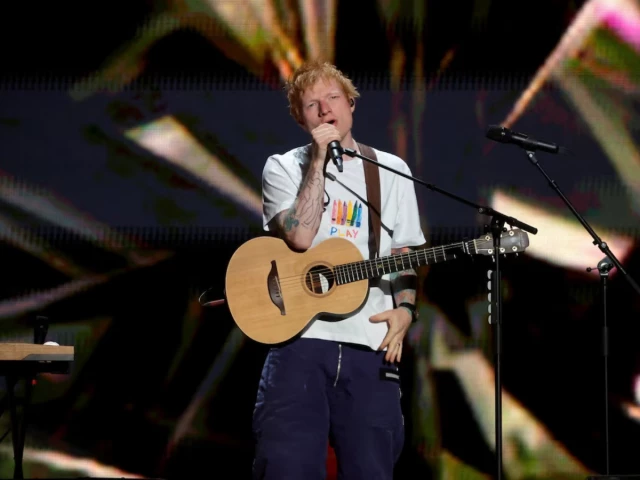
Yet, the evening also underscored the immense personal and professional toll of the crisis. Sheeran admitted to profound anxiety over his own safety, reconfigured his stage layout to mitigate potential security threats, and openly thanked a newly assembled group of temporary backing musicians willing to brave public backlash to perform alongside him. As protests raged outside the venue and global media scrutinized every word, Sheeran’s Philadelphia concert transformed from a standard pop performance into a high-stakes crucible examining free speech, artistic integrity, and the limits of safe spaces in a polarized world.
Detailed Chronology
The Spark: Macklemore’s MetLife Statement
The sequence of events that upended Ed Sheeran’s North American tour dates began on September 4, during a concert at MetLife Stadium in East Rutherford, New Jersey. Macklemore, serving as a supporting act, used his platform on stage to voice explicit support for Palestine, punctuating his performance with a vocal "Free Palestine" declaration. The statement quickly went viral on social media, drawing praise from pro-Palestinian advocacy groups while drawing swift, behind-the-scenes backlash from influential figures in the entertainment and venue management spheres.
The Ouster and Industry Retaliation
The controversy escalated sharply when Macklemore took to Instagram to reveal he had been unceremoniously dropped from the remainder of Sheeran’s U.S. tour. According to the rapper, New England Patriots owner Robert Kraft had intervened, informing Sheeran that Macklemore would be barred from performing at Gillette Stadium in Foxborough, Massachusetts, where Sheeran was scheduled for shows on September 25 and 26.
Kraft and other major stadium stakeholders reportedly issued an ultimatum: either Macklemore was removed, or the shows would not happen. Rather than cancel the tour infrastructure, Sheeran acquiesced to the venue owners’ demands, setting off a secondary wave of controversy.
The decision to drop Macklemore alienated major segments of Sheeran’s supporting roster. In a display of solidarity with the ousted rapper, the tour’s remaining support acts, including the traditional Irish folk group Beoga, abruptly pulled out of their remaining U.S. tour commitments. The sudden exodus left Sheeran scrambling to piece together a functional live band with only days to spare before his Philadelphia performance.
Initial Resistance and Immediate Backlash
As public pressure mounted, Sheeran initially attempted to distance himself from the fray. In an Instagram statement released earlier in the week, the British singer argued that his concert audiences "do not expect a political forum" and stated that he wished to avoid stepping into the role of an activist musician.
This initial attempt to downplay the controversy failed to quell the storm. Instead, it drew intense criticism from fans, free speech advocates, and pro-Palestinian organizations who accused the pop star of prioritizing corporate venue relationships over artistic expression and human rights. Protests began organizing outside scheduled tour venues, and ticket holders demanded accountability. Realizing that silence was no longer tenable, Sheeran recognized the need to fundamentally alter his public posture ahead of his Philadelphia show.
Supporting Context & Metrics
The Geopolitical Background
The controversy surrounding Ed Sheeran’s tour does not exist in a vacuum; it is deeply rooted in the catastrophic escalation of the Israeli-Palestinian conflict. The catalyst for the current war remains the October 7, 2023, attacks led by Hamas, which resulted in the deaths of approximately 1,200 people in Israel, primarily civilians, alongside the abduction of hundreds of hostages.
In the wake of that tragedy, the Israeli military launched an extensive, ongoing counter-offensive in the Gaza Strip. According to local health authorities and international monitoring bodies, the subsequent war has resulted in the deaths of tens of thousands of Palestinians—a significant proportion of them women and children—and has displaced nearly the entirety of Gaza’s 2.3 million residents.
Beyond Gaza, international attention has increasingly focused on the West Bank, where right-wing Israeli coalition policies have facilitated unprecedented expansions of Jewish settlements, alongside surges in systemic violence and displacement targeting Palestinian residents. These compounding humanitarian crises have turned cultural platforms into critical battlegrounds for public opinion, testing where public figures stand on international human rights norms.
The Economics and Logistics of Stadium Tours
From a logistical standpoint, modern stadium tours are massive corporate operations involving millions of dollars in capital, complex scheduling, and interdependent relationships among artists, booking agencies, promoters, and venue conglomerates. Major venues like Gillette Stadium, MetLife Stadium, and Lincoln Financial Field are often controlled by powerful corporate entities, sports franchise owners, or municipal trusts capable of wielding immense leverage.
When venue owners enforce informal or formal ideological vetting of performers, it exposes a vulnerability in the live music touring ecosystem. For Sheeran, complying with stadium demands meant preserving hundreds of jobs and millions in ticket revenues, but it came at a catastrophic cost to his brand and moral authority. Conversely, defying venue owners could have resulted in multi-million dollar breach-of-contract penalties and systemic blacklisting across primary North American markets.
Security and Public Safety Realizations
The real-world impacts of the political firestorm quickly translated into heightened physical security risks. Recognizing the volatility of the situation, tour organizers implemented immediate logistical changes. According to reports by Billboard, Sheeran ordered the complete removal of his secondary "B stage" to centralize crowd management and minimize exposure.
In mid-concert remarks, Sheeran admitted the palpable fear that preceded his time on stage:
"To be honest, I didn’t know what the audience would be like tonight. I didn’t know if things would have been thrown at me. I didn’t know if people would be angry with me. Today, is not the usual Loop show because I was afraid of what would happen if I stood in the middle."
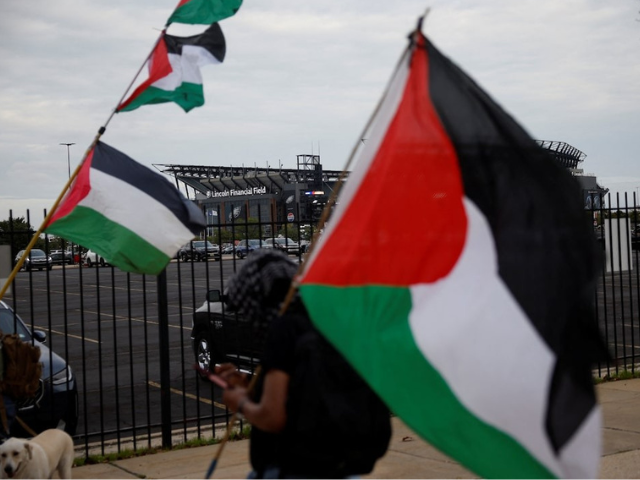
Outside Lincoln Financial Field, the Philadelphia Police Department maintained an active monitoring presence, adjusting personnel allocations based on intelligence regarding pro-Palestinian demonstrations. Roughly half a mile from the venue, protesters gathered to distribute informational material regarding conditions in Gaza, ensuring that the human cost of the conflict remained visible to attendees filing into the concert.
Official Statements
Ed Sheeran’s Philadelphia Address
Breaking his silence in front of a massive audience at Lincoln Financial Field, Ed Sheeran delivered a carefully measured yet deeply emotional opening statement that fundamentally shifted his public narrative:
"I’ve had to take and make difficult decisions and I am making mistakes and I’m so, so sorry… This week, the criticism was about something much more important and I’ve had to take and make difficult decisions, and I am making mistakes, and I’m so, so sorry."
Addressing the core geopolitical dimensions of the controversy, Sheeran condemned the initial Hamas attacks while sharply criticizing the subsequent military response:
"At the start of the concert, [I call] the October 2023 Hamas attack that killed 1,200 Israelis ‘horrific.’ But Israel’s subsequent war, which has killed thousands in Gaza and displaced almost all of the population, is catastrophic and unjustifiable and disproportionate."
He further expanded his critique to the West Bank:
"My heart has been broken by the scale of devastation and loss of civilians’ lives, children’s lives… systemic injustice in the West Bank could not be ignored."
Crucially, Sheeran addressed the alarming trend of venue censorship, declaring his opposition to the corporate vetting of artistic speech:
"This happens in so many places that I perform around the world, but it should never happen in the free world."
Concluding his remarks on inclusivity, Sheeran reiterated his core philosophy for his live shows:
"Everyone is welcome at my concerts… My concerts have always been a safe space for everyone, and that matters hugely to me."
The Scramble for Talent: Backing Musicians Speak
With traditional support acts having departed, Sheeran addressed the audience regarding the recruitment of his emergency backing ensemble, featuring violinist Alicia Enstrom alongside temporary musicians Mike, CJ, Eric, and Clay:
"There are certain songs that just don’t work on the loop pedal, so when my friends dropped out of the show, I was thinking, ‘How am I gonna keep the show the same, and how am I gonna get musicians to stand on stage with me in a week when no one wants to stand on stage with me?’"
He praised the courage of his new collaborators:
"I just wanna say before they come on stage [that] they said yes to being on stage with the knowledge that the world thought I was a certain type of person. They said yes with the knowledge that the world may hate them too for standing on stage with me and I am so grateful for them being on stage tonight and standing on stage with me in front of you guys."
Future Outlook
The fallout from the Ed Sheeran-Macklemore controversy signals a permanent shift in how major musical tours will navigate political speech, venue relationships, and public accountability. As the live music industry enters a more fragmented and ideologically charged era, several key trends and outcomes are likely to emerge:
- Heightened Scrutiny on Venue Contracts: The revelation that stadium owners can successfully veto supporting acts based on political statements will likely spark legal and contractual pushback from artists’ unions and booking agencies. Performers may increasingly demand clause protections that safeguard freedom of expression within touring rider agreements.
- The Politicization of Mainstream Audiences: Gone are the days when pop stars could comfortably inhabit a politically neutral bubble. Audiences, protesters, and digital communities now demand moral clarity from artists commanding global platforms. Silence or neutrality is increasingly interpreted as complicity, forcing performers to actively articulate their values.
- Security Protocols for Large-Scale Events: Event organizers will need to invest heavily in enhanced risk assessment and crowd management strategies. As seen in Philadelphia, the blending of geopolitical dissent with stadium entertainment requires unprecedented cooperation between tour security, municipal law enforcement, and local community organizers.
- Resilience of Independent Support Acts: The willingness of artists like Beoga to sacrifice lucrative tour slots on moral grounds demonstrates a growing solidarity movement among musicians. This grassroots accountability network may empower smaller acts to speak out more freely, knowing that a broader artistic community stands ready to support them against corporate retaliation.
Ultimately, Ed Sheeran’s Philadelphia concert proved that music and politics can no longer be cleanly separated at the stadium gates. As the tour continues its North American run, the legacy of this controversy will serve as a definitive case study in the modern cost of artistic conscience, public diplomacy, and the enduring struggle for free expression on the global stage.




Comments
Facebook App ID not configured. Please add it in the Customizer.