
Executive Overview
In the cutthroat world of elite art market acquisitions, few rivalries match the high-stakes chess match between Christie’s and Sotheby’s. This past summer, the two mega-auction houses locked horns in a fierce battle to secure one of the most coveted remaining private troves of modern and contemporary masterworks: the sprawling collection of the late Herbert Lust.
Lust, an eccentric and erudite former banker, scholar, and prolific collector whose discerning eye was matched only by his deep personal connections to the artists he championed, passed away earlier this year at the remarkable age of 99. Left in his wake was a residual estate boasting roughly 300 museum-grade works collectively valued at an estimated $60 million.
After months of intense negotiations, private pitches, and behind-the-scenes maneuvering, Christie’s—operating in strategic collaboration with the Fine Art Group—emerged victorious. The auction house announced that it will officially handle the collection, with the marquee offerings slated to hit the auction block during its flagship November sales series in New York. Additional lots will be rolled out across subsequent sales in London and Paris, with total expectations for the dispersal projected to exceed $50 million.
Read Also
Yet, this victory is more than just a financial coup; it represents a dramatic upset. Sotheby’s had cultivated a decades-long relationship with Lust, positioning themselves as the natural stewards of his estate. The stunning pivot to Christie’s underscores the volatile and unpredictable nature of top-tier art consignments, where institutional loyalty can shift rapidly in the face of aggressive modern marketing strategies and lucrative financial guarantees.
Detailed Chronology: From Greenwich Estate to the Auction Block
The journey of the Herbert Lust collection from his idiosyncratic homes in Greenwich, Connecticut, and a Manhattan pied-à-terre to the pristine salesrooms of Christie’s is a tale defined by decades of passionate acquisition and a final, fiercely contested summer of negotiations.
The Summer Showdown
Rumors first began swirling through the art market in August, when sources close to the negotiations revealed that both Christie’s and Sotheby’s were "duking it out" for the crown jewel of late-summer consignments. The estate, managing the remnants of a once-massive inventory, was shopping approximately 300 works.
While the total estimated value sat at around $60 million, the psychological and prestige value of the collection far outweighed the financial figures. To secure the collection was to claim a piece of mid-century art history—a living archive of a man who didn’t merely buy art, but lived alongside it, intimately intertwined with the avant-garde movements of Paris and New York.
The Sotheby’s Snub: A Relationship Undone
The most compelling narrative thread of this acquisition battle is the heartbreak suffered by Sotheby’s. For all intents and purposes, Sotheby’s appeared to have an insurmountable inside track. They had carefully cultivated Lust over many years, understanding his idiosyncratic tastes and eccentric personality.
Crucially, Sotheby’s had handled significant tranches of his holdings in the past, including the successful sale of 27 Robert Indiana works from his collection back in 2017. Furthermore, in a testament to their deep-rooted relationship, Sotheby’s dispatched a full camera crew to Lust’s sprawling Greenwich home just two years prior to his death. The resulting media captured the nonagenarian collector framed comfortably against a backdrop of masterworks by Frank Stella, Hans Bellmer, Alexander Calder, and Alberto Giacometti.

That Sotheby’s lost this consignment despite years of cultivation speaks volumes about the aggressive tactics deployed by Christie’s and the Fine Art Group during the final stages of estate planning.
The Rollout Strategy
Christie’s has engineered a global rollout strategy designed to maximize visibility and bidding competition. Following the inaugural offerings at the November marquee sales in New York, supplementary sales will be staged globally in London and Paris throughout the upcoming auction calendar. By breaking up the collection across different markets, Christie’s aims to target regional buyer bases—particularly for Surrealist and post-war European works that historically command intense European interest.
Supporting Context & Metrics: The Highlights of the Lust Inventory
Herbert Lust was not a passive accumulator of wealth-signaling trophies; he was an obsessive, highly knowledgeable scholar who bought deep rather than broad. His collection contains several market-defining pieces, led by a monumental sculpture that bridges his personal biography with art history.
The Crown Jewel: Alberto Giacometti’s Figure, demie grandeur (no. 2)
The undisputed headliner of the collection is Alberto Giacometti’s Figure, demie grandeur (no. 2), which carries an aggressive pre-sale estimate of $20 million to $30 million.
Conceived and cast in 1949, this 47-inch-tall bronze holds immense biographical significance. It was crafted during the exact year that a 22-year-old Lust first met Giacometti while studying in Paris on a Fulbright scholarship. What began as a scholarly encounter blossomed into a lifelong friendship. Lust transitioned from a young admirer into an obsessive collector and one of the world’s foremost academic authorities on Giacometti’s oeuvre.
Frank Stella’s Museum-Grade Canvas
Alongside the Giacometti sculpture stands Frank Stella’s monumental 1962 painting, Les Indes Galantes, estimated at $7 million to $10 million. According to Christie’s, this canvas is one of only four related large-scale Stella works executed that year. The other three reside permanently in major museum collections, making this auction appearance a rare institutional-grade opportunity for private collectors. Remarkably, Les Indes Galantes has not surfaced at public auction in nearly 25 years.
Surrealist Depth: Hans Bellmer and Yves Tanguy
Lust’s affinity for the avant-garde is further illustrated by stellar Surrealist holdings. Hans Bellmer’s sculptural construction Jointure de boules (La Poupée), created between 1934 and 1936, carries an estimate of $1.5 million to $2.5 million.
Lust collected Bellmer with staggering depth. He famously quipped that he could acquire 50 great Bellmers for the price of a single great Magritte. Christie’s notes that Jointure de boules is the artist’s largest and most important construction from the 1930s remaining in private hands, positioning it to potentially shatter the existing auction record for Bellmer.
Additional highlights rounding out the high-value lots include:

- Yves Tanguy’s Qui répondra? – Estimated at $2 million to $3 million.
- Robert Indiana’s LOVE Wall – Estimated at $800,000 to $1.2 million.
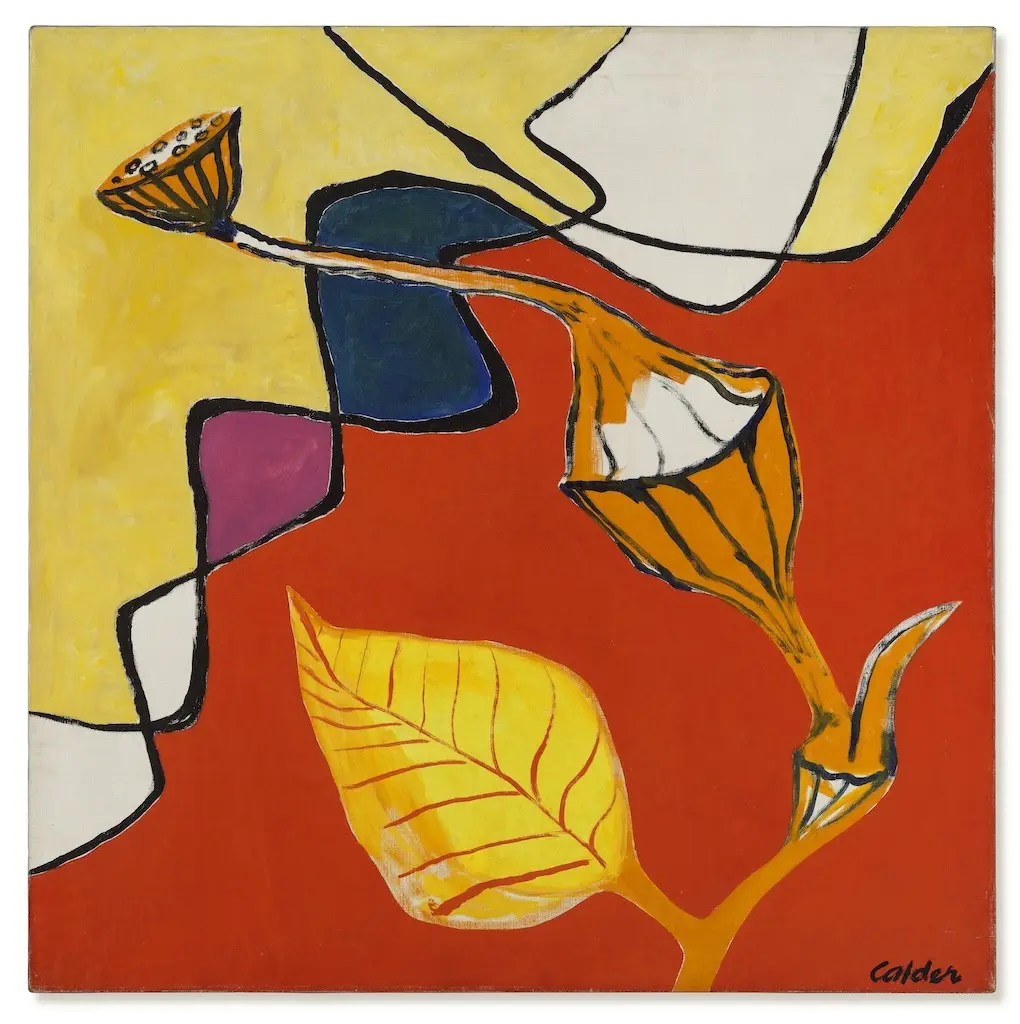
- Alexander Calder’s Pomegranate Pods – Estimated at $500,000 to $700,000.
- Alberto Giacometti’s 1946 oil painting Chaise jaune dans l’atelier – Estimated at $400,000 to $600,000.
Official Statements and Institutional Impact
While the auction houses have kept the precise financial terms of the consignment agreement under wraps—standard practice in competitive estate acquisitions—the partnership with the Fine Art Group highlights a growing trend of collaborative consignments designed to mitigate risk and pool client networks.
In statements released alongside the announcement, representatives for Christie’s emphasized the rare pedigree of the material. The integration of Lust’s scholarly pursuits with blue-chip market heavyweights creates a narrative that auction houses love: a collection born of genuine intellectual curiosity and profound personal relationships with artists, rather than purely speculative financial investment.
Furthermore, the dispersal of the Lust collection reflects a broader ecosystem of estate planning where major collectors often balance institutional philanthropy with market sales. By the time of his death at 99, Lust had already strategically divested substantial portions of his holdings to public institutions.
- The Tel Aviv Museum of Art received staggering institutional gifts, including approximately 200 works by Alberto Giacometti.
- The Hirshhorn Museum and Sculpture Garden in Washington, D.C., accepted a substantial donation of more than 70 rare photographs in 2020.
Despite these monumental philanthropic gestures—which drained hundreds of works from his personal inventory—Lust still retained over 1,000 objects divided between his Greenwich residence and his Manhattan pied-à-terre. The upcoming sales represent only the final chapters of a lifelong curation process.
Future Outlook: What the Lust Sale Signals for the Fall Market
The successful acquisition of the Herbert Lust collection by Christie’s serves as an important barometer for the broader contemporary and modern art market heading into the final quarters of the fiscal year.
As macroeconomic headwinds and cautious bidding patterns have led to a more selective art market in recent seasons, consignors increasingly demand certainty, aggressive guarantees, and global marketing muscle. Christie’s victory over Sotheby’s demonstrates that the house’s leadership remains aggressive in securing blue-chip estates that can anchor high-profile evening sales.
For collectors and investors, the November auctions will provide a critical stress test for mid-century masterworks, particularly in the surrealist and post-war sectors. If pieces like the Giacometti bronze, the rare Frank Stella, and the record-seeking Hans Bellmer surpass their high estimates, it will signal robust health and enduring liquidity at the absolute apex of the art market.
Ultimately, the story of Herbert Lust’s collection is a testament to a bygone era of collecting—one where scholarship, personal friendship, and aesthetic obsession drove the formation of holdings that museums and auction houses fight over to this day. As the gavel falls this November in New York, it will close a brilliant chapter for one of the 20th century’s most singular collectors, while opening a fiercely competitive new chapter in the ongoing rivalry between the world’s premier auction houses.




Comments
Facebook App ID not configured. Please add it in the Customizer.