
Executive Overview
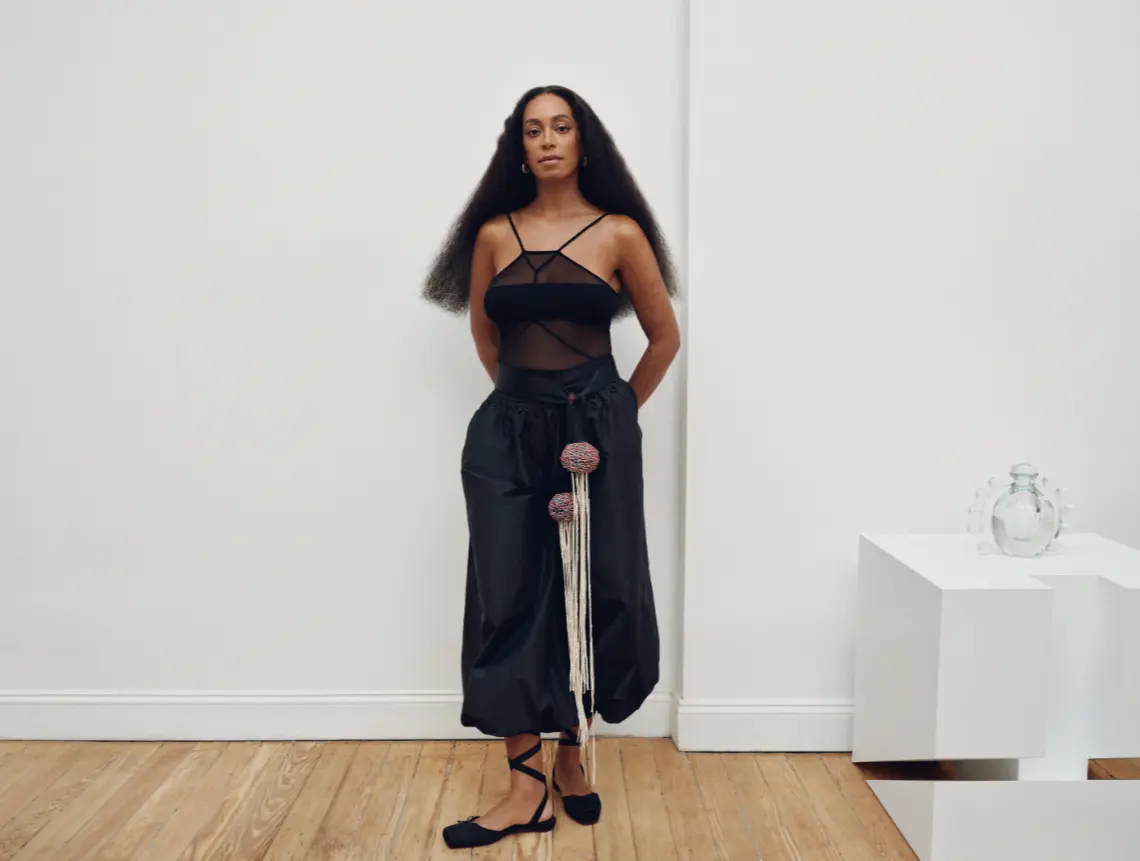
In a convergence of high-concept contemporary art, industrial design, and cutting-edge digital technology, multidisciplinary artist and musician Solange Knowles is set to unveil a major large-scale public sculpture on New York City’s High Line. The presentation forms the centerpiece of an ambitious four-day cultural initiative titled "Unfinished Projects," staged by Google and realized with the direct assistance of Google Chrome.
Scheduled to run from September 24 through September 27 within the High Line’s bustling Chelsea Market Passage, the exhibition seeks to spotlight the often-invisible gestation periods of creative works. Alongside Knowles’s monumental sculpture, the multidisciplinary showcase will feature unexpected cross-disciplinary contributions, including a conceptual take on ballet flats designed by British musician PinkPantheress and a custom-engineered chess set envisioned by Cincinnati Bengals quarterback Joe Burrow.
For Knowles, who has steadily built a reputation as a rigorous conceptual artist operating fluidly between music, performance, choreography, and visual art, this upcoming installation marks a significant milestone. The sculpture itself stems from a deeply personal, dormant sketch drafted seven years ago. By leveraging Google Chrome not merely as a browser, but as an active research, logistical, and production partner, Knowles has successfully bridged the chasm between two-dimensional ideation and three-dimensional structural reality.
Read Also
This article provides an in-depth examination of the upcoming exhibition, tracing the genesis of Knowles’s sculpture, analyzing the corporate-artistic partnership driving the event, placing the installation within the broader trajectory of her illustrious career, and exploring the future implications of tech-enabled public art.
Detailed Chronology: From a 2017 Sketch to the High Line
The journey of Solange Knowles’s monumental public sculpture is a testament to the endurance of artistic vision, even when deferred by time, competing priorities, and the sheer logistical hurdles of large-scale fabrication.
The Genesis: 2017
The foundational spark for the High Line installation dates back seven years to a quiet, unexecuted sketch drawn by Knowles in 2017. During a period of intense musical and performance output, the sketch existed merely as a conceptual blueprint—a geometric and spatial hypothesis that captured an idea regarding how form could interact with human energy and environmental elements. For years, the project remained dormant, categorized among the countless "unfinished projects" that populate the sketchbooks of creative practitioners worldwide.
The Incubation: Early 2024
The dormant idea was resurrected earlier this year as Knowles began conceptualizing new ways to translate her performance-based ethos into permanent, tangible public structures. However, bringing a sketch from paper to a multi-ton physical installation requires sophisticated material science, engineering oversight, and intricate project management. Enter Google Chrome. Recognizing the conceptual symmetry between its platform—designed to help users search, build, and realize ideas on the web—and the physical manifestation of unfinished creative thoughts, Google approached Knowles to serve as a flagship collaborator for the "Unfinished Projects" initiative.
The Research and Production Phase: Mid 2024
Over the past several months, the collaboration transformed into an intensive research-and-development partnership. According to project representatives, Knowles utilized Google Chrome as a central tool to study advanced fabrication techniques, source specialized materials, and manage the complex supply chain required to turn her 2017 sketch into a fully realized physical structure. This phase involved deep dives into digital archiving, collaborative remote planning, and material stress-testing—processes traditionally hidden behind closed studio doors.
The Public Unveiling: September 24–27, 2024
The culmination of this multi-month developmental sprint will be unveiled to the public on September 24 within the Chelsea Market Passage of the High Line. The installation will remain on view through September 27, offering New Yorkers and international art tourists a rare glimpse into a previously unrealized conceptual dream transformed into physical reality.
Conceptual Framework and Materiality
To fully appreciate Knowles’s High Line installation, one must examine the theoretical architecture underpinning the work. Public sculpture, historically dominated by monuments to political figures or abstract exercises in modernist minimalism, occupies a unique space in contemporary urban geography. Knowles’s work challenges traditional paradigms by treating sculpture not as an authoritarian monument, but as an interactive, ambient catalyst for human experience.
Electrical Conductivity and Environmental Interaction
According to an official project website dedicated to the installation (chromeunfinishedprojects.withgoogle.com/solange/), the sculpture is explicitly "designed to charge electrical conductivity through form and survey the shift in material over time when interacting with light, touch, and human energy."
This phrasing points toward a kinetic and relational approach to materiality. The sculpture is not intended to be viewed from behind a protective velvet rope; rather, it is designed to react to its environment. As sunlight shifts across the Manhattan skyline throughout the day, catching the metallic or textured surfaces of the sculpture, the work’s visual profile will continuously evolve. Furthermore, the invitation for human touch implies that the public will co-create the sculpture’s aging process, leaving traces of physical interaction etched into its very fabric.
Extending Performance Through the Mundane
For years, Knowles has investigated how performance art can exist outside traditional theatrical spaces. In her public installations, she frequently contemplates public sculpture as a means to extend performance to the viewer, but through what she terms "the everyday, mundane gestures of occupancy."
The sculpture is purposely engineered to integrate into the rhythms of urban life. Rather than demanding a rapt, standing-ovation audience, Knowles imagines the piece existing in quiet conversation with everyday activities. Whether it serves as a backdrop for a quiet moment of contemplation, a focal point for a sunset study, a physical divider for a quiet dialogue between two pedestrians, an aesthetic companion for someone reading a book on a High Line bench, or simply an object "to simply exist amongst," the work prioritizes ambient integration over aggressive spectacle.
Supporting Context & Metrics: The "Unfinished Projects" Ecosystem
To contextualize Solange’s contribution, it is essential to examine the broader corporate and artistic ecosystem of the "Unfinished Projects" initiative staged by Google and Chrome.
The Anatomy of "Unfinished Projects"
Google’s exhibition is designed to celebrate the nonlinear nature of creativity. In an age dominated by instantaneous output and algorithmically driven optimization, "Unfinished Projects" champions the value of ideation, failure, revision, and dormancy. By taking over the high-traffic Chelsea Market Passage—a vital artery of New York’s Chelsea arts district—the tech giant has carved out a physical nexus for cross-disciplinary experimentation.
Cross-Disciplinary Collaborations
While Solange’s sculpture anchors the fine-art component of the exhibition, the initiative brings together diverse cultural icons from disparate industries to showcase their own long-gestating ideas:
- PinkPantheress: The boundary-pushing British musician and producer has contributed a conceptual design for ballet flats. Known for her nostalgic yet hyper-modern sonic palette, PinkPantheress translates her distinct aesthetic into wearable architecture, exploring the intersection of comfort, movement, and subcultural style.
- Joe Burrow: The star quarterback for the Cincinnati Bengals steps outside the athletic arena to debut a custom chess set. Known for his tactical brilliance on the football field, Burrow’s architectural vision for the chess pieces explores strategic form, weight distribution, and material contrast.
Metrics of the High Line
The venue itself—the High Line—provides a high-impact backdrop for these installations. Stretching 1.45 miles along Manhattan’s West Side on a historic elevated railroad spur, the public park attracts approximately 8 million visitors annually. By positioning the "Unfinished Projects" installation within the Chelsea Market Passage—one of the most heavily trafficked indoor-outdoor segments of the park—Google and the participating artists ensure that avant-garde conceptual art is exposed to a remarkably diverse demographic of locals, commuters, and international tourists.
Official Statements and Industry Reception
The announcement of the collaboration has generated significant buzz within both the contemporary art world and the technology sector, highlighting the increasingly porous boundaries between corporate sponsorship and high-end cultural production.
Project Representatives on the Chrome Partnership
In statements released ahead of the opening, project spokespersons emphasized the symbiotic nature of the collaboration between Knowles and Google Chrome. "As she reignited this dormant project, Chrome became Solange’s research and production partner," a representative noted.
The partnership was explicitly utilized "to study fabrication techniques and materials, and to manage the process of turning a sketch into a structure." In an era where digital tools are indispensable to modern manufacturing and architectural engineering, the collaboration underscores how web-based platforms, search engines, and digital project-management ecosystems form the invisible infrastructure behind contemporary physical art.
The Intersection of Tech and Fine Art
Art critics and curators have increasingly scrutinized the growing involvement of technology conglomerates in the fine arts. While some traditionalists voice concerns over commercial co-optation, proponents argue that such partnerships provide artists with the capital, technological resources, and logistical muscle required to execute ambitious projects that would otherwise remain financially or technically out of reach.
By functioning as a production engine rather than merely a branding exercise, Google Chrome’s involvement in Knowles’s sculpture points toward a new model of corporate patronage—one where tech platforms act as digital workshops and research laboratories for cultural producers.
Solange Knowles: Beyond Music into the Global Art Canon
To understand the weight of this upcoming High Line commission, one must view it within the broader trajectory of Solange Knowles’s career as a visual and performance artist. While global audiences initially came to know her through her groundbreaking Grammy-winning musical output—most notably A Seat at the Table (2016) and When I Get Home (2019)—her practice has steadily expanded into the upper echelons of the global contemporary art world.
Institutional Pedigree
Knowles’s transition into institutional contemporary art has been marked by a series of critically acclaimed, site-specific performance and sculptural works:
- The Guggenheim Museum (New York): In 2017, she presented Fall Safe, a multidisciplinary performance piece that utilized the iconic architecture of Frank Lloyd Wright’s rotunda as a living canvas for choreography, spatial sound, and minimalist staging.
- The Venice Biennale (2019): Knowles contributed conceptual and performance-based elements that engaged with the historic, international discourse of the world’s most prestigious art exhibition.
- The Chinati Foundation (Marfa, Texas): Known for its monumental commitment to minimal art founded by Donald Judd, Marfa provided a natural home for Knowles’s explorations of space, landscape, and structural minimalism.
Saint Heron and Cultural Stewardship
Beyond her individual artistic practice, Knowles is the founder of Saint Heron, a multidisciplinary cultural agency and creative platform dedicated to preserving, publishing, and uplifting Black art, design, and performance. Through Saint Heron, Knowles has functioned not only as an artist but as a vital curator, archivist, and institutional builder, fostering spaces for underrepresented voices in design, architecture, and the fine arts.
The High Line sculpture is the logical next step in this expansive career trajectory. By moving from temporary performance art housed within museums to permanent, accessible public sculpture exposed to the elements of a major metropolis, Knowles is cementing her place in the public art canon.
Future Outlook: The Legacy of "Unfinished Projects"
As the installation dates of September 24–27 approach, art critics, urban planners, and technology analysts alike are closely watching the outcomes of the "Unfinished Projects" initiative.
Setting a Precedent for Public Art
The collaboration raises compelling questions about the future of public art in major metropolitan centers. Can corporate technology platforms effectively partner with avant-garde artists without diluting the integrity of the work? In the case of Solange’s High Line sculpture, the evidence suggests a mutually beneficial symbiosis: the artist gains access to high-level research and fabrication capabilities, while the public is gifted a profound, contemplative sculptural installation that challenges our relationship with urban space.
The Afterlife of the Sculpture
While the "Unfinished Projects" exhibition on the High Line is temporary, running for just four days, the broader life of Knowles’s sculpture remains full of potential. Public art installations of this scale frequently transition into long-term loans, permanent installations in municipal sculpture parks, or foundational pieces for subsequent institutional acquisitions.
Regardless of where the physical structure ultimately finds its permanent home, the sculpture has already achieved its primary conceptual goal: it has rescued a 2017 sketch from the purgatory of dormancy, proving that with the right tools, vision, and collaborative energy, even the most elusive creative thoughts can be carved into physical reality.
The "Unfinished Projects" exhibition, featuring works by Solange Knowles, PinkPantheress, and Joe Burrow, will be on view in the Chelsea Market Passage of New York’s High Line from September 24 to September 27, 2024. Further documentation and digital explorations of the projects can be found on Google Chrome’s dedicated portal.

Comments
Facebook App ID not configured. Please add it in the Customizer.