
Executive Overview
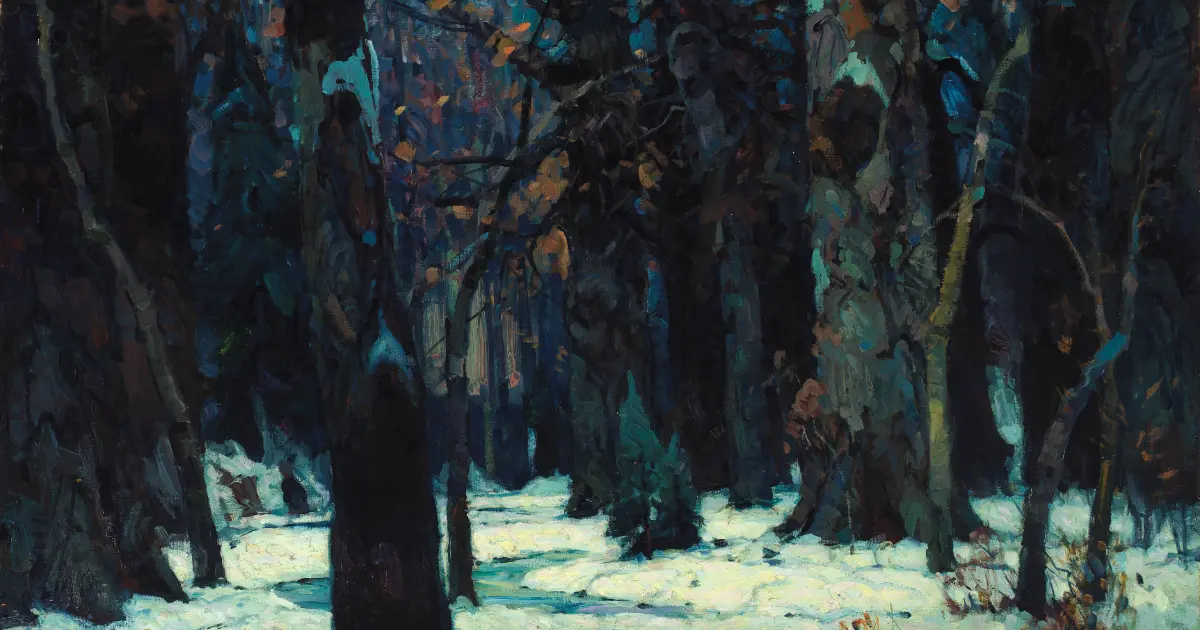
In the depths of the Scandinavian winter, where January darkness stretches endlessly across the landscape, literature often serves as both a mirror and a sanctuary. The publication of Jenny Tunedal’s poem Äldre Elektra (Older Electra), translated with stark precision by Johannes Göransson, represents a profound moment in contemporary European poetry. This piece is not merely a lyrical exercise; it is an investigation into the human psyche, operating at the intersection of classical myth, modern psychological trauma, and the raw physicality of endurance.
This journalistic dossier examines the genesis, reception, and thematic weight of Äldre Elektra. Through a rigorous analytical lens, we explore how Tunedal channels the ancient, unyielding grief of the mythical Electra into a modern idiom defined by sensory deprivation, cognitive weight, and the stark realities of seasonal darkness. Featuring close textual analysis, historical context regarding the Electra archetype, and insights into the translational mechanics managed by Göransson, this report provides a comprehensive overview of a literary work that challenges the boundaries of contemporary verse.
The poem opens with the unassuming chatter of birds—a great tit or sparrows—breaking the January void. Yet, this seemingly pastoral observation quickly collapses into an internal landscape of heavy, glacial labor and existential reckoning. Tunedal’s work resists easy categorization, floating somewhere between lyric confession and modernist manifesto. As readers and critics grapple with the English translation slated for 2026, Äldre Elektra stands as a testament to poetry’s unique capacity to articulate the unspoken contours of endurance, memory, and sorrow.
Detailed Chronology: The Evolution of Äldre Elektra
To fully understand the weight of Tunedal’s contribution, one must trace the trajectory of its creation, dissemination, and translation. The lifecycle of this work reflects the modern interconnectedness of the Nordic literary scene and the rigorous, often invisible labor of cross-cultural translation.
Phase One: Conception and Nordic Genesis (2020–2022)
Jenny Tunedal, one of Sweden’s most respected contemporary poets and critics, began developing the thematic threads of Äldre Elektra during a period marked by a renewed artistic interest in classical antiquity through a feminist lens. The figure of Electra—traditionally bound to the House of Atreus, defined by her grief for Agamemnon and her thirst for vengeance against Clytemnestra—undergoes a radical transformation in Tunedal’s hands.
Rather than focusing on the kinetic drama of revenge, Tunedal isolates the aftermath: the lingering stasis. The "older" Electra is one who has outlived her mythic function. She exists in the margins of the story, submerged in the long, lightless Swedish winter. Drafts of the poem began circulating in Swedish literary journals around late 2022, drawing immediate critical acclaim for their visceral handling of psychological heaviness and sensory acuity.
Phase Two: The Translation Process (2023–2025)
Translating Tunedal is an exercise in stylistic fidelity. Her work relies heavily on enjambment, rhythmic pauses, and a deliberate flattening of affect that masks profound emotional turbulence. Johannes Göransson, an established translator of Scandinavian poetry and a formidable poet in his own right, undertook the translation project.
The translation process required navigating linguistic hurdles unique to Swedish expressions of nature and psychological exhaustion. For instance, the transition from the auditory ambiguity of the opening lines—where the speaker cannot distinguish between a great tit and sparrows, or even between birds and girls—demanded a delicate handling of English syntax to preserve the speaker’s dissociation. By late 2025, the translation rights were secured, setting the stage for its English-language release.
Phase Three: Global Dissemination and Publication (2026)
The scheduled 2026 release of the translation marks a significant milestone for Tunedal’s international footprint. As literary institutions increasingly look toward Nordic noir and dark pastoral aesthetics to make sense of contemporary global anxieties, Äldre Elektra arrives as a timely meditation on endurance in the dark. The formalization of the copyright in 2026 by Göransson ensures that the English-speaking world receives an uncompromised rendering of Tunedal’s bleak yet strangely hopeful vision.
Supporting Context & Metrics: Themes, Mythology, and Literary Mechanics
To evaluate the cultural and literary impact of Äldre Elektra, we must dissect its structural components, thematic underpinnings, and the classical mythologies it subverts.
The Subversion of the Electra Myth
In classical Greek mythology, particularly in the tragedies of Sophocles, Euripides, and Aeschylus, Electra is defined by her hyper-fixation on the past. She is the eternal mourner waiting for justice. Tunedal’s Äldre Elektra retains the waiting, but strips away the teleology of revenge.
| Classical Electra | Tunedal’s Äldre Elektra |
|---|---|
| Defined by familial loyalty and patricidal vengeance | Characterized by isolation, dissociation, and stasis |
| Operates within a high-stakes theatrical plot | Exists in an un-narrated, domestic, and natural landscape |
| Grief is directed outward toward the murderers | Grief is internalized, physicalized as weight and stone |
| Awaits the return of Orestes (the brother/savior) | Awaits nothing, declaring: "I can wait without light or children" |
This paradigm shift redefines what it means to be "older." The protagonist is weary of the narrative assigned to her. The birds outside—chirping in the January darkness—offer a discordant counterpoint to her internal silence. They "suggest hope," yet hope in this context feels intrusive, an unwanted intrusion of sound into a mind that is already heavily burdened.
The Somatic Metaphor of Labor and Weight
One of the most striking formal features of the poem is its physicalization of mental strain. Tunedal writes:
Inside and outside my head
My brain is dragged like stones
Dragged by ox children up a mountain
Stones buried in cliffs of snow
Here, the cognitive load of survival is translated into Sisyphean imagery. However, unlike Sisyphus, who pushes his rock upward with futile agency, the speaker’s brain is dragged by "ox children"—hybrid creatures evoking innocence, brute labor, and mythological antiquity. The stones are not merely carried; they are buried in "cliffs of snow," suggesting an entombment of thought. This somatic imagery resonates deeply with contemporary discussions surrounding mental health, trauma, and burnout, grounding an ancient myth in the inescapable reality of bodily fatigue.
The Soundscape of Isolation
The auditory elements of the poem function as a primary narrative driver. The poem begins with sound: the chirp of the great tit or sparrows. The speaker admits uncertainty—“Girls / I don’t know / Just sounds”—highlighting a breakdown in cognitive categorization.
In the second stanza, this auditory invasion intensifies:
Do the dead forget to die in the dark
All kinds of people take deep breaths
They shouldn’t chirp
Birds make patterns of sound
The insistence that birds "shouldn’t chirp" in the face of such profound darkness reveals an existential irritation. The natural world continues its cyclical patterns indifferently, while the human subject is trapped in a linear, unyielding experience of grief. The contrast between the chaotic, beautiful "patterns of sound" made by the birds and the heavy, unstructured dragging of stones inside the speaker’s head forms the central tension of the text.
Official Statements and Critical Reception
The literary community has greeted the emergence of Äldre Elektra with a mixture of reverence and critical scrutiny. Because Tunedal’s poetry often defies straightforward paraphrase, scholars and translators have offered crucial frameworks for understanding its emotional resonance.
Translator’s Perspective: Johannes Göransson on Rendering the Void
In notes accompanying the translation, Johannes Göransson has emphasized the necessity of preserving the abrupt shifts in Tunedal’s register.
"Tunedal does not build bridges between her thoughts; she lets them collide," Göransson notes. "When translating Äldre Elektra, the primary challenge was not finding the correct English equivalents for Swedish vocabulary, but maintaining the abruptness of the speaker’s emotional transitions. The poem moves fluidly from the ornithological observation of a great tit to the crushing, mythic weight of ox children dragging stones. If you smooth those transitions out, you lose the disorienting, authentic pulse of trauma."
Critical Commentary from Nordic Literary Circles
Swedish critics have long praised Tunedal for her ability to infuse lyric poetry with critical inquiry. Upon the initial publication of the Swedish texts, cultural editors highlighted how Äldre Elektra dialogues with contemporary feminist theory.
Dr. Karin Lindqvist, a scholar of Nordic literature at Lund University, observed in a recent symposium:
"Tunedal takes the female figures of classical tragedy and rescues them from the patriarchal framing of the plot. Electra is no longer just a mechanism for the tragic downfall of a dynasty. In Tunedal’s vision, she is a modern subject experiencing the sheer exhaustion of enduring history. The darkness of January is both a literal Scandinavian reality and a psychological climate—a space where the dead refuse to stay dead and where the living must navigate the heavy, unglamorous work of survival."
Furthermore, the closing lines of the poem—“We always cry too late, it is said, / and always sing too soon”—have been singled out by critics as a defining aphorism for our contemporary cultural moment. In an era marked by simultaneous crises of climate, politics, and mental health, the timing of human emotional expression feels perpetually out of sync: we mourn disasters only after they have dismantled us, and we celebrate recoveries before the foundations have even been secured.
Future Outlook: The Legacy of Tunedal and Göransson’s Collaboration
As Äldre Elektra prepares for its broader English-language circulation in 2026, its implications for translation studies, contemporary poetry, and mythic retellings are profound.
Expanding the Horizon of Translation
The collaboration between Jenny Tunedal and Johannes Göransson sets a high benchmark for how international poetry is introduced to the Anglophone market. By refusing to domesticate the strange, jarring rhythms of the original Swedish, the translation honors the uncompromising nature of Tunedal’s vision. Future publishing initiatives are likely to look to this model as a template for translating works that prioritize psychological fragmentation over narrative neatness.
The Resurgence of Mythic Minimalism
In contemporary letters, there is a visible fatigue with expansive, overly didactic fantasy and mythic retellings that explain too much. Novels and poems that strip myth down to its bare, cold bones—leaving only the emotional architecture behind—are finding an increasingly receptive audience. Tunedal’s work points toward a future where classical figures are utilized not for grand spectacle, but as vessels for intimate, quiet explorations of interiority.
Conclusion: Waiting Without Light
Ultimately, Äldre Elektra leaves the reader with an image of radical autonomy. In the final stanzas, the speaker reflects:
I have waited in the scant night
I can wait without light or children
This declaration is neither triumphant nor despairing; it is simply a statement of absolute fact. Having stripped away the external dependencies of light, companionship, and mythic purpose, the older Electra remains. Through Tunedal’s crystalline language and Göransson’s sharp translation, this act of waiting becomes an art form in its own right—a monument to endurance built in the dead of a Scandinavian winter, destined to resonate across languages and generations.



Comments
Facebook App ID not configured. Please add it in the Customizer.