
Executive Overview
In the fast-paced digital era, sustaining a creative community over hundreds of sequential iterations is a monumental achievement. This week marks a significant milestone in the literary blogging landscape: the launch of the 800th Wednesday Poetry Prompt hosted by Writer’s Digest. For nearly a decade and a half, this weekly initiative has served as a cornerstone for poets ranging from novices taking their first tentative steps into meter and rhyme to seasoned laureates seeking a fresh spark of inspiration.
To commemorate this historic 800th installment, the platform has issued a seasonal challenge aligned with the recent astronomical transition: the arrival of the autumnal equinox. Writers are tasked with capturing the multifaceted essence of fall—ranging from the tactile crunch of amber foliage and the crisp cadence of Friday night football to the quiet melancholy of diminishing daylight.
Beyond the immediate poetic exercise, this milestone offers an opportune moment to examine the broader mechanics of digital-age poetry communities. This report provides an exhaustive analysis of the milestone, contextualizing the weekly prompts within the larger framework of contemporary verse education. We explore the structural philosophy behind using prompts as springboards rather than cages, review essential resources for writers navigating the labyrinth of poetic forms—such as Robert Lee Brewer’s comprehensive guides—and analyze a featured original poem, "Somewhere Beyond," to deconstruct the technical mastery required to sustain creative longevity in the digital age.
Read Also
Detailed Chronology: The Evolution of the Wednesday Poetry Prompt
The journey to 800 weekly prompts was not forged overnight; it represents a meticulous, unbroken chain of editorial dedication. Understanding the weight of this milestone requires tracing the historical lineage of digital writing workshops and the specific evolution of the Writer’s Digest poetry initiative.
The Genesis of Digital Poetry Workshops
In the early days of literary blogging, online spaces primarily functioned as static bulletin boards where creators posted finished pieces for isolated critique. The paradigm shifted dramatically when editors realized that active engagement required structured provocation. The Wednesday Poetry Prompt was born out of a necessity to bridge the gap between passive reading and active creation.
By establishing a predictable cadence—every single week, without fail—the prompt series cultivated a psychological rhythm for its readership. Writers worldwide began to structure their writing schedules around the mid-week drop. Whether it was a formal constraint challenge (such as writing a golden shovel or a pantoum) or a thematic exploration of natural phenomena, the prompts provided a reliable anchor in an otherwise unpredictable creative life.
Navigating the Milestones: From Prompt 1 to Prompt 800
- The Early Phase (Prompts 1–100): Focused heavily on establishing community trust, introducing basic poetic terms, and experimenting with foundational prompts that encouraged participants to explore memory, family, and localized landscapes.
- The Expansion Era (Prompts 101–400): As the digital community expanded, the prompts grew increasingly sophisticated. Editors introduced intricate traditional forms from global literary traditions, pushing Western-centric writers to experiment with haiku, ghazals, tankas, and lesser-known syllabic structures.
- The Resilience Epoch (Prompts 401–700): Spanning the turbulent years of global disruption and shifting digital consumption habits, this period saw the poetry community transform into a vital emotional lifeline. Participation numbers surged as isolated writers sought solace in shared thematic explorations of grief, resilience, and domestic confinement.
- The Present Milestone (Prompt 800): Marking an unprecedented level of online literary consistency. The 800th prompt bridges traditional seasonality—the autumnal equinox—with the modern digital vernacular of community-driven comments and cross-platform engagement.
Supporting Context & Metrics: The Anatomy of Modern Poetry Engagement
To fully grasp the magnitude of an 800-week run, one must evaluate the quantifiable impact of digital poetry communities on contemporary writing habits.
Metrics of Consistency and Reach
Sustaining an audience over 800 consecutive weeks equates to roughly 15 years of uninterrupted publishing. In the volatile ecosystem of digital media, where blogs shutter or pivot to video at the slightest algorithmic shift, this longevity is exceptionally rare.
- Frequency: 1 new prompt per week, 52 weeks a year.
- Estimated Cumulative Output: Assuming an average of just 20 active community responses per prompt—a conservative estimate given many threads feature dozens or hundreds of comments—the prompt series has indirectly catalyzed the creation of approximately 16,000 distinct poems over its lifetime.
- Global Participation: Contributors hail from diverse geographies, transforming a localized American publishing blog into an international virtual writers’ workshop.
The Psychology of the Creative Constraint
At the core of the Wednesday Poetry Prompt’s success is the psychological principle of the creative constraint. As famously noted by modernist creators, total freedom can often paralyze the artistic mind. Staring at a blank white screen or a limitless blank page induces cognitive friction.
By introducing a specific thematic anchor—such as the autumnal equinox, cooling evening temperatures, and the omnipresent pumpkin motifs of the season—the prompt reduces the cognitive load of decision-making. Writers do not need to invent a universe from scratch; instead, they are given a localized coordinate within the universe to start digging.
As the official prompt guidelines wisely advise participants:
"These prompts are springboards to creativity. Use them to expand your possibilities, not limit them."
This philosophical stance prevents the exercise from devolving into a rigid, academic drill. Instead, it honors the individual voice, encouraging writers to subvert, bend, or radically reinterpret the prompt’s initial premise.
Official Statements and Editorial Philosophy
Behind the architecture of the 800th prompt is Robert Lee Brewer, Senior Editor of Writer’s Digest and the guiding voice behind its poetry initiatives. Brewer’s editorial philosophy emphasizes accessibility without sacrificing technical rigor.
The Role of Poetic Forms as Structural Scaffolding
In discussions surrounding the mechanics of poetry, Brewer frequently highlights that poetic forms are not archaic cages designed to suffocate modern expression. Rather, they are the indispensable structural framing of a house. Just as an architect relies on load-bearing walls and foundational mathematics to erect a skyscraper, a poet relies on meter, rhyme scheme, syllable counts, and traditional templates to give emotional weight a tangible shape.
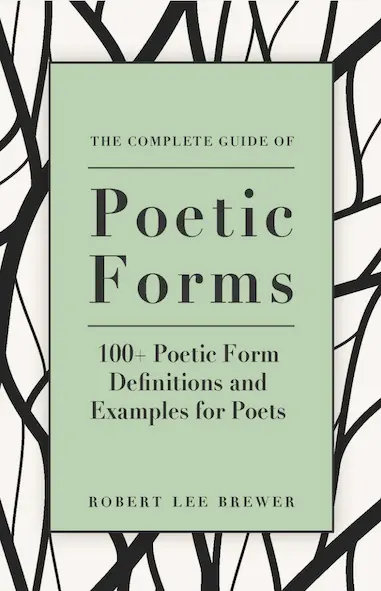
To support this educational mission, Brewer authored The Complete Guide of Poetic Forms, a comprehensive volume cataloging more than 100 distinct poetic structures. This text serves as both a reference manual and a wellspring of inspiration, providing exact definitions, historical contexts, and exemplary models for forms ranging from sonnets and villanelles to contemporary experimental templates.
Commenting Infrastructure and Community Governance
A thriving digital workshop requires more than just prompts; it requires a frictionless, safe environment for peer review and mutual encouragement. Managing an active comment section across 800 posts involves intricate logistical coordination.
Utilizing integrated identity verification tools like Disqus, the platform ensures that community spaces remain relatively free of spam while lowering the barrier to entry for new writers. Editorial oversight ensures that constructive critique remains the dominant culture of the space, fostering a welcoming haven for marginalized or emerging voices who might otherwise feel intimidated by traditional academic literary circles.
Featured Literary Analysis: "Somewhere Beyond"
To appreciate the artistic standards upheld within these workshops, it is instructive to examine a piece written by the prompt master himself. The poem titled "Somewhere Beyond," penned by Robert Lee Brewer, exemplifies the hypnotic musicality and structural precision often explored within the blog’s exercises.
Somewhere beyond the cemetery gate
a ghost sings a solitary sad song
about how she finds that she always waits
somewhere beyond the cemetery gate
for someone who is always running late
but maybe she hopes is coming along
somewhere beyond the cemetery gate
where a ghost sings her solitary song.
Technical Deconstruction
At first glance, "Somewhere Beyond" appears deceptively simple, echoing the cadence of traditional folk verse or nursery rhymes. However, a closer inspection reveals the tight architectural constraints of a strict repetend and rhyme scheme reminiscent of a modified rondeau or villanelle variant.
- Line Economy and Refrains: Notice how the opening line ("Somewhere beyond the cemetery gate") acts as an insistent anchor, recurring multiple times throughout the eight-line structure. This repetition mimics the psychological state of grief and waiting—a continuous loop where time refuses to advance.
- Thematic Resonance: The poem ties directly into the melancholic moods often associated with the transition of seasons. As the natural world sheds its foliage and prepares for the dormant quiet of winter, the poem meditates on absence, memory, and lingering hope. The figure of the ghost waiting for someone perpetually "running late" captures the poignant human condition of holding onto expectation long after logical horizons have faded.
- Musicality: The interplay between the A and B rhymes (gate/wait/late and song/along) creates a swinging, hypnotic meter. It proves that formal constraints, when handled with a light touch, do not impede emotional depth; instead, they concentrate it, turning a brief eight-line lyric into an echo chamber of longing.
Future Outlook: The Next Horizon for Digital Verse
As the Writer’s Digest Wednesday Poetry Prompt looks past its 800th installment toward the horizon of Prompt 1,000 and beyond, the landscape of poetry is undergoing rapid transformation.
The Intersection of AI and Human Craft
In an era dominated by generative artificial intelligence capable of spitting out rhyming couplets in milliseconds, human-led prompts and community workshops are more crucial than ever. AI can mimic the surface-level metrics of poetry, but it cannot authentically experience the autumnal equinox, the tactile crunch of frost on fallen leaves, or the genuine ache of longing captured in verses like "Somewhere Beyond." The future of the Wednesday prompt lies in leaning heavily into human vulnerability, lived experience, and peer-to-peer connection—elements that algorithms can simulate but never truly inhabit.
Expanding Accessibility and Global Voices
Moving forward, the initiative aims to further broaden its scope by incorporating even more diverse global poetic traditions. By introducing forms from non-Western literary canons to its growing digital audience, the platform continues to democratize poetic education.
Conclusion
The 800th Wednesday Poetry Prompt is more than a numerical milestone; it is a testament to the enduring power of the written word in a digitized world. By combining structured creative challenges, rigorous technical education through resources like The Complete Guide of Poetic Forms, and a nurturing community space, Writer’s Digest has built an enduring institution.
As poets around the globe pick up their pens to write their autumn verses—capturing the fading sunlight, the crisp evening air, and the vibrant foliage—they do so as part of a living, breathing tradition that proves, after 800 weeks, the creative impulse is stronger and more vital than ever. Let’s keep poeming.


Comments
Facebook App ID not configured. Please add it in the Customizer.