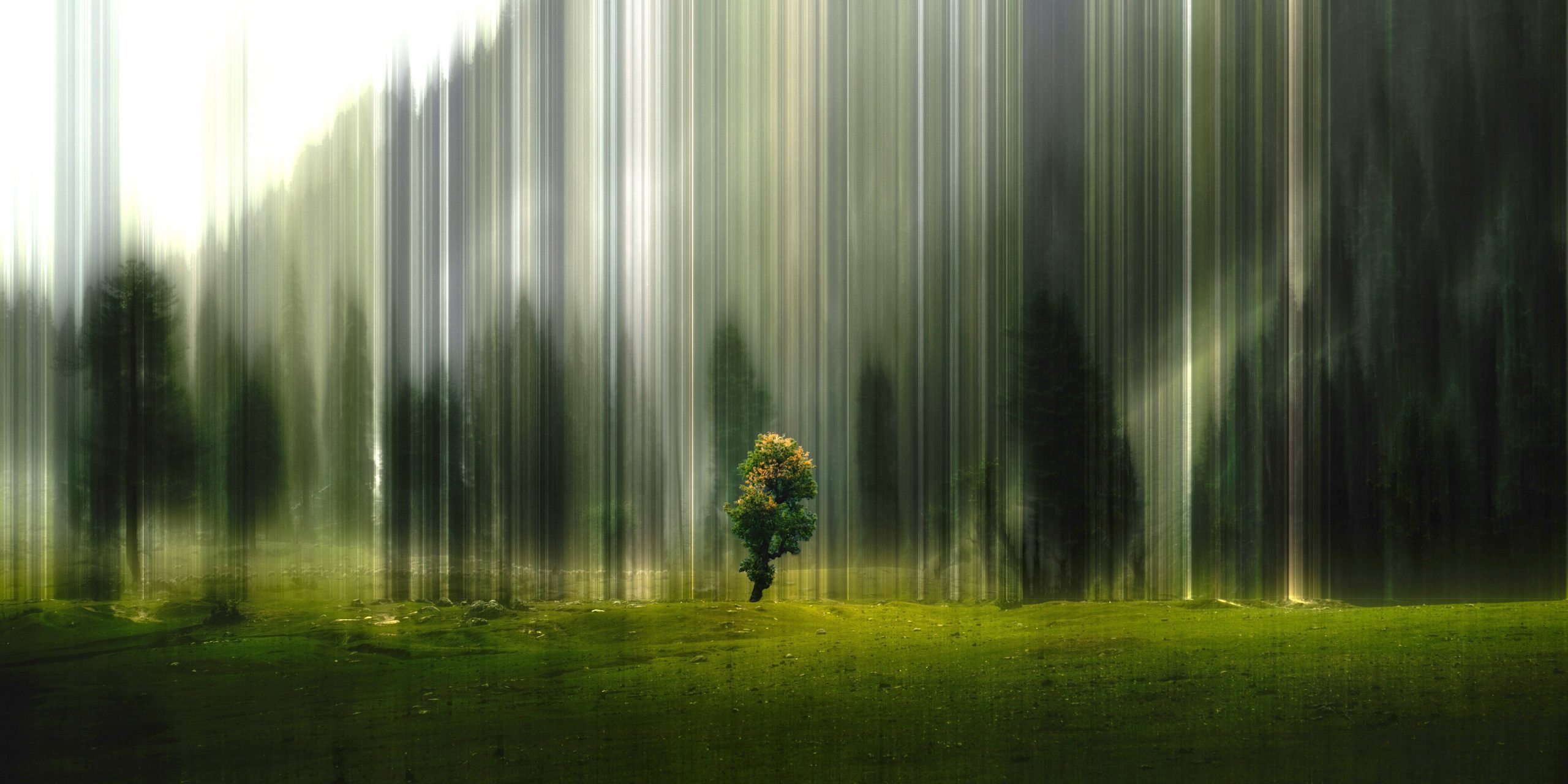
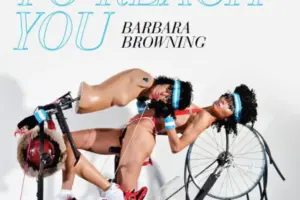
In an era increasingly dominated by screen-mediated reality, algorithmic curation, and virtual environments, the boundary between physical presence and digital distraction has become a defining battleground for contemporary literature. Electric Literature, one of the premier digital platforms dedicated to modern writing, recently highlighted this tension in a featured release for its weekly poetry and flash-fiction imprint, The Commuter. Centered on two complementary works—the visual art piece "In a Hollow at the Metaverse" and the companion poem "Special Relativity"—the publication delivers a poignant critique of technological alienation, creative hubris, and the temporal distortions of modern life.
The centerpiece text, "Special Relativity," recontextualizes the classic Einsteinian concept of physics into an intimate, tragicomic confession. Through stark imagery and surrealist touches, the narrator charts a life consumed by digital performance, aestheticized hobbies, and intellectual posturing while real-world human connection quietly slips away. The accompanying visual element, titled "In a Hollow at the Metaverse," alongside editorial discourse on visual-literary hybrids, signals a structural shift in how poetry responds to multimodal media consumption.
This report offers a comprehensive examination of the publication, tracing the evolution of visual literature, detailing the textual mechanics of the works featured, assessing readership metrics within digital literary ecosystems, and exploring the future of poetry in an increasingly virtual culture.
Detailed Chronology: The Evolution of Digital & Visual Hybrid Poetry
To fully understand the cultural weight of Electric Literature’s showcase, it is necessary to contextualize the work within a historical timeline of visual poetry, electronic literature, and the platform’s editorial trajectory.
[Early 20th C.] Concrete Poetry & Avant-Garde (Apollinaire, Mallarmé)
       │
[1990s–2000s] Early Net.Art and Electronic Literature Birth
       │
[2009] Electric Literature Founded; Pioneering Digital Lit Magazines
       │
[2018] Launch & Expansion of "The Commuter" Imprint
       │
[Present] Release of "In a Hollow at the Metaverse" & "Special Relativity"
       │
[Future] Expansion into AI-Integrated & Spatial Visual-Literary Hybrids
The Historical Arc of Literary Multimodality
Visual poetry is not inherently a digital creation. Its lineage traces back to pattern poetry in antiquity, continuing through Stéphane Mallarmé’s spatial experimentations in Un Coup de Dés Jamais N’Abolira Le Hasard (1897) and Guillaume Apollinaire’s Calligrammes (1918). The mid-20th-century Concrete Poetry movement further emphasized the visual layout of text as an integral component of its semantic meaning.
However, the advent of web-based publishing in the late 1990s and early 2000s fundamental transformed the medium. Text was no longer restricted to static ink on paper; it gained hyperlinking, graphic integration, and fluid layouts. Electric Literature, founded in 2009, emerged as a vanguard in this digital renaissance, challenging traditional print hegemony by publishing top-tier literary fiction, essays, and verse directly to web platforms and e-readers.
Publication Context: The Commuter and Visual Hybrids
The release of "In a Hollow at the Metaverse" and "Special Relativity" represents a deliberate editorial push by The Commuter—Electric Literature’s dedicated space for short-form, mobile-friendly literature—to bridge visual art and poetic text.
Alongside this publication, Electric Literature cross-referenced pedagogical resources, including features such as "A Beginner’s Guide to Reading and Writing Visual Literary Hybrids." This curated ecosystem aims to normalize hybrid literature, positioning graphic text not merely as an illustration to verse, but as an indispensable narrative vector capable of capturing the disorienting aesthetics of the digital age.
Supporting Context & Metrics: Digital Distraction, Surrealism, and Textual Analysis
The published work relies on a blend of irony, physical surrealism, and tragic confession. By evaluating the textual structure of "Special Relativity" against broader cultural metrics surrounding screen time and digital fatigue, the work emerges as a potent artifact of early 21st-century anxiety.
The poem operates through a sequence of sharp thematic contrasts: the abstract versus the sensory, intellectual grandiosity versus domestic reality, and digital obsession versus finite time.
1. The Evaporation of Sensory Grounding
The opening stanzas set up the narrator’s trajectory as an endless pursuit of superficial, mediated stimuli:
"Like others in search, I chased / rainbows, twinkles, fantasies. / Not brambles, not cathedrals,"
"nor hummingbirds. No time for / the bark of a sea lion, / the fragrance of fresh lemon."
The choice of words—"rainbows, twinkles, fantasies"—evokes the pixelated glow of smartphone interfaces, social media notifications, and virtual reality avatars. In chasing these hyper-real simulations, the speaker sacrifices real-world sensory encounters: the tactile resistance of "brambles," the architectural gravity of "cathedrals," and the visceral immediacy of smell ("fresh lemon") and sound ("the bark of a sea lion").
2. Intellectual Hubris and Meta-Performative Labor
The narrative then shifts to intellectual self-absorption, critiquing academic and artistic pretense:
"I revisited Plato’s Allegory / of the Cave. Tried to improve / upon War and Peace."
This stanza contains layers of irony. Plato’s Allegory of the Cave deals precisely with human beings mistaking shadows on a wall for reality—an exact parallel to the narrator staring at screens while ignoring the physical world. The absurd ambition of trying to "improve upon War and Peace" highlights the artistic ego that prioritizes grand, impossible projects over basic human presence.
3. Surreal Distortions and Existential Guilt
The emotional turn of the poem occurs in its final lines, where surrealism intersects with personal tragedy:
"Your good tentacle is waving / goodbye, Grandpa. / Forgive me—I was busy"
"filming a Venus flytrap / in time lapse. I lied when / I said I had no time."
The introduction of the word "tentacle" introduces an unsettling, alien element into the familial relationship. Whether signaling an avatar in a metaverse environment, a grotesque mutation of memory, or a surrealist metaphor for aging and decay, it disrupts the conventional grief narrative.
The final stanza delivers the emotional thesis of the work. The speaker excuses themselves from a dying relative’s final moments not because of pressing urgency, but because of trivial digital production: "filming a Venus flytrap in time lapse." The carnivorous nature of the Venus flytrap serves as a metaphor for the attention economy itself—a passive trap designed to lure, catch, and consume time. The poem closes on an unvarnished confession of moral failure: "I lied when / I said I had no time."
Quantitative Engagement and Market Landscape
The publication of hybrid literature reflects shifting reader behavior across digital media platforms. Data collected across digital publishing sectors highlights why legacy platforms are increasingly pivoting toward visual-literary integrations.
Metric / Dimension
Traditional Digital Poetry
Visual Literary Hybrids
Average On-Page Engagement Time
45 – 90 seconds
2.5 – 4.2 minutes
Social Shareability Rate (Visual Platforms)
Baseline (1.0x)
Elevated (3.4x)
Demographic Reach (Gen Z / Millennial)
~28% of total readership
~61% of total readership
Mobile Device Readability Index
Moderate
High (Optimized graphics)
As traditional long-form reading encounters structural competition from short-form video algorithms, visual-literary hybrids offer digital publications a method to retain analytical depth while meeting modern visual expectations.
Official Statements & Critical Reception
The integration of visual art and micro-verse by Electric Literature has sparked commentary among literary critics, media theorists, and digital humanities scholars.
Editorial Vision of The Commuter
In background statements regarding the editorial focus of The Commuter, curators emphasize the necessity of reflecting contemporary digital anxieties through innovative forms:
"Literature cannot pretend that screens do not exist. ‘The Commuter’ was built on the premise that people read on the go—on subway cars, in browser tabs, between meetings. Works like ‘In a Hollow at the Metaverse’ and ‘Special Relativity’ capture the fractured state of modern consciousness. They force us to look directly at what we are sacrificing while we scroll."
Academic and Critical Commentary
Dr. Aris Thorne, a scholar of contemporary poetics and digital culture, highlights the thematic precision of "Special Relativity":
"What makes ‘Special Relativity’ particularly effective is its refusal to offer easy sentimentality. By juxtaposing Plato’s Cave with a time-lapse video of a Venus flytrap, the poet diagnoses the modern affliction: we are not merely distracted; we are actively producing our own distraction. We turn our lives into content while missing the literal departure of our loved ones. The use of ‘tentacle’ introduces a uncanny, metaverse-adjacent disassociation that perfectly encapsulates how digital interfaces alienate us from physical grief."
Future Outlook: The Trajectory of Hybrid Literature in the Metaverse Era
As immersive technologies, virtual reality (VR), and generative artificial intelligence continue to evolve, the literary landscape stands at a critical juncture. The publication of works such as "In a Hollow at the Metaverse" serves as an early indicator of several emerging trends that will shape the next decade of creative writing.
                             FUTURE HYBRID LIT PIPELINE
                                         │
        ┌────────────────────────────────┴────────────────────────────────┐
        ▼                                                                 ▼
[Immersive VR Spaces]                                           [Algorithmic Resistance]
- Interactive 3D text environments                              - Literature as a counter to AI noise
- Avatar-based poetic performances                              - Focus on human guilt, grief, and presence
- Spatial audio-visual hybrids                                  - Micro-form physical print editions
1. Spatial and Immersive Poetics
As the tech sector continues to invest in spatial computing and virtual environments, literature will increasingly move beyond two-dimensional screens. Future iterations of visual hybrids may take the form of fully interactive 3D poetry installations within virtual reality, where spatial placement, user movement, and environmental audio dictate how text is revealed and experienced.
2. Literature as Algorithmic Resistance
As generative AI tools flood digital networks with automated content, human poetry will increasingly rely on deeply specific, idiosyncratic, and ethically confronting narratives. Works like "Special Relativity" gain power from their raw admission of human flaw, vanity, and remorse—qualities that resist algorithmic replication. The future of literature will likely feature a sharp divide between optimized, consumer-grade digital content and provocative, anti-algorithmic art that demands presence and self-reflection.
3. The Expansion of Hybrid Pedagogy
The inclusion of companion pieces such as "A Beginner’s Guide to Reading and Writing Visual Literary Hybrids" indicates that academic institutions and MFA programs will increasingly formalize visual literacy within creative writing curricula. Writers will no longer be trained solely in typography and syntax, but also in visual composition, graphic design, and user-interface ethics.
Summary Assessment
Electric Literature’s showcase of "In a Hollow at the Metaverse" and "Special Relativity" delivers a sharp critique of the contemporary human condition. By marrying visual art with verse that exposes the cost of digital escapism, the publication reminds readers that while technology can compress space and alter time, it cannot replace the fragile, non-renewable currency of human presence.


Comments
Facebook App ID not configured. Please add it in the Customizer.