
Executive Overview
Two decades after it first mesmerized and terrified audiences worldwide, Guillermo del Toro’s dark fantasy masterpiece Pan’s Labyrinth (El laberinto del fauno) is making a grand return to the big screen. To commemorate the milestone 20th anniversary of its original release, Fathom Entertainment, in collaboration with major studio partners, has announced a strictly limited theatrical re-release of a newly struck, artificial intelligence-free 3D and standard digital remaster. The film will screen in cinemas nationwide from October 8 through October 15, 2026, offering both nostalgic cinephiles and a new generation of moviegoers the rare opportunity to experience the Academy Award-winning Spanish-Mexican co-production the way it was meant to be seen: in the dark, communal space of a commercial theater.
Coinciding with this cinematic revival, a brand-new, 2.5-minute retrospective featurette has been released online, generating immense buzz across the film community. The short-form documentary piece offers a treasure trove of behind-the-scenes footage, rare archival clips, and fresh commentary from a star-studded lineup of recognizable industry faces. Among them are original star Ivana Baquero—now a grown woman reflecting on her formative childhood role—alongside notable admirers and fellow auteurs such as Jacob Elordi (who recently starred in del Toro’s upcoming Frankenstein adaptation) and Charlie Day (who previously collaborated with the director on Pacific Rim).
The featurette does not merely serve as a nostalgia trip; it dives deep into the technical grit of the film’s celebrated practical creature effects, confronts the uncompromising brutality of a film that arguably could not be made in today’s risk-averse studio climate, and teases modern interpretations of the movie’s famously ambiguous, tear-jerking conclusion. As tickets go on sale via Fathom’s portal, this anniversary marks a critical moment to re-evaluate the enduring legacy of del Toro’s crowning achievement in practical fantasy and allegorical storytelling.
Read Also
Detailed Chronology: From Concept to the 20th-Anniversary Revival
To fully understand the magnitude of Pan’s Labyrinth returning to theaters in 2026, one must trace the timeline of its creation, its meteoric rise to critical acclaim, and its enduring cultural footprint.
Phase 1: Genesis and Production (2004–2006)
Guillermo del Toro conceptualized Pan’s Labyrinth as a spiritual companion piece to his 2001 Spanish Civil War ghost story, The Devil’s Backbone. While the earlier film dealt with the political fallout of the war through the lens of a haunted orphanage, Pan’s Labyrinth expanded the canvas into a dark fairy tale set in 1944 post-Civil War Francoist Spain.
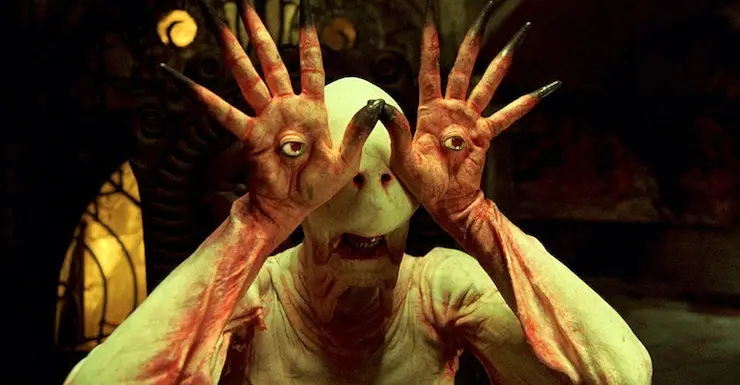
Production was famously grueling. Operating on a modest budget of approximately $19 million, del Toro and his creative team—including legendary creature designer Doug Jones, makeup effects wizard DDT Efectos Especiales, and cinematographer Guillermo Navarro—pushed practical effects to their absolute limit. Principal photography took place in the damp, unforgiving pine forests of the Guadarrama mountain range near Madrid. Every creature, from the towering Faun to the skin-crawling Pale Man, was brought to life through elaborate prosthetic suits, animatronics, and sheer performance art rather than digital shortcuts.
Phase 2: Global Phenomenon and Critical Triumph (2006–2007)
Following its world premiere at the 2006 Cannes Film Festival, where it received a rapturous 22-minute standing ovation, Pan’s Labyrinth captured the imagination of international critics and audiences alike. It defied the traditional barriers foreign-language films often face in Western markets, grossing over $83 million worldwide.
The film’s critical apex arrived during the 79th Academy Awards in 2007. Despite not winning Best Foreign Language Film (a designation that famously went to Germany’s The Lives of Others), Pan’s Labyrinth secured six total nominations and walked away with three Oscars: Best Art Direction, Best Cinematography, and Best Makeup. It cemented del Toro’s reputation not merely as a master of genre horror, but as an elite, visionary auteur capable of blending harrowing historical tragedy with transcendent mythmaking.
Phase 3: The 20th-Anniversary Resurgence (2025–2026)
As the film approached its second decade, whispers of a high-definition restoration began circulating through cinephile circles. In early 2026, those rumors were confirmed with the announcement of the AI-free remastered theatrical cut. Eschewing modern, controversial AI upscaling techniques in favor of meticulous, human-led digital preservation and color-grading overseen under strict archival standards, the re-release aims to honor the photochemical integrity of Navarro’s original cinematography.
The accompanying rollout of retrospective featurettes, spearheaded by high-profile celebrity commentary, has successfully injected Pan’s Labyrinth back into contemporary pop-culture conversations, bridging the gap between millennial film buffs who saw it in cinemas in 2006 and Gen Z audiences discovering physical media and streaming masterpieces online.
Supporting Context & Metrics: The Craft Behind the Magic
The newly released 2.5-minute anniversary featurette offers a fascinating window into the nuts and bolts of how Pan’s Labyrinth was constructed—details that underscore why the film continues to cast such a long shadow over modern fantasy filmmaking.
The Triumph of Practical Effects
One of the most striking revelations in the featurette highlights the sheer reliance on tactile, physical filmmaking over computer-generated imagery (CGI). Aside from a few select environmental clean-ups and magical elements, the creatures that populate Ofelia’s (Ivana Baquero) terrifying underworld are tangible entities.
In the featurette, a now-grown-up Baquero chuckles as she recalls interacting with the film’s mischievous fairies on set. To a young actress standing on a cold Spanish forest floor, complex magical sprites were often represented by nothing more mundane than simple golf balls attached to sticks. This forced the young star to rely entirely on imagination, matching her terrified or awestruck gazes to empty air—a testament to her precocious dramatic talent.
Conversely, the physical reality of monsters like the Pale Man—portrayed with terrifying grace by Doug Jones—left an indelible mark not only on viewers, but on modern actors who study del Toro’s filmography. Jacob Elordi, who stars in del Toro’s eagerly anticipated Frankenstein project, confesses in the featurette that specific visceral images from the film have haunted him for years. Chief among them is the infamous sequence where the eyeless Pale Man violently devours the heads of the helpless fairies—a masterclass in cinematic tension and shocking, uncompromised violence.
Box Office and Critical Standing Metrics
- Production Budget: ~$19 million USD
- Global Box Office Gross: ~$83.8 million USD (an extraordinary return on investment for an R-rated, Spanish-language fantasy film)
- Academy Award Nominations: 6 (Best Original Screenplay, Best Foreign Language Film, Best Original Score, Best Art Direction, Best Cinematography, Best Makeup)
- Academy Award Wins: 3 (Best Art Direction, Best Cinematography, Best Makeup)
- Rotten Tomatoes Critical Approval Rating: 95% (with an average rating of 8.6/10)
- Metacritic Score: 98/100 (indicating "universal acclaim")
Official Statements and Industry Perspectives
The release of the 20th-anniversary featurette has sparked a wave of commentary from actors and directors alike, reflecting on how the film’s uncompromising vision positions it as an endangered species in modern Hollywood.
The Uncompromising Vision of Guillermo del Toro
Guillermo del Toro has never shied away from defending the dark, violent nature of his fairy tales. He has frequently argued that children’s literature and classic folklore—from the Brothers Grimm to Hans Christian Andersen—were never intended to be sanitized. They were psychological survival tools designed to help young minds process the cruelty, injustice, and mortality inherent in the real world.
In various archival interviews compiled for the anniversary cycle, del Toro emphasizes that framing the horrors of the Spanish Civil War through the eyes of a child allows the audience to bypass political fatigue and engage with the pure, unadulterated essence of human suffering and resistance.
Contemporary Industry Reactions
In the new featurette, It’s Always Sunny in Philadelphia star and Pacific Rim actor Charlie Day shares his profound appreciation for the film’s narrative complexity. While avoiding heavy spoilers for those uninitiated, Day discusses the lingering ambiguity of the film’s climax.
Similarly, Jacob Elordi’s inclusion in the featurette bridges a vital generational gap. As an actor currently collaborating with del Toro on Frankenstein, Elordi represents a new wave of talent inspired by the auteur’s dedication to physical craftsmanship. Industry analysts note that having rising stars championing older masterpieces is a brilliant promotional strategy for Fathom Events, ensuring that the theatrical screenings attract demographics far younger than those who originally purchased tickets in 2006.
Furthermore, industry commentators have latched onto the featurette’s discussion regarding "what moments wouldn’t have made it onto a screen today." In an era dominated by risk-averse corporate tentpoles, algorithm-tested screenplays, and PG-13 mandates designed to capture the widest possible four-quadrant demographic, Pan’s Labyrinth stands as a monument to uncompromising artistic freedom. Its unflinching depiction of fascism, facial mutilation, child endangerment, and grim sacrifice would face intense regulatory and studio pushback in the modern corporate studio ecosystem.
Future Outlook: The Legacy of Pan’s Labyrinth in Modern Cinema
As moviegoers prepare to pack auditoriums nationwide between October 8 and October 15, 2026, the cultural footprint of Pan’s Labyrinth shows no signs of fading. Instead, its 20th anniversary serves as a timely reminder of the value of cinematic preservation in an age increasingly threatened by digital ephemera and the encroachment of artificial intelligence in art creation.
The explicit marketing of the re-release as an "AI-free version" is a calculated, highly effective nod to contemporary anxieties within the entertainment industry. As studios increasingly experiment with generative AI for background art, script assistance, and digital restoration, del Toro’s steadfast defense of human-driven, tactile artistry acts as a rallying cry for purists. The meticulous remastering process ensures that Guillermo Navarro’s moody amber-and-blue lighting palette, the rich textures of the Faun’s bark-like skin, and the haunting strains of Javier Navarrete’s Oscar-nominated score are preserved with pristine clarity.
Looking forward, the renewed interest in Pan’s Labyrinth arrives precisely as Guillermo del Toro continues to cement his status as one of cinema’s all-time great dark fantasists. With his ongoing explorations of classic monsters and gothic literature, the DNA of Pan’s Labyrinth can be traced through every frame of his subsequent filmography.
For fans old and new, the October 2026 theatrical run is more than just a nostalgic victory lap; it is a pilgrimage back into the heart of a cinematic labyrinth where imagination is both a sanctuary from fascism and a mirror reflecting the deepest, most beautiful truths of the human soul. Tickets for the remastered anniversary screenings are currently available through Fathom Entertainment’s official website, giving audiences a limited-time window to step once more through the stone archway and into the dark magic of del Toro’s peerless masterpiece.




Comments
Facebook App ID not configured. Please add it in the Customizer.