
Executive Overview
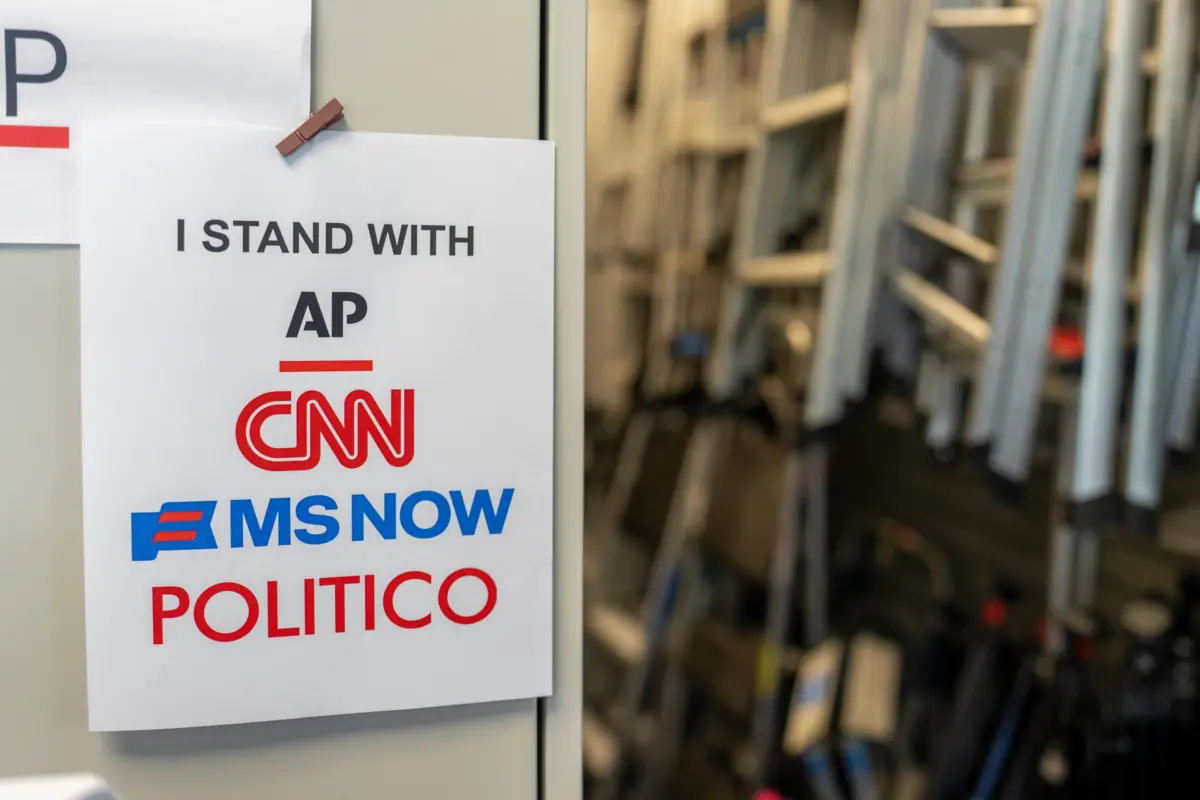
In a swift and decisive constitutional rebuke, a federal district court has forced the Trump administration to rescind its unprecedented ban on major news organizations entering the White House complex. The legal confrontation, which unfolded over a tense 11-hour window on Thursday, centers on the administration’s attempts to bar reporters from CNN, Politico, and MS NOW following critical coverage.
U.S. District Judge Timothy Kelly—a first-term appointee of President Donald Trump—issued an emergency temporary restraining order early Thursday morning demanding the immediate restoration of press credentials for the targeted outlets. Despite the clear judicial mandate, White House officials initially balked, turning reporters away at the gates for nearly half a day before finally complying at noon.
The emergency order marks a critical early chapter in what legal scholars predict will become a protracted First Amendment battle over the boundaries of executive power, the retaliatory revocation of press access, and the constitutional rights of the Fourth Estate. While Thursday’s ruling provides immediate, albeit temporary, relief to the barred journalists, the underlying legal dispute is far from resolved. Judge Kelly has signaled his intent to rule expeditiously on a more durable preliminary injunction, and the administration has already vowed to escalate the matter to the appellate courts.
Read Also
As the judiciary weighs the competing demands of national security claims against the bedrock principles of freedom of the press, the fallout from this week’s showdown reverberates far beyond the briefing room, raising fundamental questions about transparency, political retaliation, and the health of American democracy.
Detailed Chronology
Friday Afternoon: The Edict is Handed Down
The crisis began on a Friday afternoon when President Donald Trump shocked the press corps by announcing an immediate, indefinite ban on reporters from CNN, Politico, and MS NOW. In a social media post and subsequent remarks to reporters, Trump justified the severe sanction by asserting that the outlets "shouldn’t be able to constantly write or report FICTION and LIES" regarding his administration’s policies and actions.
Furthermore, the president issued a chilling warning to the broader media landscape, threatening that additional news organizations could soon be added to the blacklist if their coverage did not align with executive expectations. The announcement sent immediate shockwaves through journalistic and legal circles, where it was immediately recognized as an unprecedented escalation in the administration’s contentious relationship with the media.
Monday: Shifting Justifications and National Security Claims
As legal teams for the barred media outlets mobilized over the weekend, the White House shifted its public rationale for the ban. Initially framed as a response to unfavorable coverage and perceived "fiction," administration officials pivoted toward a more legally potent justification: national security.
During a Monday press briefing, President Trump escalated his rhetoric, accusing the banned reporters of having "violated our National Security by writing false and defamatory stories with unknown ‘sources.’"
However, this justification immediately ran into a wall of skepticism. Investigative reports—most notably from the media newsletter Status and The Washington Post—revealed a deeply ironic twist: one of the primary "unknown sources" cited by the White House as a national security risk was none other than Vice President JD Vance himself, who had spoken openly to reporters during an official White House press call. The revelation severely undermined the administration’s credibility in court, exposing the national security rationale as a post-hoc rationalization for political retaliation.
Thursday 1:00 AM – 8:00 AM: The Federal Ruling and Initial Defiance
The legal showdown reached its first critical milestone in the early hours of Thursday morning. U.S. District Judge Timothy Kelly issued a scathing temporary restraining order. In his written opinion, Kelly dismantled the administration’s defense, noting that the White House had offered "little to back up their asserted national security interest."
The court ordered the immediate restoration of press credentials, ruling that the prolonged exclusion of the outlets inflicted irreparable harm on their constitutional rights and the public’s right to information.
However, the administration did not immediately yield. Over the course of Thursday morning, multiple reporters arriving at the White House gates armed with the federal court order were rebuffed by security personnel. White House officials claimed they were still "processing" the paperwork, maintaining the blackout for hours after the judicial mandate took effect.
Thursday 12:00 PM: Compliance and Readmission
Nearly 11 hours after Judge Kelly’s ruling was handed down, and following frantic negotiations between Department of Justice attorneys and counsel for the media outlets, the White House relented. At approximately noon on Thursday, reporters from CNN, Politico, and MS NOW were finally permitted to pass through security and re-enter the press briefing room.
While the journalists resumed their duties, the atmosphere within the West Wing remained tense, with administration officials signaling that their fight against what they term biased reporting is far from over.
Supporting Context & Metrics
To fully understand the magnitude of this week’s legal battle, one must examine the broader historical and quantitative context of presidential press relations. The revocation of White House press credentials has historically been utilized with extreme sparingness, reserved almost exclusively for severe security infractions or criminal behavior.
| Metric / Indicator | Contextual Data |
|---|---|
| Duration of Initial Ban | 6 days (Friday afternoon to Thursday noon) |
| Delay in Court Compliance | ~11 hours post-ruling |
| Targeted Outlets | CNN, Politico, MS NOW |
| Legal Instrument | Temporary Restraining Order (14-day maximum validity) |
| Presiding Judge | U.S. District Judge Timothy Kelly (Trump appointee) |
| Core Legal Defense | National Security vs. First Amendment Free Press Protections |
The escalation under the current administration reflects a quantitative and qualitative shift in executive-press relations. Over the past two years, the cumulative friction between the White House communications apparatus and investigative reporters has intensified. Rather than relying on traditional channels of rebuttal—such as press releases, official statements, or direct interviews—the administration has increasingly turned to structural exclusion.
Legal scholars point out that while the White House maintains broad discretionary control over physical space management, using that control as a content-based filter to punish critical reporting violates long-established constitutional precedents. The First Amendment protects the press from viewpoint discrimination by the government, a legal threshold that Thursday’s ruling suggests the administration failed to clear.
Official Statements
The events of the past week have drawn sharp, polarized reactions from political figures, legal advocates, and press freedom organizations.
The White House Perspective
Defending the administration’s actions, White House Press Secretary and senior officials maintained that the executive branch possesses inherent authority to regulate access to its facilities to protect the integrity of national discourse.
In a statement released shortly after the court order, a senior administration official argued:
"The American people elected President Trump to lead a government that puts security and truth first. When news organizations repeatedly traffic in defamatory falsehoods and compromise sensitive information under the guise of anonymous sourcing, the executive branch must take steps to protect its operations. We respectfully disagree with the court’s premature intervention and will pursue all available legal avenues to defend the administration’s prerogative."
President Trump himself offered a more direct, personal rationale for the ban during conversations with reporters earlier in the week, stripping away the complex legal arguments to focus on the emotional core of the dispute:
"It’s really just cumulative stories of the last two years. You get sick of it. When people are constantly writing fiction and lies, at some point, you have to draw a line."
The Media and Legal Advocacy Perspective
Legal representatives for the banned news organizations, alongside major press freedom coalitions, hailed Thursday’s ruling as a vital victory for the rule of law.
In a joint statement, counsel for CNN, Politico, and MS NOW emphasized the broader implications for American democracy:
"The First Amendment does not permit the government to pick and choose which news outlets are allowed to cover the people’s business based on whether it approves of their reporting. Judge Kelly’s ruling is a clear affirmation that the White House is not above the law. A free press is the cornerstone of a free society, and we are grateful that the court has swiftly restored our reporters to their rightful place in the briefing room."
Civil liberties groups have similarly rallied around the case, warning that allowing an administration to bar journalists based on editorial content would establish a dangerous precedent, transforming the White House press corps from an independent watchdog into a state-sanctioned propaganda arm.
Future Outlook
While Thursday’s temporary restraining order has successfully restored press access in the short term, the legal war is only just beginning.
The Path to a Preliminary Injunction
Judge Kelly’s current order is a temporary measure designed to prevent immediate and irreparable harm while the court considers the merits of the case. Under federal rules, a temporary restraining order can remain in effect for a maximum of 14 days.
During this window, both legal teams will submit comprehensive briefs and present oral arguments regarding a more durable preliminary injunction, which would legally bar the administration from revoking press credentials for the duration of the underlying lawsuit. Judge Kelly has stated his intention to rule expeditiously on this matter, likely setting up another high-stakes legal showdown before the two-week clock expires.
The Inevitable Appeal
Regardless of Judge Kelly’s upcoming decision on the preliminary injunction, the losing side is virtually guaranteed to appeal the ruling to the U.S. Court of Appeals for the District of Columbia Circuit. President Trump has already signaled his willingness to take the fight as high as necessary, raising the distinct possibility that the case could eventually land on the docket of the U.S. Supreme Court.
If the Supreme Court ultimately takes up the case, it could result in a landmark constitutional ruling defining the precise contours of executive authority over White House press facilities in the digital and modern political era.
Long-Term Implications for the Press Corps
Beyond the courtroom, the chilling effect of the administration’s actions will likely linger. The episode has forced newsrooms across the country to re-evaluate their security protocols, legal preparedness, and strategies for covering an increasingly adversarial executive branch.
For now, the reporters from CNN, Politico, and MS NOW are back at their desks in the West Wing, filing stories and asking tough questions. But as this week’s rapid-fire events demonstrate, the fragile equilibrium between the executive branch and the Fourth Estate remains under unprecedented strain, with the future of press freedom hanging in the balance.


Comments
Facebook App ID not configured. Please add it in the Customizer.