By Greg Daugherty Special to Smithsonian Magazine August 13, 2026
Executive Overview
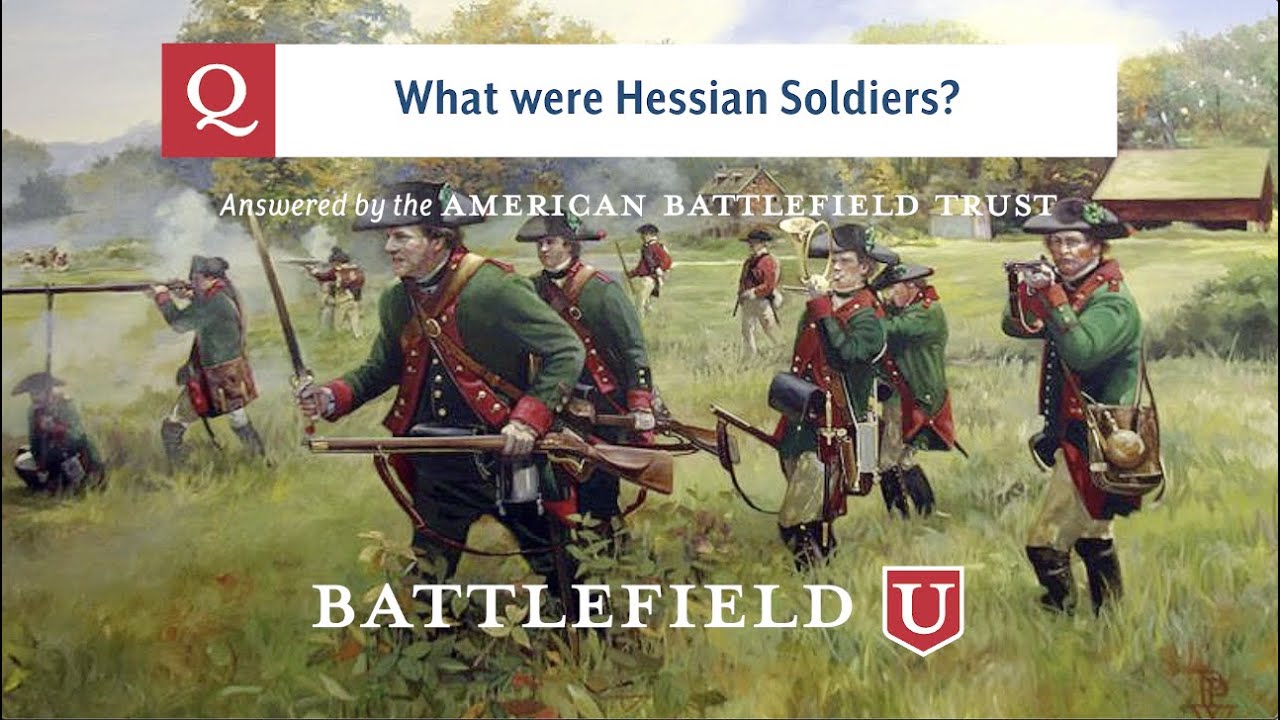
On August 15, 1776, a formidable flotilla of British transport ships dropped anchor off Staten Island, New York. Aboard these vessels were more than 8,600 foreign soldiers—the vanguard of a massive contingent of German troops dispatched to crush the burgeoning American rebellion. Dressed in striking blue or green coats, topped with tall, pointy brass miter caps, these unfamiliar combatants cut an imposing figure on the colonial landscape.
For more than two centuries, popular history has codified these foreign troops as "Hessian mercenaries"—hired guns fighting purely for profit under the command of King George III. Modern historical research, however, reveals a far more complex reality. These men were not mercenaries by strict definition, nor were they all from the German territory of Hesse. They were professional soldiers and conscripts loaned by their sovereign rulers in exchange for lucrative British cash subsidies.
Far from serving as a swift instrument of decisive victory, the arrival of the German auxiliaries became a pivotal catalyst that galvanized colonial resistance, solidified Patriot resolve, and permanently altered the trajectory of the American Revolutionary War.
Detailed Chronology: From the Atlantic Crossing to the Turning Point at Trenton
1. The Decision to Intervene (1775)
Following over a year of armed conflict with colonial militias, a frustrated King George III announced in October 1775 his intention to "put a speedy end to these disorders by the most decisive exertions." Having failed to secure troops from Catherine the Great of Russia or the Dutch Republic, the British government turned to the fractured principalities of the Holy Roman Empire. Parliament negotiated subsidy treaties with six German territories—most notably Hesse-Cassel and Hesse-Hanau—securing a steady stream of military manpower.
2. The Hellish Atlantic Crossing (Spring 1776)
The first contingent of German troops departed the German port of Bremerlehe in mid-April 1776. Conscript accounts, such as that of Johann Gottfried Seume, document an agonizing voyage. Packed so tightly into bunks that they could only sleep on their sides, the men endured putrid water and worm-infested rations for more than three months before reaching North American waters in August.
3. Immediate Deployment and the Loss of New York (August–September 1776)
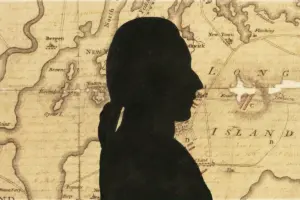
Barely off their transport ships, British commander William Howe integrated the exhausted German troops into amphibious operations. On August 27, 1776, a combined force of British and German troops overwhelmed the Continental Army at the Battle of Long Island. Outnumbered and outmaneuvered, George Washington’s forces suffered heavy casualties before executing a daring night retreat across the East River. Subsequent Patriot defeats at Kip’s Bay and Harlem Heights forced the Continental Army out of New York City entirely, driving them across New Jersey and into Pennsylvania.
4. The Shock at Trenton and Strategic Reversal (December 1776)
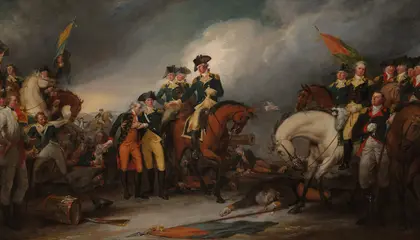
The perception of British and German invincibility was shattered on the night of December 25, 1776. Washington led his demoralized troops across the ice-choked Delaware River to launch a surprise counter-offensive against the German garrison stationed in Trenton, New Jersey. Following a fierce two-hour engagement, nearly 900 German soldiers were captured. The Battle of Trenton proved to be a decisive turning point, revitalizing colonial morale and demonstrating that the Continental Army could successfully confront elite European troops in the field.
Supporting Context & Metrics: Unpacking the German Force
To accurately understand the German military presence during the American Revolution, historians rely on demographic metrics and geopolitical context:
Total Troop Strength: Approximately 30,000 German soldiers served alongside British forces throughout the eight-year conflict.
Geographic Origins: Germany was not a unified nation in the 18th century; instead, it comprised a patchwork of territories within the Holy Roman Empire. While Hesse-Cassel and Hesse-Hanau supplied the majority of the troops, soldiers also hailed from Ansbach-Bayreuth, Brunswick, Waldeck, and Anhalt-Zerbst.
Casualties and Attrition: According to historical breakdowns by scholar Edward J. Lowell and modern researchers like Friederike Baer:
Returned to Europe: ~17,300 soldiers survived and returned to their native lands.
Combat Fatalities: ~1,200 men died in action.
Illness and Accidents: ~6,400 troops succumbed to disease and environmental hazards.
Deserters / Settlers: Roughly 5,000 soldiers deserted the ranks. Between 5,000 and 6,000 ultimately chose to remain in North America, with up to 3,500 settling permanently within the United States. Modern genealogical estimates suggest that millions of Americans today may have a "Hessian" ancestor in their family tree.
Official Statements and Contemporary Perspectives
The introduction of foreign troops sparked intense ideological debate on both sides of the Atlantic, profoundly shaping political rhetoric during the founding of the United States.
The Continental Congress and the Declaration of Independence
Long before the troops disembarked, colonial newspapers tracked their movements across Europe. The Continental Congress seized upon this foreign intervention as an ultimate betrayal. When the Declaration of Independence was adopted on July 4, 1776, it prominently featured the German deployment among its 27 official grievances against King George III:
"He is at this time transporting large armies of foreign mercenaries to complete the works of death, desolation and tyranny, already begun with circumstances of cruelty and perfidy scarcely paralleled in the most barbarous ages, and totally unworthy the head of a civilized nation."
Colonial Leadership Reacts
Prominent Founders viewed the arrival of foreign soldiers as a moral line crossed by the British Crown. John Jay, who later served as the first Chief Justice of the United States, wrote in a widely distributed public address:
"Why are the mercenaries of Germany transported near 4,000 miles to plunder your houses, ravish your wives and daughters?"
George Washington’s Assessment
Despite early propaganda painting the Germans as bloodthirsty monsters, interactions on the ground complicated these harsh stereotypes. George Washington himself noted in a February 1777 correspondence that captured colonial prisoners frequently reported receiving "much kinder treatment" from German soldiers than from their British counterparts.
Furthermore, the Continental Congress actively encouraged defection by passing resolutions in August 1776 offering land grants—ranging from 50 to 1,000 acres depending on rank—along with full civil rights to any German soldier willing to lay down arms and swear allegiance to the emerging republic.
Future Outlook: Legacy and Historical Revisionism
As the United States reflects upon its foundational history, the legacy of the German auxiliary forces continues to be re-examined. Modern historical scholarship has successfully stripped away much of the wartime Patriot propaganda, reframing the "Hessians" not as caricatured monsters, but as human pawns caught in the geopolitical machinery of 18th-century dynastic politics.
Exhibitions, academic monographs (such as Friederike Baer’s definitive Hessians: German Soldiers in the American Revolutionary War), and ongoing genealogical discoveries ensure that these men are remembered in full historical context. Ultimately, King George III deployed these 30,000 troops to secure a swift and absolute military victory; instead, their presence catalyzed colonial unification, accelerated the push for complete independence, and left a permanent demographic and cultural imprint on the American fabric.

/https://tf-cmsv2-smithsonianmag-media.s3.amazonaws.com/filer_public/15/6a/156a4923-bf80-47e0-8353-584546bf7130/hessians.png)
/https://tf-cmsv2-smithsonianmag-media.s3.amazonaws.com/accounts/headshot/greg2.png)
/https://tf-cmsv2-smithsonianmag-media.s3.amazonaws.com/filer_public/15/6a/156a4923-bf80-47e0-8353-584546bf7130/hessians.png)
/https://tf-cmsv2-smithsonianmag-media.s3.amazonaws.com/filer_public/0e/80/0e80db64-b989-4e83-80ed-6e306678c4d4/gettyimages-1397980674.jpg)
/https://tf-cmsv2-smithsonianmag-media.s3.amazonaws.com/filer_public/38/a7/38a79759-383b-4869-bf46-c6f855ad30df/compleat.jpg)
/https://tf-cmsv2-smithsonianmag-media.s3.amazonaws.com/filer_public/cf/14/cf14d00d-fa37-4406-8eb7-00a46f9e314d/johanngottfriedseume_frommeyersgroschenbibliothek.png)
/https://tf-cmsv2-smithsonianmag-media.s3.amazonaws.com/filer_public/34/d2/34d2d403-ec4f-4001-a857-090886ae1d34/johann_koch.png)




Comments
Facebook App ID not configured. Please add it in the Customizer.