

In the biting, raw chill of November 2025, the pristine north shore of Nantucket, Massachusetts, became the unlikely stage for a monumental and haunting spectacle. A fifty-foot, 104,000-pound sperm whale washed ashore—the first of its kind to strand on the island’s sandy expanses in over two decades. The sheer scale of the leviathan immediately transformed a routine marine mammal stranding into a logistical and philosophical puzzle that captured regional and national attention.
Weighing roughly the equivalent of eight adult African elephants or twenty-nine midsize sedans, the massive carcass posed an unprecedented puzzle for local authorities, marine biologists, and environmental caretakers. Deemed "too big to move" by standard mainland methodologies, the creature’s presence on the public shoreline sparked days of emergency planning, public mourning, and scientific inquiry.
This dramatic event serves as the cornerstone for "How to Move the Dead," a powerful, resonant poem by Gretchen Williams, which has been selected as the Missouri Review Poem of the Week for September 7, 2026. Williams—a published poet, global health equity researcher, Harvard T.H. Chan School of Public Health Master of Science graduate, and certified forest therapy guide—uses the Nantucket stranding not merely as a subject of environmental reportage, but as a profound meditation on grief, logistics, and the heavy, emotional mechanics of letting go. Through Williams’s pen, the logistical nightmare of removing a fifty-ton cetacean from a public beach unfurls into a universal metaphor for how humanity confronts intractability, loss, and the silent burdens we carry across life’s uncertain thresholds.
Read Also
Detailed Chronology: The Stranding and Removal of the Nantucket Leviathan
Discovery and Initial Assessment
The unfolding narrative began on a bleak November morning when beachgoers and coastal residents discovered the monumental silhouette of the adult sperm whale resting in the frigid surf of Nantucket’s north shore. Battered by raw, freezing waves, the leaden corpse arched limply against the coastline, its massive lower jaw famously sawed off early in the process by authorities to deter relic hunters and poachers from harvesting its prized teeth.
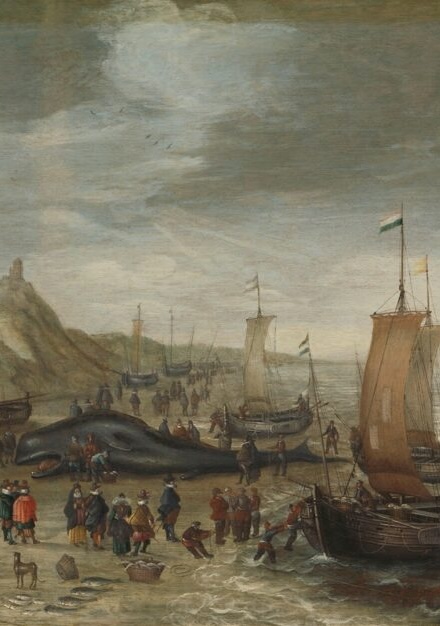
With its mouth left agape in a permanent, silent yawn against the wash, the creature looked as though it had been cut off mid-call. Within hours, word spread across the island. A steady stream of mourners, onlookers, and the merely curious descended upon the cordoned-off stretch of sand. Visitors engaged in spontaneous rituals of grief and respect, scattering flower petals and singing coastal hymns over what they viewed as an anointed mariner—a creature that had spent its life bridging two worlds before being dispatched into a final, silent one.
The Logistical Impasse
Behind the sombre pageantry, however, lay an acute municipal and environmental emergency. Leaving a 52-ton mammal to rot openly on a popular public beach was deemed both unsafe and unseemly. Yet, early investigations laid bare a harsh reality: there was no traditional machinery on that side of creation powerful enough to hoist or transport a carcass of that staggering weight inland.
Small initial excisions and examinations performed directly on the beach revealed gnarled scar tissue and structural trauma, though no immediate, obvious pathogens or singular acute injuries could be identified on-site. The whale had to be moved, but conventional transport was physically impossible.
The Resolution: Returning to the Deep
Five days after the initial stranding, a concerted effort involving heavy industrial machinery offered a breakthrough. Municipal teams deployed an excavator to maneuver the massive frame, looping a heavy-duty tether securely around its tail. The carcass was dragged back into the turbulent surf, where it was hitched to a powerful tugboat.

The tugboat churned fifty miles offshore into the freezing, abyssal Atlantic, ferrying the leviathan just far enough out to ensure the relentless tides could not wash it back ashore. Jettisoned back down into the dark—the realm where it had spent the majority of its life as a deep-dive feeder—the whale returned to the ocean reliquary, finding a final resting place far beyond the reach of the human shore.
Supporting Context & Metrics: The Anatomy of a Stranding
To fully grasp the magnitude of the event that inspired Williams’s poetry, one must examine the raw numbers and the broader ecological realities facing modern cetaceans.
- Mass and Dimensions: At fifty feet in length and weighing approximately 52 tons (104,000 pounds), the Nantucket sperm whale dwarfed standard salvage equipment. To contextualize its bulk, the animal weighed as much as eight full-grown African elephants or twenty-nine standard midsize sedans.
- Rarity: The stranding marked the first time a sperm whale had washed ashore on Nantucket in more than twenty years, elevating the event from a routine ecological occurrence to an extraordinary historical anomaly for the region.
- The Anthropogenic Epilogue: While initial on-site examinations were inconclusive, subsequent forensic investigations by marine biologists determined that the endangered animal had been killed by the long-term, cumulative effects of a ship strike. This diagnosis highlights a grim reality of modern maritime navigation: busy shipping lanes intersecting with deep-diving marine mammal habitats frequently result in tragic, human-caused fatalities.
- Literary Background: Gretchen Williams’s work bridges the analytical rigor of public health with the profound emotional resonance of nature writing. Supported by prestigious institutions such as the Bread Loaf Writers’ Conference, the Kenyon Review Writers Workshop, the Virginia Center for the Creative Arts, and the Massachusetts Audubon Society, Williams brings a unique interdisciplinary lens to her poetry. Her writing has found homes in esteemed publications like the Mississippi Review, and she earned recognition as a poetry finalist for the Missouri Review 2026 Perkoff Prize.
Official Statements and Expert Perspectives
The logistical hurdles faced by Nantucket officials sparked intense debate among environmentalists, marine biologists, and public safety officers.
Local emergency management officials emphasized the unprecedented nature of the operation. In statements released during the week-long ordeal, municipal spokespersons noted that standard protocols for marine strandings—typically involving burial above the high-tide line or quick dissection—were rendered completely obsolete by the sheer scale of the 52-ton body. "There is simply no precedent, nor any heavy equipment on the island, designed to hoist an animal of this tonnage inland without risking structural failure or severe public health hazards," officials noted during the crisis.
Marine mammal rescue organizations echoed these concerns while emphasizing the ecological significance of the animal’s final journey. Returning the carcass to deep waters, conservationists explained, served a vital biological purpose. In the deep ocean, a falling whale carcass creates a localized ecosystem known as a "whale fall," sustaining deep-sea scavengers and benthic organisms for decades.
In her author’s note, Gretchen Williams reflected on the deeper philosophical implications of the event:
"This poem explores the ways we often try to address seemingly intractable problems or situations, and how what seems like solely an issue of logistics at first glance may instead be a matter of will—a practice in the motions required to release just about anything."
Williams draws a direct, haunting parallel between the mechanical impossibility of moving the dead whale and the emotional trials of human existence:

"Like how you carry any dead thing: a broken housecat from the middle of the road, the getaway plan long abandoned but tough to shake off, a paper-thin marriage stock-still in its sickbed. Hands slick with blood and marked by scars of mottled memory. Cradling whatever remains to the curb, to the shoreline, to an uncertain threshold—released into the next world."
Future Outlook: Art, Ecology, and Collective Memory
As maritime traffic continues to increase along the Eastern Seaboard, conservationists and marine policy experts are redoubling efforts to mitigate the frequency of ship strikes on endangered species like sperm whales. Improved acoustic monitoring, mandatory vessel slow-downs in high-density migration corridors, and advanced radar tracking systems are among the primary tools being deployed to prevent future tragedies.
Yet, beyond the realms of marine biology and municipal disaster planning, the Nantucket stranding will endure through the power of art and literature. Gretchen Williams’s "How to Move the Dead" ensures that the lonely, awe-inspiring struggle of November 2025 transcends its physical reality. By transforming a grueling five-day salvage operation into a profound exploration of grief, release, and human endurance, the poem offers readers a mirror for their own quiet burdens.
As cultural institutions and literary magazines continue to highlight works that bridge the gap between ecological observation and internal emotional landscapes, pieces like Williams’s serve as vital touchstones. They remind us that whether we are grappling with a fifty-ton leviathan cast ashore by an indifferent sea, or carrying the invisible, paper-thin weight of a finished chapter in our personal lives, the fundamental challenge remains unchanged: finding the courage, the collective will, and the steady hands required to let go and set our dead adrift into the vast, uncertain dark.





Comments
Facebook App ID not configured. Please add it in the Customizer.