
Executive Overview
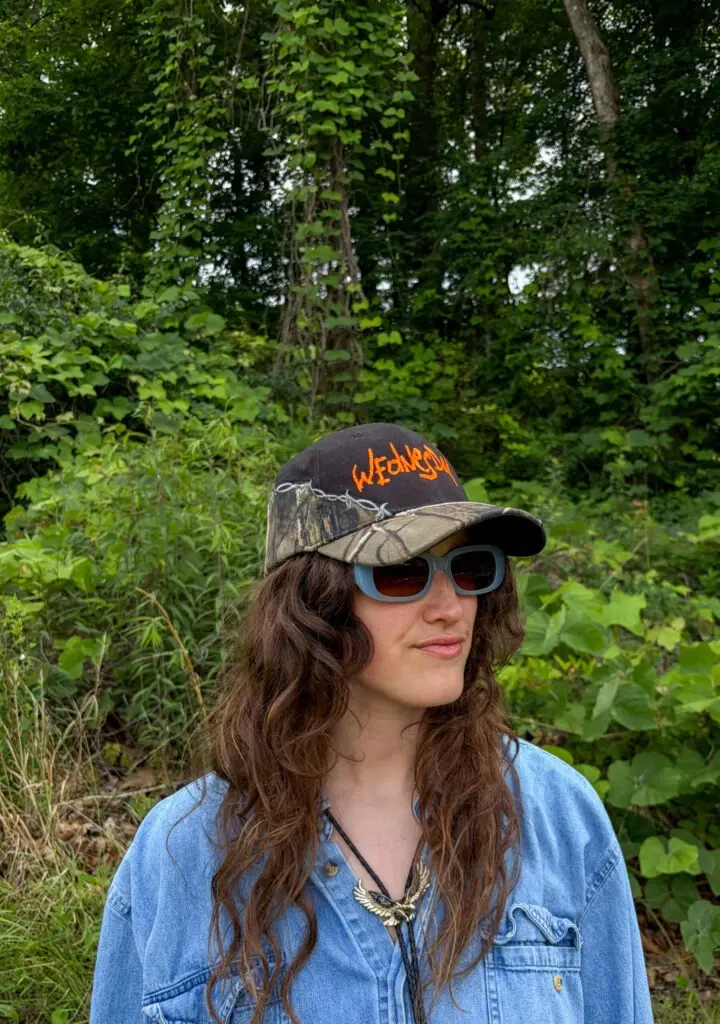
In contemporary American poetry, few pieces manage to weave the mundane domesticity of abandoned sourdough starter with the wild, untamed realities of East Tennessee ecology quite like Anna Drasko’s latest work. Selected as the prestigious Poem of the Week by The Missouri Review, Drasko’s "Maker" is a piercing, multi-layered exploration of creation, gender expression, ecological coexistence, and the inherent limitations of language.
Drasko, an emerging voice whose work has previously graced the pages of Chestnut Review, phoebe, and Good River Review, brings an academic rigor paired with a raw, visceral sensibility to their writing. Holding degrees from the University of Pennsylvania and Penn State, Drasko uses "Maker" to interrogate what it means to construct an identity in a world that voraciously demands consumable conformity. Through vivid imagery—ranging from a neighbor’s dog chasing wild turkeys into the canopy of highway-side kudzu to a neglected jar of fermenting dough rotting in a refrigerator—the poem functions as a modern ars poetica. It questions the very tools writers use to define themselves, challenging the reader to reconsider how autonomy, gender, and language are perpetually under construction.
Detailed Chronology: The Genesis and Evolution of "Maker"
To understand the architecture of "Maker," one must trace the physical and psychological landscape from which it emerged. The poem’s genesis is deeply rooted in the gritty, highway-adjacent geography of East Tennessee, where the boundaries between human domesticity and wild ecosystems blur daily.
Read Also
The Backyard Ecosystem and the Highway Guardrail
Drasko’s creative process began in a backyard that shares a guardrail with a bustling highway. In this narrow strip of land, invasive kudzu vines aggressively choke out native flora by the arrival of June. Yet, amidst the relentless roar of passing vehicles and the hum of industrial pollution, life persists with stubborn resilience. Drasko spent hours observing the nocturnal and twilight visitors to this fragmented habitat: feral cats, red-tailed hawks, lumbering groundhogs, the occasional white-tailed deer, and neighbors’ loose dogs.
The Inciting Incidents
Two distinct, seemingly unrelated events collided in Drasko’s mind to spark the composition of "Maker":
- The Flying Turkeys: Witnessing a neighbor’s dog named Dolly chase a wild turkey, forcing the heavy bird to take panicked flight high into the skeletal branches of a tree. Having previously assumed turkeys were strictly ground-bound, Drasko was struck by the unexpected verticality of the flight.
- The Neglected Sourdough: Opening the refrigerator to inspect a neglected, months-old sourdough starter. Rather than standard yeast culture, the jar housed a miniature, toxic ecosystem featuring swirling layers of pink, black, and green mold—a visual metaphor for abandoned domestic expectations.
From Domesticity to Gender Autonomy
The timeline of the poem’s creation mirrors a pivotal personal transition in Drasko’s life. The cessation of baking bread—an act traditionally coded as a comforting, feminine domestic chore—coincided precisely with Drasko’s departure from womanhood. Moving away from the societal expectation of being a "woman who makes things people can eat," Drasko embraced a genderless identity. "Maker" documents this psychological pivot, shifting from the performance of palatable womanhood to the unfiltered reality of a body and selfhood that resist neat categorization.
Supporting Context & Metrics: The Literary Landscape of Anna Drasko
Anna Drasko’s emergence as a distinct voice in contemporary American letters is supported by an impressive academic and publication trajectory.
Academic Foundation and Literary Footprint
Drasko’s dual pedigree—holding degrees from the Ivy League institution the University of Pennsylvania and the public research powerhouse Penn State—informs the intellectual scaffolding of their poetry. This academic background manifests in a keen self-awareness regarding linguistics and semiotics. Drasko understands that words are inherently unstable vessels, a theme explicitly tackled in the concluding lines of "Maker": "Language is still / in the making, usually saying / more & less than its meaning."
Publication Metrics and Reach
- Literary Journals: Drasko’s poems have found homes in some of the nation’s most discerning literary magazines, including Chestnut Review, phoebe, and Good River Review.
- Digital and Print Resonance: The selection of "Maker" by The Missouri Review—a publication with a decades-long history of championing world-class poetry, fiction, and nonfiction—places Drasko among the upper echelon of contemporary emerging poets.
- Thematic Breadth: Drasko’s body of work, highlighted by pieces like Self-Portrait as Genderless Thing (published via Chestnut Review), consistently interrogates the intersections of queer identity, rural Southern landscapes, and the physical body as an evolving site of inquiry.
Official Statements and Authorial Insights
In an exclusive author’s note accompanying the publication of "Maker," Drasko provided profound insight into the thematic motivations driving the poem:
"This poem began in my backyard, where we share a guardrail with the highway, and the invasive kudzu vine suffocates every native plant by June. Amid the cars blurring by, I spend nights watching the turkeys, cats, hawks, groundhogs, the occasional deer, and my neighbors’ loose dogs. Despite the pollution, everything is so alive. No matter what the conditions, life still unfolds."
Drasko elaborates on the intersection of ecology, domestic neglect, and gender liberation:
"I didn’t know turkeys could fly until I saw Dolly chase one up into that tree, and that same day, I checked on my sourdough starter with its layers of pink and black and green that had been rotting in my fridge for months. I enjoyed watching the mold multiply week after week in new colors as I stopped making bread around the same time I left being a ‘woman’ behind. It was an abandonment that felt right."
Addressing the technical challenges of capturing queer and non-binary existence on the page, Drasko notes:
"This poem turned toward Ars Poetica as I pressed up against the limits of language, which happens often when I try to put words to my experiences of gender, or to anything."
Future Outlook: The Expanding Horizon for Drasko’s Poetry
The recognition of "Maker" as Poem of the Week marks a significant milestone in Anna Drasko’s literary career, signaling broader critical attention to their unique poetic voice.
What’s Next for the Author
As Drasko continues to write from East Tennessee, literary critics anticipate the development of a full-length poetry collection. Works that successfully bridge the gap between rural ecological observation and sharp, queer theoretical frameworks are increasingly vital in contemporary literature. Drasko’s ability to use humor, visceral body horror, and sharp linguistic turns positions them as a writer capable of pushing American poetry into new, uncharted territories.
The Evolution of Queer Rural Narratives
For too long, rural literature has been pigeonholed into rigid, traditionalist tropes. Writers like Drasko are actively dismantling these boundaries, proving that the American South is a complex, polyphonic space where queer existence, invasive vines, highway pollution, and rotting sourdough can coexist in a single, breathing ecosystem.
As "Maker" demonstrates, language—much like gender, much like a neglected loaf, and much like a wild turkey taking flight into an unlikely sky—is forever under construction. Anna Drasko is building something entirely new out of the scraps, and the literary world is watching closely to see what takes flight next.

Comments
Facebook App ID not configured. Please add it in the Customizer.