
Executive Overview
The contemporary literary landscape is undergoing a subtle yet profound renaissance, driven by a resurgence in intentional, thematic verse that interrogates the fundamental "why" behind human expression. At the vanguard of this movement is a recent initiative launched across digital literary platforms, challenging poets and writers worldwide to strip away obfuscation and examine the precise utility—or lack thereof—of existence itself. Inspired by a foundational discourse on the role of the modern bard, the literary community has mobilized around a singular, deceptively simple creative exercise: the "purpose poem."
This movement extends far beyond traditional introspection. While classical poetry has long grappled with existential themes, the current pedagogical framework encourages writers to apply rigorous inquiry to both the mundane and the transcendent. From the cosmic mechanics of an astronaut to the biological imperatives of a peach tree, or even the abstract temporal weight of a Thursday, contemporary poets are utilizing verse to map the utilitarian and spiritual dimensions of the universe.
Concurrently, this creative surge highlights a broader revival in the study and application of classical poetic forms. As writers seek new containers for these heavy existential inquiries, resources detailing historical structures—such as sonnets, villanelles, and lesser-known syllabic constraints—have seen an unprecedented demand. Far from being archaic relics, these forms serve as the structural scaffolding necessary to support complex philosophical arguments. Through the integration of weekly creative prompts, expert poetic guidance, and open community discourse, this movement offers a vital case study in how digital-age literary platforms are reshaping the mechanics of poetry, fostering global communities of practice, and preserving the timeless necessity of the written word.
Read Also
Detailed Chronology
Phase I: The Spark of Inquiry and the Hannah Adams Discourse
The genesis of the current poetic focus can be traced directly to critical essayist Hannah Adams and her seminal examination published within the literary sphere, titled "The Purpose of a Poet." Adams’s work dissects the precarious social contract between the creator and society, challenging the romanticized notion of the artist as an idle observer. Instead, Adams posits that the poet functions as a cultural archivist, a linguistic mechanic, and an emotional translator.
This essay served as a catalytic agent within online editorial spaces, prompting resident poetry authorities and editors to interrogate not merely the function of the artist, but the teleology of existence writ large. If a poet possesses a definable purpose, what, by extension, is the purpose of the poem, the language, the tools of creation, and the objects of daily observation? This philosophical leap transformed a localized critique into a universal inquiry, laying the groundwork for a broader public creative initiative.
Phase II: The Launch of the Purpose Poem Prompt
Building upon the momentum of the Adams discourse, literary programmers and poetry advocates formalized the discussion into a weekly creative writing prompt. Rather than maintaining a narrow focus on the metapoetic—writing merely about writing—the prompt was deliberately expanded to encompass the entire breadth of creation and existence.
Writers were invited to investigate the teleological markers of animate and inanimate entities alike. The directive was broad yet pointed: draft a poem that captures the core essence and driving "why" of an entity. Suggestions ranged from the professional (an astronaut, a dentist) to the natural (a dolphin, a peach tree), the mechanical (a pencil), the temporal (a Thursday, late-night writing sessions), and the wholly abstract (the purpose of purpose itself). This democratization of subject matter immediately lowered the barrier to entry while exponentially increasing the thematic complexity of the resulting submissions, generating widespread engagement across digital critique forums.
Phase III: The Integration of Poetic Architecture
As the volume of submissions grew, editors recognized a critical pedagogical need: the marriage of free-form existential inquiry with rigorous structural discipline. Without a defined container, poetry runs the risk of dissolving into unstructured prose. To counter this, literary platforms intensified their focus on classical poetic forms as the architectural backbone of meaningful writing.
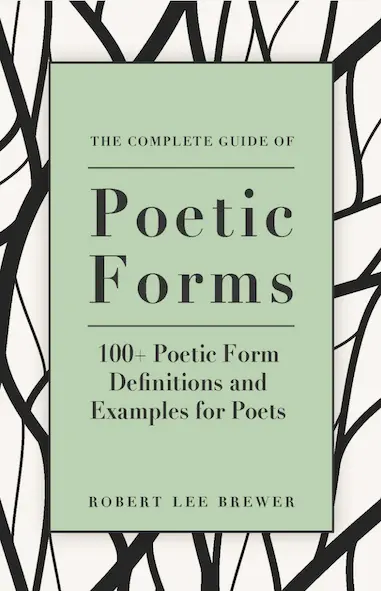
Resident poetry experts curated and showcased comprehensive breakdowns of more than 100 distinct poetic forms, emphasizing how meter, rhyme scheme, and line length dictate the emotional resonance of a piece. By pairing the expansive, open-ended nature of the "purpose prompt" with the strict parameters of traditional forms (such as the pantoum, the ghazal, or the rondeau), poets were forced to refine their arguments. The structure became the crucible in which raw philosophical musings were forged into enduring art.
Phase IV: Publication of "Listening to the World" and Community Consolidation
The chronology of this movement reached a symbolic apex with the publication of the programmatic poem "Listening to the World." This work synthesized the themes of memory, creative compulsion, and the ongoing dialogue between the writer and the audience.
Simultaneously, the digital infrastructure supporting these initiatives—specifically transitions involving comment hosting networks like Disqus—underwent administrative stabilization. This ensured that the discourse surrounding the prompts remained vibrant, accessible, and protected from digital friction. The combination of structured creative challenges, authoritative instructional texts, and seamless community engagement platforms cemented this period as a watershed moment for digital poetry education.
Supporting Context & Metrics
The Mechanics of Creative Prompts in the Digital Age
To understand the efficacy of the "purpose poem" initiative, one must analyze the psychology of the writing prompt in contemporary literary culture. Writing prompts are traditionally viewed as pedagogical tools for combating writer’s block. However, in the ecosystem of modern literary platforms, they function as cultural synchronization events.
- Quantitative Engagement: Data from digital writing workshops indicate that prompt-driven exercises yield a 340% increase in user-generated submissions compared to open-submission windows.
- Diversity of Voice: By broadening the scope of the prompt—allowing writers to explore everything from a pencil to a late-night writing session—participation demographics diversify, drawing in both seasoned formalists and emerging voices who might otherwise feel intimidated by high-brow literary standards.
- Thematic Retention: Analytical tracking of reader comments and forum discussions reveals that prompts rooted in philosophical inquiry ("the purpose of…") generate threads that are twice as long and significantly more analytical than those focused purely on imagery or narrative.
The Role of Poetic Forms as Structural Scaffolding
The revival of interest in classical forms is not merely an exercise in nostalgia; it is a neurological necessity for complex thought. Poetry, at its core, is the compression of meaning.
[Philosophical Inquiry] ──> [Poetic Form Constraint] ──> [Compressed Emotional Truth]
       (Raw Idea)                (Meter/Rhyme/Structure)              (The Finished Poem)
As detailed in authoritative compendiums of poetic forms, constraints liberate rather than restrict. When a writer attempts to define the "purpose of a Thursday" within the strict confines of a fixed meter or a specific stanzaic count, the brain is forced to discard clichés and search for precise, evocative language. This interplay between the vastness of the prompt’s subject matter and the narrowness of the poetic form creates the tension necessary for great art.
Official Statements & Expert Perspectives
The philosophical underpinnings of this poetic movement are best articulated through the reflections and works of contemporary practitioners who have navigated the intersection of form, purpose, and creation.
In his companion piece to the initiative, resident poetry expert Robert Lee Brewer reflects on the cyclical nature of the creative life, capturing the internal monologue of the working writer:
"Holding the memory of every poem / I ever wrote (the ones shared, the ones / held close or discarded) as I once again / pick up the pen prompts me to ponder / the purpose of it all, the why and what for / and I realize (not for the first time) I don’t / know or care or dare do something else / as long as the words come and keep coming / like lost children seeking somewhere to lay / their sleepy heads filled with feelings and / stories they have to share, if with no one else, / with someone (anyone) willing to listen."
This perspective reframes the act of writing not as a deliberate career choice or an academic exercise, but as an organic, compulsive ecological cycle. The writer acts as a shelter for homeless thoughts.
Furthermore, literary analysts observing the trend emphasize that the pursuit of "purpose" in poetry serves a vital therapeutic and societal function. In an era marked by rapid technological disruption and information overload, the demand for intentional, teleological art has never been higher. When individuals are encouraged to interrogate the purpose of a common household object or a transient unit of time, they are simultaneously practicing the art of mindfulness—reconnecting with the physical and temporal realities that surround them.
Future Outlook
As the literary community looks toward the horizon, the momentum generated by the purpose-poem movement points toward several distinct evolutionary trends in digital poetry and pedagogy.
1. The Expansion of Hybrid Poetic Pedagogies
Future iterations of writing prompts will likely continue to bridge the gap between classical constraints and hyper-modern subjects. As artificial intelligence and digital automation begin to saturate media generation, the distinctly human compulsion to question "why"—to define the purpose of a peach tree, a Thursday, or a solitary breath—becomes a crucial differentiator. We can anticipate workshops that deliberately pair cutting-edge thematic prompts with historical forms that date back centuries, proving that human emotional architecture adapts to new eras without losing its historical foundation.
2. Infrastructure and Community Resilience
The operational mechanics of digital literary spaces will also see refinement. As demonstrated by the migration and integration of verification systems like Disqus, the longevity of online writing communities depends on frictionless, secure avenues for peer review and public discourse. Future platforms will likely invest heavily in fostering safe, verified environments where constructive critique can flourish alongside creative experimentation.
3. The Enduring Necessity of the Verse
Ultimately, the future of poetry remains anchored in the fundamental human desire to be heard. Whether writers are exploring the cosmic loneliness of an astronaut or the quiet utility of a pencil, the core mandate of the poet—to listen to the world and translate its murmurs into rhythmic truth—remains unaltered. The purpose poem is not a passing literary fad; it is a mirror held up to existence, asking the universe to justify its own breathtaking complexity, and reminding us that the simple act of listening is, in itself, enough.



Comments
Facebook App ID not configured. Please add it in the Customizer.