
Executive Overview
Cardiovascular disease (CVD) is undergoing a terrifying demographic migration. Once widely understood as a health crisis predominantly affecting older adults in their sixth and seventh decades of life, severe cardiac pathologies are now relentlessly advancing into the younger strata of the Pakistani population. According to leading public health data and clinical observations, cardiovascular complications currently account for approximately 30 percent of all deaths nationwide. However, the most alarming facet of this modern epidemic is not merely its staggering mortality rate, but the dramatic shifting of the disease baseline: individuals in their 20s, 30s, and 40s are increasingly filling emergency departments with acute myocardial infarctions—commonly known as heart attacks—and other catastrophic cardiovascular events.
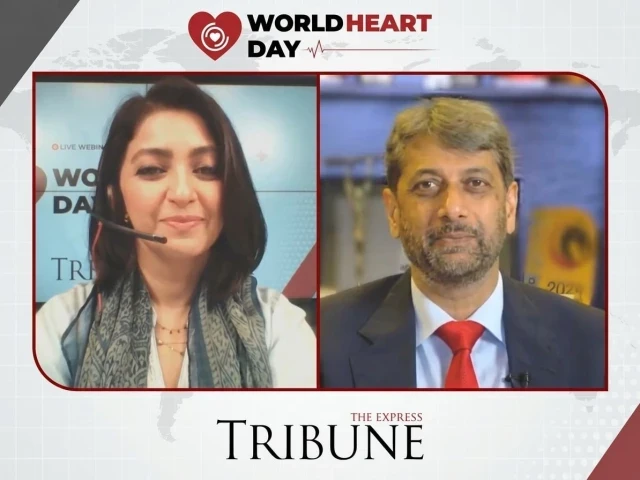
This seismic shift was a central focus of a high-level World Heart Day webinar hosted by The Express Tribune, featuring prominent interventional cardiologist Dr. Fawad Farooq. A Professor of Interventional Cardiology at the premier National Institute of Cardiovascular Diseases (NICVD) in Karachi, Dr. Farooq issued an uncompromising public health warning. He emphasized that the cumulative damage inflicted by modifiable lifestyle factors—chiefly tobacco consumption, a sedentary lifestyle, and systemic obesity—begins insidiously in childhood and adolescence. By the time acute symptoms manifest in young adulthood, irreversible cellular and vascular damage has frequently already occurred.
Medical experts maintain that treatment alone is fundamentally insufficient to curb this rising tide. Instead, a paradigm shift is urgently required, moving from reactive emergency interventions to proactive, lifelong cardiovascular risk management that begins long before clinical symptoms ever appear.
Read Also
Detailed Chronology: The Evolution of a National Health Crisis
The modern cardiovascular crisis in Pakistan did not materialize overnight; rather, it is the cumulative result of decades of socio-economic modernization, shifting nutritional landscapes, and deeply entrenched cultural habits regarding tobacco and physical exertion.
The Childhood Foundation (Ages 5–15)
According to clinical insights shared during the NICVD-backed discussions, the modern trajectory toward premature heart disease frequently initiates during early childhood. In contemporary Pakistani society, urbanization, proliferating digital technologies, and mounting academic pressures have drastically reduced the physical activity of children. Extended screen time has largely replaced outdoor play, while the dietary landscape has shifted heavily toward ultra-processed, high-calorie, and nutrient-deficient fast foods. This early-life imbalance—marked by sedentary behaviors and excess caloric intake—lays down the initial physiological tracks for childhood weight gain, dyslipidemia (abnormal blood lipid profiles), and insulin resistance.
The Adolescent Transition (Ages 12–19)
Compounding this dietary and physical decline is a deeply troubling trend in early tobacco experimentation. Clinical observations indicate that a growing number of Pakistani adolescents initiate smoking between the ages of 12 and 14. Driven by peer pressure, environmental exposure, and aggressive marketing, these teenagers develop severe nicotine dependence at a vulnerable developmental stage. Consequently, by the time these individuals reach their mid-20s or early 30s, they carry a heavy cumulative burden of a decade or more of continuous vascular exposure to thousands of toxic combustion byproducts.
The Young Adult Critical Window (Ages 20–40)
The convergence of early-onset tobacco use, chronic physical inactivity, rising obesity rates, and unmonitored stress creates a precarious physiological state in young adulthood. While Western populations typically experience primary coronary events in later life—allowing decades for the vascular system to adapt or for collateral blood vessels to develop—young Pakistanis are increasingly suffering acute cardiac events without prior adaptation. Because younger patients often lack the collateral circulation that older bodies develop over time, a first heart attack in this demographic is frequently sudden, massive, and disproportionately fatal. Medical professionals report that emergency rooms are seeing unprecedented numbers of patients in the prime of their lives presenting with acute coronary syndromes, high blood pressure, and early-stage type 2 diabetes.
Supporting Context & Metrics: The Scale of the Burden
To fully grasp the gravity of the crisis outlined by the NICVD, one must examine the broader epidemiological landscape of non-communicable diseases (NCDs) in South Asia.
- The 30% Mortality Benchmark: Cardiovascular diseases remain the single largest killer in Pakistan, responsible for nearly three out of every ten deaths. This metric outstrips many infectious diseases and malignancies, positioning cardiometabolic disorders as the country’s premier public health emergency.
- The Tobacco Toll: Tobacco consumption accounts for a substantial and preventable share of annual mortality. Beyond direct smokers, millions of Pakistanis are subjected to second-hand smoke in homes, workplaces, and public venues, multiplying the systemic cardiovascular risk across non-smoking family members, particularly women and children.
- The Danger of Multi-Factorial Synergy: Clinical data underscores that risk factors do not act in isolation. The co-existence of smoking, hypertension, diabetes, and obesity does not merely add to an individual’s risk profile—it multiplies it exponentially. For example, a young smoker who is also obese and hypertensive faces a cardiovascular hazard manifold higher than the sum of those individual risks.
- The Thrombotic Threat of Smoking: While metabolic conditions such as diabetes and elevated cholesterol develop progressively over extended periods, tobacco use possesses a uniquely volatile mechanism. Nicotine and combustion byproducts immediately increase blood viscosity and platelet aggregation, significantly elevating the short-term tendency of blood to clot. This hyper-coagulable state can trigger a catastrophic cardiac event with little to no anatomical warning.
Official Statements and Expert Insights
During the World Heart Day discourse, Dr. Fawad Farooq offered profound clinical perspectives on the nature of cardiovascular disease, the specific dangers of tobacco, and the imperative of preventative medicine.
Addressing the limitations of modern medicine, Dr. Farooq stated unequivocally:
"Treatment alone is not enough. People need to understand their risk factors while they are still healthy. Diabetes, hypertension, obesity, physical inactivity, and smoking do not simply add to cardiovascular risk; they combine to increase it substantially."
Elaborating on the stark reality of young heart attack victims, Dr. Farooq noted that clinical practice in Pakistan reveals a stark departure from Western epidemiological curves:
"While cardiovascular disease is more commonly encountered after the age of 50 or 60 in many Western populations, doctors in Pakistan are now seeing serious cardiac problems among people in their 20s, 30s, and 40s. Although precise local data remain limited, this trend is undeniably evident in our daily clinical practice and emergency rooms."
Differentiating between the psycho-behavioral driver of addiction and the physical destruction caused by smoking, Dr. Farooq clarified the mechanism of harm:
"When a cigarette is lit, the burning process produces smoke containing thousands of chemicals, including carcinogens and other toxic compounds. Nicotine is what drives dependence and makes quitting difficult… The greater concern is that cigarettes deliver nicotine through the burning of tobacco, a process that exposes the body to more than 6,000 harmful chemicals."
Offering pragmatic guidance on smoking cessation and harm reduction, Dr. Farooq remarked on the cycle of relapse:
"Smoking in any form, or tobacco use in any form, should not be consumed at all. However, quitting can be extremely difficult for people who have smoked for many years because nicotine dependence produces both physical and behavioural withdrawal symptoms. For long-term smokers who are unable to quit immediately, harm-reduction approaches—such as nicotine gums, patches, and non-combustible methods—can form part of a structured quitting strategy under medical guidance."
Finally, emphasizing the psychological barrier to early screening, Dr. Farooq left viewers with a foundational preventative mantra:
"Try to keep your heart healthy while you are in health, before developing disease. Once heart disease has occurred, treatment can be difficult and may never fully return a patient to their earlier baseline."
Future Outlook: A Roadmap for Mitigation
Reversing the tide of premature heart disease in Pakistan requires a coordinated, multi-sectoral approach involving individual behavioral modification, systemic healthcare reform, and robust public policy interventions.
1. Clinical and Preventative Reorientation
Healthcare providers must pivot away from a purely curative model toward aggressive primary prevention. Routine medical check-ups in primary care settings must prioritize the early screening of modifiable risk factors—specifically blood pressure, fasting blood glucose, and lipid profiles—long before patients reach middle age. Furthermore, physicians must treat tobacco cessation not merely as a lifestyle preference, but as a critical clinical intervention, utilizing structured counseling and approved pharmacological aids.
2. Public Health Education and Pediatric Intervention
Public health campaigns must educate parents, educators, and children on the long-term consequences of sedentary habits and poor nutrition. Schools must reintroduce robust physical education curricula, limit digital screen time, and restrict the availability of ultra-processed, high-sugar, and high-sodium foods on campuses. Concurrently, anti-smoking campaigns must specifically target teenagers, debunking the glamorization of tobacco and e-cigarettes.
3. De-normalizing Tobacco Use
Societal attitudes toward public smoking must undergo a fundamental transformation. Health professionals must act as uncompromising role models, championing smoke-free environments in homes, healthcare institutions, and public spaces. By treating second-hand smoke as a serious public health hazard and social unacceptable behavior, communities can protect vulnerable populations—especially children—from involuntary cardiovascular exposure.
4. Recognizing Critical Warning Signs
Public awareness regarding the atypical or acute manifestations of heart disease must be systematically elevated. Citizens must be educated to recognize and immediately report vital warning signs:
- New or progressive chest pain (angina) triggered by exertion, climbing stairs, or emotional stress and relieved by rest.
- Unexplained reductions in exercise tolerance or acute shortness of breath during routine daily activities.
- Episodes of unexplained syncope (fainting), sudden loss of consciousness, or rapid, irregular heartbeats.
- Heightened vigilance for individuals with a family history of premature heart disease (defined as a myocardial infarction occurring before age 55 in close male relatives or before age 65 in close female relatives).
Conclusion
The rising incidence of heart disease among young Pakistanis is a clarion call for urgent national action. As Dr. Farooq and other leading cardiologists at the NICVD have underscored, the human and economic cost of waiting for disease to manifest is unsustainable. By fostering a culture of early screening, active living, nutritious diets, and total tobacco avoidance, Pakistan can safeguard its younger generations and secure a healthier, more resilient future.





Comments
Facebook App ID not configured. Please add it in the Customizer.