
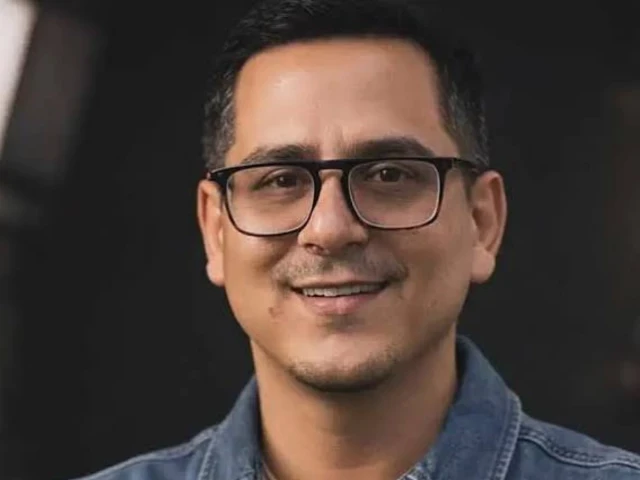
Award-winning Kashmiri filmmaker Arfat Sheikh walked free from a United States Immigration and Customs Enforcement (ICE) detention facility on bond on Thursday, concluding an initial ordeal that began with his sudden apprehension at Washington Dulles International Airport on September 24, 2026. Sheikh, whose cinematic portfolio predominantly examines the harrowing sociopolitical realities and human toll of the enduring conflict in Indian-administered Kashmir, was arrested by federal agents immediately as he disembarked from a domestic flight arriving from California.
While the granting of bond on Tuesday and his subsequent release on Thursday represent a temporary reprieve, Sheikh’s legal battles are far from over. The deportation proceedings initiated against him by the Department of Homeland Security (DHS) remain active, underscoring the precarious position faced by many asylum seekers and international scholars currently navigating the labyrinthine and increasingly punitive US immigration system.
Sheikh’s detention has ignited a firestorm of controversy, galvanizing international human rights organizations, free-speech advocates, and prominent figures within the global independent film community. Critics argue that his arrest is part of a broader, politically motivated crackdown engineered under the administration of President Donald Trump. This administration has systematically targeted foreign nationals who enter the United States on temporary visas—such as student or visitor permits—subsequently transitioning to asylum seekers in a bid to secure permanent protection from persecution in their home countries.
Read Also
For Sheikh, whose critically acclaimed 2024 feature film Saffron Kingdom draws heavily on the trauma of displacement, diaspora, and the geopolitical flashpoints of his native homeland, the experience of sudden detention underscores the very themes he commits to celluloid. As his defense team prepares for ongoing immigration hearings, the case has crystallized a larger debate over the weaponization of bureaucratic immigration mechanisms, the erosion of protections for artists and activists, and the chilling effect such aggressive enforcement actions impose upon creative expression worldwide.
Detailed Chronology
To understand the gravity of Arfat Sheikh’s detention and subsequent release, it is essential to trace the precise timeline of events that brought the young filmmaker from the editing suites of academia to the bleak confines of an ICE detention center, and finally back to a provisional state of freedom.
2019–2020: Arrival and the Pursuit of Asylum
Arfat Sheikh’s journey into the American educational and artistic landscape began in 2019, when he arrived in the United States on a valid non-immigrant student visa. Driven by a passion for visual storytelling and a desire to bring international attention to the underrepresented narratives of his homeland, Sheikh enrolled as a graduate student in film at Georgia State University.
Recognizing the escalating dangers, political instability, and suppression of independent journalism and artistic voices in Indian-administered Kashmir, Sheikh took the formal, legally sanctioned step of filing an application for asylum in 2020. Under established US immigration protocols at the time, individuals with pending asylum applications are legally permitted to remain within the country while their cases wind through the administrative backlog. Furthermore, they are typically granted employment authorization documents (EAD), enabling them to work, pay taxes, and integrate into their local communities. For several years, Sheikh lived openly in Alexandria, Virginia, pursuing his craft, completing academic requirements, and working on film projects that would eventually garner international critical acclaim.
September 24, 2026: The Airport Interception
The situation shifted dramatically on September 24, 2026. Sheikh, who had been traveling to California for professional reasons, boarded a return flight to the Washington, D.C. area. According to a defense campaign established by his friends, relatives, and professional colleagues, federal agents from ICE—an enforcement division operating under the umbrella of the Department of Homeland Security—intercepted Sheikh the moment he stepped off the plane at Washington Dulles International Airport.
Without prior warning or an opportunity to consult legal counsel on the tarmac, Sheikh was taken into federal custody. The sudden nature of the apprehension mirrored tactics increasingly deployed against individuals whose non-immigrant statuses have been targeted for administrative review or visa revocation under shifting federal priorities.
October 6–8, 2026: Bond Hearing and Release
Following his detention, a mobilization of legal advocates, family members, and civil rights groups launched a rigorous campaign demanding his immediate release. Behind closed doors, legal teams mounted a defense centered on his lawful entry, his pending asylum status, his community ties in Virginia, and his lack of any criminal record.
On Tuesday, October 6, 2026, a presiding immigration judge granted Sheikh a bond, recognizing that he did not pose a flight risk or a danger to public safety. Following the necessary administrative processing and financial bonding procedures, Sheikh was formally released from ICE custody on Thursday, October 8, 2026. Despite this hard-fought victory, DHS officials clarified that the underlying deportation case against him remains fully active, setting the stage for protracted legal battles in the immigration court system.
Supporting Context & Metrics
The detention of Arfat Sheikh does not occur in a vacuum; it is situated at the intersection of international geopolitics, restrictive American domestic policy, and the perilous realities faced by artists who use their platforms to critique state power.
The Cinematic Lens: Saffron Kingdom and Conflict in Kashmir
Arfat Sheikh’s artistic identity is inextricably linked to the geopolitical realities of Indian-administered Kashmir, a heavily militarized region that has been the epicenter of territorial disputes and human rights concerns for decades. Rather than treating these struggles as distant headlines, Sheikh’s work personalizes the geopolitical.
His breakout 2024 feature film, Saffron Kingdom, serves as a poignant exploration of displacement and cultural trauma. The narrative traces the arduous journey of a family forced to flee their home in Srinagar, Indian-administered Kashmir, during the turbulent 1990s, eventually finding themselves attempting to rebuild their lives in Atlanta, Georgia, by 2019. The thematic resonance of the film—dealing with uprooting, the search for identity, and the lingering psychological scars of political conflict—mirrors, in an eerie art-imitates-life fashion, the sudden disruption of Sheikh’s own life in the United States.
The cinematic merit of Sheikh’s work has been widely recognized by festival juries and cultural institutions across the globe. Saffron Kingdom swept multiple accolades, earning the prestigious Best Feature Film award at the Chicago Filmmakers Awards, the LA Film and Documentary Awards, the Melbourne Independent Film Festival, and the Wake Forest Film Festival. Additionally, Sheikh’s personal commitment to advocacy through cinema was honored with the Emerging Filmmaker Activist Award at the Teaneck International Film Festival.
The Broader US Immigration Crackdown
Sheikh’s case is a prime example of a broader, systemic shift in US immigration enforcement policy. In August 2026, the administration of President Donald Trump signaled a major hardening of its stance toward foreign nationals utilizing the asylum system after entering the country on temporary visas.
According to policy announcements released late last summer, the administration explicitly stated it was actively working "to identify and revoke the non-immigrant visas of foreigners who have come to the US claiming to be short-term visitors, but then file for asylum to stay here permanently." This directive represents a fundamental tightening of administrative parameters, aiming to close perceived loopholes that allow individuals fleeing persecution abroad to transition from temporary educational, tourist, or business visas to protected asylum statuses while inside the United States.
President Trump’s overarching immigration strategy has prioritized aggressive domestic enforcement, mass deportation drives, and heightened scrutiny of foreign nationals as a cornerstone of national security policy. However, this hardline approach has drawn fierce condemnation from civil liberties organizations, immigration attorneys, and human rights defenders. Critics argue that the administration’s tactics routinely trample upon established due process rights, bypass administrative safeguards, and create a climate of pervasive fear.
Ethnic minorities, international students, and foreign artists have raised acute concerns regarding racial profiling and the arbitrary targeting of individuals whose political speech or artistic output may be viewed unfavorably by state authorities, both foreign and domestic.
Official Statements and Institutional Positions
The standoff over Arfat Sheikh’s legal status has drawn sharp contrasts between the justifications provided by federal law enforcement and the alarm sounded by the coalition advocating for his freedom.
The Department of Homeland Security’s Stance
In response to widespread media inquiries and public outrage following Sheikh’s arrest, the Department of Homeland Security issued an official statement on Wednesday, October 7, 2026, clarifying the government’s legal rationale.
DHS confirmed that Sheikh was arrested on September 24 under administrative immigration authorities. The agency asserted that while Sheikh "legally entered the US on a temporary basis," he subsequently "overstayed his lawful admittance."
Addressing the central argument raised by Sheikh’s defense team regarding his pending asylum application, DHS maintained a strict legal interpretation: "A pending application does not confer legal status in the US." The agency emphasized that while Sheikh’s administrative and legal challenges will proceed, he will be afforded standard due process within the immigration court system. This position underscores the administration’s view that individuals with pending applications remain vulnerable to enforcement actions if their initial temporary non-immigrant visas expire or are administratively revoked under new policy directives.
The Defense Campaign and Civil Rights Advocates
Conversely, the defense campaign organized by Sheikh’s friends, relatives, and professional colleagues has vigorously contested the framing presented by DHS. The campaign’s public statements emphasize that Sheikh entered the country entirely legally in 2019, acted in good faith by filing for asylum within the statutory windows in 2020, and maintained full compliance with federal work and residency authorizations.
"Arfat entered this country seeking safety to pursue his education and his art," a representative for the defense campaign stated. "For years, he has lived openly as a contributing member of the Alexandria community, working under government-authorized permits while his asylum case made its way through a notoriously backlogged system. Detaining him at an airport while he was traveling for his profession is an aggressive, unnecessary measure that disrupts his life and sends a chilling message to artists and scholars everywhere."
Human rights organizations watching the case note that targeting individuals with pending, legally filed immigration applications undermines public trust in the integrity of the legal system. They argue that categorizing compliant asylum seekers as priorities for detention and deportation erodes the humanitarian protections that the United States has historically offered to those fleeing political instability, censorship, and persecution.
Future Outlook
As Arfat Sheikh adjusts to life outside the physical confines of the ICE detention center, his immediate future remains heavily shadowed by legal uncertainty. The granting of bond allowed him to return to his home in Alexandria, Virginia, but it does not resolve the core question of whether he will be permitted to remain in the United States or face forced removal to a region where his life and career have historically been fraught with peril.
The Legal Road Ahead
Sheikh’s defense attorneys are currently preparing for the continuation of his deportation proceedings in immigration court. The legal strategy will likely hinge on several critical pillars:
- The Validity of the Asylum Claim: Attorneys will continue to press the merits of Sheikh’s 2020 asylum application, emphasizing the documented dangers he faces as an outspoken filmmaker and native of Indian-administered Kashmir.
- Administrative Due Process: The defense will scrutinize the legality and motivations behind the revocation or challenge of his non-immigrant status, particularly in light of the Trump administration’s newly enacted August 2026 guidelines targeting asylum seekers who entered on temporary visas.
- Character and Community Ties: The outpouring of support from academic institutions, film festivals, and civil rights groups will be leveraged to demonstrate Sheikh’s positive contributions to American society and his strong ties to the local community in Virginia.
However, navigating the immigration court system in the current political climate is notoriously difficult. With the executive branch actively prioritizing the identification and removal of individuals caught in administrative gray areas between temporary visas and pending asylum claims, Sheikh’s case could face prolonged litigation, potentially stretching over many months or years.
Implications for International Artists and Free Expression
Beyond the courtroom, Sheikh’s case serves as a bellwether for the international creative community operating within the United States. Filmmakers, writers, academics, and journalists from conflict-ridden regions across the globe are watching the proceedings with mounting anxiety.
The criminalization or administrative targeting of artists whose work critiques geopolitical conflicts raises profound questions about the future of cultural exchange and intellectual freedom. If foreign nationals residing in the US under legal protections can be abruptly detained while traveling domestically based on shifting executive priorities, the safety and viability of the United States as a sanctuary for persecuted intellects are severely compromised.
For now, Arfat Sheikh remains behind his camera and his editing desk, working to complete new projects while his legal team prepares for the battles ahead. Whether his art—which has resonated with audiences from Chicago to Melbourne—will be granted a permanent home in the United States remains an open question, one that will test the resilience of American immigration jurisprudence and the enduring commitment to protecting freedom of expression for artists worldwide.

Comments
Facebook App ID not configured. Please add it in the Customizer.