
Executive Overview
In the contemporary American political landscape, the discourse surrounding immigration and cultural identity has traditionally focused on socioeconomic drains, border security, and demographic shifts. However, a profound and paradoxical pivot has taken place within segments of the American right. Rather than targeting communities traditionally subjected to anti-immigrant vitriol—such as those categorized by lower educational attainment or systemic economic disadvantage—a new wave of conservative online anger is increasingly directed at Indian immigrants and Indian Americans.
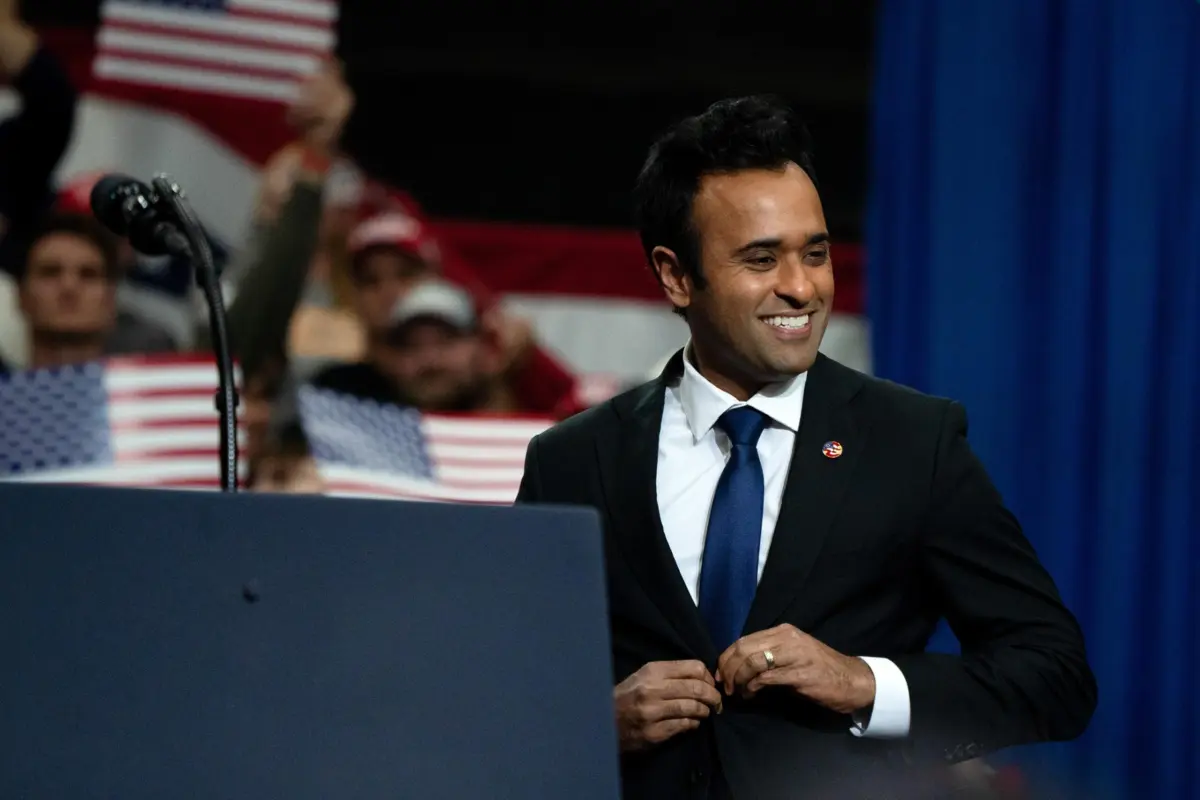
This rising animus was sharply highlighted in early October when Vivek Ramaswamy, the Republican candidate for governor of Ohio, attempted a quintessential political campaign maneuver: picking up a young child. The subsequent fumbling of the boy generated a viral clip across social media platforms. What followed, however, exposed a darker undercurrent. When Ramaswamy responded by posting a portrait of himself holding his own son, the replies quickly devolved into virulent, anti-Indian racial abuse.
This incident is not an isolated aberration. Instead, it serves as a glaring symptom of a wider ideological shift. Analysts, journalists, and cultural commentators note that anti-Indian sentiment on the right is rooted less in traditional xenophobia and more in status envy and economic anxiety. Unlike marginalized minority populations, Indian Americans and Indian immigrants occupy prominent spaces in high-status professions—dominating tech sectors, medical fields, corporate executive suites, and elite academic institutions.
Read Also
This article investigates the genesis of this rising bigotry, exploring how it mirrors historical forms of prejudice like antisemitism, the mechanisms of cultural coping deployed by far-right influencers, and the pragmatic resilience demonstrated by the Indian American community in the face of escalating hostility.
Detailed Chronology: From Campaign Stumbles to the ‘Indian Question’
The Ramaswamy Incident and the Viral Backlash
The convergence of political aspiration and digital vitriol crystallized in October, when Vivek Ramaswamy’s campaign stop yielded an awkward viral video. While public stumping often features lighthearted interactions with constituents, Ramaswamy’s minor physical stumble while picking up a child became instant fodder for internet mockery.
While political missteps are standard fare for candidates of all backgrounds, the commentary surrounding Ramaswamy quickly crossed the line from political critique to ethnic targeting. Critics weaponized the clip to revive tired tropes regarding foreignness and assimilation, questioning his ability to act as a "normal American family man."
When Ramaswamy attempted to correct the narrative by sharing an intimate family photo with his son, the response laid bare the vitriol of a segment of the online conservative ecosystem. Commentators unleashed a barrage of anti-Indian stereotypes, questioning not only his political viability but his cultural right to participate in the American civic fabric.
The Rise of ‘The Indian Question’
As the rhetoric intensified, prominent right-wing figures began openly debating what some have termed "The Indian Question." In online forums and podcasts hosted by influential conservative activists like Christopher Rufo and Jonathan Keeperman, the conversation shifted from conventional policy debates on immigration quotas to cultural critiques of South Asian achievement.
During these exchanges, commentators attempted to intellectualize their discomfort with South Asian success, framing the demographic’s high academic achievement—such as dominance in national spelling bees and standardized testing—as somehow fundamentally "un-American." Conversely, they romanticized traditional markers of white adolescent culture, such as high school athletics and partying, as authentic expressions of American identity. This rhetorical gymnastics highlights an ongoing effort by far-right ideologues to rebrand high achievement as a cultural deficit, turning minority success into a perceived threat to native-born status.
Supporting Context & Metrics: Status Envy and Micro-Minority Visibility
To understand the mechanics of this modern backlash, one must examine the demographic profile and socioeconomic standing of Indian Americans within the United States.
The Paradox of Hyper-Visibility
According to demographic data, Indian Americans comprise a distinct micro-minority, representing roughly 1 to 2 percent of the total United States population. Yet, their presence in high-visibility, high-status positions is disproportionately massive.
- Corporate Leadership: Indian Americans occupy executive suites at historic rates, leading major global technology enterprises including Microsoft, Google, Adobe, and IBM.
- Professional Sectors: The community is heavily concentrated in high-compensation, high-prestige sectors such as medicine, engineering, finance, and academia.
- Academic Excellence: South Asian students frequently over-index in elite universities, standardized testing benchmarks, and specialized academic competitions.
This hyper-visibility starkly contrasts with other successful minority groups throughout American history. For instance, while Jewish Americans have achieved immense professional and cultural success since the late 20th century, they do not possess the same immediate physical or cultural visibility in everyday mass media and corporate life. By contrast, the visible rise of Indian Americans into roles historically dominated by white professionals—such as Fortune 500 CEOs, university presidents, and leading technologists—has triggered profound psychological displacement among middle-class Americans.
Analogies to Historic Prejudice: Antisemitism vs. Traditional Racism
Journalist Zaid Jilani, who has extensively covered the surge in anti-Indian racism, points out that this backlash bears a striking resemblance to historical antisemitism rather than the systemic racism historically directed at Black or Hispanic Americans.
Traditional racism in America has frequently weaponized the stereotype of the impoverished, uneducated immigrant who allegedly "leeches off government resources." However, this narrative fails when applied to Indian immigrants, who typically arrive via high-skilled visa programs, possess advanced degrees, settle in affluent neighborhoods, and emphasize rigorous family and educational values—ideals that ostensibly align with conservative platforms.
Because these traditional stereotypes do not apply, hostile actors have pivoted to framing Indian Americans not as a drain on resources, but as a status threat. Middle-class Americans navigating an increasingly competitive globalized economy view high-achieving immigrants as direct competitors for scarce resources: top-tier university admissions, prestigious corner offices, and economic security. Consequently, the backlash is less about xenophobic border anxieties and more about a wider anti-globalization, protectionist sentiment gaining traction on the political right.
Official Statements and Expert Perspectives
The shifting nature of American nativism has drawn alarm from civil rights advocates, cultural historians, and immigrant communities alike.
Zaid Jilani on Status Anxiety and Coping Mechanisms
In an interview discussing the roots of this phenomenon, Zaid Jilani emphasized that the resentment is fundamentally tied to societal positioning.
"It’s not that Indian Americans are necessarily being stereotyped as antisocial, criminal, coming here illegally, so on and so forth," Jilani noted. "It’s more that they’re being seen as a status threat to a lot of particularly middle-class Americans, people who want their kids to rise to the top of their school, who want their kids to have the corner office… It’s a much larger anti-globalization backlash on the right, not only when it comes to things like immigration, but also trade and tariffs."
Despite the ugliness of these attacks, Jilani highlighted a surprising element among the Indian Americans he interviewed: a profound sense of immigrant pragmatism. Rather than responding with immediate outrage, many members of the community exhibit an empathetic understanding of the economic anxieties plaguing native-born Americans.
First- and second-generation immigrants frequently adopt a "keep your head down and grind" mentality. Recognizing that their presence coincides with broader economic struggles among working- and middle-class Americans, many community members advocate for discretion, cautioning against flaunting success or denigrating native culture—a subtle critique directed at high-profile figures like Vivek Ramaswamy, whose cultural commentary has occasionally exacerbated friction.
Historical Parallels: The Integration of Prior Immigrant Waves
Cultural analysts note that the trajectory of Indian American integration mirrors historical patterns observed in previous immigrant waves, such as the Italian American experience in the 20th century.
When Italian immigrants first arrived in large numbers, they faced severe discrimination, stereotypes of clannishness, and targeted restrictions. They initially clustered in specific geographic enclaves and professional niches where they could secure an economic foothold. Over decades, as generations accumulated wealth and educational capital, they integrated fully into the American mainstream to the point where their distinct ethnic origins became nearly imperceptible.
Similarly, early-generation Indian American parents have traditionally channeled their children into high-certainty career tracks like medicine and engineering to secure financial stability. However, as the diaspora matures and builds generational wealth, younger generations are increasingly branching out into the arts, media, politics, and Hollywood—a natural maturation process that mirrors the historical arc of all successful immigrant groups.
Future Outlook: Navigating the New Frontier of American Identity
As the United States continues its transition into a multi-ethnic, highly globalized superpower, the tensions surrounding cultural and economic success will likely persist. The emergence of "The Indian Question" on the American right signals a complex evolution in how xenophobia operates in the 21st century.
Key Trajectories to Watch:
- The Political Alignment of High-Achieving Minorities: While historic waves of immigrants leaned predominantly progressive, high-earning demographic groups often face cross-pressures. The rise of figures like Vivek Ramaswamy demonstrates that some Indian Americans are drawn to conservative economic and cultural policies, even as portions of the conservative base exhibit nativist hostility.
- The Evolution of the American Meritocracy: As institutions grapple with debates over affirmative action, standardized testing, and corporate diversity quotas, the exceptional performance of South Asian Americans will remain a central flashpoint in broader arguments over fairness, competition, and national identity.
- Community Resilience and Assimilation: Drawing on deep-seated traditions of immigrant pragmatism, the Indian American community is poised to continue its path of deep civic, cultural, and political integration.
Ultimately, the friction between native-born anxieties and immigrant achievement is a painful growing pain of a changing nation. Whether the American right can reconcile its professed valuation of hard work, family values, and educational excellence with its populist anxieties over global competition will remain one of the defining cultural questions of the decade.



Comments
Facebook App ID not configured. Please add it in the Customizer.