
Executive Overview
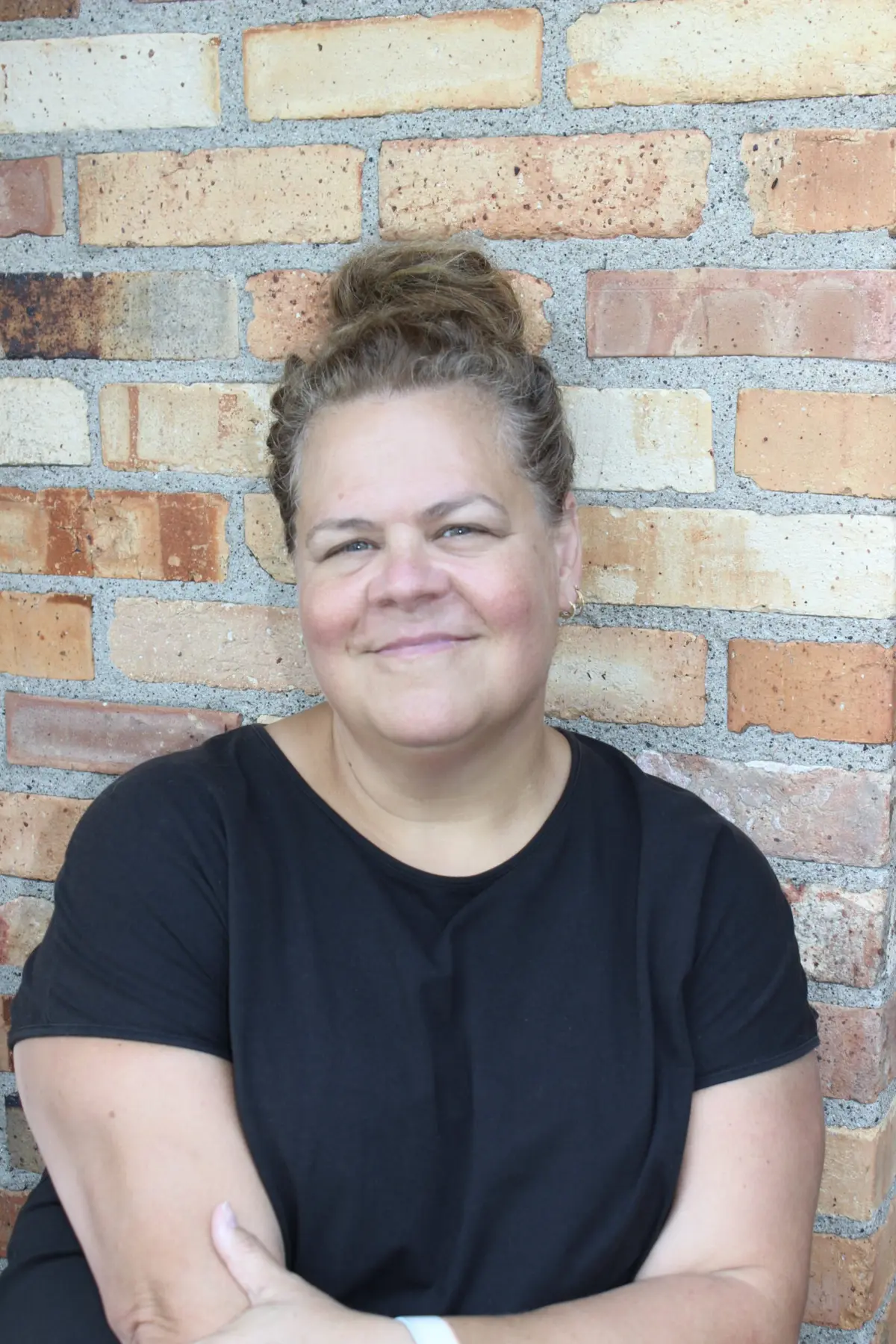
In the contemporary literary landscape, few works interrogate the friction between institutionalized local history and the violent realities of colonial displacement quite like Catie Rosemurgy’s poetry. Recognized widely for her critically acclaimed collections My Favorite Apocalypse and The Stranger Manual—both published by Graywolf Press—Rosemurgy has carved out a distinct space as an architect of psychological landscapes, domestic surrealism, and historical reckoning.
Her latest piece to capture public and critical attention is the poem "Diorama 1871 (while a pie burns, the schoolteacher’s wife keeps going)," selected recently as the Missouri Review Poem of the Week. Accompanyed by T.A.J. Vermeulen’s 1930 arresting Dutch painting Gezin kijkt verschrikt op van het diner. Dat’s de wekker! as its title image, the poem plunges readers headfirst into a whirlwind of cataloged accumulation, sensory shock, and archival failure.
At its core, the piece emerges from a deeply personal and unsettling encounter with local history museums in the upper Midwest. These institutions, often celebrated as community pillars preserving frontier heritage, frequently construct a sanitizing narrative that sidesteps the mechanisms of colonial settlement. Struck by the haunting silence surrounding this omission—particularly in a museum featuring a diorama of a once-thriving, now-ghost-town settlement—Rosemurgy began a poetic project designed to shatter historical amnesia. By breathing imagined interiority and vocal cadence into the microscopic, white plastic or plaster figures trapped within historical dioramas, she exposes the fatal mix of inability and unwillingness that prevents modern society from confronting the true toll of its foundational narratives.
Read Also
Detailed Chronology: From Upper Midwest Museums to the Page
To understand the genesis of "Diorama 1871," one must trace the biographical and creative trajectory that brought Rosemurgy to the exhibit cases of the upper Midwest.
Phase I: The Museum Visits and the Haunting Silence
Several years ago, while visiting regional historical societies near the landscapes of her childhood, Rosemurgy encountered a recurring curatorial choice. Rather than reckoning with the complex, violent realities of indigenous displacement and colonial expansion, these museums presented pristine, orderly origin stories. They displayed artifacts of early homesteading—tools, kitchen implements, and topographical maps—as neutral, heroic triumphs over wilderness.
For Rosemurgy, the absence of indigenous histories and the sanitized portrayal of settlement felt less like a passive oversight and more like a malignant silence. This realization crystallized when she stood before a detailed diorama depicting a boomtown from the late nineteenth century—Gold River, a fictionalized or archetypal stand-in for the hyper-accelerated urbanization of the American frontier.
Phase II: The Diorama as a Microcosm of Denial
The diorama—a frozen, miniature theatrical set designed to render history consumable, neat, and picturesque—became for Rosemurgy a metaphor for the limits of historical empathy. Trapped behind glass, the tiny white figures stood frozen mid-gesture: building, trading, arguing, and dying.
Sensing the psychological paralysis inherent in these displays, Rosemurgy asked herself a radical question: What would happen if the miniature inhabitants of these historical tableaux began to break character? What if the domestic routines—such as a schoolteacher’s wife ignoring a burning pie—were understood not as quaint domesticity, but as acts of desperate, dissociative survival amidst an overwhelming influx of colonial infrastructure?
Phase III: Composition and Publication
Beginning this ambitious poetic sequence in Philadelphia—where she lives and teaches at the College of New Jersey—Rosemurgy marshaled her fellowships from the Pew Foundation, the National Endowment for the Arts, and the Rona Jaffe Foundation to dedicate intense focus to the project.
The inclusion of "Diorama 1871" in the Missouri Review marks a major milestone in this ongoing sequence. By pairing the text with Vermeulen’s unsettling depiction of a family startled mid-meal by an alarm, the publication highlights the poem’s central theme: the terrifying intrusion of reality into meticulously constructed, domestic illusions.
Supporting Context & Metrics: The Anatomy of "Diorama 1871"
The poem itself stands as a masterclass in accumulation, cataloging, and formal restraint. Eschewing traditional stanzaic rhyme in favor of breathless, cascading lists, Rosemurgy mimics the sudden, overwhelming deluge of civilization that accompanied the founding of nineteenth-century frontier towns.
The Deluge of Objects
The poem opens with an immediate sense of ontological shock:
The newcomers arrived in Gold River in such large numbers. So much sudden. So many
What follows is an unrelenting catalogue of human debris and infrastructure, organized with clinical precision yet conveying mounting chaos:
- Domestic and Industrial Implements: stools, bunks, bowls, shovels, nails, cleavers, ladders / chutes, pipes, levers, cinches, planks, bolts, shears
- Capital and Territorial Division: stakes, plots, parcels, holdings, claims, allotments / freighters, schooners, barges, barks, steamers / disputes, interests, debts, ledgers, accounts
- Social and Legal Constructs: names, births, graves, clans, vows, curses, oaths
The Transition to Corporeal Reality
As the catalog progresses, the poem shifts from inanimate infrastructure to the intimate, fragile mechanics of the human body. The items move from hats and buttons to anatomy itself:
elbows, tongues, femurs, arteries, knuckles, spines,
This seamless blending of manufactured goods with human skeletal and vascular systems serves a devastating poetic function. It equates the colonization of land with the mechanical commodification and physical fragmentation of the body. The frontier is built not just out of timber and iron, but out of flesh, bone, and bodily fluid.
Sensory Overload and Somatic Trauma
In its final stanzas, the poem transforms into an inventory of somatic breakdown. The lexicon shifts toward injury, infection, and decay:
nicks, cuts, bruises, rots, punctures, sprains / fractures, limps, twists, tears, pulls, knots / pithings, pokings, severings, suturings, swellings / infections, fevers, fugues, visions, airs, aches
By the time the poem reaches its chilling conclusion, the psychological and physical weight of expansion has overwhelmed the capacity for documentation:
Accurate records could not be maintained. They lost track of what hurt and how much and who felt it.
This closing line operates as a brilliant critique of historical archives. Official histories prioritize tallies, deeds, and ledgers while entirely losing track of systemic, embodied trauma. The records break down because the human cost simply outstrips the accounting methods of the colonizers.
Official Statements and Author’s Reflections
In her official Author’s Note provided to the Missouri Review, Catie Rosemurgy elaborates on the ethical and artistic motivations driving this poetic series:
"This poem is from a book I began writing after visiting two local history museums in the upper Midwest near where I grew up. Both museums largely ignore the role of colonial settlement in their curation, and that silence felt hauntingly malignant to me in the days after my visit. One of the museums features a diorama of the once-thriving, now-deserted town in which the museum is located. As a way of exploring the fatal mixture of inability and unwillingness that prevents us from developing a shared, public narrative of our history, I began to write poems that imagine the tiny, white figures in the diorama beginning to speak."
Rosemurgy’s critique hits at the heart of contemporary heritage management. Local history museums often operate as sites of civic comfort, reinforcing regional mythologies of hard work and self-reliance while omitting the structural violence that cleared the land for settlement. By introducing the voices—and the somatic realities—of the diorama’s inhabitants, Rosemurgy challenges visitors to confront what cultural theorist Avery Gordon terms "ghostly matters"—the haunting presence of histories that institutions have tried to render invisible.
Future Outlook: The Legacy of the Diorama Project
As Catie Rosemurgy continues to expand her manuscript examining these Midwestern museums, the literary community is watching closely. Her work bridges a crucial gap between lyrical experimentation and historical accountability.
1. Re-evaluating Regional Archives
"Diorama 1871" arrives at a time of intense national and international scrutiny regarding how public history is displayed. From national monuments to small-town historical societies, institutions are under increasing pressure to decolonize their narratives. Rosemurgy’s poetry acts as a literary analogue to this museological shift, offering an aesthetic framework for exposing what standard exhibitions leave out.
2. The Future of the Poetry Collection
With two critically acclaimed books already establishing her reputation as a voice of fierce intelligence and linguistic dexterity—The Stranger Manual and My Favorite Apocalypse—Rosemurgy’s forthcoming collection promises to be a landmark contribution to American poetry. By focusing on the miniature as a lens for examining macro-historical catastrophes, she demonstrates how lyric poetry can function as an alternative archive.
3. Pedagogical and Critical Impact
As a professor at the College of New Jersey, Rosemurgy’s influence extends into the classroom, where her pedagogical approach encourages younger writers to interrogate the inherited narratives of landscape and memory. Her ability to translate archival absences into visceral, breathing verse ensures that her work will remain a vital touchstone for discussions on poetry, history, and ethics for years to come.
In "Diorama 1871," Catie Rosemurgy does not merely animate a static museum exhibit; she shatters the glass case entirely, inviting readers to step into the scorching, chaotic, and unresolved kitchen of the past—where the pie is burning, the schoolteacher’s wife keeps walking, and the true cost of history can no longer be ignored.

Comments
Facebook App ID not configured. Please add it in the Customizer.