
Executive Overview
The international arts and heritage sectors are currently navigating a turbulent landscape defined by overlapping geopolitical crises, institutional introspection, and extraordinary archaeological breakthroughs. From the unexpected cancellation of major global biennials under the shadow of regional warfare to mysterious mishaps within the vaulted halls of world-class museums, the cultural sphere serves as a sensitive barometer for wider societal anxieties.
At the same time, forward-looking initiatives—ranging from the restitution of ancient antiquities and the revitalization of historic Islamic architecture to monumental paleontological and maritime discoveries—demonstrate the enduring resilience of cultural preservation. This comprehensive report examines the critical developments shaping the global arts ecosystem, analyzing the policy implications, institutional responses, and socio-political dynamics driving the news cycle across Europe, Asia, and the Middle East.
Detailed Chronology
Geopolitical Pressures and Institutional Crises
The past month has laid bare the acute vulnerability of the international arts calendar to escalating geopolitical tensions.
Read Also
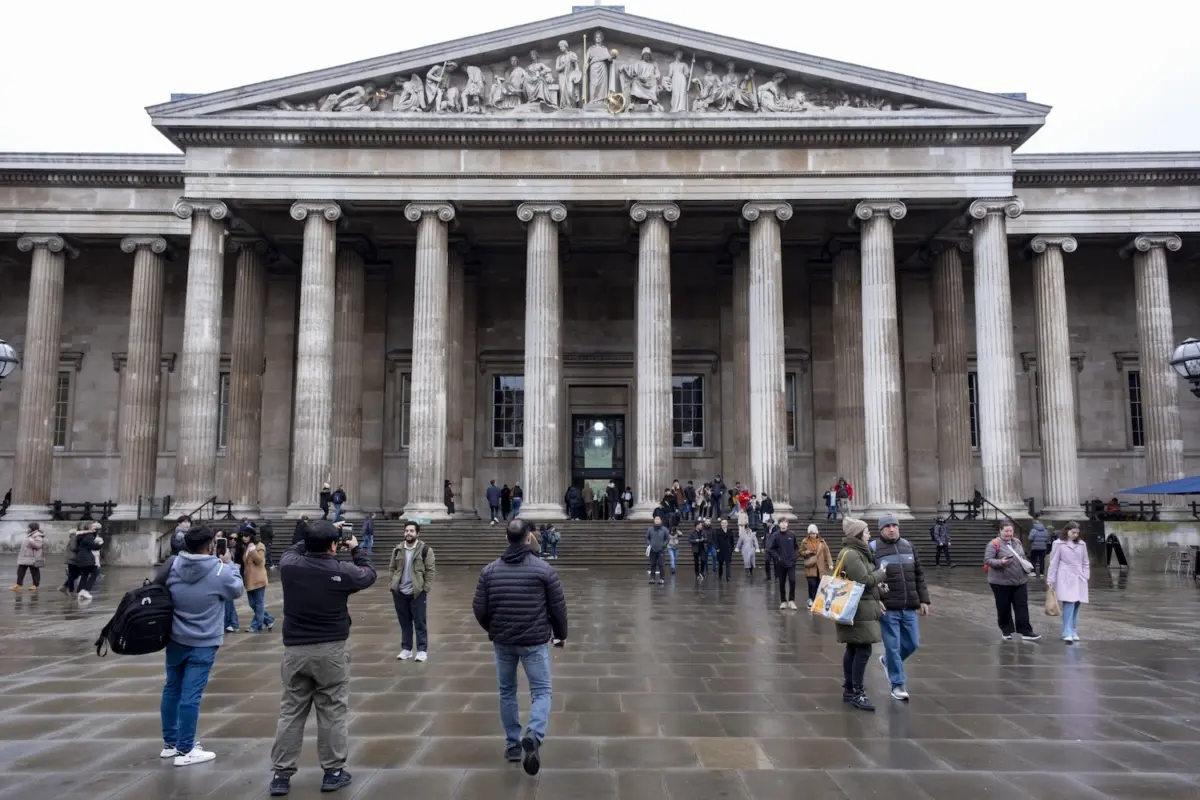
- October 4: A mysterious preservation failure occurs at the British Museum in London. A three-hundred-year-old Jingdezhen porcelain bowl and box shatter inside a secure display case. The incident goes public weeks later via Chinese social media, igniting a broader conversation about artifact safety and transparency in heritage stewardship.
- Mid-October: Pakistan’s Karachi Biennale Trust abruptly announces the cancellation of the fifth edition of the Karachi Biennale, themed "Kal" (Tomorrow), which was scheduled to run from January 16 to 31. Organizers cite deteriorating regional security and active "war conditions" as the primary drivers behind the decision. Chief curator Noor Ahmed expresses deep dismay, noting she was excluded from the administrative deliberations.
- Late October: German President Frank-Walter Steinmeier delivers a stark warning against rising nationalism during the expansion ceremony of the Kunsthalle Würth in Schwäbisch Hall. He highlights the existential threats facing institutions like the Bauhaus Dessau Foundation, framing cultural freedom as a frontline defense against democratic erosion.
Restitution, Regeneration, and Historic Recoveries
Amidst contemporary disruptions, significant strides are being made in the domains of heritage recovery, architectural restoration, and ancient discovery.
- November Milestone: In an unprecedented diplomatic and cultural gesture, Israel officially returns twenty-two ancient artifacts to Greece. This transfer coincides with Athens’ ongoing, aggressive global campaign to restitute dispersed components of classical monuments, most notably the Parthenon Marbles.
- Thessaloniki Revival: Following an exhaustive, multi-year restoration initiative led by the Metropolitan Organization of Museums of Visual Arts of Thessaloniki (MOMus), a historic 15th-century mosque—which spent decades operating as the Alacazar cinema—reopens its doors as a state-of-the-art visual arts and cultural exhibition venue.
- Paleontological and Archaeological Revelations: Researchers announce the classification of Invictibellatrix amberina, a newly discovered apex predator and cousin of the Tyrannosaurus rex, whose fossilized remains were unearthed on the Isle of Wight. Concurrently, maritime archaeologists publish findings detailing the discovery of the oldest-known shipwreck off the Turkish coast, dating back roughly 4,400 to 4,700 years—coinciding with the construction of Egypt’s Great Pyramid of Giza.
Supporting Context & Metrics
To fully understand the weight of these events, one must examine the underlying structural metrics and historical contexts governing contemporary arts administration, museum conservation, and geopolitical heritage politics.
The Karachi Biennale and the Cost of Cancellation
The Karachi Biennale is Pakistan’s largest contemporary art platform, designed to bring international dialogue to a region historically starved of institutional arts infrastructure. The canceled fifth edition, themed around "Kal" (Urdu for yesterday or tomorrow, depending on context), was poised to feature:
- Over 100 participating visual artists drawn from local and international pools.
- Four co-curators, led by prominent curator Noor Ahmed.
- An economic and cultural footprint intended to cement Pakistan’s presence within the South Asian contemporary art market.
The abrupt administrative shutdown—executed without the consultation of the curatorial team—underscores a persistent friction between risk-averse institutional boards and cultural practitioners who argue that art carries its highest utility precisely during periods of social and political unrest.
The British Museum Incident and Museum Accountability
The shattering of the Jingdezhen porcelain artifacts highlights the ongoing challenges of preventive conservation in high-traffic public institutions. Jingdezhen ware, historically celebrated as the pinnacle of Chinese imperial porcelain production, requires precise climate control and structural stability within exhibition displays.
The incident gained traction not through official British Museum press releases, but via user-generated documentation on Chinese social media platforms like Xiaohongshu and Weibo. This dynamic points to a fundamental shift in institutional accountability: global audiences now demand immediate transparency and rigorous post-incident reviews regarding the stewardship of shared cultural heritage.
Mega-Trends in Fair Realignment and Architectural Conservation
- Art Cologne’s Expansion: Founded in 1967 as the world’s first modern art fair, Art Cologne announced its migration to Hall 1 of the newly constructed Confex Conference and Exhibition Center for October 2027. This move reflects the competitive pressure on legacy art fairs to secure expansive, technologically advanced facilities to match the scale of contemporary mega-exhibitions.
- The Loss of Donald Insall: The passing of pioneering conservation architect Donald Insall at age 100 marks the end of an era for historic preservation. Insall’s meticulous restoration of Windsor Castle following the devastating fire of November 1992 established modern benchmarks for combining traditional craftsmanship with contemporary engineering safeguards.
Official Statements and Institutional Perspectives
The reactions of key figures and organizations involved in these headlines reveal deep ideological divisions over the role of art in times of crisis.
"Artists and partners have been contacting me, and they are all quite disappointed about how communications and commitments with them are being handled. During a time of stated war and unrest, art becomes all the more powerful. This is deeply detrimental for Pakistan’s international art ecosystem."
— Noor Ahmed, Lead Curator, Karachi Biennale (Speaking to Hyperallergic)
Addressing the broader sociopolitical climate in Europe, German President Frank-Walter Steinmeier emphasized the precarious nature of artistic autonomy:
"We are witnessing a resurgence of nationalist rhetoric that seeks to instrumentalize or silence cultural institutions. Museums and design centers like the Bauhaus Dessau Foundation are not mere repositories of the past; they are the testing grounds for democratic freedom. When they fear for their survival, our open society is directly compromised."
— Frank-Walter Steinmeier, President of Germany
On the maritime archaeological front, research teams working off the Turkish coast underscored the historical significance of their recent deep-sea excavation:
"The three-holed stone anchors found in the wreck area closely resemble those documented in Bronze Age Minoan, Cypriot, Anatolian, and Levantine contexts. These artifacts provide unprecedented empirical data regarding early maritime trade networks, long-distance commerce, and ancient shipbuilding technologies that rival the engineering ambitions of contemporary terrestrial monuments like the Giza Pyramids."
— Lead Maritime Archaeologists (Journal of Maritime Archaeology)
Future Outlook
As the international cultural sector looks toward the remainder of the decade, several critical trajectories are emerging:
- The Resilience of Independent Biennials: The Karachi Biennale cancellation serves as a cautionary tale for arts organizations operating in volatile zones. Moving forward, biennial trusts will need to develop more decentralized, crisis-resilient operational frameworks that protect curatorial investments and artist livelihoods against sudden geopolitical shocks.
- Accelerated Restitution Pressures: Israel’s return of twenty-two antiquities to Greece establishes a noteworthy precedent for non-European nations holding disputed heritage items. As Athens maintains pressure on institutions housing the Parthenon Marbles and other fragments, international museums will face mounting diplomatic expectations to engage in good-faith repatriation dialogues.
- Technological Integration in Conservation: Incidents like the British Museum porcelain breakage will likely accelerate the integration of smart-monitoring systems—such as real-time micro-vibration sensors and AI-driven structural integrity diagnostics—within display cases housing fragile historical assets.
- Adaptive Reuse of Sacred Heritage: The successful reopening of the 15th-century Thessaloniki mosque as a MOMus contemporary arts space demonstrates a sustainable model for heritage revitalization. Transforming historically contested or repurposed structures into open civic and cultural hubs offers a powerful blueprint for reconciling layered architectural pasts with modern community needs.

Comments
Facebook App ID not configured. Please add it in the Customizer.